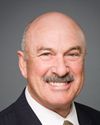
National Defence Committee on June 12th, 2012
Evidence of meeting #46 for National Defence in the 41st Parliament, 1st Session. (The original version is on Parliament’s site, as are the minutes.) The winning word was nato.
A recording is available from Parliament.
On the agenda
MPs speaking
Also speaking
- Jack Granatstein As an Individual
- Ernie Regehr Research Fellow, Institute of Peace and Conflict Studies, University of Waterloo, As an Individual
1 p.m.
Some hon. members
Agreed.
1 p.m.
Conservative
1 p.m.
Conservative
1 p.m.
Conservative
The Chair James Bezan
Bells will be going off again in about 20 minutes.
Okay, we'll keep moving along.
Mr. Strahl, you're on.
1 p.m.
Conservative
Mark Strahl Chilliwack—Fraser Canyon, BC
Thank you, Chair. That will affect my questioning structure a little bit.
I was going to ask, in light of Mr. Kellway's question, whether the new Russian and Chinese fighter jets have the capability to deliver nuclear weapons.
1 p.m.
Research Fellow, Institute of Peace and Conflict Studies, University of Waterloo, As an Individual
I am not aware of the Chinese. The Russians certainly do. As long as they maintain non-strategic weapons, they will have fighter aircraft with that capability.
1 p.m.
Conservative
Mark Strahl Chilliwack—Fraser Canyon, BC
Is that in response to the F-35, or is the F-35 design responding to what Russia has, in your view?
1 p.m.
Research Fellow, Institute of Peace and Conflict Studies, University of Waterloo, As an Individual
It's part of a long-term strategy of simply maintaining a mix of nuclear capability from strategic—air, land, and sea—to a variety of non-strategic.The United States has gone down to virtually a single non-strategic weapon, the B61. Russia keeps a wider range.
1 p.m.
Conservative
Mark Strahl Chilliwack—Fraser Canyon, BC
Perhaps you could answer. I was going to ask Professor Granatstein. I'm assuming you observe NATO for more than just nuclear disarmament reasons. Some of the things he talked about were problems with a 60-year-old alliance. When pressed quickly into an actual operation, it had obvious communications difficulties and some concerns with interoperability. Would you agree with me that it's important to Canada as part of NATO to continue to participate in international exercises, and when we are procuring equipment, we make sure the interoperability of that equipment with our NATO allies is paramount?
1 p.m.
Research Fellow, Institute of Peace and Conflict Studies, University of Waterloo, As an Individual
As I said before, I think it's very important that Canada continue to participate in military and other kinds of operations beyond its borders and that it has the capacity to make a contribution. Having said that, I think we need to adopt a bit of modesty about what can be accomplished, as both Libya and Afghanistan indicate these expeditionary operations can be very efficient, and particular elements of military operation, as in deposing regimes. As in both cases, we are seeing that the major challenge is in rebuilding new regimes. There, a different set of resources, skills, and capabilities are required. While Canada needs to maintain a capability to cooperate with allies and others, including in the United Nations, in the military peace support operations internationally, I think a much more heightened approach to the diplomatic reconstruction elements of resolving those conflicts needs to be included.
1 p.m.
Conservative
Mark Strahl Chilliwack—Fraser Canyon, BC
Do you think NATO is best placed to head those sorts of rebuilding efforts, or should that be left to the United Nations or another body? Is NATO designed to have that whole-of-government approach to a rebuild?
1:05 p.m.
Research Fellow, Institute of Peace and Conflict Studies, University of Waterloo, As an Individual
I think the evidence is that NATO is not designed particularly for that. Its primary role is collective defence. It has adopted the role of crisis management with some mixed degree of success. The cooperative security needs a much broader canvas than what NATO can provide.
1:05 p.m.
Conservative
1:05 p.m.
Conservative
The Chair James Bezan
Thank you. You still have time left, but we will move on.
Mr. Brahmi, you have five minutes.
1:05 p.m.
NDP
Tarik Brahmi Saint-Jean, QC
Thank you, Mr. Chair.
I will be asking my questions in French.
Mr. Regehr, you talked mostly about nuclear disarmament against NATO's traditional backdrop, in other words, the Cold War and the traditional nuclear powers, so to speak.
Do you have any suggestions on the role NATO should play as far as emerging traditional powers go? Without getting into the conflicts, could you comment on the tensions that exist between India and Pakistan, and between Iran and Israel? How might the pursuit of global nuclear disarmament take shape for these two sets of countries, which are all emerging nuclear powers?