Debates of May 3rd, 2006
House of Commons Hansard #15 of the 39th Parliament, 1st Session. (The original version is on Parliament's site.) The word of the day was norad.
Topics
- Question Period
- Sexual Abuse Prevention Month
- Powell River Regals
- Bromont National Cycling Centre
- Status of Women
- Myron Humeniuk
- Anjou
- Stanley Cup Playoffs
- Swift Galey Textile Factory
- Agriculture
- Israel
- The Budget
- Food Labelling
- Forest Industry
- The Budget
- Older Workers
- Employment Insurance
- The Budget
- The Environment
- Aboriginal Affairs
- Taxation
- Securities
- Post-Secondary Education
- The Budget
- Aboriginal Affairs
- The Budget
- Child Care
- Agriculture
- Kyoto Protocol
- Official Languages
- Citizenship and Immigration
- The Environment
- Privilege
- Canadian Human Rights Commission
- ALS Month Act
- Controlled Drugs and Substances Act
- Income Tax Act
- Criminal Code
- DNA Identification Act
- Canadian Safe Drinking Water Act
- Food and Drugs Act
- Business of the House
- Petitions
- Questions on the Order Paper
- Motions for Papers
- Business of Supply
- The Budget
- Interim Supply
- Norad
The Budget
Oral Questions
2:35 p.m.
Calgary Southwest
Alberta
Conservative
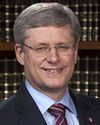
Stephen Harper Prime Minister
Mr. Speaker, the leader of the NDP will have to decide whether this is a bad budget or whether it is his budget.
I will say this. Canadians are going to wonder, in watching the NDP, why the NDP on such a positive day is so angry, why the NDP is so full of gloom and doom. Canadians know good news when they hear it.
The Environment
Oral Questions
May 3rd, 2006 / 2:35 p.m.
Liberal
The Environment
Oral Questions
2:35 p.m.
Some hon. members
Oh, oh!
The Environment
Oral Questions
2:35 p.m.
Liberal
The Speaker Peter Milliken
Order, please. Again, I know the member is being greeted with much enthusiasm, but he has the floor and we have to hear the question.
The hon. member for Kings--Hants.
The Environment
Oral Questions
2:35 p.m.
Liberal
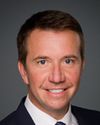
Scott Brison Kings—Hants, NS
Mr. Speaker, it is not easy being popular.
With its massive surplus, the government could have invested more money in the environment, but it chose instead to cut $2 billion from environmental programs.
Why is the government making Canada the only country in the world that is slashing its investments in the environment?
The Environment
Oral Questions
2:35 p.m.
Edmonton—Spruce Grove
Alberta
Conservative
Rona Ambrose Minister of the Environment
Mr. Speaker, the hon. member opposite might like to know that, under the Liberal Kyoto plan, Canadian families could have seen up to $600 per Canadian family shipped overseas to be spent on international credits. Under our made in Canada plan, Canadian taxpayer dollars will stay right here in Canada to be spent on our environment right here at home.
Our made in Canada plan will invest in Canadian solutions, Canadian technology and Canadian communities. I would like to ensure that the hon. member knows that in our plan, Canadians come first.
The Environment
Oral Questions
2:35 p.m.
Liberal
Scott Brison Kings—Hants, NS
Mr. Speaker, what is notable is that in their plan, the environment comes last.
This is what the Sierra Club has said about this budget, “The most tangible action on the environment by government has been to cut climate change programs”.
Why is the environment minister not ashamed that by slashing $2 billion from environmental programs, Canada has joined the international organization of one: the only country in the world to cut environmental programs?
The Environment
Oral Questions
2:35 p.m.
Edmonton—Spruce Grove
Alberta
Conservative
Rona Ambrose Minister of the Environment
Mr. Speaker, I am happy to address the hon. member's concerns. I would like to let him know that during the election, when we announced our transit pass tax policy, the Sierra Club said, “I think it's a very good move on the Conservatives' part”.
The other thing I would like to remind the hon. member of, as he stands in his place as the Liberal Party of Canada environment critic, is he is on record as saying that the Kyoto agreement was basically written on the back of an airplane napkin on the way to Kyoto, and on December 10, he voted against Kyoto.
Aboriginal Affairs
Oral Questions
2:40 p.m.
Liberal
Anita Neville Winnipeg South Centre, MB
Mr. Speaker, Canadians agree that the economic and social conditions of our aboriginal citizens is desperate. For months, the Liberal Party, the aboriginal leadership and all the premiers have called for the full implementation of the Kelowna accord. Had the NDP not sold out, they too might have done the same.
My question is for the Prime Minister. With a 90% reduction in the Kelowna commitments, does he realize that he has cast aside the greatest opportunity to create social peace and prosperity for aboriginal Canadians?
Aboriginal Affairs
Oral Questions
2:40 p.m.
Calgary Centre-North
Alberta
Conservative
Jim Prentice Minister of Indian Affairs and Northern Development and Federal Interlocutor for Métis and Non-Status Indians
Mr. Speaker, let us ensure that the facts are clear. Aboriginal Canadians are real winners under this budget. We have provided the following: $300 million for northern housing; $300 million for off reserve housing; $150 million additional funds in the budget; and a $325 million budgetary increase for this department in the estimates last week. That is a total of $1.1 billion of new money. In addition, there is the $500 million socio-economic fund. In addition to that, there is $2.2 billion for the residential schools agreement.
This is a fair and reasonable budget for aboriginal Canadians that also requires--
Aboriginal Affairs
Oral Questions
2:40 p.m.
Liberal
Aboriginal Affairs
Oral Questions
2:40 p.m.
Liberal
Anita Neville Winnipeg South Centre, MB
Mr. Speaker, this is not a good news budget for aboriginal peoples. Let me tell members what people are saying.
Chief Stewart Phillip, Union of B.C. Chiefs, said, “aboriginal people across Canada learned that Prime Minister has a wooden heart to match his wooden smile”. Grand Chief Phil Fontaine agrees.
As we heard earlier, Ralph Klein said, “I don't like it...I liked the commitment that was given by the Liberal government to the First Nations and the Métis people”.
How can the Prime Minister and the minister even pretend that what was announced was good--
Aboriginal Affairs
Oral Questions
2:40 p.m.
Liberal
Aboriginal Affairs
Oral Questions
2:40 p.m.
Calgary Centre-North
Alberta
Conservative
Jim Prentice Minister of Indian Affairs and Northern Development and Federal Interlocutor for Métis and Non-Status Indians
Mr. Speaker, the budget puts forward $1.1 billion of new money for aboriginal Canadians. It balances the competing objectives of being fair and reasonable to aboriginal Canadians, and ensuring accountability and results.
Here is what Patrick Brazeau, the national chief of the Congress of Aboriginal Peoples, had to say:
--it's the first time that a federal government has fully acknowledged our constituency being the off-reserve, Métis, non-status and status Indians... But secondly, you know, we see a government that's fulfilling its commitments.
Taxation
Oral Questions
2:40 p.m.
Bloc
Yvan Loubier Saint-Hyacinthe—Bagot, QC
Mr. Speaker, the Minister of Finance has acknowledged the fiscal imbalance and pledged to correct it. Fine. Correcting the fiscal imbalance for the long term will require the redistribution of tax fields and fundamental reforms to equalization.
Does the Minister of Finance agree that we must immediately dismiss the idea of solving the fiscal imbalance by a one-time increase in federal cash transfers? Unlike tax fields and equalization, a federal cash transfer will do nothing to ensure the autonomy and financial stability of Quebec and the provinces.