Debates of May 12th, 2010
House of Commons Hansard #45 of the 40th Parliament, 3rd Session. (The original version is on Parliament's site.) The word of the day was industry.
Topics
- Question Period
- Snowbirds
- Canada Health Day
- Maison Michel-Sarrazin
- Asbestos
- Diabetes
- National Nursing Week
- Rail Transportation
- Community Resource Centre
- Spinal Cord Injuries
- Eliminating Pardons for Serious Crimes
- Homelessness
- Justice
- New Book on Sovereignty
- Ethics
- Eliminating Pardons for Serious Crimes
- Offshore Drilling
- Foreign Affairs
- International Co-operation
- Nuclear Non-Proliferation
- The Environment
- Taxation
- Afghanistan
- Securities
- Government Programs
- Public Safety
- Securities
- Official Languages
- Afghanistan
- Justice
- Sydney Harbour
- The Environment
- Presence in Gallery
- Business of the House
- Government Response to Petitions
- First Nations Certainty of Land Title Act
- Nunavut Planning and Project Assessment Act
- Interparliamentary Delegations
- Committees of the House
- Criminal Code
- Petitions
- Questions on the Order Paper
- Starred Questions
- Questions Passed as Orders for Returns
- Motions for Papers
- Fairness at the Pumps Act
- Competition Act (Inquiry into Industry Sector)
- ATLANTIC SHELLFISH INDUSTRY
Foreign Affairs
Oral Questions
2:25 p.m.
Calgary Southwest
Alberta
Conservative
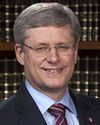
Stephen Harper Prime Minister
Mr. Speaker, on the contrary, Canada is a strong supporter of the Copenhagen accord, which is the first agreement to include all the major emitters. I hope the Bloc Québécois and the other opposition parties will also support this very important international agreement.
International Co-operation
Oral Questions
2:25 p.m.
Bloc
Francine Lalonde La Pointe-de-l'Île, QC
Mr. Speaker, the Canadian government's campaign to join the UN Security Council is not doing that well over in Africa. Its failure to invest in that continent in terms of international aid—reduced from 14 to 7 priority countries—has been strongly criticized. Furthermore, its backward position on women's health has no credibility.
Does the government realize that its conservative policies at the international level are hampering its campaign for a seat on the Security Council?
International Co-operation
Oral Questions
2:25 p.m.
Durham
Ontario
Conservative
Bev Oda Minister of International Cooperation
Mr. Speaker, I want to get the facts on the table. In fact, under this government, we have met our commitment to Africa and doubled that commitment to $2.1 billion a year. Forty-five per cent of CIDA's aid goes to Africa. Sixty-two per cent of our food aid goes to Africa. Fifty-five per cent of our agricultural support goes to Africa. Fifty-one per cent of our multilateral aid goes to Africa.
Because of Canada's G8 commitment to save the lives of mothers and children, the majority of that support will go to Africa.
International Co-operation
Oral Questions
2:25 p.m.
Bloc
Francine Lalonde La Pointe-de-l'Île, QC
Mr. Speaker, when he was in opposition, the Prime Minister blindly supported the United States' illegal and immoral war in Iraq, when the UN Security Council opposed such unilateral action. Clearly the Prime Minister does not believe in multilateralism.
How could he possibly think that Canada has any chance of joining the Security Council when he has so little respect for the multilateral decisions made by the UN?
International Co-operation
Oral Questions
2:25 p.m.
Thornhill
Ontario
Conservative
Peter Kent Minister of State of Foreign Affairs (Americas)
Mr. Speaker, we will it leave to the members of the United Nations to decide when the time comes to vote on the non-permanency to the Security Council in the fall.
Nuclear Non-Proliferation
Oral Questions
May 12th, 2010 / 2:25 p.m.
NDP
Jack Layton Toronto—Danforth, ON
Mr. Speaker, the Nuclear Non-Proliferation Treaty Review Conference is under way, but the Conservative government is in the process of selling nuclear technology to states that are not getting on board with nuclear non-proliferation. That has to have the UN Secretary-General very concerned.
Will the Prime Minister tell Ban Ki-moon that he can count on Canada to be fully engaged and fully a part of his plan to rid the world of nuclear weapons?
Nuclear Non-Proliferation
Oral Questions
2:30 p.m.
Calgary Southwest
Alberta
Conservative
Stephen Harper Prime Minister
Mr. Speaker, I think the government has been clear in the past. This is a long-term result that all of us would like to see. There is a lot of work to be done to get there. We are concerned today with nuclear weapons that are proliferating in the hands of both some dangerous states potentially and non-state actors. Those are the challenges with which the government is seized.
Nuclear Non-Proliferation
Oral Questions
2:30 p.m.
NDP
Jack Layton Toronto—Danforth, ON
Mr. Speaker, Canada is lobbying for a seat on the UN Security Council. Our chances would be better if the government showed some leadership concerning major global issues, but Canada now ranks 57th in contributions to UN peacekeeping missions. That is shameful.
The UN has issued a direct appeal to Canada on several occasions, asking for help in the Congo, for instance.
Will the Prime Minister finally respond positively to this direct appeal?
Nuclear Non-Proliferation
Oral Questions
2:30 p.m.
Calgary Southwest
Alberta
Conservative
Stephen Harper Prime Minister
Mr. Speaker, Canada is committed. Our Canadian Forces are participating in six United Nations international missions, including our contribution to the mission in Afghanistan.
I hope the NDP will also one day support this United Nations mission in Afghanistan.
Nuclear Non-Proliferation
Oral Questions
2:30 p.m.
NDP
Jack Layton Toronto—Danforth, ON
Mr. Speaker, just at the moment we are leaving it, that is a bit of a bizarre proposition.
Ban Ki-moon had another very tough message for the government. He said that Canada had to live up to its greenhouse gas emission reduction targets. He also said that Canada had to show leadership on the whole issue of climate change. He is right to say that climate change poses an existential threat to all of us and that Canada has an important role to play.
Therefore, the Prime Minister has to make a choice. Is he going to listen to his advisory panel to downplay climate change at the G20, or is he going to put it on the agenda like the UN Secretary—
Nuclear Non-Proliferation
Oral Questions
2:30 p.m.
Liberal
Nuclear Non-Proliferation
Oral Questions
2:30 p.m.
Calgary Southwest
Alberta
Conservative
Stephen Harper Prime Minister
Mr. Speaker, I am not sure what advisory panel the leader of the NDP is talking about. I can certainly say there have been consultations with all of the members of the G20 and the G8. I anticipate that all important subjects, including climate change, will be covered at the summit.
The position of the Government of Canada is very well known. We are strongly supportive of the Copenhagen accord, which for the first time in history involves commitments from all major emitters. I hope the NDP and the opposition parties will finally get on board with this international climate change accord.
The Environment
Oral Questions
2:30 p.m.
Etobicoke—Lakeshore
Ontario
Liberal
The Environment
Oral Questions
2:30 p.m.
Some hon. members
Oh, oh!
The Environment
Oral Questions
2:30 p.m.
Liberal