Mr. Speaker, I know the member for Wascana does not want to wait his turn, but I will answer the other member's question first.
As the IMF says, this government is on track. We will balance the budget in the medium term.

House of Commons Hansard #121 of the 40th Parliament, 3rd Session. (The original version is on Parliament's site.) The word of the day was judge.
FinanceOral Questions
2:30 p.m.
Conservative

Jim Flaherty Conservative Whitby—Oshawa, ON
Mr. Speaker, I know the member for Wascana does not want to wait his turn, but I will answer the other member's question first.
As the IMF says, this government is on track. We will balance the budget in the medium term.
Public Service of CanadaOral Questions
February 1st, 2011 / 2:30 p.m.
Liberal

Siobhan Coady Liberal St. John's South—Mount Pearl, NL
Mr. Speaker, the government is on the wrong track. Conservatives have said that allowing some 11,000 public servants to retire each year without replacing them is their deficit plan.
However, the PBO survey of 10 departments, which account for half of all operating expenses, says the Conservatives are way off. In fact, those departments expect to reduce employment by approximately 1,000 full-time staff.
Again, we cannot count on a government that simply cannot count. Why is the government not telling Canadians the truth? Where is the plan and what is the impact of those cuts?
Public Service of CanadaOral Questions
2:30 p.m.
Okanagan—Coquihalla B.C.
Conservative

Stockwell Day ConservativePresident of the Treasury Board and Minister for the Asia-Pacific Gateway
Mr. Speaker, I see the observation today from the Parliamentary Budget Officer saying that approximately 1,100 employees will be the attrition number for this year. He could not be more wrong. It is more than 11,000. As a matter of fact, last year I think it was 11,463. If he is off by 1,000% on that number which is very easily proven, what is he off on all the other numbers he is talking about?
Telecommunications IndustryOral Questions
2:30 p.m.
Liberal

Dan McTeague Liberal Pickering—Scarborough East, ON
Mr. Speaker, Canadian consumers and businesses are facing new and significant Internet fees and independent service providers will be forced out of the market if the CRTC's decision on usage based billing is permitted. Consumers and small businesses will have Internet usage capped at 25 gigabytes and pay more if that limit is exceeded.
Why will the Minister of Industry and indeed the Prime Minister not act now and instruct the CRTC to overturn, not just review, this regressive, anti-competitive and very costly decision to Canadians?
Telecommunications IndustryOral Questions
2:30 p.m.
Parry Sound—Muskoka Ontario
Conservative

Tony Clement ConservativeMinister of Industry
Mr. Speaker, I welcome the hon. member and the rest of his caucus to this ongoing debate. I would like to bring him up to date on this.
I have expressed, on behalf of our government, the concerns of our government with respect to the CRTC ruling, with respect to what it does to consumers, with respect to what it does to entrepreneurs and small business people and to Canadians generally.
The hon. member knows that the CRTC is an independent body, but we have the power to review and we have the power to turn back. Certainly, we will be reviewing this decision very quickly.
Telecommunications IndustryOral Questions
2:30 p.m.
Liberal
Dan McTeague Liberal Pickering—Scarborough East, ON
Mr. Speaker, consumers should never have to worry that each click or each video will cost them an arm and a leg. Canadians need the Internet in order to prosper in today's digital economy. Limiting bandwidth will also eliminate competition.
The CRTC should defend the concept of open, affordable and unlimited access to the Internet for all Canadians.
Will the Minister of Industry now order the CRTC to reverse this costly decision?
Telecommunications IndustryOral Questions
2:30 p.m.
Parry Sound—Muskoka Ontario
Conservative
Tony Clement ConservativeMinister of Industry
Mr. Speaker, as I said, this is a very important issue for consumers, small businesses and innovators, and I will consider it as soon as possible.
The hon. member is now dealing with this issue. I notice, though, that the Liberals are really concerned about this issue because they are trying to raise money from their donors on this issue. The Liberals do not really care about the public policy. They just want to raise more dough for Liberal coffers for an election that nobody wants.
EmploymentOral Questions
2:30 p.m.
Bloc

Robert Bouchard Bloc Chicoutimi—Le Fjord, QC
Mr. Speaker, contrary to the Conservatives' claims, we are still short 30,000 jobs to get back to the level we were at before the crisis. For example, the Quebec forestry industry, which has lost 18,000 jobs since 2005, is struggling to get out of this difficult situation.
Will the government understand that the crisis is far from over in the forestry industry and that it needs a comprehensive policy to support and modernize the industry, as was the case with the auto industry in Ontario?
EmploymentOral Questions
2:35 p.m.
Roberval—Lac-Saint-Jean Québec
Conservative

Denis Lebel ConservativeMinister of State (Economic Development Agency of Canada for the Regions of Quebec)
Mr. Speaker, all of the forestry experts in the country agree that it is a matter of markets. Unfortunately, the only ones who do not get it are the members opposite. They are playing politics with these people's jobs. The markets are difficult. Our workers are among the best in the world and we will continue to support them. Billions of dollars have been put into improving green practices through the community adjustment fund, and we will continue to support the forestry industry with research and development.
EmploymentOral Questions
2:35 p.m.
Bloc
Robert Bouchard Bloc Chicoutimi—Le Fjord, QC
Mr. Speaker, another industry in Quebec, the aerospace industry, is being threatened by Conservative policies. Even though Quebec represents 55% of the industry, it received only 40% of the spinoffs from the latest military contracts. All the other regions are receiving more than their share.
Will the government get its head out of the sand and guarantee Quebec its fair share of the spinoffs of these contracts?
EmploymentOral Questions
2:35 p.m.
Parry Sound—Muskoka Ontario
Conservative
Tony Clement ConservativeMinister of Industry
Mr. Speaker, obviously, this program, like any other military program and like the F-35s, generates spinoffs. The Canadian industry told me that this program was important because Quebec companies are expected to receive a number of contracts in the future.
This program works for Canadian business and for Quebec business, and that is why we are going ahead with it, along with the military reasons the hon. Minister of National Defence has made.
Shoreline ProtectionOral Questions
2:35 p.m.
Bloc

Raynald Blais Bloc Gaspésie—Îles-de-la-Madeleine, QC
Mr. Speaker, when Rivière-au-Renard was flooded in 2007, Canada Economic Development helped affected entrepreneurs, businesses and non-profits that were not eligible for Quebec emergency programs.
The Bloc Québécois is calling for this measure to be applied to the victims of the high tides in eastern Quebec. Will the government finally take action?
Shoreline ProtectionOral Questions
2:35 p.m.
Roberval—Lac-Saint-Jean Québec
Conservative
Denis Lebel ConservativeMinister of State (Economic Development Agency of Canada for the Regions of Quebec)
Mr. Speaker, as my colleague knows, our agreement with the Government of Quebec gives it the capacity to take action and implement programs, which it intends to do, based on need.
We added small businesses in the last review, which took place in 2008. The minister responsible in Quebec is currently working on it. He has said that the current program met most needs. We will base our response on Quebec's requests.
Shoreline ProtectionOral Questions
2:35 p.m.
Bloc

Claude Guimond Bloc Rimouski-Neigette—Témiscouata—Les Basques, QC
Mr. Speaker, two months after the high tides that devastated eastern Quebec, there is still uncertainty about federal assistance for the victims. The federal government could quickly contribute to reconstruction by establishing a tax credit for repairs required as a result of the damage caused by the disaster. This credit could be modelled after the home renovation tax credit.
Does the government plan to implement the Bloc proposal or will it let the victims fend for themselves?
Shoreline ProtectionOral Questions
2:35 p.m.
Roberval—Lac-Saint-Jean Québec
Conservative
Denis Lebel ConservativeMinister of State (Economic Development Agency of Canada for the Regions of Quebec)
Mr. Speaker, it is quite interesting that the Bloc is asking us to not respect our agreements with the province of Quebec. That is very interesting.
We will respect the agreements we have with the province of Quebec, which is currently evaluating the overall damage. We know that the people in these regions have been seriously affected. I had the privilege of visiting the area, meeting the people and seeing the damage first-hand. We will respect Quebec and honour our agreements with it.
Public SafetyOral Questions
2:35 p.m.
Liberal

Mark Holland Liberal Ajax—Pickering, ON
Mr. Speaker, the megaprison strategy almost ruined California. Such a strategy steals money from health care, education and infrastructure. It makes prisons into criminal factories.
If the father of this strategy, ultra-Republican Newt Gingrich, now understands the disastrous consequences of such policies, why can the Prime Minister not understand them as well? Why is the Prime Minister taking a more extreme position than Newt Gingrich?
Public SafetyOral Questions
2:35 p.m.
Provencher Manitoba
Conservative
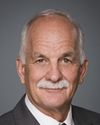
Vic Toews ConservativeMinister of Public Safety
Mr. Speaker, yesterday, the member for Ajax—Pickering toured a correctional institution. What was he concerned about? It was not offender accountability nor the health and safety of our correctional guards. No, the Liberal public safety critic was concerned about low morale among prisoners. He was concerned about our tough on crime policy.
Why will that member not express the same concern for victims that he does for prisoners?
Public SafetyOral Questions
2:40 p.m.
Liberal
Mark Holland Liberal Ajax—Pickering, ON
Mr. Speaker, unlike the minister, I go to the prisons. I take a look at the programs. I see what works and I know that the focus has to be on rehabilitation.
The fact is that party is now to the right of Newt Gingrich. Newt Gingrich has to moderate the Prime Minister. It is time the Conservative Party of Canada upgraded its ideology.
While the churches across Canada, the Anglican, Baptist, Presbyterian, Catholic, Lutheran, United and every other church say that these policies are wrong and will not work, the Conservatives forge forward. Why? Why are they bent on trying to repeat the disaster of California?
Public SafetyOral Questions
2:40 p.m.
Provencher Manitoba
Conservative
Vic Toews ConservativeMinister of Public Safety
Mr. Speaker, Canadians know our Conservative government will continue to work hard to get results for law-abiding Canadians and victims, such as our bill that would prevent those who commit sexual crimes against children from ever receiving a pardon.
Unlike the Liberal member for Ajax—Pickering who wants to stand up for inmate morale, we stand with the victims. We stand with those children who have been abused. Why will that member not do the same and get those bills passed?
Foreign AffairsOral Questions
2:40 p.m.
Liberal

Bob Rae Liberal Toronto Centre, ON
Mr. Speaker, I have a question for the minister about Canada's response to the crisis in Egypt.
I wonder if the minister could explain why it is that there are more diplomats posted to the Ottawa River than there are posted overseas? How can he explain the exaggerated and bloated size of the staff in the Prime Minister's office reviewing things like media clippings and other things and a complete absence of serious consular services available on the ground for Canadians in some of the most difficult and troublesome places in the world?
Why this remarkable contrast?
Foreign AffairsOral Questions
2:40 p.m.
Pontiac Québec
Conservative
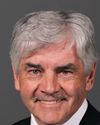
Lawrence Cannon ConservativeMinister of Foreign Affairs
Mr. Speaker, my hon. colleague should get his facts straight. The Liberals, once again, are all over the place. The Liberal opposition has not taken the time to view the tremendous work that has been done by the DFAIT officials in helping Canadians get back here on a voluntary basis.
We have been working night and day to accommodate Canadians and we have been working with our allies. As a matter of fact, we have been getting great congratulations from all of our allies, as well as all of the Canadians who were involved.
Foreign AffairsOral Questions
2:40 p.m.
Liberal
Bob Rae Liberal Toronto Centre, ON
Mr. Speaker, we completely support the work of our diplomatic services, which is why we think that it would be better for them to be in Lebanon, Mexico or Egypt rather than by the river in Ottawa. The government is in the process of increasing the number of people who work for the Prime Minister's bureaucracy but the necessary services are not available in the field where Canadians are. This is a problem. They do not have the support of the government, but we support them.
Foreign AffairsOral Questions
2:40 p.m.
Pontiac Québec
Conservative
Lawrence Cannon ConservativeMinister of Foreign Affairs
Mr. Speaker, I would be more than happy to appear before the parliamentary committee to report on the deployment of our staff to different parts of the globe and explain how these people are serving the interests of Canada throughout the world. If the hon. member would like to invite me to appear before the committee, I would be happy to do so.
Public SafetyOral Questions
2:40 p.m.
Conservative

Phil McColeman Conservative Brant, ON
Mr. Speaker, our Conservative government has put forward a legislative agenda that is smart on crime and tough on criminals. We have introduced bills that put the rights of victims and law-abiding Canadians first. For example, last year we referred Bill C-23B to the public safety committee but, thanks to the delays from the Liberal-led coalition, the bill has been waiting nearly nine months.
Would the Minister of Public Safety please update the House on the progress of this important bill?
Public SafetyOral Questions
2:40 p.m.
Provencher Manitoba
Conservative
Vic Toews ConservativeMinister of Public Safety
Mr. Speaker, currently, criminals who commit sexual offences against children are eligible for a pardon. Nearly nine months ago, our Conservative government introduced legislation to put an end to this. Our pardons bill remains before the public safety committee and I urge opposition parties to work to get this important bill through committee and back into the House.
Even though the Liberal member for Ajax—Pickering disagrees, I think victims have waited long enough.