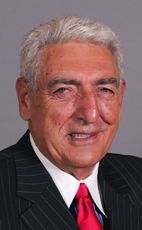
House of Commons photo

Crucial Fact

  • His favourite word was following.

Last in Parliament September 2008, as Conservative MP for Thunder Bay—Superior North (Ontario)

Won his last election, in 2006, with 36% of the vote.

Statements in the House

Supply November 6th, 1997

I see my colleague opposite, in his anger, has not yet begun to pay attention to what is happening. If he would wait I am sure he would get an opportunity to speak in due course. That is a rule of the House.

The tone of the debate seems to be heading toward divisiveness and the fostering the divisiveness in the country that we are all trying to correct.

As a result of what the member for Medicine Hat just said in the House, does he agree with the following two points?

First, the House of Commons has a fundamental role when a country is as big as Canada. Some areas are more productive than others. Should we as a federal state be responsible for the distribution of the wealth in order to look after people living in certain regions who are not as fortunate to have the same natural resources as perhaps the people in his province?

Second, he talked about the surplus and a tax dividend. Should we not first be looking at improving health care, improving the educational system and improving the transportation system? Are they not the best places to put our funds?

Supply November 6th, 1997

Madam Speaker, I want to ask the member from Medicine Hat a couple of questions with respect to the speech he just gave. I am a bit disturbed by the tone of the debate.

Interparliamentary Delegations October 23rd, 1997

Mr. Speaker, pursuant to Standing Order 34, I have the honour to present, in both official languages, the report of the Canadian delegation to the 38th annual meeting of the Canada-United States interparliamentary group which was held in Sydney, Nova Scotia and Charlottetown, Prince Edward Island from September 11 to September 15 of this year.

The meetings, like previous ones, outline the close personal and interpersonal relations between Canada and the United States. While we do not always agree on all aspects of this issue, we had the opportunity to honestly exchange viewpoints and information in a friendly manner showing the mutual respect that each country has for one another.

At the historic fortress of Louisburg we dealt with many important issues. Trade and economic matters, global peace and security and transport are questions that affect the billion dollars worth of trade a day going across our borders. We have not been able to directly resolve some of these important issues but we had the opportunity of putting forward in the strongest terms Canada's position as we approach the millennium.

Unfortunately the Pacific salmon dispute tainted the tremendous relationship that exists between the province of British Columbia, indeed all Canadians, and in particular the states of Washington, Alaska and Oregon.

With this in mind it was the consensus of all those attending, the Senate from the United States, the House of Representatives and members of Canadian Parliament, that they should convene a meeting on the west coast to deal with those issues that are supportive of the friendly relations that exist between the two countries. We will pursue that and advise the House accordingly as we proceed down that path.

Canada Co-Operatives Act October 22nd, 1997

Mr. Speaker, thank you for allowing me to ask a question of my colleague from Brandon—Souris. His most fortunate experience since coming to the House has been that he is fortunate enough to sit beside the member for Saint John. I am sure that if he pays attention he will find much wisdom in his seat mate.

The importance of co-operative housing, in the area he represents and in the area in Saskatchewan, as we heard earlier from the spokesperson for the New Democratic Party, and the federal involvement in co-operative housing has really been a success story in Canada.

I can only relate my own parochial and personal interest inasmuch as we have several co-operative housing ventures in the area I represent in Thunder Bay, one being the Castlegreen co-operative housing venture. I have visited Castlegreen on many occasions.

I would like to express exactly what I see when I drive into Castlegreen. First there is the pride of ownership among all the residents. It is about the best well kept area in the whole of our community of Thunder Bay. They have the community spirit that I do not see in any other communities. It is due to the residents who live there. It is interesting because many people who live in this co-operative housing area are physically challenged. Although they are physically challenged they participate in all the activities that go on in that area.

My question for the member for Brandon—Souris is on the Sask wheat pool that he mentioned, as did the member who spoke for the NDP. I have a concern about the Saskatchewan Wheat Pool, it being one of the largest co-operatives referred to. I read in the last while that it became a member of the Toronto Stock Exchange and is selling its stock.

Perhaps the member could explain how it can be a co-operative and be a corporation selling shares on a public exchange.

Speech From The Throne September 25th, 1997

Mr. Speaker, I am very pleased to be able to respond to the question posed by my friend from Prince George. First, let me congratulate you, Mr. Speaker, on assuming your position in the chair today. We are sure that you will fulfil the mandate required of all Speakers. All of us on this side of the House wish you well. Someone on the other side who was speaking earlier made some reference to your looks. I can tell you, Mr. Speaker, from my advantage point down here you look a lot better than the people to your left.

I am really quite taken aback by my friend who just spoke. Evidently he has not been listening to his leader for the last two or three years. All we have heard from the Reform Party is its interest in making sure that we had a balanced budget and that we reduced a horrendous debt that was left to us. I do not know how to refer to Reform members, but would it be kind to say they were kissing cousins of the previous government that had the administration of this country for nine years? If not kissing cousins, they slept in close proximity to each other.

The debt that we inherited in 1993 was what the Reform Party, when it first came into the House, talked about incessantly.

What we have done as a Liberal government in four short years is simply this. We have eliminated the deficit which is what Reformers have been talking about. Once we have the deficit in this country under control then we can take a good run at working on the debt that was assumed by their kissing cousins or whatever way we want to refer to them.

Before we took government, if they look at the facts of the situation, the debt in this country was $140 billion. When the Conservative government left power it was about $530 billion. We have been able to temper that debt over the last four years by something under $600 million. We are beginning to reduce the debt because we know how to administer the financial affairs of the country. That is basically what their leader has been saying and that is what we have done.

I cannot believe that my good from from Prince George is not giving the Liberal Party and ourselves the credit for that. I would like him to respond to that, but just one more minute.

I want to know what my friend from Prince George has against finding out about the sexual habits of seniors? What has the hon. member got against the senior citizens in this country? Could he respond to that please.

Committee Of The House April 23rd, 1997

Mr. Speaker, I apologize to the Chair for being late but had I been here in time for the vote, I would have voted with my colleagues.

Sunshine Day April 22nd, 1997

Madam Speaker, I believe you would find all-party support for the following motion. I move:

That June 21st be declared Sunshine Day in Canada.

The Sunshine Foundation is a national charitable organization with offices in all provinces and has over 30 active chapters. The foundation makes dreams come true for special children challenged by life threatening illnesses or severe physical disabilities.

It is funded solely by donations and does not look to any government level for support.

The foundation chose June 21 as its special day because it is the longest day of sunshine throughout the year. It works for special children throughout Canada and truly appreciates the all-party support the House will give to the motion today.

Canada Marine Act April 16th, 1997

Madam Speaker, I thank the hon. member for his question. According to the act, in September of this year there will be a complete review of all pilotage authorities in Canada.

To go one step further, I hope we have the opportunity in that review to bring the technology and the expertise we have gained in the Canadian marine transportation industry into the 21st century; to use global positioning if it is necessary; and to use the new innovations that are so helpful.

We must consider global positioning, whether pilotage is necessary and whether pilots and captains can navigate ships without the aid of pilotage. We must consider everything to lessen the cost of the transportation of our goods in Canada.

Canada Marine Act April 16th, 1997

Madam Speaker, if the previous speaker from the Reform Party had not made the analogy of Gracie and George Burns and how to solve income tax problems, I would have listened with interest to all the other items he raised like Pearson airport. With that analogy he made every other financial and arithmetic calculation suspect. Perhaps we should rethink the numbers.

I thank my colleagues for allowing my amendments on Bill C-44 respecting the marine act and how it affects future transportation.

The act concerns ports and harbours, pilotage, the seaway and the Great Lakes. There is no question that the most critical aspect of the legislation is the restructuring of Canadian ports. The previous structure of the ports was not efficient and had some errors. Above all else the ports had to be restructured. The

legislation adequately addresses that point. I will talk about the harbours in a moment.

We could have done a little better with pilotage. Although we addressed some of the issues with respect to pilotage, I do not agree with the remarks of the Bloc Quebecois member in the transportation committee.

It was not an accommodation. It was an interest on the government side to make sure fundamental issues with respect to marine transportation would pass in this session. I am sure pilotage, as it particularly affects the Laurentian Pilotage Authority and pilotage on the Great Lakes, will be up for consideration as soon as we return to the House.

There is a debate on whether the seaway and the Great Lakes system should be exclusively with users or exclusively with a binational panel. Some of our recommendations concerned a combination of both. The Great Lakes and St. Lawrence Seaway system is made up of 15 locks that raise and lower ships. We must consider the physical mechanics of running locks adequately, especially in Canada with our diverse and severe weather conditions starting some time in early March and lasting usually until December 31. A binational panel could administer the locks and bring forward economies of scale that are necessary to keep our transportation modes competitive in Canada.

I want to discuss the harbour commissions in Canada. Unfortunately because of the legislation the harbour commissions have become a casualty. The harbour commissions have been a success story in the marine transportation history of Canada. All of them, from 1964 when the Harbour Commissions Act, the Toronto Harbour Commission Act and the Harbour Commissions Act of Hamilton were passed, were success stories in Canada.

I take this opportunity to thank all commissioners who have ever served on any harbour commission in Canada for their wonderful work, dedication and volunteerism. They ensured that their harbour commissions operated successfully and were to the benefit of all Canadians.

Harbour commissions will cease to be operative with the passage of this bill. The following harbour commissions will become port authorities: Fraser River Harbour Commission, the North Fraser River Harbour Commission, the Nanaimo Harbour Commission, the Oshawa Harbour Commission, the Port Alberni Harbour Commission, the Windsor Harbour Commission and the Thunder Bay Harbour Commission. I know the members of that commission today and its past members, all of whom have done a tremendous job.

My colleague from Broadview-Greenwood will speak to the Toronto Harbour Commission and how the legislation will help that commission unravel the log jam it has found itself in for many years. We expect great benefits for the Toronto Harbour Commission.

As one of my colleagues mentioned, unfortunately the Hamilton Harbour Commission chose not to participate in the legislation. Hopefully in the future it will see the wisdom of becoming a port in Canada with port structure and all its benefits. We encourage that commission to move quickly so that all ports will be under one administration, one regulatory control, with a common set of goals.

It is fundamental that most of us in the House are nation builders. We should be building a strong Canada. We should be building a unified Canada. We should be building an indivisible Canada. We do so through the legislation we debate in the House on a daily basis.

Sometimes it is important for all members to set aside our parochial interests to look at Canada as a whole. In this instance I hope all people involved in marine transportation would consider the importance of having one unified regulated system so that we can build the best marine transportation ever.

The goal of the transport ministry and the transport committee is to ensure that transportation costs are efficient and cost effective. If we achieve that goal the agricultural community, farmers and those who manufacture goods, have the ability to deliver products to customers in the United States, England or hopefully the emerging South American countries. By doing so they become more competitive than they were in past. That is good for all Canadians.

I yield the rest of my time to my colleague from Broadview-Greenwood.

Canada Marine Act April 15th, 1997

Mr. Speaker, I rise on a point of order. I would like to join my colleague from Hamilton-Wentworth on the vote he just cast.

(The House divided Motion No. 28, which was agreed to on the following division:)