
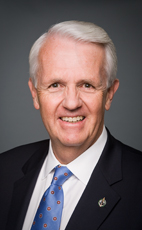
House of Commons photo

Crucial Fact

  • His favourite word was clearly.

Last in Parliament October 2015, as Conservative MP for Don Valley West (Ontario)

Lost his last election, in 2015, with 38% of the vote.

Statements in the House

Veterans Hiring Act May 16th, 2014

Mr. Speaker, before I begin, I am delighted to share my time today with the member for Durham.

I am pleased to rise today in support of our government's efforts to help Canada's veterans find meaningful employment after their service is complete. I join in support of Bill C-27, the veterans hiring act.

We have been working hard to provide Canada's veterans and their families with the support they need. Our proposed measures to improve access to federal service jobs for veterans are a perfect example of this. They would provide Canada's deserving veterans significantly increased access to jobs in the federal public service, rewarding and meaningful jobs that would allow them to continue to lead and serve our great country.

The bill before us builds on a previous commitment made by our government, as well as new ones outlined in economic action plan 2014, to help move veterans to the front of the line for federal public service jobs.

First and foremost, eligible veterans whose military service was cut short by a career-ending injury or illness suffered in the line of duty would be given statutory priority consideration for job openings in the public service. This change would give these veterans the highest level of consideration for jobs in the federal public service, a well-deserved advantage that would recognize their sacrifices for Canada. This single measure clearly demonstrates that our government understands that while men and women with disabilities may no longer be able to continue serving in the Canadian Armed Forces, they are still very capable of making great contributions in the service of our country. That is the same principle behind our proposal to increase the existing priority entitlement for all medically released veterans from two to five years.

However, we propose to take this even further. The initiative we have proposed today would also allow a great number of veterans and still-serving military personnel who have at least three years of service to participate in the hiring process for advertised positions in the federal public service. This would give our honourably released veterans and still-serving military personnel access to the public service employment opportunities they need to thrive following their service. Under this legislation, eligibility for these opportunities would continue for a full five years after release, giving our veterans the opportunity to upgrade any training or education they deem necessary.

As much as these changes would provide Canada's veterans with access to public service jobs, it is important that a measure be put in place to ensure that they are seriously considered for the opportunities for which they apply. That is why this bill would give our personnel and veterans priority for externally advertised jobs if they have three years of military service.

I am proud to support all of these amendments. They are truly the right thing to do. These new measures, coupled with our significant investments and initiatives, would provide our veterans with much of the support they need. I am proud that our government has listened to the needs of our military personnel who have served with such valour and courage. Let me assure the House that we are not only listening, we are taking concrete, substantive action to ensure that these brave men and women are provided the opportunities they so richly deserve.

Our government has already invested almost $4.7 billion in new funding to improve the benefits and services we provide to veterans and their families. We have also established the veterans bill of rights, something our veterans have been asking for since the 1960s.

To ensure the fair treatment of veterans, their representatives, and their families, we created the Office of the Veterans Ombudsman. Since 2007, we have also doubled VAC's national network of operational stress injury clinics from five to ten, which has addressed the growing number of veterans suffering from post-traumatic stress disorder and other mental health conditions.

Further, since forming government, we have implemented many important mental health programs and initiatives. They include the following: developing access to a national network of more than 4,800 community mental health professionals so veterans can get the help they need wherever they live; establishing the VAC assistance service, a 24-hour toll-free line that provides veterans and their families with short-term professional counselling and referral services, including support for mental and emotionally health concerns; and investing in a peer support program for injured and ill veterans and still-serving members, and expanding it to the support of their families.

In 2008 we enhanced the critically acclaimed veterans independence program so that thousands of veterans, widows, and caregivers could also receive the housekeeping and grounds maintenance services they needed to remain in their own homes.

In 2009 we restored and expanded benefits for approximately 3,600 Allied veterans and 1,000 families who have made Canada their home. That same year, we worked with the Department of National Defence to open our first integrated personnel support centres on Canadian Armed Forces bases and wings. Today there are 24 such centres across the country as well as seven satellite offices so that more than 100 VAC employees are now working alongside their counterparts at National Defence to provide coordinated services for releasing military men and women.

In 2010 we announced that we were significantly enhancing the new veterans charter. Changes we implemented in October 2011 better ensure that our most seriously injured veterans and their families are receiving the financial support they require.

To serve veterans and their families better, faster, and in modern and convenient ways, we launched the cutting red tape for veterans initiative. Through this initiative, we have first, simplified our policies and programs for veterans; second, streamlined business processes at veterans affairs; and third, introduced new technologies.

To better ensure that Canada's veterans and Canadian Armed Forces personnel make a successful transition to civilian life, we developed our veterans transition action plan, and we are supporting initiatives from the new Veteran Transition Advisory Council that are helping to raise awareness of the skill sets veterans have to offer the private sector.

Our government continues to work ambitiously to ensure that Canada's men and women in uniform transition out of military life with the utmost success. That is why we have been a proud supporter and financial partner in the new Helmets to Hardhats Canada program, a program that is providing veterans with opportunities for employment and apprenticeship in the construction industry. That is also why we are working with corporate Canada and the Canadian Armed Forces in partnership with employers across the country to assist veterans in transitioning to civilian careers.

Our government will continue to ensure that our veterans succeed after their service. That is why we have brought forward these measures that build on all the investments and initiatives our government has made in support of our veterans.

They establish our unprecedented level of commitment to hiring veterans in the federal public service and deliver meaningful new opportunities for Canada's veterans and military personnel.

This legislation is a giant leap forward, not just for these remarkable men and women but for our country. Canadian Armed Forces personnel and veterans are admired for their leadership and teamwork and for having executed their duties faithfully and effectively to serve our nation at home and abroad. They have taken up the cause to defend our rights and freedoms and preserve our way of life. They have the skills, training, and experience that make them strong candidates for federal public service jobs.

Our government is committed to ensuring that when veterans leave military service, they have the support they need to transition with the utmost success. That is why I urge all members in this House to give their full support to the changes I have outlined here today.

Telecommunications May 16th, 2014

Mr. Speaker, yesterday the Competition Bureau provided a submission to the CRTC that has confirmed what our government has been saying: that Canadians want more choice, lower prices, and better service in the wireless sector. Competition lowers prices and keeps business from becoming complacent.

The Competition Bureau estimates that a fourth national wireless carrier could benefit consumers and add a billion dollars a year to our economy.

Can the parliamentary secretary inform the House of what our government is doing to promote more competition in the wireless sector?

Veterans May 16th, 2014

Mr. Speaker, I was proud on May 9 to attend the National Day of Honour here in Ottawa. It was a remarkable time to pay our respects and our honour to our veterans and their families.

Today the hiring veterans act is being debated in the House of Commons. Our government believes that injured veterans should move to the front of the line for public service jobs if they are qualified.

However, veterans might be surprised to learn who is opposing the hiring veterans act: the public sector unions. They believe that a veteran who has been injured in the service of Canada should be left to the back of the line. Our government will not let that happen.

I call on all members in this place to drop their talking points. Let us all stand up for our veterans.

Vision Health May 15th, 2014

Mr. Speaker, May is national Vision Health Month, and the Canadian National Institute for the Blind wants to make vision health awareness a priority for all Canadians. We know that 75% of vision loss is avoidable, yet in Canada someone loses their vision every 12 minutes.

Age-related macular degeneration is the leading cause of vision loss, with over a million Canadians having some form of AMD, including individuals within my riding of Don Valley West. The number of Canadians who experience vision loss is forecast to double over the next 20 years, as one in four Canadians over the age of 75 will develop macular degeneration.

As demographics change in Canada, the cost of vision loss is going to rise, making our health care system even more costly for Canadians. The CNIB and Vision 2020 Canada are working to create a vision health plan for Canada. I encourage all parliamentarians to join me in advocating for this important health issue.

Fair Elections Act May 13th, 2014

Mr. Speaker, in my speech, I talked about the extent to which the committee opened its doors and heard the views of Canadians, many eminent and very well-respected Canadians, who took the time and energy to come to Ottawa to present their testimony as witnesses at committee.

In my numbers, just to reflect briefly, the committee had a long and extensive study, with 15 meetings, accounting for roughly 31 hours of study. This was no trivial exercise. This was an extensive study in the House. There were 72 witnesses who appeared at committee. I should also mention that, with regard to my hon. colleague's comment, we allowed every witness the opposition brought forward to committee to testify. That is an incredible statement.

It ran hearings across the country and brought a series of witnesses for whom the government, the committee itself, opened its doors to and clearly heard from.

I believe the democratic process has been well entrenched in the bill and that hearing the opinions of Canadians has been more than adequately met.

Fair Elections Act May 13th, 2014

Mr. Speaker, I was involved actively at the grassroots level talking to my constituents. Clearly, there have been opinions on both sides, but any time I talked to my constituents in Don Valley West about vouching, they mirrored or exceeded the 87% of Canadians who were polled in the Ipsos poll of April 24. They said that it was a reasonable expectation that identification should be proven by the voter.

I have talked to Canadians within my riding, across the city of Toronto and, in fact, across Canada as I have had opportunity. Also, I should add, in my riding I led a round table discussion on this very issue at the Canadian National Institute for the Blind to address issues of voting for the disabled, in this case, the sight impaired and the blind. Clearly, our position on this is well entrenched in the minds of the people to whom I have talked, and they are very supportive.

Fair Elections Act May 13th, 2014

Mr. Speaker, let me be clear. I did not want to use the comparison to necessarily say that one equals the other. Clearly, there are differences between OHIP and the right of a voter.

In fact, the privilege and the right to vote is more important than any other democratic standard we have available to Canadians today. I merely pointed that out to the degree that from an identification process, the Ontario health insurance program has rigid rules and processes in place where one simply cannot get a health card without three very well-defined pieces of identification, including photo identification.

I believe, very consciously, that our right to vote is the greatest privilege we as Canadians have today. To that end, we must take very seriously the identification processes, the issue of eliminating vouching to the degree that we have for identity as a mandate to ensure we uphold the very highest level of electoral standard that we possibly can.

Clearly, I outlined that in my presentation today.

Fair Elections Act May 13th, 2014

Mr. Speaker, respectfully, I disagree with the premise on which the question was launched.

The commissioner and the CEO would be separated, according to the bill. Under good governance, fiduciary responsibility is now entrenched in so many parts of our society that it is important the premise be maintained and underpinned in everything we talk about today. We would do that from the perspective of separating the CEO in managing the process and the commissioner in managing investigations and so on.

The commissioner would have the same powers that he has today, and the same powers as the RCMP. We agree that the commissioner must be free to do his job without impediment. That is why the separation of the two would fall with the commissioner working under the Director of Public Prosecutions. That way, he would, very reasonably, be able to operate in an unfettered environment and according to the fiduciary standards that are, again, inherent in our society.

Fair Elections Act May 13th, 2014

Mr. Speaker, it is my great pleasure to rise today to speak in support of Bill C-23, the fair elections act. I would like to take this opportunity to outline how this bill would be a great benefit to our democracy.

Our government understands that the integrity of Canada's voting system is paramount to our democracy. It is vital that we protect the integrity of the system, so that everyday Canadians remain in charge of our democracy. That is why the bill has been met with support by Canadians from coast to coast to coast.

My hon. colleagues have spoken at length about the many facets of this landmark legislation. The fair elections act would ensure that our elections are fair and democratic. As members of all parties, we are entrusted by Canadians to act in the interests of protecting the integrity of our electoral process. The fair elections act would provide all members an opportunity to uphold that obligation.

I would like to add that the government undertook extensive consultations in drafting this legislation. The bill brings to light concerns raised by Canadians, various groups and think tanks, Elections Canada, and parliamentarians themselves. The fair elections act addresses those concerns and would improve the system by introducing a new standard of consistency.

We promised to examine the bill with openness to ideas that would strengthen this common sense bill. That is why on April 25 the government announced it would support amendments to the fair elections act.

The committee has had a long and extensive study of Bill C-23. There have been 15 meetings, amounting to roughly 31 hours of study. In addition, 72 witnesses appeared at committee to offer insight into how we could further strengthen this bill.

I would like to begin by discussing the issue of vouching. First, I want to emphasize an important element of the fair elections act, which is the changes it would make to the identification process. As it stands, the current system has been unable to preserve the integrity of the electoral process. In fact, serious errors of a type the courts consider “irregularities” that can contribute to an election being overturned were found to occur in 42% of cases involving identity vouching.

Overall, the Neufeld report estimates that irregularities occurred for 1.3% of all cases of election day voting during the 2011 federal election. More than 12 million Canadian citizens cast ballots, and the audit indicates that the application of specific legal safeguards, in place to ensure each elector is actually eligible to vote, were seriously deficient in more than 165,000 cases due to systematic errors made by elections officials.

Averaged across 308 ridings, elections officers made more than 500 serious administrative errors per electoral district on election day. These levels are just too high. We must recognize that a fraudulent or illegitimate vote has the same mathematical effect as denying honest Canadians their constitutional right and privilege to cast a ballot.

The Neufeld report cites cases of fraudulence and irregularities that are far too high. We cannot let the electoral system continue on its current flawed trajectory. That is why the fair elections act would finally end the use of vouching as a means of identification.

Our government believes that it is important to let every eligible voter cast a ballot. By the same token, we believe that fraudulent voters should be ineligible to cast a ballot. The safeguards that current laws established to halt fraudulent voters were violated in 50,735 cases, 42% of the time, in the 2011 election according to Elections Canada's own compliance report. We cannot continue to abide by the current vouching procedures and expect different results in future elections.

It is evident that changing times have brought about changing threats to the integrity of the electoral process. That is why I am pleased with the direct manner in which the fair elections act would proactively keep up with changing conditions.

The fair elections act represents a giant leap forward in ensuring that the integrity of the electoral process is upheld.

The bill would require voters to choose from some 39 pieces of acceptable identification to prove their identity and residency. Photo ID would not be required. However, simply having someone vouch for a voter's identity, without so much as a utility bill to back it up, would no longer suffice.

While the fair elections act would require people to show ID proving who they are before they vote, we supported an amendment to help people whose address is not on their ID. If someone's identification does not have an address on it, they would need to sign a written oath of residence. Another voter with fully proven ID would be required to co-sign the oath, attesting to the voter's address. This would only be required for people whose identification does not have an address.

This is one of the reasons why Canadians overwhelmingly support the bill. In fact, 87% of Canadians believe it is reasonable to require someone to prove their identity and address before they can vote.

As a resident of Ontario, I recently had the opportunity to apply for a new OHIP card in my riding of Don Valley West. In applying for Ontario health insurance, one must provide proof of citizenship, proof of residency, and support of identity. That is three pieces of identification. With that level of scrutiny required for an OHIP card, it is only right to support a bill that requires a similar level of identification be provided for voters in our federal elections. What our government will not support is the opposition suggesting that people should not require any ID to vote.

This is another reason why Canadians are on board with the bill. According to an April 24, 2014, Ipsos poll, 70% of Canadians believe it is acceptable to eliminate vouching and require voters to personally prove their identity and address before voting. Our government believes that in a democratic country all eligible citizens have the right to participate in making the decisions that affect them. The fair elections act would ensure that an honest vote is not denied by fraudulent votes. The fact is that the fair elections act represents a giant leap forward in ensuring that the integrity of the electoral process is, in fact, upheld.

Another important element of the bill is that it would separate the Commissioner of Canada Elections and the Chief Electoral Officer. Quite simply, the Commissioner of Canada Elections should not serve at the pleasure of another official. He should have control over his staff and his budget, and no one should have the power to dictate what he investigates. It just makes sense that the commissioner should not work for one of the entities he might investigate. This is in keeping with basic fiduciary accountability and standards that government departments and institutions use to ensure their functions are carried out properly and ethically.

Our government understands that separating administration from enforcement is vital to upholding the integrity of our electoral process. That is precisely why the fair elections act would house the commissioner with the director of public prosecutions. There, elections law enforcement would be held under the auspices of a strong commissioner. We have made him completely independent by giving him authority to investigate offences. The commissioner would also be afforded full independence with regard to being in charge of his own staff and his own investigations, as well as a fixed term of seven years, in which he could not be dismissed without cause. We gave him new offences to help him in his investigations, such as obstructing an investigation and providing false information.

Our government also supports an amendment that would give the commissioner the unrestricted ability to begin investigations by removing the bill's proposed evidence threshold before the commissioner may begin an investigation.

Working in different entities, our government understands that a line of communication between the Commissioner of Canada Elections and the Chief Electoral Officer would be required to perform their duties effectively. As a result, our government supports an amendment that would allow the Chief Electoral Officer and the Commissioner of Canada Elections to exchange information and documents.

Meanwhile, the CEO currently has the power to adapt provisions of the Elections Act during emergencies. It is highly unusual to give an unelected agency head the power to rewrite any section of an act of Parliament. Our government believes that the purpose of this power should be limited to protecting the right to vote, which is in line with basic democratic principles.

In addition, members of all parties have complained that the rules are unclear and complicated. Complicated rules cause unintentional breaches and intimidate Canadians from taking part in democracy. That is why the fair elections act would make the rules for the Chief Electoral Officer clear, predictable, and easy to follow.

The fair elections act would continue to equip the CEO with key responsibilities, especially as they relate to educating voters. That is why our government supports an amendment with regard to the education mandate of the Chief Electoral Officer. The Chief Electoral Officer may communicate with the public. Where he advertises to inform electors about the exercise of their democratic rights, he can only do so on how to be a candidate; when, where, and how to vote; and what tools are available to assist disabled electors. Further, the CEO may support civic education programs for primary and secondary schools, something that I know in my riding is a very important element.

I am pleased with the direct manner in which the fair elections act and its amendments would establish ethical and fiduciary investigative independence that is in line with good governance.

Another essential element of this bill is that it would redirect Elections Canada back to its core mandate. As recent elections have shown, Canadians are participating less and less in the voting process. In my constituency of Don Valley West, 67% of eligible voters cast a ballot in the last federal election. Federal voter turnout, however, was even lower at 61%.

Since Elections Canada began promoting voter participation campaigns, turnout has actually plummeted from 75% in 1988 to a low of 61% in 2001, where it has stayed. The facts show that Elections Canada's campaigns are not working. As a result, the bill would amend section 18 of the Canada Elections Act to focus all of Elections Canada promotional campaigns on two purposes: informing people of the basics of voting—where, when, and what ID to bring—and informing disabled people of the extra tools available to them to help them vote and participate in their democracy.

Let me be clear. Elections Canada would continue to be the organization responsible for the administration of our elections. However, the job of generating interest would be left to aspiring candidates and parties. Government bureaucracy should continue to focus on administrative functions and leave the duties of generating interest to the parties and the candidates. That is why the fair elections act would allow parties to better fund democratic outreach with a small increase in spending limits, while imposing tougher audits and penalties to enforce those limits. Aspiring candidates and parties, not a government agency, have a duty to reach out to voters, to inspire them and give them something worth voting for. It is time for the agency to get back to the basics, while political parties get down to the work they are prescribed to do.

Finally, the fair elections act would introduce additional measures to crack down on lawbreakers and fraudsters. These would strengthen the penalties for election lawbreakers, including introducing prison time for serious offenders and tougher fines for rule breakers. For example, anyone caught bribing or obstructing an election official could receive upward of five years in prison, and anyone who makes a false statement could be fined up to $50,000. Investigators would also be afforded more extensive capacities to fulfill their mandates; a number of new rules would close loopholes, crack down on influence of big money, and help stop the election fraud that jeopardizes the system. This includes enhanced protection for voters against robocalls, cracking down on voter fraud by prohibiting vouching, and banning the use of loans used to evade donation rules.

In addition, the fair elections act would introduce guidelines for clear and transparent tracking and records retention of telemarketing, which would help prevent rogue calls and voter deception. It would also introduce measures to track mass calls to protect voters and prevent fraud by creating a mandatory public registry for voter contact services by telephone. The fair elections act would make it an offence to impersonate an election official and increase penalties for deceiving people out of their votes. That is why the fair elections act is a major improvement of the status quo.

It is clear that Bill C-23 is not only constructive, but very reasonable, and we are moving forward.

In closing, the bill would make it harder to break the law and easier to vote, not to mention it would close loopholes to big money. Election laws would be tough and predictable, but easy to follow. Life would be harder for election lawbreakers, and easier for honest citizens, who merely wish to take part in their democracy.

Our government continues to be a leader when it comes to enforcing greater accountability in politics. When we first took office, we passed the most comprehensive anti-corruption legislation in Canadian history, the Federal Accountability Act. This important legislation increased oversight, cracked down on lobbying and expanded transparency in government spending. Now, through the fair elections act, we are building on that strong record in helping to ensure that Canada's democracy remains strong and that its integrity remains upheld.

The fair elections act is an important step forward toward greater transparency and accountability in our elections. These meaningful changes would help strengthen Canada's electoral system and ensure that our democracy would remain in the hands of everyday Canadians.

That is why I vote in favour of the fair elections act. I hope my colleagues on both sides of the House will join me in doing the same.

National Day of Honour May 2nd, 2014

Mr. Speaker, one week from today, Canadians from coast to coast to coast will stand shoulder to shoulder with their neighbours and friends to pay respect to our men and women who served, and to those who gave their lives, in the Afghanistan war.

Just like Terry Fox Public School in Cobourg, Ontario, next week this standout school will host representatives from the Canadian Armed Forces to discuss the significance of the National Day of Honour with students in grades 5 to 8.

Municipalities from every region of the country will pause for a moment of silence alongside over 29,000 schools, teachers, and schools boards across Canada.

May 9 will be a day in which we can set politics aside and pay tribute to our remarkable men and women who served our country.

I call on all members in this place to support this remarkable day and thank our Afghan war veterans.