
Evidence of meeting #24 for Fisheries and Oceans in the 45th Parliament, 1st session. (The original version is on Parliament’s site, as are the minutes.) The winning word was industry.

A recording is available from Parliament.

On the agenda

Members speaking

Before the committee

Mavin  Commercial Harvester, As an Individual
Sproul  President, Bay of Fundy Inshore Fishermen's Association
Kierce  General Manager, Coast Tsimshian Fish Plant Ltd
Archambault  Scientitic Director of the ArcticNet Network, As an Individual
Rigg  Director and Owner, Atlas Ocean Tours
Nickerson  Director and Owner, Atlas Ocean Tours

11 a.m.

Liberal

The Chair Liberal Patrick Weiler

I call this meeting to order.

Welcome to meeting number 24 of the House of Commons Standing Committee on Fisheries and Oceans.

I want to start by acknowledging that we are gathered on the ancestral and unceded territory of the Algonquin Anishinabe people. I express gratitude for being able to do the important work of this committee on lands they've stewarded since time immemorial.

Pursuant to Standing Order 108(2), the committee is meeting to continue its study of marine and coastal protections.

I would like to thank today's witnesses for their understanding when the committee meetings were cancelled on February 11 and for reorganizing their schedule to be here in person or virtually.

Today's meeting is taking place in a hybrid format, pursuant to Standing Orders. Members can join in person and remotely using the Zoom application.

Before we continue, I would like to ask all in-person participants to consult the guidelines written on the cards on the table. These measures are in place to help prevent audio and feedback incidents and to protect the health and safety of all participants, but particularly the interpreters.

Pursuant to our routine motions, I would like to advise the committee members that all witnesses appearing virtually today have successfully conducted the required technical testing.

I will make a few comments for the benefit of the witnesses and the members.

Please wait until I recognize you by name before speaking. For those participating by video conference, click on the microphone icon to activate your mic, and please mute yourself when you're not speaking.

If you're participating through the Zoom application and would like interpretation, at the bottom of your screen, you can choose floor, English or French. For those in the room, you can use the earpiece and select the desired channel.

This is a reminder that all comments should be addressed through the chair.

For members in the room, if you wish to speak, please raise your hand. For members participating via Zoom, please use the “raise hand” button.

With that, I'd like to welcome our witnesses.

In person, we have Doug Mavin, commercial harvester. Appearing by video conference, we have Colin Sproul, president of the Bay of Fundy Inshore Fishermen's Association. Also participating by video conference, we have Glenn Kierce, general manager of the Coast Tsimshian Fish Plant Ltd.

We're going to start with the witnesses' opening statements for five minutes or less, starting with Mr. Mavin.

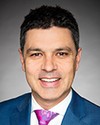
Doug Mavin Commercial Harvester, As an Individual

Thank you, Mr. Chair and honoured members of Parliament, for this opportunity.

My name is Doug Mavin. I am a commercial fisherman with over 40 years in the industry. My family actively participates in nearly all the coastal fisheries. We have also supported fisheries management through survey work and industry associations. Commercial fishing has been the backbone of our family through four generations. Commercial fishing provides fresh seafood not only for our family but also for the world.

We take great care and pride in providing high-quality seafood while practising responsible stewardship of this rich resource. We depend on strong, healthy, well-managed, viable fisheries.

Commercial fishing in B.C. is being directly impacted by the MPA process, particularly in the northern shelf bioregion. In 2019, industry participants came together at our own time and expense to develop a plan that met conservation objectives while significantly mitigating impacts to our fisheries. This was a substantial, well-organized effort undertaken by the marine planning team. We met all conservation targets while reducing impacts to our industry by approximately 75%.

Despite this, the partners in the northern shelf bioregion chose to disrespect this effort in pursuit of their own agendas. B.C. already has measures such as 164 rockfish protected areas, which have never had any form of assessment; 29 glass sponge reef closures equal in size to Ottawa; and other robust measures, such as strict bycatch quotas, world-class fisheries monitoring systems and highly adaptive management plans designed to support and protect our marine resources.

Bycatch quotas are so stringent that they have had the effect of closing large areas to hook and line ground fishing as bycatch exceeds directed catch to such an extent that it has made these areas inaccessible to many groundfish fisheries. Our fisheries have adapted to these measures well. We have learned to adjust and to avoid closed conservation areas and bycatch species to harvest our directed catch. We have world-class logbook data collection and real-time vessel monitoring systems to accurately track our fishing activities.

Unfortunately, the MPA process has chosen to use our data to identify more areas for closure. These are the areas our fisheries have adapted to, where we can still meet our fisheries' objectives for both conservation and harvests. At the same time as our fisheries are being confronted with the realities of the MPA process, we are also confronted with a number of first nations' indigenous protected and conserved areas declared outside of federal processes.

Fishermen are left on their own to deal with this issue. The DFO tells us that these areas are open to commercial fishing, while the first nations proponents threaten us directly with serious consequences if we fish. The DFO and the RCMP have chosen to pursue a policy of appeasement and non-enforcement of commercial fishing rights. In the cases of conflict, the DFO solution is to close those areas, citing a safety concern.

In total, rockfish and glass sponge reef closures, bycatch rules, MPAs and first nations' demands have condensed our fisheries into an ever-shrinking footprint. My business has been directly impacted by crowded fishing grounds and reduced productivity, resulting in increased fishing costs. Our fishing businesses are shouldering the financial burden for a UN-driven agenda supported by the Government of Canada. These and many other decisions by the department continue to wilfully undermine commercial fishing in B.C.

The human cost to our industry is tangible. Young people are leaving our industry in droves at the same time as our largest age cohort is retiring. To be clear, this issue is not a reflection of the state of our fish stocks or the health of our marine ecosystems. It is a direct response to a consistent government policy to undermine commercial fishing in B.C. Nowhere is this more evident than in my own family. Ask any one of my four children, and they will tell you that they love commercial fishing. Unfortunately, none of my children can see commercial fishing as a pursuable career, so for my family, our fishing business and all its knowledge built over four generations of hard work ends with me.

Thank you again for this opportunity, and I welcome your questions.

The Chair Liberal Patrick Weiler

Thank you very much.

Next we're going to go to Colin Sproul for five minutes.

Colin Sproul President, Bay of Fundy Inshore Fishermen's Association

Committee chair and members, thank you very much for this opportunity to share our views.

I appear before you today on behalf of the Bay of Fundy Inshore Fishermen's Association. For 30 years, we have represented owner-operator fishing families on the shores of the Bay of Fundy in Nova Scotia. Our group has a distinguished history of advocating for sustainable fishing practices and community-based fisheries management.

Over this time, our commitment to responsible use of resources has led us to partnerships with many groups in academia and the conservation community. We have a history of co-operation with governments and regulators at all levels, earning us a reputation as a valuable ally on ocean issues. Our members are proud of this legacy and committed to preserving our way of life for future generations of Nova Scotians.

We have significant concerns surrounding the development of marine protected areas. When first summoned to DFO headquarters in Atlantic Canada and presented with the department's plans, we were shocked to discover that areas of interest for the development of marine protected areas had already been identified and settled on.

Two areas in particular encompassed the most economically important fishing grounds for our members: areas they have fished responsibly and sustainably for generations. Exclusion from these fishing grounds would be a death blow to our members' way of life. The fact that these areas of interest within the Bay of Fundy were settled on without fulsome consultation with the Bay of Fundy Inshore Fishermen's Association speaks for itself.

The reason for this exclusion was clear to us: the unprincipled alliance between the department, some Canadian universities and environmental non-governmental organizations, ENGOs. The majority of these ENGOs take significant amounts of foreign funding, then use that money to lobby the Canadian government. Some universities receive massive subsidies from the federal government, then act to produce work that seeks to justify the ideological motivations of the current government surrounding ocean protection. A small group of academics familiar to each other are the dominant players within all three of these groups.

Coastal communities are left wondering whose interests are being represented by individuals who seem to move freely between their jobs as regulators, scientists and lobbyists.

We believe it's important to note that all of Canada's seas enjoy a very high level of protection, which generally exceeds that offered by the creation of marine protected areas in developing countries. Canada's commitments at the United Nations to arbitrary protection levels of 20% and 30% of our seas were made by representatives of these same ENGOs—again, without any consultation with our industry.

Previous governments had seen fit to appoint a [Technical difficulty—Editor] to represent such an important industry at these tables. None have been appointed since 2015, leaving our fishery represented by groups eager to disparage us even though we have some of the best-managed fisheries on earth.

The same behaviour continues to be exhibited by the Department of Fisheries, which seems happy to collaborate financially and otherwise with Canadian and even American ENGOs to unfairly disparage the Canadian fishing industry. Seeing our own tax dollars spent in America to damage our reputation for sustainable fishing in a market so important to us is outrageous. Fish harvesters rightly expect our own government to champion us on the international stage.

Like most of the myriad of problems we see within the Department of Fisheries today, these ones are certainly centred on a lack of engagement and consultation with fishers and their organizations and the undeserved influence of ENGOs. It's time to push pause on the development of MPAs and re-engage with coastal communities to prevent the severe economic damage that will happen, under present plans, to the most important industry in Atlantic Canada.

Trust between our industry and the department on the development of MPAs has certainly been broken. The onus is now on the Department of Fisheries to rebuild that trust.

Thank you, Mr. Chair and committee members. I invite your questions.

The Chair Liberal Patrick Weiler

Thank you very much.

With that, we're going to conclude opening remarks with Glenn Kierce for five minutes.

Glenn Kierce General Manager, Coast Tsimshian Fish Plant Ltd

Thank you, Mr. Chair and members of the committee, for the opportunity to speak today.

My name is Glenn Kierce. I am the general manager for Coast Tsimshian Fish Plant, which is solely owned by the Lax Kw'alaams First Nation. In addition, I'm the general manager of fishing operations for Lax Kw'alaams. I've worked for the nation since 2012, and I've been fishing on this coast for 44 years. I'm a third-generation fisherman. I am a director of the Deep Sea Trawlers Association of British Columbia, a director of the Canadian Groundfish Research and Conservation Society and a member of the groundfish trawl advisory board.

Through these roles, I am actively involved in co-management and decision-making processes that support the sustainable management of our trawl fishery. Fishing isn't just my job. It's my life, my family's history and the backbone of the community. Our nation has managed marine resources sustainably for over 15,000 years, guided by Tsimshian law and a seven-generation planning mindset. Conservation is not something new to us; it's who we are.

Today, I'm not here to argue against conservation. I'm here to talk about how marine protected areas are being implemented, and the very real risks this approach poses to sustainable fisheries, indigenous livelihoods and coastal infrastructure.

At the Coast Tsimshian Fish Plant, we employ 100 people full time. During peak salmon season, that number grows to 170, which is 25% of the community. These are good, family-supporting jobs in a remote community where employment options are extremely limited. Meaningful, stable employment is critically important to community well-being, and it plays a key role in supporting positive social and mental health outcomes in indigenous communities. We are also the only first nations groundfish-processing facility on the north coast. If our plant slows or shuts down, there is no alternative employer or backup plan. Jobs, income and community stability are immediately at risk.

The northern shelf bioregion MPA process includes 17 signatory first nations, yet there are 204 first nations in British Columbia, and many more nations along the coast whose livelihoods are directly affected by these decisions. This MPA network has been developed by only a small subset of first nations alongside a select group of government officials and NGOs, leaving a significant number of indigenous voices unheard. Indigenous participation in Canada's commercial fisheries is substantial, with approximately 20% to 25% of licence-holders and participants being first nations. Decisions of this magnitude risk creating nation-to-nation tensions by privileging some perspectives over others, rather than strengthening inclusive, coast-wide relationships.

We are deeply invested in our sustainable fisheries and want to ensure that they remain viable and accessible so that indigenous and non-indigenous fishing families alike can continue to participate for generations to come. That's why the northern shelf bioregion MPA process is so concerning. This will not just take away livelihoods and food security. It also risks decimating entire indigenous coastal communities.

The groundfish trawl fishery that supplies our [Technical difficulty—Editor] conservation measures in the world. In [Technical difficulty—Editor] that froze the existing fishing area and [Technical difficulty—Editor] like corals and sponges. Today, trawling occurs along less than 6% of the entire B.C. coast. That footprint is permanent. We do not [Technical difficulty—Editor] fisheries are MSC-certified across 16 species, using both bottom and mid-water gear. This certification is global recognition that these fisheries are sustainable, well managed and environmentally responsible. Despite all this, the northern shelf bioregion proposes to remove access to an additional 27% of trawl-fishing areas.

On the Pacific coast, we already have world-class fisheries management. We operate under rigorous science, real-time monitoring, enforceable rules and adaptive management that responds to changing conditions in the ocean. These systems are not theoretical; they are working every day on the water. As a third-generation fisherman with 44 years of experience, I am proud of the fisheries management system we have in place. I believe it is doing an excellent job of protecting sensitive habitats, conserving fish stocks and supporting a healthy, thriving marine ecosystem. That success should be recognized and built upon, not overridden by policies that ignore the strength of the system we already have.

I want to be very clear: You cannot keep taking away access and expect a fishery to survive. When fishing areas are closed, effort doesn't disappear. It creates congestion, safety risks and operational inefficiencies and ultimately undermines the very sustainable goals that MPAs are meant to achieve.

Thank you for letting me speak today to the committee. I welcome your questions.

The Chair Liberal Patrick Weiler

Thank you very much. That concludes our round of opening introductions.

With that, we're going to start our first six-minute round of questions with Mr. Small.

11:20 a.m.

Conservative

Clifford Small Conservative Central Newfoundland, NL

Thank you, Mr. Chair.

I'd like to thank the witnesses for coming forward for this important study.

Mr. Sproul, you've been an exceptional advocate for the fishing industry in southwest Nova Scotia for several decades. The fishing industry is worth close to $1 billion or a little more to your region: to fishing families, suppliers, boat builders and all others in your economy who rely on spinoffs created by the fishing industry.

This committee has sought answers in terms of economic impact, cost-benefit analysis and whatnot from those who advocate for the government's following of the 30 by 30 UN initiative. Have you ever seen an economic impact statement, study or whatnot about the effect that the shutting down of areas to the fishing industry would have on the fishing industry and those who rely on its spinoffs?

11:20 a.m.

President, Bay of Fundy Inshore Fishermen's Association

Colin Sproul

I think Mr. Small's question is a very important one, and the answer is no: The department freely admits, I think, that at this point they don't have a sense of the extreme economic impact from some of the ideologically motivated decisions they continue to make in fisheries management.

[Technical difficulty—Editor] generator in Nova Scotia: its largest export, biggest employer and a bedrock and backbone of the Atlantic Canadian economy. I think that members of the industry rightly expect the government to appreciate those concerns before they move forward, but as detailed in some of the testimony here today, our opinions were excluded not only on the sustainability/conservation side, but also on the economic side.

What we see is that the chief motivation for the development of the MPAs has come from ENGOs, which seem to act as an echo chamber for Liberal government policy. What we see is an attempt by this government to achieve social licence for their ideologically motivated aims on conservation with communities that they certainly have no social licence in.

Let me be clear that the coastal communities I speak for do not support the development of these areas on our most important fishing grounds when it's possible to still protect our oceans and reach our targets in places that aren't so economically important to the fishing industry. It seems like the parallels on the land are that when we protect forests, for instance, we protect old-growth forests, not a place that's very important for forestry.

11:20 a.m.

Conservative

Clifford Small Conservative Central Newfoundland, NL

Mr. Sproul, are you saying that the current government could achieve its 30 by 30 objectives to appease the United Nations by protecting areas that are basically pristine and pure and never fished, versus areas that have been fished and where over the years, as happens with land use, sometimes the damage is hard to repair? To the point you made earlier, how much ocean do you think is out there that's basically never been touched by industry of any form and that's available for 100% protection?

11:20 a.m.

President, Bay of Fundy Inshore Fishermen's Association

Colin Sproul

Yes, we certainly have the space in Canada to reach our UN targets without affecting the economically important fishing grounds. We've seen that same approach used by the United States. During the Obama administration, they protected a huge swath of American ocean without having any effect on commercial fishing. It comes back to the initial consultation period where we weren't asked about areas that we thought would be important to protect, but also, just as important, that would not affect our members' bottom line.

It takes you to another really important point. We have generational knowledge of the ecologically sensitive areas that we believe should be protected: for instance, the nursery grounds of our lobster industry. We were never offered the chance to offer input on which areas we thought were ecologically sensitive before the development of the areas of interest, which seems beyond reason considering our members' generational knowledge of what areas are important.

11:20 a.m.

Conservative

Clifford Small Conservative Central Newfoundland, NL

Could you answer quickly, Mr. Sproul? The time is short.

We've heard testimony from advocates of 30 by 30 marine protection that shutting down areas to fishing will increase opportunities outside of those areas. Do you believe that?

11:25 a.m.

President, Bay of Fundy Inshore Fishermen's Association

Colin Sproul

I want to point out that we have the best managed fishery on earth. The lobster fishery of Atlantic Canada, right now, is the most valuable fishery that has ever existed in history, anywhere on earth, and it's because of organic management from within the industry by fishermen.

The idea that the ocean needs to be protected from us is wrong-headed thinking. Fishing families will always be the best stewards of the resource, and the reason is clear: Generations of our families have relied on it, and we intend to have our children and future generations rely on it. There are no greater stewards of the industry than us.

I totally reject the false narrative that MPAs are needed to protect the ocean from fishing in Canada, where we have some of the most regulated fisheries on earth.

The Chair Liberal Patrick Weiler

Thank you very much, Mr. Small.

Mr. Cormier, you have the floor for six minutes.

Serge Cormier Liberal Acadie—Bathurst, NB

Thank you, Mr. Chair.

First, let me welcome our new colleague, Mr. Chris Bittle, who is replacing Mr. Morrissey today.

I'm going to start with Mr. Sproul.

Thanks for being with us again.

I said to your colleague, Mr. MacPherson, in a previous meeting that you're here so often that I think we're going to have to give you a points card for attending so many meetings. Your input is always welcome.

You talked about the challenges regarding those MPAs, and I think you're talking about the Bay of Fundy. For the proposed MPAs you're talking about, in your opinion, is that just a proposition of some areas that we want to maybe close to fishing? Is this something you will be able to discuss in upcoming meetings with DFO officials and with fishing organizations in terms of what these MPAs will look like? What is the problem you see right now with those proposed MPAs?

11:25 a.m.

President, Bay of Fundy Inshore Fishermen's Association

Colin Sproul

Thank you for the great question.

It comes back to a lack of trust. There's definitely been a broken bridge of trust in the industry between its representative associations and the department. While the areas I'm talking about are proposed areas of interest and have not yet been first ranked for the creation of an MPA, there's no trust within our membership that our interests will be considered at this point.

I've seen MPAs begin to be developed, and fishermen have asked for simple things like whether trap fisheries or hook and line fisheries would still be allowed to be active there and if they would write it in stone for us. However, the department continually deflects from clear answers on that and refuses to put it in writing for the industry. I really think that the members' concerns are all founded in a lack of trust between us and the department.

To rebuild that trust, we need to start over at ground zero and be able to offer our input about where we think areas of interest should be. I'll point this out again. I think my members recognize that there are ecologically important areas where we don't fish within our own fishing grounds, but we know they're important for nursery grounds and for other important life-cycle processes that we'd like to see come forward.

I would say that the answer to your question is to rebuild that trust.

Serge Cormier Liberal Acadie—Bathurst, NB

In terms of trust from your members, when you arrive at a meeting, the officials put a map on a table and say, “Hey, guys. By the way, this zone is where we want to close to fishing.” Is that what I'm hearing from you? Is that how it happens in meetings?

11:25 a.m.

President, Bay of Fundy Inshore Fishermen's Association

Colin Sproul

That is how it happens.

The other thing that's important to us—and perhaps the most ominous—is this. When we arrive at those tables, we see representatives of ENGOs that are getting almost the entirety of their funding from American sources, sitting at the table with the same stakeholder status that we have. They have already been given an opportunity, privately, to offer input before the meeting even happens.

When I go home and search the World Wide Web for the board of directors for those groups, I frequently see that they're on a who's who list of former staffers from Justin Trudeau's government. It leads us to question their motives.

Serge Cormier Liberal Acadie—Bathurst, NB

Thank you, Mr. Sproul.

Mr. Mavin, I'm not very familiar with B.C. fishing, but my dad was a fisherman on the east coast all his life.

I think you mentioned it in your speech, but what kind of fishing enterprise do you have?

11:30 a.m.

Commercial Harvester, As an Individual

Doug Mavin

Presently, I commercially fish salmon and have done for years. I've been active in herring fishing and halibut and groundfish hook and line, including rockfish species and lingcod. I also commercially fish prawns.

Now that I'm a little older, I don't fish as much as I used to. I used to spend approximately seven months of the year at sea.

Serge Cormier Liberal Acadie—Bathurst, NB

Are you saying that some of those zones in the B.C. area are closed to some of your fishing?

11:30 a.m.

Commercial Harvester, As an Individual

Doug Mavin

Yes, very much so.

Serge Cormier Liberal Acadie—Bathurst, NB

You were also talking about the bycatch, and you said that you managed to adapt to it. How did you do that? People who know the industry know that it is a little difficult to manage when you fish for a certain species and you catch so many others. How did you manage to make that happen?

11:30 a.m.

Commercial Harvester, As an Individual

Doug Mavin

In B.C. currently, there are areas that most of us know. Our industry is highly collaborative. We fishermen co-operate with each other tremendously because we have to. It's out of necessity. In the old days, we used to keep secrets, but that doesn't work because we have to assist one other to harvest our catch. We give one another information on where we can fish and where we can't fish.

There are now tremendous areas in B.C. where the volume of bycatch is so high and the stocks are so strong that you can't access your directed catch there. As an example, with halibut, to fish halibut you have a quota to catch, but you have a very small and very tightly regulated bycatch of rockfish to work with, and that precludes a tremendous amount of fishing grounds. What has happened is that our halibut fishery has become concentrated onto the fishing grounds where we can actually get the job done and work within the rules.

The Chair Liberal Patrick Weiler

Thank you very much, Mr. Cormier.

Mr. Beaulieu, welcome to the committee. You have the floor for six minutes.