Evidence of meeting #12 for Health in the 45th Parliament, 1st session. (The original version is on Parliament’s site, as are the minutes.) The winning word was immigration.

A video is available from Parliament.

On the agenda

Members speaking

Before the committee

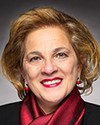
Marjorie Michel  Minister of Health
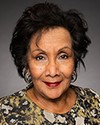
Lena Metlege Diab  Minister of Immigration, Refugees and Citizenship
Baird  Senior Assistant Deputy Minister, Strategic Policy, Department of Citizenship and Immigration
Orencsak  Deputy Minister, Department of Health
Park  Assistant Deputy Minister, Economic Programs, Department of Citizenship and Immigration

The Chair Liberal Hedy Fry

I call this meeting to order.

Welcome to meeting number 12 of the House of Commons Standing Committee on Health.

We recognize that we meet on the unceded territory of the Algonquin Anishinabe.

Today's meeting is taking place pursuant to the Standing Orders.

I would like to remind participants of the following housekeeping points. Please wait until I recognize you by name before speaking.

I'll remind you that all comments should be addressed through the chair. For members in the room, if you wish to speak, raise your hand. The clerk and I will try to see it early enough that we can recognize you.

Pursuant to the motion adopted on Tuesday, September 23, 2025, this committee will resume the study of the impact of immigration policy on health care and barriers to integration internationally.

Now I would like to welcome our witnesses.

Welcome to the Honourable Marjorie Michel, Minister of Health, and with her the officials from Health Canada: Greg Orencsak, deputy minister; Jocelyne Voisin, senior deputy minister; and Michelle Owen, executive director.

Welcome also to the Honourable Lena Metlege Diab, Minister of Immigration, Refugees and Citizenship, and with her the officials from the department: Louise Baird, senior assistant deputy minister, strategic policy; and Suyoung Park, assistant deputy minister, economic programs.

Ministers, you each have five minutes. This will be a continuous meeting. After your five minutes, we'll be open for questions and answers. I will give you a one-minute and then 30-second shout-out, and I do mean literally a shout-out. You can then wrap up what you have to say.

Thank you very much.

I will begin with the Minister of Health.

Minister Michel, you have five minutes, please.

11:05 a.m.

Papineau Québec

Liberal

Marjorie Michel LiberalMinister of Health

Thank you, Madam Chair.

Good morning, members of the committee.

Thank you for inviting me today, and thank you for the important work you are doing as a committee.

Thank you for the opportunity to speak as part of the study on the international accreditation of internationally trained health professionals and their integration into the Canadian health care system.

Canada's strength comes from its people, and our health is the cornerstone of our success. Across the country, our health care system continues to face unprecedented workforce pressures. While the supply of health professionals is growing, demand is rising even faster. Many internationally educated health professionals want to contribute their skills, but they face lengthy, costly and complicated credential recognition processes. About one-third of internationally educated health professionals in Canada are employed outside their field.

This represents both a workforce challenge and a missed opportunity to strengthen Canadians' access to health care. It's also a call to action for all levels of government. Together, we can do more to help foreign-trained professionals put their skills to work for Canada more quickly and effectively. Our government is taking action on that.

In the recently tabled budget 2025, we announced the creation of the foreign credential recognition action fund, to which we will allocate $97 million over five years, starting in 2026-27. This fund will aim to help skilled immigrants get their professional credentials recognized more quickly, particularly in high-demand sectors such as health care and construction. This is done in collaboration with the provinces and territories. The goal is to unlock the economic potential of immigrants by reducing the understaffing caused by barriers to credential recognition.

This is work the federal government must do in partnership.

I recently met with my provincial and territorial counterparts at the health ministers' meeting, where we discussed our efforts to remove barriers and help more internationally educated health professionals join the workforce. Provinces and territories have also been working to develop innovative models for foreign credential recognition processes in their own jurisdictions, and we are seeing good results across the country.

The federal government is currently signing agreements with colleges for internationally educated health professional projects. Alberta has been seeing many new foreign-trained doctors joining their workforce. B.C. is now streamlining doctors and nurses from the U.S. Ontario also has also a similar program. I could give many other examples of what we can do when we come together as a country.

Throughout our history, we have opened our doors to people from abroad.

The Chair Liberal Hedy Fry

You have one minute.

Marjorie Michel Liberal Papineau, QC

Canada embodies the values that the world aspires to. Because we are Canadians, we take care of each other and we look out for each other. When Canadians are healthy, they can take care of their families, contribute to their communities and keep our economy strong.

By working together, we can help more internationally educated health professionals put their skills to work faster and more efficiently across the country, and ensure that Canadians get the care they need, when and where they need it.

The Chair Liberal Hedy Fry

Thank you very much, Minister.

I now go to Minister Diab.

You have five minutes, please, Minister.

11:10 a.m.

Halifax West Nova Scotia

Liberal

Lena Metlege Diab LiberalMinister of Immigration

Thank you, Chair.

Good morning, colleagues.

Canadians expect timely access to quality health care. Across the country, there are workforce challenges to finding doctors, nurses and other providers. While health care delivery falls to provinces and territories, immigration supports those efforts by helping to bring skilled professionals into the system faster. Immigration alone will not solve these challenges, but it is a vital part of the solution—strengthening care for Canadians.

11:10 a.m.

Conservative

Dan Mazier Conservative Riding Mountain, MB

I have a point of order.

The Chair Liberal Hedy Fry

We have a point of order.

Yes, Mr. Mazier, go ahead.

11:10 a.m.

Conservative

Dan Mazier Conservative Riding Mountain, MB

ParlVU is not recording this meeting. The public's not seeing this.

The Chair Liberal Hedy Fry

Minister, excuse me. We'll suspend until we find out what's going on.

The Chair Liberal Hedy Fry

I want to inform the committee that, apparently, this is happening with a lot of committees this morning. It's the slowness of the Internet. However, I gather that this is still on television. It may not be on ParlVU, but it's on television, so people can see it if they look.

I think we will go back. I think the Conservatives have said they're okay with that. Is the Bloc okay with that, Madame Larouche? Okay. Thanks.

All right, we're resuming. Minister Diab, I'm going to start with you. You had just a couple of seconds, so it's back to five minutes. Thank you.

Lena Metlege Diab Liberal Halifax West, NS

Thank you, Madam Chair.

Good morning, committee colleagues.

Canadians expect timely access to quality health care, but across Canada, we are facing workforce challenges to finding doctors, nurses and health care providers. While health care delivery falls to provinces and territories, immigration supports those efforts by helping to bring skilled professionals into the system faster. Immigration alone will not solve these challenges, but it is a vital part of the solution—strengthening care for Canadians.

Our government's mandate is clear: to attract the world's best talent while maintaining immigration levels that are sustainable and suited to Canada's capabilities.

In health care, this means working with provinces and territories to attract and retain the professionals that Canadians rely on every day.

Both temporary and permanent immigration pathways help to meet those needs. For example, through the global skills strategy, my department helps Canadian employers bring in highly skilled workers faster. Originally designed for the tech sector, it also helps to fill critical health care roles more quickly, from doctors and registered nurses to their spouses, who benefit from expedited work permit processing.

Thousands of skilled workers who came through this program are now permanent residents, contributing to our workforce and our communities. Our new international talent attraction strategy builds on these efforts, positioning Canada to meet strategic labour market needs and helping employers recruit high-skilled workers faster in sectors like health care, construction, emerging technology and artificial intelligence. This focused approach brings global expertise where it's needed most, which is to strengthen Canada's workforce and economy.

International students play a critical role in Canada's health care talent pool. Nearly 60,000 international students are currently enrolled in a health care-related program.

Through the postgraduate work permit program and other temporary work streams, many are gaining Canadian experience and choosing to stay here, contributing their skills and knowledge to communities across the country.

Federal and provincial permanent residence programs are helping more health professionals to make Canada their home. Over 11,000 arrived in 2024 and another 8,000 so far this year. Express entry and provincial nominee programs are building a stronger, more resilient health workforce across the country. With higher provincial nominee admission targets in 2026, provinces are positioned to welcome practice-ready health professionals to support their communities.

Attracting people is only part of the equation.

My department is working with Employment and Social Development Canada, provinces, territories and regulators to align immigration pathways with credential recognition.

The regional licensing model adopted in Atlantic Canada shows that collaboration reduces barriers and helps qualified professionals start working more quickly.

We’re taking a balanced approach to immigration—one that strengthens our economy, that respects community capacity and that restores balance and confidence in the system. That includes supporting francophone communities by welcoming more health care professionals who live and work in French.

The Chair Liberal Hedy Fry

You have one minute.

Lena Metlege Diab Liberal Halifax West, NS

Every nurse, doctor and health professional who chooses Canada strengthens our health system and the communities they serve.

Thank you very much.

I look forward to questions.

The Chair Liberal Hedy Fry

Thank you very much, Minister.

Now we go to the question and answer session. The first one is a six-minute round, and the six minutes includes the question and the answer. If everyone can be as succinct as they can, we can get in a whole lot of questions easily.

11:20 a.m.

Conservative

Dan Mazier Conservative Riding Mountain, MB

Just before the clock starts—

The Chair Liberal Hedy Fry

Pardon me, but is this a point of order, Mr. Mazier?

11:20 a.m.

Conservative

Dan Mazier Conservative Riding Mountain, MB

It's just a point of clarification. Can both ministers be here for the full two hours?

Lena Metlege Diab Liberal Halifax West, NS

I will be here until one o'clock.

The Chair Liberal Hedy Fry

Yes. I sent you a note saying that, Mr. Mazier.

11:20 a.m.

Conservative

Dan Mazier Conservative Riding Mountain, MB

Things change. I just wanted to get confirmation.

Thank you very much.

The Chair Liberal Hedy Fry

We will begin for six minutes, please, with Mr. Mazier from the Conservatives.

11:20 a.m.

Conservative

Dan Mazier Conservative Riding Mountain, MB

Thank you, Chair, and thank you, ministers, for coming here today.

Who is responsible for ensuring that immigration levels match health care capacity? Is it you, Minister Diab, or is it Minister Michel?

Lena Metlege Diab Liberal Halifax West, NS

Certainly, as the Minister of Immigration, Refugees and Citizenship, my role is hopefully clear and understood by now. It is to manage our immigration system. We just put a levels plan together, which is done on a yearly basis. We have targets for permanent residents and for temporary residents. We now have an attraction strategy and francophone targets.

11:20 a.m.

Conservative

Dan Mazier Conservative Riding Mountain, MB

Who is responsible, though, for the immigration levels to match health care capacity? Is it either one of you?