What I want to do is finish the questioning.
Mr. Genest, if you could get right to your question fairly quickly, I'd appreciate it.

Evidence of meeting #15 for Veterans Affairs in the 41st Parliament, 1st Session. (The original version is on Parliament’s site, as are the minutes.) The winning word was legion.
A recording is available from Parliament.
10:15 a.m.
Conservative
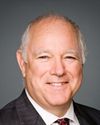
The Chair Conservative Greg Kerr
What I want to do is finish the questioning.
Mr. Genest, if you could get right to your question fairly quickly, I'd appreciate it.
10:15 a.m.
NDP

Réjean Genest NDP Shefford, QC
My question is for the representatives of the department.
When are you going to answer the people from the Legion and those in Mr. Laidler's program about their requests for support in connection with post-traumatic-stress syndrome? Will you do it next year, in five years, in 16 weeks? When will you let them know that you've heard them?
10:15 a.m.
Director, Mental Health, Department of Veterans Affairs
No, I actually commit to following up with the department on that issue.
10:15 a.m.
Conservative
December 1st, 2011 / 10:15 a.m.
NDP
Réjean Genest NDP Shefford, QC
Some information is conveyed to veterans concerning services for post-traumatic-stress cases, but how can members of the family of someone in the military -- there are both men and women in this field -- get in touch with you if they suspect that this person is suffering from psychological problems? Is there any publicity, any information about this?
10:15 a.m.
Operations Coordinator, Veterans Transition Program, University of British Columbia
Right now, because it has been a research project and they have been developing and evaluating it, we haven't been doing a lot of outreach. We are in that position now, so a lot of our funding will be going toward getting veterans in the communities and finding people to come into the program.
On the family members, people often come in because their spouses say they need to get some help because things aren't going right. So it is affecting the family, and that's how they are pushed into it many times.
We have a spousal component to our program, where spouses come in for a one-day session separately with a therapist. They sort of validate their common experiences. We've had both male and female spouses, including one from a same-sex marriage, where a man came in and was accepted by the other wives and girlfriends in the group.
10:15 a.m.
Conservative
10:15 a.m.
Conservative

Rob Anders Conservative Calgary West, AB
Thank you very much.
My question is directed to Mr. Laidler.
I know some other people who suffer from post-traumatic stress disorder. What were the experiences that you saw or discussed with the other veterans in this setting that made you understand and appreciate that you also suffered from it? Were there things that allowed you to heal or deal with some of those issues and helped serve as some form of rehabilitation?
10:20 a.m.
Operations Coordinator, Veterans Transition Program, University of British Columbia
Yes, I'd be happy to share my personal experience here. I have done it before in the media and also in a documentary called War in the Mind. Our program was featured for 12 minutes in that documentary on TV Ontario. It's still available to be seen online.
One of the big issues that plagued me was something that caught me completely off guard. While training to go overseas, we expected to engage and fight the Taliban, and that's what I thought we'd be doing. One of the roles I had there, along with guarding supply convoys, was intermittently guarding the front gate of Kandahar airfield. While doing that, we saw civilian ambulances come through.
A young girl about 14 years old, who was forced into a marriage she didn't want to be in, was in one of those civilian ambulances. As her only option she decided to light herself on fire. Her entire body was covered in burns. I went up to search the vehicle.
It's our policy on the front gate that we call in bomb-sniffing dogs to make sure there are no explosives and it's not some sort of booby trap. I called, and the civilian contractors took half an hour to arrive at our post. I had to sit behind my machine gun holding her in the civilian ambulance, which was simply a van with its seats taken out. There was no air conditioning.
I remember watching the sunlight on top of her body. I could think of the agony she must have been going through and found myself helpless and trapped. I wished so many times—I'd think about it over and over—that I had just given her the all-clear. I should have searched her by hand. I should have brought her on to camp to get the medical services she needed. I would often think about that feeling of helplessness. It would come in my dreams; it would come in the middle of my writing an exam. I would ruminate about the “what ifs”, and using that much mental energy took away from my being productive.
Coming into the program, I didn't feel that I had any right to have PTSD or be affected by my tour because I wasn't the front of the front lines in the battle group. I was guarding supply convoys. Having other members who were in those front-line positions say they had never seen anything that bad, that was really messed up, gave me permission to start addressing it. They were the senior veterans. These are veterans not just from Afghanistan, but Korea, Cyprus, and other places. They said this was really serious.
If we take it a little further to talk about the actual process of change in our program, we go back and revisit that experience. It's what Dr. Marv Westwood calls a therapeutic enactment. He wrote his book on this. We act out that situation, and I acted out that situation. I went back and spoke to that woman, played by another member of our group. We resolved it. She got to say what she needed to say to me and I got to say what I needed to say to her. I relived that experience in the way I thought it should have been lived.
By doing it, not just talking it out but physically moving around—this is based on a lot of research by van der Kolk that trauma is not talked into the body and therefore it cannot be talked out. After acting it out and having it witnessed by others, and at the end having ten men turn around and say that really wasn't my fault, that I had done all I could, I started to see this in a whole new light. I started to let it into me and forgive myself that, yes, I'd tried everything I could. That made a huge difference to me.
Unfortunately, the woman did die later on in camp.
I saw three women like that come through our front gate. It reaffirmed exactly why I went over there: to protect people. It turned out to be not to fight the Taliban but to protect the civilians and try to bring a better life to them there.
[Applause ]
10:20 a.m.
Conservative
The Chair Conservative Greg Kerr
I think everybody agrees it's a rather dramatic point to wrap up on.
I do want to thank you all very much for participating. I also want to point out that if you have additional information you would like to send to the committee, we'd appreciate it, because this study is going to continue.
Thank you all for the work you do.
We will take a break for a couple of minutes and then go back into business.
[Proceedings continue in camera]