Bill C-2 (Historical)
Yukon Environmental and Socio-economic Assessment Act
An Act to establish a process for assessing the environmental and socio-economic effects of certain activities in Yukon
This bill was last introduced in the 37th Parliament, 2nd Session, which ended in November 2003.
Sponsor
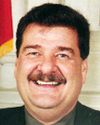
Bob Nault Liberal
Status
This bill has received Royal Assent and is now law.
Elsewhere
All sorts of information on this bill is available at LEGISinfo, provided by the Library of Parliament. You can also read the full text of the bill.
Supply
Government Orders
October 23rd, 2003 / 4:05 p.m.
See
context
Bras D'Or—Cape Breton
Nova Scotia
Liberal
Rodger Cuzner Parliamentary Secretary to the Prime Minister
Mr. Speaker, it is indeed a pleasure to join in the debate today on this opposition motion. May I note off the top that I will be splitting my time with my very capable colleague from York West.
Certainly I will never pretend to have a vast or deep technical appreciation for the complexities of the procedures of the House. However, I assure members that any light that I would shed would be pale in comparison to the comments in the intervention that was made earlier in the debate from the government leader of the House.
I will not be quoting from Marleau and Montpetit or citing passages from Beauchesne's. I believe as far as the technical aspects of the motion, they were very much addressed during the presentation by the government House leader.
I would like to make comments about the current Prime Minister, but I will not reach back too far and try to celebrate the 40 year career of our current Prime Minister and his commitment to public life. I will leave that to the pundits and the biographers and let him take his rightful place in history, which I am sure will be smiled upon by all.
I would like to talk about events that have occurred recently and more, the recent initiatives shown by this Prime Minister, including some of the brave, decisive decisions that have been made while he has been on his watch. He has presented legislation, rendered opinions on everything in our day to day activities in the House that have really made Canada a better place to be and one of which all Canadians can be proud.
I must make note first of some of the comments that have been made on the other side of the House during the course of this debate. They would like to think of late that things have slowed down in the House and that the work of the government is not being done. Nothing could be further from the truth.
Since 2002, over 55 pieces of legislation have come forward. Of those, 22 have been passed by the House, the Senate and have received royal assent. We really should celebrate some of this significant legislation.
I look at Bill C-2, the Yukon Environmental and Socio-Economic Assessment Act, Bill C-5, the act respecting the protection of wildlife species and species at risk in Canada and Bill C-12, an act to promote physical activity in sport. That is the first piece of sport legislation that has cleared this House since the late 1960s. Bill C-44, an act to compensate military members injured during service is legislation that addresses some obvious inequities in how we deal with members of the military who have sustained serious injury and debilitating injury.
Of late we have had a tough time as a country. We have to look at some of the things we have experienced over the last 12 months such as SARS, mad cow and the forest fires and floods in western Canada. My home province of Nova Scotia just suffered the effects of hurricane Juan. We have had our own array of difficulties and none through any cause of our own. We have been very fortunate. Because of our financial situation, we have been able to offer assistance. We have been able to move in and make decisive, benevolent moves to help in each of those areas.
The pain is far-reaching on several of those issues, but certainly the federal government has been there. Had we not been in good financial stead, then perhaps we would not have been able to assist as well as we did.
Obviously, on our financial house, everything comes back to the economy and what has gone on with it. Sometimes as Canadians we suffer from a short memory. It is convenient not to remember back to 1995 or not look back and remember when this country operated with a $48 billion deficit. The state of the books as of the mid-1990s was deplorable. We were close to being recognized as a third world nation. We just could not continue as a country.
Under the leadership of our Prime Minister, a vision was set. If we could get our financial house in order, then we could to reinvest in the social programs, those programs that Canadians hold so dear. That is what in fact took place. Cuts were made, and, yes, every Canadian shared in the pain of those cuts. However they were imperative. We had to lasso the deficit and gain control of our financial well-being. That was done in the mid-1990s.
Since then we have been able to reinvest. Our economy continues to grow and continues to strengthen.
Since 2002, 612,000 jobs have been created under the Prime Minister, two-thirds of them full time. While other members of the G-7 continue to experience huge difficulties with their national budgets, we are firm on the controls of the budgets here with the Government of Canada.
From 1997 to 1998, Canada became a deficit free country for the first time in 30 years. In the year 2000 the recorded surplus was $12.3 billion. In 2003 the government under, the Prime Minister's leadership, recorded its sixth consecutive surplus budget. In doing so we have applied $52 billion to the national debt. That alone this year will save the people of Canada $3 billion in interest payments on that national debt, which is significant and that has to be noted.
It is great to talk about the big numbers and about the national picture in terms of our financial position. Let us bring it down and let us talk about what has been accomplished at the grassroots for the average Canadian. How have they benefited from the leadership and the stewardship of the Prime Minister?
I remember that it was not that long ago, two or three years, when we all talked about the brain drain and the loss of our best and our brightest as they moved across the border to seek employment in the States. The government saw this as a problem and the Prime Minister saw this as a problem and part of his vision was to invest in innovation and research.
By doing so we were able to keep those students and professors in Canada, to have them study here and perform their research here. What we have seen is really a shift, where now the drain is coming from the States. These people are coming back to Canada or they are staying in Canada and we are attracting some of the best and brightest minds from other countries.
I can take that down to a personal level. I see the investments that have been made in the universities in my area, St. Francis Xavier and the University College of Cape Breton. They are benefiting from programs such as the national research chairs, the Atlantic innovation fund, those types of investments. We are keeping those kids here.
I see the reinvestment in health care of $34.8 billion following the Romanow commission. We have an MRI machine in Sydney. We have digital x-ray machines in Inverness and in Richmond County. People can get x-rays which can be digitized, then sent and read by specialists anywhere in the world. That was not available two years ago.
I see improvements in infrastructure in my home communities, in Birch Grove and in St. Peter's through the Canada-Nova Scotia infrastructure program. Tomorrow I will attend tomorrow the opening of a water treatment plant in Glace Bay, where a $10 million investment by all three levels of government will provide clean water to the residents of Glace Bay. I am very happy to be part of that announcement.
I could talk about species at risk legislation that is important to the people and Kyoto that will secure a healthy environment as we go forward to the future.
What I would like to finish on is the Prime Minister's guidance and leadership through the Iraqi crisis. He took a brave, strong and principled position throughout the Iraqi crisis, identifying that Canada stood as a sovereign nation, much to the criticism of the official opposition. When we look at the polls now, well over 70% of Canadians know that he did the right thing.
Our Prime Minister has provided great leadership in this country, and well beyond this motion today, he will continue to provide that leadership to the people of Canada.
Ted White North Vancouver, BC
I hear the parliamentary secretary interrupting again and crying out and asking how many bottles of champagne there are at Stornoway. Obviously I do not have an intimate knowledge of the wine cellar at Stornoway, but I would expect the Leader of Her Majesty's Official Opposition, just as I would expect the Prime Minister, to have an appropriate amount of appropriate liquors, wines and foods for the times when he entertains heads of state and important people from around the country.
The leader of my party has an important job to do as Leader of the Official Opposition and it is entirely appropriate that he have the correct tools to do his job. Part of that toolbox involves the wine cellar at Stornoway for the sorts of events that he might hold. He has to interact with the movers and shakers of the business community of the country, with international heads of state and with important people who are interested in the political process and who may want to make representations to him about the way the government is handling the portfolio.
Frankly, if the minister over there or in fact any of the members on that side think they can rattle me by throwing these things at me, they are completely wrong because I feel perfectly comfortable with the positions we take on bills.
I want to get back to fundraising. Raising money eyeball to eyeball from individuals is the way the Canadian Alliance has always done it. We have been very comfortable with that and we would have been happy to continue to work under those rules. Even the 25% average that we have collected from corporations over the past five years, most of it was from small corporations giving $1,000 or less, which is the amount allowed in the bill anyway. When we look at those small contributions, the $1,000 to $1,100 amounts, they are often from mom and pop-type businesses that give a corporate cheque because their accountant only decides at the end of the year whether the money will go under their individual incomes or under corporate spending.
That was one reason that our party supported the $1,000 figure for corporate donations, even though, on principle, we were not opposed to the idea of no political donations. We felt it facilitated individual donations to have that small limit there. I am not sure if it will necessarily stand up to a charter challenge but, nevertheless, the concept is not particularly offensive to us.
As I mentioned, the Canadian Alliance has always raised its money directly from its supporters. When I joined the Reform Party back in 1987 it was very small party and it did not have the benefit of tax deduction status. We had to start from nothing with nothing and within 10 years we became the official opposition in the Government of Canada. That was a big achievement because a party needs a lot of passion from supporters behind it to raise the money to achieve that.
I am actually very disappointed in the bill that the government did not accept some of the recommendations that I made to make it easier for small parties to get started. One of those recommendations was the 50 candidate rule.
The government has consistently tried to prevent parties from having registered status, tax receipt status, by requiring them to run 50 candidates in ridings in a general election. The fact is that when the Reform Party first started we could not do that. This is unfair. It penalizes small parties. The fact is that a party needs 12 members for recognition as a party in this place,
During the hearings on Bill C-2, which was the overhaul of the elections act in 1999 and 2000, the committee, on which I was a member, had representations from most of the small parties operating in this country, the Green Party, the Communist Party, a whole list of them, and I had discussions with them.
There actually was a court case in Ontario that ruled that a party was actually two persons and that running two candidates was sufficient. Even the small parties agreed that was going to the other extreme from the 50 candidates.
Our committee reached an agreement that it should be 12 candidates. I went to the minister with that and said that in order to avoid any more tax challenges, which have already cost taxpayers tens of millions of dollars fighting a ridiculous fight, why do we not make it 12 candidates. I told the minister that all the small parties had agreed to that number, that we could be put it into Bill C-2 and the issue would be finished. There would be no more court cases. The minister was absolutely bullheaded and would not do it. This fight has continued on and will go all the way to the Supreme Court and cost us an absolute fortune.
Bill C-24 gave us the opportunity to revisit the issue. I tried in vain to get the minister to go back to this and change it to 12 members but he would not do it. I cannot help but feel that he has not properly assessed the risk here and that he just does not care about taxpayer money. He seems oblivious to the fact that he is wasting millions of dollars fighting these battles which he cannot win.
One of the other battles in which he is currently involved and one which he cannot win is the one having to do with third party advertising. This is the right, in a free and democratic country, for third parties, that is people outside the political process, to bring up issues and spend money on supporting candidates or issues during election campaigns completely outside the electoral process.
The government has fought that for at least 15 years. First it was the Tory Party and now it is the Liberals. This has been ongoing. The minister has spent tens of millions of dollars fighting against this third party advertising which the courts keep striking down. His argument is that because of a ruling in Quebec, which had to do with the Quebec referendum and that there should be spending limits on the yes and no side in a referendum and no third party interference, that this is justification for applying the same rules to an election.
The fact is that is faulty logic. A referendum has a yes and a no question on the ballot. A person either votes yes or no. There is no other issue.
If a person gives some money to a yes side and some money to a no side to fight the battle leading up to voting day, I think most people, and perhaps all people, would agree it is entirely fair to then exclude third parties from that. Then it becomes unfair. If we want a fair fight, then we allow the yes side and the no side to fight fairly with limitations.
When this is applied to an election, an unlimited number of issues will come to the fore during an election. Political parties will not bring up the things they do not want to talk about. Therefore, it is only fair that third parties be allowed to intervene and spend some money on themselves.
Before I go on, Mr. Speaker, might I ask for unanimous consent of the House to split my time with the member for Surrey Central. If there is unanimous consent for that, I will split my time; otherwise I will not.
Canada Elections Act
Government Orders
June 10th, 2003 / 5:40 p.m.
See
context
Glengarry—Prescott—Russell
Ontario
Liberal
Don Boudria Minister of State and Leader of the Government in the House of Commons
Madam Speaker, it gives me pleasure to speak on the third group of amendments. I want to start by commenting on the last suggestions made by the hon. member who just spoke. He referred to Bill C-2, which I also sponsored. His colleague from North Vancouver sat on the committee when we dealt with this bill.
According to him or whoever wrote his speech, the bill tightens the elections rules in a way that is too tight. In other words, it does not give opportunities to smaller political parties. This is revisionist history at its best, because of course everyone who was around here after the 1993 election remembers that the first set of amendments we made to the Elections Act, after our government came to power, was a bill sponsored by a then Reform MP to tighten up because marginal political parties were getting a subsidy. The bill was under the name of Ray Speaker, I believe, and it had to do with eliminating the subsidy to a group that called itself the Natural Law Party, because it was a fringe group and not a political party in the traditional sense of the definition. It served to do just that.
Whoever wrote his speech failed to take that into account. The hon. member should go back to him or her and ask the writer to read Hansard . Hansard is good stuff. It tells us all kinds of useful information, particularly about what we did ourselves. That is always useful.
He may also want to take the transcript of the Standing Committee on Procedure and House Affairs. The then chairman of the committee, the hon. member for Kingston and the Islands, was just excellent at chairing that committee. So excellent were his skills that he is now the Speaker of the House of Commons. It was at this committee that we did the work at the initiation of a Reform, now Alliance, MP. So much for that.
I would now like to speak to Motion No. 12. I agree with the member who just spoke. The amendment proposed by the New Democrats simply does not work. Incidentally, I proposed this amendment following a speech by a colleague of the hon. member opposite, the member for North Vancouver, who indicated that there was a flaw.
He was right. This flaw did exist. If there were no receipts for funds collected by riding associations since 2000, we would not know what to do. Before 2000, fine, there is a type of grandfather clause. However, for money collected since 2000, we have to know where it came from, but there was no rule saying that we had to know where it came from, so we did not know.
Which is why he was right to raise this point. The member for Edmonton—Strathcona is quite right when he says that this motion moved by our colleague from the New Democratic Party does not work.
If this motion were to be carried, there would be thousands of dollars in riding association accounts that would go nowhere; they would be in a sort of limbo, because it would be impossible to track them. For this reason, we cannot agree to the amendment proposed by my colleague.
I thank all members for their contributions to report stage. I ask them all to vote for Bill C-24.
Don Boudria Glengarry—Prescott—Russell, ON
Mr. Speaker, that was not a very serious question asked by the hon. member. We are supposed to be discussing this morning why time allocation at this stage of the bill is required. Instead we have these questions which are not really serious and it surprises me because the member is usually a very serious person, particularly as it pertains to election laws. I will be the first to recognize some of his valuable contributions. We do not always agree on election laws, but on Bill C-2, which we did before, he made a number of suggestions which were constructive. Even on this bill, which he also disagrees with, he has been helpful from time to time. But having him rhyming off what he perceives to be so-called scandals and to say he wants my response to that, it of course it has nothing to do with the issue before the House, and it has nothing to do with anything because they are largely in his mind.
Canada Elections Act
Government Orders
June 9th, 2003 / 5 p.m.
See
context
Glengarry—Prescott—Russell
Ontario
Liberal
Don Boudria Minister of State and Leader of the Government in the House of Commons
Mr. Speaker, I want to take a moment to speak to the second group of amendments.
I have listened attentively to the speech just given by the hon. member. I know he feels very profoundly about his constituents. I know he works very hard for them. However in his speech he has not stated correctly the position of all of us in the House.
That being said, I will be the first to admit that he works hard for his constituents. I remember last summer when we had a crisis of another kind in his part of the country. He and I were speaking to each other during the summer months from our respective homes, working on such things as the Hay West initiative. I know how hard he and another member from Saskatchewan worked.
The Saskatchewan farmers were in my office last week. Again, we were discussing not only the problems they have now, which are very real and very serious, but we were also discussing the issue of last year in which constituents from my constituency, your constituency, Mr. Deputy Speaker, if I can address you as such for the purpose of identifying your constituency because your constituents were very helpful, and those from a number of areas.
I do not agree with some of the things that are being said now. The issue of the legislation in the House and the issues of the overall agenda of the government are not identical. Obviously a minister negotiating with a province to obtain help for a group of people is not necessarily a legislative initiative. Where the two coincide is in question period where members, opposition members in a greater number but government members too or government supporting members, question the government to ensure that it does what is best for Canadians. That is done by question period. That is done by the statements that we make in the House of Commons. That is done by the private members' initiatives that people produce from time to time on a whole variety of issues and so on. That is done by the committee work that we all do around here. Countless committee reports are tabled in the House of Commons. Issues are discussed. Committees increasingly travel throughout the country and listen to Canadians.
You and I, Mr. Speaker, were just recently in the U.K. looking at what its Parliament does, and the same in Scotland. I think everyone who went there came to the conclusion that although the U.K. Parliament does some things better than us, our committee system is by far superior to its committee system. That is much to the credit of members on all sides of the House in terms of the good work they do.
The issue of marijuana legislation is not one that somehow interferes with how ministers are trying to help out with issues, whether it is SARS, the BSE issue in agriculture or anything else. A bill was introduced and put on the Order Paper by the minister. We have not yet debated it, so obviously it has not taken debating time away from anything else. That is the marijuana bill.
In terms of the bill that is before us today, Bill C-24, and the amendment that we are discussing at the present time, it is designed to make this great institution even better. I do not apologize for that. I think it ultimately serves all Canadians better when the legislation that governs how we are elected is better.
I feel that this legislation will improve our system. In 1973-74 there was no legislation on political party financing. Later there were strict laws on spending limits. I will use my case as an example since it is the one I know best. I come from a socio-economic background where it would have been impossible to become a member of parliament a generation ago. Yet, today I have the opportunity to serve my country.
Who would have thought that a busboy at the parliamentary restaurant, who dropped out of high school, would become a member of parliament let alone a minister or Leader of the Government in the House of Commons?
Yet, I had this opportunity. I may have worked hard, I may have been lucky, but for the most part it is the law that allows me to be here because I did not have to be rich to be a candidate. It was not a prerequisite as it is in some democracies, or so-called democracies.
Our neighbours to the South hold some great democratic values for which I congratulate them. But they are still not well endowed when it comes to democratic values. My test of democracy is not, for instance, met by the news that Senator Hillary Clinton spent the equivalent of what is spent by all political parties in Canada for the 301 ridings in this country to get herself elected.
The bill we have before us at this time will help improve this system. Not for me, who has been in one elected position or another for the past 27 years, but for the future generations. I think that I have a reasonable chance of getting the nod from my party for the next election, and maybe even a reasonable chance of getting re-elected, but those who come after me are entitled to a better situation than I have known. They are the ones I hope will benefit from this opportunity, along with the institution in which we all sit.
Now for the clause in question, which we are addressing. Its objective is to clarify the fact that, after the next election, there will of course be a review of the legislation. That is already there, but I have proposed an amendment. Its purpose is to respond to the concerns of the committee, by stating that, next time, this review must address the financial aspect we are adopting at this time, today, tomorrow and in the days to come. We must be sure that, should the formula require adjustment, improvement, additions or deletions, or anything else, the steps required to make such major improvements will be there. The amendment in question is in Group No. 2, which we are discussing, nothing else.
Back to what I was saying before, with all due respect to certain of my colleagues—particularly the previous speaker—I disagree strongly with him when he says this is not a significant bill. I believe it will likely be one of the most important bills this Parliament enacts.
Those who produced the original act in the 1970s have produced a very important piece of legislation, and so is Bill C-2, which was introduced in a previous Parliament to prohibit this kind of control which was impending by third parties, these so-called public interest groups which were influencing the political system by claiming to be running parallel campaigns.
That is when the National Citizen's Coalitions of this world were stopped. There is a case pending before the courts and we will see what comes of it. I will not discuss the details of the case because I do not want to prejudice the outcome, but I think that this is another important bill for democratizing our institutions. Today, we have Bill C-24 before us and we will conclude debate.
I urge my hon. colleagues to support the last step we have to take to complete this debate, that is, take the required votes and then pass the bill in the House. This will ensure that it will become the law of the land for generations to come, so that our institution can be increasingly one which represents all the citizens of our country, men and women, regardless of their ethnic origin or whatever group they belong to, allowing them to at least aspire to get elected. If they are as lucky as I was, they will get elected to represent their fellow citizens in this place.
Yvon Godin Acadie—Bathurst, NB
Mr. Speaker, I am happy to hear from the Liberal member that the member for Bonaventure—Gaspé—Îles-de-la-Madeleine—Pabok had worked on the committee studying the employment insurance program.
We must remember that the bill we worked on after the 2000 election is identical to Bill C-44, which existed before the election, that is before the member for Bonaventure—Gaspé—Îles-de-la-Madeleine—Pabok was elected.
For our listeners, there is nothing new in Bill C-2 regarding employment insurance. It is the same bill. The member for Bonaventure—Gaspé—Îles-de-la-Madeleine—Pabok said, “I am making a heartfelt appeal to the minister to change the EI Plan”. Nothing has changed since he was elected and they are talking about his alleged performance on the Standing Committee on Human Resources Development.
The question I asked last week had to do with the crisis situation. I agree with the member that the government has given $90 millions to New Brunswick, but it also reduced employment insurance by $278 million a year. My question is this: What will the government do in a crisis? That is the question.
Supply
The Royal Assent
May 8th, 2003 / 5:30 p.m.
See
context
The Deputy Speaker
I have the honour to inform the House that a communication has been received which is as follows:
Rideau Hall
Ottawa
May 8, 2003
Mr. Speaker:
I have the honour to inform you that the Right Honourable Adrienne Clarkson, Governor General of Canada, signified royal assent by written declaration to the bills listed in the Schedule to this letter on the 8th day of May, 2003, at 4:07 p.m.
Yours sincerely,
Barbara Uteck
Secretary to the Governor General
The schedule indicates that royal assent was given to Bill C-2, an act to establish a process for assessing the environmental and socio-economic effects of certain activities in Yukon; and Bill C-10A, an act to amend the Criminal Code (firearms) and the Firearms Act.
It being 5:33 p.m., the House will now proceed to the consideration of private members' business as listed on today's Order Paper.
Yukon Environmental and Socio-economic Assessment Act
Government Orders
March 18th, 2003 / 6 p.m.
See
context
The Speaker
With respect to Bill C-2, third reading, in light of the agreement of the House, I now declare the motion for third reading carried.
(Bill read the third time and passed)
Marlene Catterall Ottawa West—Nepean, ON
Mr. Speaker, I think you would find consent in the House that the vote on the previous motion be applied in reverse to the vote on the main motion on Bill C-24 and to the vote on the motion on Bill C-2, with the addition to the Liberals voting of the member for Eglinton—Lawrence, the member for Scarborough East, the member for Oakville and the member for Scarborough Centre.
Specific Claims Resolution Act
Government Orders
February 28th, 2003 / 12:50 p.m.
See
context
Progressive Conservative
Rick Borotsik Brandon—Souris, MB
Madam Speaker, I find it rather ironic that I rose to speak in support of Bill C-2 just prior to Bill C-6. All of the accolades that I gave to Bill C-2 with respect to the consultative process, to all parties not only being involved in the process but being supportive of the process are absolutely and totally changed when we come to Bill C-6. In fact, it is the same minister and department, but it is like night and day.
Bill C-6 has not had a consultative process. It has not listened to the joint task force of 1998. It has not brought all of the stakeholders together in a consultative process. It is frankly one of the worst piece of legislation that the ministry could bring forward. Here we have two examples, one a good example and one a deplorable example.
Again, I rise on behalf of my colleague, the member for Dauphin--Swan River, who has been instrumental in speaking in opposition to the bill. I would like to reiterate the position of the Progressive Conservative Party that we cannot support Bill C-6 at third reading.
As has been said by the member from the NDP, there are a number of shortcomings in the bill, not the least of which is the limit of the commission of $7 million for the tribunal. We recognize when we are dealing with land claims, when we are having to make necessary commitments to those land claims, that the majority of them are well over the limit of $7 million.
It seems to me that it is simply a matter of the government putting in place another roadblock where it does not have to deal with the real issue of settling these land claims, and simply delays and delays. As usual the government feels it can stick its head in the sand often enough and long enough with whatever the issue. Whether it be EH-101 helicopters, health care, taxation, gas prices or land claims, it sticks its head in the sand and eventually it thinks that people will either forget or the issue will go away. It will not and it cannot.
In fact, in this particular case what the government would like to do with its proposals in Bill C-6 is take about 100 years to clear up the backlog of the outstanding land claims. The government may think it has 100 years, but I know the average age of the government members and I can assure the House they do not have that long to sit in the House to be able to settle those land claims.
I am also concerned with the makeup of the tribunal. We have examples now of other organizations that have government appointed members. One that comes to mind is the Canadian Wheat Board where the government has its own appointees. What they simply do is take the agenda of the government to the table and nothing changes. This is the same factor in Bill C-6 where the members of the tribunal would be appointed by the same person, the minister who is trying to reach an agreement on land claims which is a total conflict of interest.
However the government is not too concerned with conflict of interest as we have seen with other issues that are now going on in the House. It is not only not a concern for the government but it seems to be part of the norm. It seems like the government members like to put into place legislation that would perpetuate more conflicts because that is the way in their minds business is meant to be done. It seems they have done a very good job of putting in place another conflict with the land claims system which is something they probably did on purpose.
Another issue relates to animosity. There is not a stakeholder who supports the bill with the exception of the minister. The minister feels that it is the best piece of legislation contrary to whatever anybody else believes.
As I said earlier, there was no consultation and no process. Any of the people that it is trying to achieve a settlement with do not buy into the process and do not buy into the legislation.
The Progressive Conservative Party will vote against Bill C-6 at third reading. We believe strongly that bringing forward Bill C-6 would just perpetuate the problem. We believe that there must be closure. We believe that there is a need for an honest resolution to the land claims issues within the country. There is not only a need but a constitutional right to be able to settle those land claims. Unfortunately, the bill would perpetuate the problem, it would not fix it. It is more part of the problem than part of the solution. Therefore we will be voting against the bill.