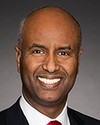
Evidence of meeting #43 for Foreign Affairs and International Development in the 45th Parliament, 1st session. (The original version is on Parliament’s site, as are the minutes.) The winning word was defence.

A video is available from Parliament.

On the agenda

Members speaking

Before the committee

Cronin  Director General, North America Bureau, Department of Foreign Affairs, Trade and Development
Mondy  Director General, North America Trade Policy Bureau, Department of Foreign Affairs, Trade and Development
Larose  Director General, International Security Policy and Strategic Affairs Bureau, Department of Foreign Affairs, Trade and Development
Andrea Charron  Director, Centre for Defence and Security Studies, University of Manitoba, As an Individual
Meredith Lilly  Full Professor, Simon Reisman Chair in International Economic Policy, Carleton University, As an Individual
Tronnes  Executive Director, Center for North American Prosperity and Security, As an Individual

11 a.m.

Liberal

The Chair Liberal Ahmed Hussen

I call this meeting to order.

Welcome to meeting number 43 of the House of Commons Standing Committee on Foreign Affairs and International Development.

Pursuant to Standing Order 108(2) and the motion adopted by the committee on February 12, 2026, the committee is meeting regarding its study of the bilateral relationship between Canada and the United States of America.

Today's meeting is taking place in a hybrid format, pursuant to the Standing Orders. Members are attending in person in the room and remotely using the Zoom application.

Before proceeding with the witnesses, I'd like to inform members that last Friday, October 2, the clerk distributed a proposed budget for the current study in the amount of $13,650. Does the committee agree to adopt the proposed budget?

Some hon. members

Agreed.

11 a.m.

Liberal

The Chair Liberal Ahmed Hussen

I would now like to welcome our witnesses for the first hour.

From the Department of Foreign Affairs, Trade and Development, we have Niall Cronin, director general, North America bureau; Martin Larose, director general, international security policy and strategic affairs bureau; and Yannick Mondy, director general, North America trade policy bureau.

I understand that you will be delivering a total of 10 minutes of opening remarks, which will be shared. We will then proceed to questions from members of the committee.

I now invite you to begin. Please proceed.

Niall Cronin Director General, North America Bureau, Department of Foreign Affairs, Trade and Development

Thank you, Mr. Chair and honourable members of the committee.

I appreciate the opportunity to appear before you today for the committee's study on the bilateral relationship between Canada and the United States.

My name is Niall Cronin. As director general for North America at Global Affairs Canada, I oversee policy and operations in support of Canada's bilateral relationship with the United States, and with Mexico.

My colleagues Yannick Mondy from the North America trade policy bureau and Martin Larose from the international security policy and strategic affairs bureau are with me today to answer questions about the trade, security and defence dimensions of the Canada-U.S. relationship.

Mr. Chair, there is no bilateral relationship of greater importance to Canada than the one we have with the United States. As the Prime Minister said when he opened last month's investment summit, Canada and the United States “will always be neighbours, and Canada will continue to be the U.S.'s most important partner in many key areas. After all, even at times of disagreement over our long-shared history, we have always maintained deep ties.”

The Prime Minister has also been clear: Canada must build a new economic and security relationship with the United States—one that is principled, pragmatic and anchored in resilience and sovereignty. It would be a partnership defined not by an ever-deepening integration across all domains but by complementary strengths in pursuit of shared security and prosperity.

While we are all aware of recent challenges, the Canada-U.S. relationship is enduring and multi-faceted. We will always be neighbours, and Canada will always stand ready to advance our mutual economic and security interests.

I look forward to your questions, but first I will give the floor to my colleague, Director General Mondy, to speak more directly about the trade dimension of the Canada-U.S. relationship.

Yannick Mondy Director General, North America Trade Policy Bureau, Department of Foreign Affairs, Trade and Development

Thank you.

Mr. Chair, honourable members of the committee, thank you for the invitation to appear before you today.

As the director general responsible for North American trade policy at Global Affairs Canada, I will focus my remarks on the Canada-U.S. trade relationship, recent trade discussions with the United States and their impact on Canada's economic interests.

At the ministerial joint review required under CUSMA, which was held on July 1, 2026, Canada and Mexico confirmed their desire to renew the agreement for an additional 16-year term. The United States did not agree to the renewal and instead indicated its intention to continue discussions regarding what it views as shortcomings in the agreement and in its broader trade relationship with Canada and Mexico. As a result, the parties have entered the annual review process contemplated under the agreement. In the meantime, CUSMA remains in force and continues to provide the legal framework governing North American trade.

Against this backdrop, Canada has engaged intensively with the United States since January 2025 in an effort to reduce trade tensions and provide greater certainty to workers and businesses. These efforts culminated this summer when Canada and the U.S. were engaged in negotiations to reach an interim bilateral agreement.

Canada approached these discussions constructively and in good faith. Our goal was simple: to obtain significant tariff relief and restore stability to the bilateral trade relationship. We were looking for a fair deal, not a deal at any cost.

Although I cannot disclose the specific details of the arrangement that was considered, Canada demonstrated flexibility and was willing to explore various solutions. However, we could not accept proposals that would have harmed Canada's economic interests, compromised our sovereignty or weakened the key economic sectors of the Canadian economy. Ultimately, the negotiations did not produce an outcome that met Canada's objectives, and no agreement was reached.

Following the breakdown of negotiations on August 21, the United States proceeded with the implementation of tariffs under section 338 of the Tariff Act of 1930, also known as the Smoot-Hawley act. These measures imposed tariffs of up to 50% on a broad range of Canadian goods, including products that otherwise would benefit from preferential treatment under CUSMA. They affect several important Canadian sectors, including alcoholic beverages, dairy products, pulp and paper, construction materials, furniture, apparel, consumer goods and other manufactured products.

Canada responded on August 25 by announcing reciprocal countermeasures that were carefully calibrated to match the value and the rate of U.S. actions. These measures entered into force on September 8. They apply to approximately 27.6 billion dollars' worth of U.S. imports. At the same time, the government introduced a package of support measures to help Canadian businesses and workers adapt to an evolving trade environment.

Despite these challenges, Canada remains committed to maintaining a productive and mutually beneficial trading relationship with the United States. We remain ready to work with the United States on issues of common interest and on solutions that will restore the stability and predictability workers, businesses and investors across North America depend on.

At the same time, Canada is taking steps to strengthen its economic resilience, enhance its competitiveness and diversify trade opportunities. While our relationship with the United States will remain essential, Canada is positioning itself to succeed in an increasingly uncertain global trading environment.

Thank you, Mr. Chair. I look forward to answering the committee's questions.

I will turn it over to my colleague Martin Larose.

Martin Larose Director General, International Security Policy and Strategic Affairs Bureau, Department of Foreign Affairs, Trade and Development

Thank you very much.

Mr. Chair, honourable members of the committee, thank you for inviting me to participate today, alongside my colleagues, in this meeting as part of your study on the bilateral relationship between Canada and the United States.

As director general responsible for international security policy and strategic affairs at Global Affairs Canada, I frequently handle files related to the United States, with a focus on the security and defence relationship between our two countries.

The defence and security relationship between Canada and the United States has entered a new phase where Canada must approach co-operation with a clearer vision of its fundamental interests. Geography is an inescapable factor, and Canada's security and defence require close collaboration with the United States.

It is well known that the current U.S. administration has made building a stronger, safer and more prosperous United States the central objectives of its foreign policy. Canada has long benefited from the United States for its defence, just as the United States has benefited from Canada. This area of the broader bilateral relationship is one in which we can clearly show our American colleagues when our interests align and how the actions of the Government of Canada, taken first and foremost for Canadians from coast to coast to coast, also support U.S. interests.

Canada is rapidly ramping up defence spending to bolster our capabilities, focusing right here in North America. This will make us stronger, more capable and a better ally. At the same time, we're broadening and deepening our partnerships around the world to make Canada stronger at home in both defence and economic spheres. Canada will always work with the U.S. when it is in its interest. Defence is one such area—more specifically, in continental defence, Arctic security, NORAD modernization and integrated air and missile defence.

Thank you. I look forward to our discussion this morning.

The Chair Liberal Ahmed Hussen

Thank you for your statements.

I will now open the floor for questions, beginning with MP Mantle.

You have six minutes.

11:10 a.m.

Conservative

Jacob Mantle Conservative York—Durham, ON

Thank you, Mr. Chair.

Thank you to our officials for appearing before this committee on this study and for providing your valuable testimony.

Most of my questions will be directed toward Ms. Mondy from the trade perspective.

Ms. Mondy, are we at war with the United States?

11:10 a.m.

Director General, North America Trade Policy Bureau, Department of Foreign Affairs, Trade and Development

Yannick Mondy

I'm not a specialist who can declare on these issues, but I can mention that we are not currently negotiating with the U.S. Those negotiations ended on August 21, as I mentioned in my testimony. We remain open to having a constructive bilateral dialogue and concluding a framework. That I can mention.

11:10 a.m.

Conservative

Jacob Mantle Conservative York—Durham, ON

We're not at war with the United States....

11:10 a.m.

Director General, North America Bureau, Department of Foreign Affairs, Trade and Development

Niall Cronin

If I could say so, we're here to emphasize that the relationship between Canada and the U.S. is broad-based, deep, multi-dimensional and enduring.

I think the Prime Minister was clear in his message to an American audience at the investment summit that geography is a fact and that Canada will remain an important partner to the United States in a number of issues. Throughout history, there have been disagreements, but we've managed to work through them.

11:10 a.m.

Conservative

Jacob Mantle Conservative York—Durham, ON

I'll leave this open. I'll let you decide who is best placed to answer.

Could you explain for me the economic rationale for countertariffs in this circumstance? Is there one for the Canadian economy?

11:10 a.m.

Director General, North America Trade Policy Bureau, Department of Foreign Affairs, Trade and Development

Yannick Mondy

Well, what I can mention is that we've taken measures to respond to the U.S. that were targeted and calibrated—as I mentioned in the testimony—both with respect to the tariff rate and with respect to the amounts that are involved. Those countertariffs are intended to respond to U.S. actions that are inconsistent with CUSMA, that agreement, and we're looking to defend our interests.

11:10 a.m.

Conservative

Jacob Mantle Conservative York—Durham, ON

I'll move to the interest portion of the equation in a moment, but on the economics, do those countermeasures help Canadian businesses or harm Canadian businesses that import from the United States?

11:10 a.m.

Director General, North America Trade Policy Bureau, Department of Foreign Affairs, Trade and Development

Yannick Mondy

I can mention that we are looking to conclude an agreement that is in the best interest of Canadian businesses and workers, and we're working very closely with provinces and territories, and businesses as well, in the context of measures that are imposed by the U.S., including our response to them. We have a remission framework that is also there in order to provide support. The government has announced measures of support as well that were released at the same time as the countermeasures.

11:10 a.m.

Conservative

Jacob Mantle Conservative York—Durham, ON

As an economic proposition, tariffs impose dead-weight loss on the economy and impose costs on businesses that pay them. Is that true?

11:10 a.m.

Director General, North America Trade Policy Bureau, Department of Foreign Affairs, Trade and Development

Yannick Mondy

Excuse me. Could you repeat your question?

11:10 a.m.

Conservative

Jacob Mantle Conservative York—Durham, ON

As an economic proposition, countertariffs or tariffs in general impose economic costs on the businesses that pay them and create deadweight loss in the economy. Is that true?

11:10 a.m.

Director General, North America Trade Policy Bureau, Department of Foreign Affairs, Trade and Development

Yannick Mondy

I can't comment on your qualification of this issue as to whether they create dead-weight loss.

11:10 a.m.

Conservative

Jacob Mantle Conservative York—Durham, ON

The imposed costs on businesses...?

11:10 a.m.

Director General, North America Trade Policy Bureau, Department of Foreign Affairs, Trade and Development

Yannick Mondy

They seek to rectify what is an unfair situation between Canada and the United States.

11:10 a.m.

Conservative

Jacob Mantle Conservative York—Durham, ON

On seeking to rectify that, has your department done any analysis on the costs that Canadian businesses pay with respect to Canadian countertariffs?

11:15 a.m.

Director General, North America Trade Policy Bureau, Department of Foreign Affairs, Trade and Development

Yannick Mondy

I can tell you that this is something we track closely, and we work very closely with the Department of Finance, as well as with the chief trade negotiator's office on these issues, and we're meeting with stakeholders quite regularly on this.

11:15 a.m.

Conservative

Jacob Mantle Conservative York—Durham, ON

I'm glad to hear that.

Would you undertake to provide this committee with the analysis or any of the discussion so that we could better understand your understanding, or the government's understanding, of the costs that these are imposing on Canadian businesses?

11:15 a.m.

Director General, North America Trade Policy Bureau, Department of Foreign Affairs, Trade and Development

Yannick Mondy

I can't qualify if we're doing the specific analysis that you have in mind, but I can certainly take a look and see what is advisable for the committee. There is a process under way on stakeholder...a request that's before the CIIT regarding what we've heard from businesses and stakeholders. That process is under way and will be shared with the committee members.