Yes.
Evidence of meeting #33 for Citizenship and Immigration in the 41st Parliament, 1st Session. (The original version is on Parliament’s site, as are the minutes.) The winning word was refugees.
A recording is available from Parliament.

Evidence of meeting #33 for Citizenship and Immigration in the 41st Parliament, 1st Session. (The original version is on Parliament’s site, as are the minutes.) The winning word was refugees.
A recording is available from Parliament.
5:45 p.m.
Conservative
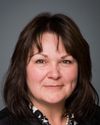
Roxanne James Conservative Scarborough Centre, ON
It's hard to believe—though again, it's not hard to believe from my viewpoint, because I'm on this committee and I know the statistics—that almost 25% of all refugee claimants are coming from the European Union, democratic countries from which you would not expect refugee claimants to be coming. Our last witness was quite passionate about legitimate refugees versus those shopping around for the best benefit package they can find.
Having said that, when we talk about the European Union, it's actually costing Canadian taxpayers $170 million per year. I think that's a figure we need to mention more and more, because people cannot believe the cost to Canadian taxpayers.
What are your comments specifically about designating safe countries from where we really shouldn't be getting refugee claimants?
In fact, there are statistics for those who withdraw their applications or abandon them altogether. Some 95% from the European Union actually abandon those claims, but again, they are here long enough to start collecting the benefits.
5:45 p.m.
Crown Attorney, Ministry of the Attorney General of Ontario
Hungary is even higher at 97% to 98%. I think there should even be mechanisms to get them to leave more quickly. With that kind of failure rate, 98%, it's pretty well everybody who's coming in.
What I've heard is that the police investigated the Hungarians coming over, and asked why they were coming here and why they didn't go somewhere else, to Australia, for example. They're coming here because in Hungary they're told—and I don't know if it's true or not, but it's probably true—that we have the most generous welfare package for refugees in the world. That's why they're coming here, because they get the best deal here.
5:45 p.m.
Conservative
Roxanne James Conservative Scarborough Centre, ON
This bill isn't just aimed at cracking down on bogus refugee claimants.
I know that another witness made a comment about asylum seekers, that it will be harmful to them if we think that all asylum seekers are bogus refugee claimants. But that's not the case and we all know that's not the case.
This bill is aimed at cracking down on those who are abusing our generosity. At the same time, it's also allowing Canada to accept legitimate, bona fide refugees into Canada much quicker than has been done in the past. Some of these people need our assistance. This bill aims to allow them to get that assistance and support much quicker.
What are your comments on that?
5:50 p.m.
Crown Attorney, Ministry of the Attorney General of Ontario
My own parents are refugees from World War II. Obviously, I'm here because ultimately Canada's a generous place. But there's a difference between being generous and being fools. When the world knows that you can come here and lie on a form and nothing's going to be done about it and you can get welfare for four or five years, that's not generosity: it's stupidity on the road to bankruptcy.
I welcome this bill. In fact, I think it's not strong enough in dealing with the bogus refugees.
5:50 p.m.
Conservative
Roxanne James Conservative Scarborough Centre, ON
We actually had another person here on February 6. No, excuse me, it was not in this committee. But Richard Kurland, an immigration lawyer, has been quoted as saying, when referring to the minister, the following:
Finally someone recognized that the open wallet approach of the past, offering free education, free medicare, and a welfare cheque to anyone who touche[s] Canadian soil....
He said that finally we had someone who would take a look at that particular aspect.
5:50 p.m.
Crown Attorney, Ministry of the Attorney General of Ontario
Yes, they know the system. Virtually every one of those people you see at the top of this list knows that when you come to Canada, you go on welfare. In fact, the Karadis, for example, go to some doctor they have in Toronto, Dr. Sajo, who says, “You have a problem with diet.” And they get an extra dietary allowance. They know right away how our system works and how you can maximize benefits.
5:50 p.m.
Conservative
Roxanne James Conservative Scarborough Centre, ON
Can I just ask how much time I have left? Okay, I'm just going to keep talking.
When I think of Bill C-31, I think of it being in the best interests of Canada as a nation. I think it's in the best interests of the safety and security of the Canadian citizens and the people who are here in Canada. I also think it's in the best interests of Canadian taxpayers. And let's face it, they are the ones who are footing the bill for fraudulent claims. I also believe that this bill is in the best interests of legitimate refugees, bona fide refugees, who need Canada's help.
Would you agree with all of those statements?
5:50 p.m.
Crown Attorney, Ministry of the Attorney General of Ontario
Yes, I would agree.
5:50 p.m.
Conservative
5:50 p.m.
Crown Attorney, Ministry of the Attorney General of Ontario
These people, the people at the top of this list, are not going to like it.
5:50 p.m.
Conservative
Roxanne James Conservative Scarborough Centre, ON
So it's in the best interests of everybody except for the people who are seeking to abuse our generosity.
April 30th, 2012 / 5:50 p.m.
NDP
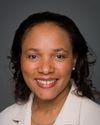
Sadia Groguhé NDP Saint-Lambert, QC
Thank you, Mr. Chair.
My thanks to the witnesses for joining us today.
During the debates on Bill C-31, we have heard on a number of occasions that asylum seekers are abusing Canada's generosity. What is your comment on that, Ms. Douglas?
5:50 p.m.
Executive Director, Ontario Council of Agencies Serving Immigrants (OCASI)
I think we generalize to the detriment of those bona fide refugees that we keep hearing about while we continue to talk about refugees as a group who are taking advantage of our system. But I think Francisco wanted to comment on this specifically.
5:50 p.m.
Regional Director, Toronto, Ontario Council of Agencies Serving Immigrants (OCASI)
You have to check the percentage of refugee claimants in our criminal system. It's very low. The bill is not going to catch these people. Mr. Skarica is very passionate about it. Why? Because the refugee hearing will be in 30 days. There won't be enough time to do a criminal check of anything. This person could be accepted as a convention refugee very easily.
One of the problems he detected was that the RCMP, the CBSA, or whatever, don't do the checks that need to be done. Do you know what I mean? He is very clear about how Hungary is a safe haven for criminals in that particular sense. How are we going to deal with that situation here in 30 days? Maybe the person will be accepted. And we are going to have an issue if that person is accepted.
So the double-checks are important. That's why the shorter terms, when we have a system that has been proven not to work in many circumstances, are a problem.
5:50 p.m.
Executive Director, Ontario Council of Agencies Serving Immigrants (OCASI)
I should say that the latest statistics from the Ministry of Community and Social Services in Ontario do not bear out the fact that refugees and immigrants are overrepresented in our social assistance system. We can certainly take a look at those statistics.
5:55 p.m.
NDP
Sadia Groguhé NDP Saint-Lambert, QC
As a democratic country, we have made enormous progress in basic human rights. Earlier, one of our witnesses stressed the importance of a society being founded on the rule of law rather than on the power of any one person, the minister in this case.
Minister Kenney has said that democratic countries are safe countries that cannot produce refugees. Do you share that opinion? If not, can you give us examples that would demonstrate the opposite?
5:55 p.m.
Executive Director, Ontario Council of Agencies Serving Immigrants (OCASI)
One of the arguments we have been making is that there are people who belong to particular social groups who, even within democratic countries, are discriminated against and at times even killed. In particular, we are looking at lesbians and gays.
For example, I come from the Caribbean. Not to stereotype or generalize about Caribbean culture or practices, but we do know that there are a number of gays and lesbians from some Caribbean countries who have had to flee, including to Canada, for protection because of their sexual orientation. Will our minister deem those countries to be a democratic? Absolutely. They're part of the Organization of American States. We have very good trade relations with the Caribbean, as we should. But at the same time, we have to recognize that there are particular groups of people who need Canada's protection even when they are born and live in countries we deem to be democratic.
5:55 p.m.
Regional Director, Toronto, Ontario Council of Agencies Serving Immigrants (OCASI)
And on the other hand, one of the main problems we have with the modification of the designated country of origin is the process with which that country will be determined. In the original Bill C-11, when it was passed, they were talking about refugee rights, the standards of rights or the standards of violations in that particular country, and a specialized team was going to analyze that particular concept of the evolution of the human rights issues in that particular country.
Now, that situation is gone, and we are only going to use the statistics prepared in Canada, such as the rate of acceptance, withdrawal, and 30 cases in particular time. Those are statistics in Canada. Why don't we go back to the idea of the specialized team that would take a look at the human rights levels or issues going on in that country, and provide a report on that? This would work better.