Debates of April 11th, 2000
House of Commons Hansard #83 of the 36th Parliament, 2nd Session. (The original version is on Parliament's site.) The word of the day was marriage.
Topics
- Order In Council Appointments
- Government Response To Petitions
- Committees Of The House
- Species At Risk Act
- Income Tax Act
- Endangered Species Sanctuaries Act
- Petitions
- Questions On The Order Paper
- Modernization Of Benefits And Obligations Act
- Report Of The Auditor General
- Firefighters
- Health Care
- National Organ Donor Registry
- Canada Customs
- Education
- Prime Minister Of Canada
- Honda Insight
- A Vision For Canada
- Taxpayers' Rights
- Canada Book Day
- Sayisi Dene
- Aéroports De Montréal
- Iran
- Prime Minister Of Canada
- Employment Insurance
- Volunteers
- Iran
- Revenue Canada
- Middle East
- Health
- Middle East
- Auditor General's Report
- Young Offenders
- Auditor General's Report
- Genetically Modified Organisms
- Auditor General's Report
- Immigration
- Taxation
- Solicitor General
- Immigration
- Aboriginal Affairs
- National Defence
- Treasury Board
- Human Resources Development
- Option Canada
- Canada Pension Plan
- Immigration
- Modernization Of Benefits And Obligations Act
- Division No. 1276
- Division No. 1277
- Committees Of The House
- International Circumpolar Community
Immigration
Oral Question Period
2:40 p.m.
Bloc
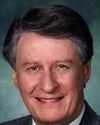
Benoît Sauvageau Repentigny, QC
Mr. Speaker, today, once more, the auditor general is criticizing serious shortcomings at Immigration Canada, including inadequate security of visas and data banks. Even more worrisome is the fact that medical screening for entry into Canada has remained unchanged for the past 40 years.
How does the Minister of Citizenship and Immigration explain that in 2000 her department is carrying out the same medical exams as it did 40 years ago?
Immigration
Oral Question Period
2:40 p.m.
Thornhill
Ontario
Liberal
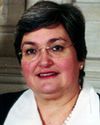
Elinor Caplan Minister of Citizenship and Immigration
Mr. Speaker, let me repeat again that public health and security concerns are number one priorities for my department and for the government.
The auditor general says that we need to improve our security screening, and we are doing that. The auditor general says that we need to improve our medical screening, and we are doing that.
When we table the new regulations, for the first time we will have a definition of medical inadmissibility that has been agreed to in a consensus by all provinces. That should go a long way toward responding to those needs.
I want the members to know that at ports of entry every immigration officer who has a medical concern about anyone entering Canada can require and actually demand a medical examination.
Taxation
Oral Question Period
April 11th, 2000 / 2:40 p.m.
Liberal
Alex Shepherd Durham, ON
Mr. Speaker, my question is for the Minister of Finance. There are only 19 days left for Canadians to file their 1999 income tax returns. Many low and middle income earners know that as their incomes approach the thresholds of new tax brackets they often pay marginal rates of taxes as high as 50%.
This discourages people from working and reduces productivity, lowering the potential wealth for all Canadians. What is the minister doing to eradicate this disparity?
Taxation
Oral Question Period
2:45 p.m.
LaSalle—Émard
Québec
Liberal
Paul Martin Minister of Finance
Mr. Speaker, the question from the member for Durham is significant because we have in fact reduced the middle tax rate from 26% to eventually 23%; significant because we are increasing the threshold from $29,000 to $35,000 and from $59,000 to $70,000 respectively; significant because we have reindexed the entire tax system; significant because it is evident from question period over the last couple of months that it is only Liberal members of parliament who want to reduce taxes for Canadians.
Solicitor General
Oral Question Period
2:45 p.m.
Reform
Jim Abbott Kootenay—Columbia, BC
Mr. Speaker, let us talk about mismanagement in the solicitor general's department where it does not just cost money but in fact costs people their lives.
The auditor general points to the infamous Bernardo disaster where DNA samples delayed by two years allowed him to commit four more rapes and two more murders.
How dare this government tell Canadians that it is serious about protecting law-abiding citizens. Its policies give licence for Bernardo and other predators to go after law-abiding citizens.
Solicitor General
Oral Question Period
2:45 p.m.
Cardigan
P.E.I.
Liberal
Lawrence MacAulay Solicitor General of Canada
Mr. Speaker, we do take the auditor general's report very seriously. As far as DNA, they have improved dramatically over the last number of months and by September 30 all priority cases will be completed within 30 days.
Solicitor General
Oral Question Period
2:45 p.m.
Reform
Jim Abbott Kootenay—Columbia, BC
Mr. Speaker, how can we believe that? Let us take a look at another example in the auditor general's report. There was a 227 day delay in getting DNA samples processed in the case of a sexual assault of a child.
The auditor is very clear: The issue is not resources, the issue is mismanagement on the part of this government.
When will the solicitor general get serious about protecting law-abiding Canadians?
Solicitor General
Oral Question Period
2:45 p.m.
Cardigan
P.E.I.
Liberal
Lawrence MacAulay Solicitor General of Canada
Mr. Speaker, this is of course a serious issue. It is too bad my hon. colleague does not do a little research before asking his question.
In his first question concerning the lab for the DNA test, it was the Ontario lab, not the federal lab. You should get your facts straight.
Solicitor General
Oral Question Period
2:45 p.m.
The Speaker
Order, please. I would remind members to please address their remarks always to the Chair.
Immigration
Oral Question Period
2:45 p.m.
NDP
Pat Martin Winnipeg Centre, MB
Mr. Speaker, today the auditor general noted serious weaknesses in the economic component of the Canada immigration program. Not only do these shortcomings seriously limit Canada's ability to maximize the benefits of immigration, it gives ammunition to the enemies of immigration who would use any excuse to close the door and to keep people out of this country.
What steps does the minister of immigration intend to take to remedy these many criticisms, and will she concede that part of the problem is government cutbacks that have left immigration so starved for resources that it cannot possibly deliver a quality product?
Immigration
Oral Question Period
2:50 p.m.
Thornhill
Ontario
Liberal
Elinor Caplan Minister of Citizenship and Immigration
Mr. Speaker, the auditor general acknowledged the need for additional resources for my department. In fact, $139 million has been allocated and, of that, $49 million in the last budget specifically for security and health concerns.
The member opposite should know that it is the intention of the new legislation, which I just tabled, to address many of the other concerns. We want to close the back door to those who would criminally abuse our system so that we can open the front door wider to the people Canada needs to come and build this country to prosperity.
Aboriginal Affairs
Oral Question Period
2:50 p.m.
NDP
Bev Desjarlais Churchill, MB
Mr. Speaker, the minister of Indian affairs must know that one of the greatest factors affecting the education of aboriginal students is the inadequate housing and infrastructure.
This year's federal budget did little to address the issue. The auditor general has indicated that if these shortfalls are not addressed within the system, it will take 23 years for on reserve populations to reach education parity with the overall Canadian rate for high school.
Is the minister satisfied with that rate? Is it okay that it will take 23 years for on reserve aboriginal populations to reach educational parity with the rest of Canadian students?
Aboriginal Affairs
Oral Question Period
2:50 p.m.
Kenora—Rainy River
Ontario
Liberal
Bob Nault Minister of Indian Affairs and Northern Development
Mr. Speaker, as I said in my previous answer, no, I am not satisfied and we have every intention of changing it.
National Defence
Oral Question Period
2:50 p.m.
Progressive Conservative
Elsie Wayne Saint John, NB
Mr. Speaker, yesterday the Prime Minister made a personal commitment to send Canadian forces personnel to the Middle East if asked. The Middle East is a very dangerous theatre of operations, one that could become extremely volatile and dangerous for Canadian soldiers.
Did either the Minister of National Defence or the CDS personally know of and endorse the commitment before it was made?
National Defence
Oral Question Period
2:50 p.m.
York Centre
Ontario
Liberal
Art Eggleton Minister of National Defence
Mr. Speaker, we have a proud record in terms of peacekeeping in the Middle East. In fact we have the command position at this point in time in the Golan Heights. It is because the United Nations knows that Canada is dependable and can do a good job in peacekeeping. That is what the Prime Minister was saying.
We have an interest in the Middle East and continue to have one. We want to be of help. If the UN puts a mission together we want to be there and be part of it, but of course we will do the usual checks, including risk assessment, to make sure it is an acceptable level.