Debates of Feb. 21st, 2002
House of Commons Hansard #146 of the 37th Parliament, 1st Session. (The original version is on Parliament's site.) The word of the day was species.
Topics
- Privilege
- Government Response to Petitions
- Interparliamentary Delegations
- Committees of the House
- Petitions
- Questions Passed as Orders for Returns
- Question No. 84—
- Questions on the Order Paper
- Species at Risk Act
- National Parks
- Citizenship and Immigration
- Black History Month
- 2002 Winter Olympics
- National Parks
- 2002 Winter Olympics
- Guaranteed Income Supplement
- International Mother Language Day
- Trade
- International Mother Tongue Day
- 2002 Winter Olympics
- Human Cloning
- Black History Month
- Legal Aid
- Highway 11
- Team Canada
- National Defence
- Health Care
- National Defence
- Immigration
- Highway Infrastructure
- Immigration
- Middle East
- National Security
- Foreign Affairs
- Kyoto Protocol
- Pension Plans
- Minister of National Defence
- Health
- Kyoto Protocol
- Airline Industry
- Aboriginal Affairs
- Kyoto Protocol
- Softwood Lumber
- Public Works and Government Services
- Trade
- Infrastructure
- Canada Lands Company
- Justice
- Business of the House
- Points of Order
- Species at Risk Act
- Business of the House
- Species at Risk Act
- Business of Supply
Kyoto Protocol
Oral Question Period
2:50 p.m.
Bloc
Bernard Bigras Rosemont—Petite-Patrie, QC
Mr. Speaker, in connection with implementing the Kyoto protocol, the Minister of the Environment said in the House yesterday that the past must be taken into account in determining the costs that would have to be borne by the provinces, but there were limits.
Is the minister prepared to recognize that the most relevant benchmark year should be 1990, the year used in the Kyoto agreement?
Kyoto Protocol
Oral Question Period
2:50 p.m.
Victoria
B.C.
Liberal
David Anderson Minister of the Environment
Mr. Speaker, I am just as happy to have the representation of the hon. member as I am to have representation from members in any corner of the House.
Kyoto Protocol
Oral Question Period
2:50 p.m.
Bloc
Bernard Bigras Rosemont—Petite-Patrie, QC
Mr. Speaker, yesterday the Minister of the Environment wrongly suggested that the Bloc Quebecois opposed the ratification of the Kyoto protocol.
What does the minister have to say about the remarks of his colleague, the Minister of Natural Resources, who stated yesterday at an energy conference that Canada's commitment to ratifying the Kyoto protocol was wavering?
Kyoto Protocol
Oral Question Period
2:50 p.m.
Victoria
B.C.
Liberal
David Anderson Minister of the Environment
Mr. Speaker, I was enthusiastic about the Bloc Quebecois' wish to ratify the Kyoto agreement. The only problem is that two days later, they said that they did not want to do anything in the province of Quebec to reduce greenhouse gas emissions.
Kyoto Protocol
Oral Question Period
2:50 p.m.
Some hon. members
Oh, oh.
Kyoto Protocol
Oral Question Period
2:50 p.m.
Liberal
David Anderson Victoria, BC
There you go. I was always ready. I was ready in the past and now they do not want to do anything. They support the agreement, but they oppose the action required. This is what I find somewhat difficult.
Airline Industry
Oral Question Period
2:50 p.m.
Canadian Alliance
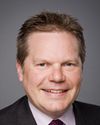
James Moore Port Moody—Coquitlam—Port Coquitlam, BC
Mr. Speaker, the transport minister has said that prior to September, Canada had a better air security regime than the United States. Since September 11, however, both countries have improved their security. The Canadian government is charging $24 per flight for the improvements while the United States is charging $5 per flight.
Given that, according to the transport minister, our starting point on security was further ahead, why are Canadians going to be taxed at triple the rate of Americans?
Airline Industry
Oral Question Period
2:50 p.m.
Markham
Ontario
Liberal
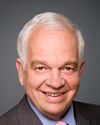
John McCallum Secretary of State (International Financial Institutions)
Mr. Speaker, this is similar to the hon. member's previous question in which he said that if something were revenue neutral by law it could be a tax grab. It reminds me of a previous comment he made in the House a few months ago in typical Alliance logic. I quote:
The only way we can prevent those people from crashing a plane into a building in the first place is with capital punishment.
That is the logic of his party.
Airline Industry
Oral Question Period
2:50 p.m.
Canadian Alliance
James Moore Port Moody—Coquitlam—Port Coquitlam, BC
Mr. Speaker, the problem with the government is that seven air carriers have died on its watch, the air industry has only been profitable in 3 of the past 12 years, in the year 2000 we saw the greatest collapse in air traffic in aviation history and WestJet was the only carrier to turn a profit last year.
Why is the government continuing to put in policies and raise taxes on flying at a time when more people are supposed to be flying? Why is the government raising taxes instead of lowering them? When will it wake up?
Airline Industry
Oral Question Period
2:50 p.m.
Don Valley East
Ontario
Liberal
David Collenette Minister of Transport
Mr. Speaker, the hon. member does not like airport improvement fees. He does not like fuel surcharges. He does not like Nav Canada fees. Now he does not like the security fees. Yet his party is on record as supporting user fees.
Therefore, I assume he is advocating that the general taxpayer pay, thereby adding to the deficit. If that is not the case, who does he expect to pay for the security: the tooth fairy?
Aboriginal Affairs
Oral Question Period
2:50 p.m.
Liberal
Rick Laliberte Churchill River, SK
Mr. Speaker, my question is for the minister responsible for children and youth.
Canadians are well aware that learning and skills are crucial for their success in the prosperity of our nation in this knowledge based economy.
[Editor's Note: Member spoke in Cree]
A growing aboriginal population is facing a number of challenges in skills development. We know that an increasing number of aboriginal people are entering the workforce.
Could the minister inform the House as to what the government is doing to ensure aboriginal people have the opportunities to get the skills they need for success?
Aboriginal Affairs
Oral Question Period
2:50 p.m.
Western Arctic
Northwest Territories
Liberal
Ethel Blondin-Andrew Secretary of State (Children and Youth)
Mr. Speaker, as we develop the skills agenda, we are committed to ensuring that opportunities are created for more aboriginal people. We will be consulting all the appropriate stakeholders.
In addition to that, in the last budget we committed $185 million to help reduce the incidence of fetal alcohol syndrome and its effects, to help with child care, as well as the aboriginal head start initiative, which would aid early childhood development, and to support programs for children who have special needs on reserve. We have also invested $1.5 billion for aboriginal human resource development--
Aboriginal Affairs
Oral Question Period
2:55 p.m.
The Speaker
The hon. member for Red Deer.
Kyoto Protocol
Oral Question Period
February 21st, 2002 / 2:55 p.m.
Canadian Alliance
Bob Mills Red Deer, AB
Mr. Speaker, the economic damage of Kyoto on Canada is becoming clearer every day. The real truth is that the government has economic estimates which show the devastation to our economy but it will not make those public. It has no implementation plan and no co-operation with most provinces or industry.
When will the minister come clean to Canadians and tell them the real truth about Kyoto and what it will cost?
Kyoto Protocol
Oral Question Period
2:55 p.m.
Victoria
B.C.
Liberal
David Anderson Minister of the Environment
Mr. Speaker, I will be meeting with ministers of energy and the environment from the provinces and territories on Monday and Tuesday in Victoria. This is a continuation of a series of meetings. We had one in Manitoba in September, another in Ontario in October and, after the upcoming meetings, there will be another in May.
At these meetings we bring forward the information from our officials. We are discussing it and trying to work out what would be the least impact scenario for the ratification of Kyoto and, of course, in addition to the ratification question, reaching the minus 6% target of 1990 which the Prime Minister set in 1997.