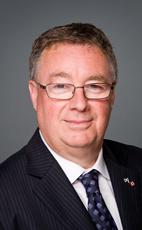
Malcolm Allen

House of Commons photo

Track Malcolm

Your Say

Elsewhere

Crucial Fact

  • His favourite word is folks.

NDP MP for Welland (Ontario)

Won his last election, in 2011, with 42.20% of the vote.

Statements in the House

Government Expenditures May 9th, 2013

Mr. Speaker, clearly the department of the President of the Treasury Board did not do those controls, or it would know where the $3.1 billion went in the first place.

The government has abandoned accountability. The Auditor General said this money was not reported to Parliament, and contrary to what the President of the Treasury Board says, it was not even reported to cabinet, the Auditor General said.

Earlier today, the Conservative member for Nipissing—Timiskaming said the billions of dollars would be identified in “due course”.

Can the President of the Treasury Board tell us when “due course” will eventually find its way to this House?

Government Expenditures May 9th, 2013

Mr. Speaker, the President of the Treasury Board continues to simply choose the quotes he likes from the Auditor General. He keeps saying that public accounts has the money.

Here is what the Auditor General actually said:

The information reported annually in the public accounts was at an aggregate level and...not separately reported as a distinct (or separate) line item. Furthermore...much of that information is now archived and unavailable.

Why is the President of the Treasury Board claiming the money is in the public accounts when the Auditor General says no, it is not.

Business of Supply May 9th, 2013

Mr. Speaker, my colleague from Hamilton Centre is absolutely correct. He quoted the Auditor General quite clearly and succinctly. I share the Auditor General's concern about risk. As much as he said “may” have in the three scenarios that he and the department said could have happened, they clearly could have added another “may have”, which is that there is a potential risk that it was not spent the way the possibilities were laid out. There is no definitive answer. No one knows. The government will not provide an answer, because it seemingly does not know. Otherwise, I am sure the government would provide a list of things it spent it on.

It has been unable to do that, which clearly indicates that they do not know and that the Auditor General, Mr. Ferguson, was correct in his assessment when he said that there is, indeed, a risk that the money went to another place. That is potentially why the government does not want to provide the information. Perhaps it went to pay for a gazebo and perhaps not in northern Ontario. Perhaps in some other place in this country there is a new gazebo being erected as we speak that would be quite lavish. Clearly, for $3.1 billion, one can build a lot of gazebos.

Business of Supply May 9th, 2013

Mr. Speaker, I know that my colleague is passionate about security, and I respect his duty and service to this country as a former member of the Armed Forces. I have said it before and I will continue to say it every time he asks me a question, because I admire his service.

Unfortunately, I disagree with him. The problem is that the government cannot tell us if it actually expended the money the way it intended to. It cannot. Did it leave bits out of the security piece it intended to do? It does not know, and neither do Canadians, and that is why I say neither do our friends across the way.

He is absolutely right that I live within a stone's throw of the border. The Americans are great friends of ours. They have been coming back and forth across the border for hundreds of years and continue to. We have many friends in the U.S. Those of us who live in border areas respect and love our friends across the border. We truly do.

I respect the fact that my colleague says that we need to be careful about it. I agree with him that we need to be careful about it. That is why the government has to tell us where the money is. What did it do with it? How did you spend it? If you spent it appropriately, then we can say that.

Business of Supply May 9th, 2013

Mr. Speaker, I want to thank my colleague from Timmins—James Bay for sharing his time with me.

The member's last comment was that the Conservative Party said it was horizontal. The last time I checked, if somebody is horizontal, that person is actually asleep; however, if someone loses $3.1 billion, that person must not be asleep but comatose, because if the person was just asleep and woke up and rolled over, the money might be found under the mattress. In this particular case the government cannot find the money at all; it does not know where it is.

The government says it just lost track of it; it is not really lost. The Conservatives need to find themselves a good bloodhound. Maybe they could find the track and find where they lost it, because they have clearly misplaced it.

When we talk about that type of money and the size of the Government of Canada, we have to ask ourselves if it is a rounding error. Because the government spends billions of dollars, it might be a rounding error, but that is not the case here. Here we have slightly less than $13 billion, of which the government lost $3.1 billion. The government has simply lost track of it. If we do the quick math, that is about 24%. If a business lost track of 24% of its product, it would go bankrupt, yet the Conservative government says it is okay; the money just went places.

The Conservatives relied on the Auditor General's report. The Auditor General went through a list of possibilities with government departments and said, “The funding may have lapsed without being spent. It may have been spent on PSAT activities and reported as part of ongoing programs. It may have been carried forward and spent on programs not related to PSAT.”

The interesting part about those three statements is that there are two common words in every one of those statements, and those words are “may have”. The government does not know, and the Auditor General did not know either. He had no idea. This was purely a “perhaps”.

Let me posit another “perhaps”. Perhaps the government did spend it somewhere else and does not want to tell us. The Conservatives cannot tell us that they did not, even though they continue to say that nothing was misspent because the Auditor General said so. No, the Auditor General said they might have done something; the Auditor General did not say they definitely did something.

The problem is that it is open. We do not know what they did with it because they cannot find it. If they could find it, they could tell us what they did with it, but they cannot find it, so they cannot tell us. How do we know that they did not misspend it?

When I asked the President of the Treasury Board the other day about it, he did not know either. He could not tell me where he put it. He does not know. He says he believes the money is in the public accounts. Oddly enough, the Auditor General disagrees. He says the money is not there. The President of the Treasury Board needs to go back and take a look.

My good friend from Pontiac has moved this motion to do just that. Let us find out where that $3.1 billion actually went.

The Conservatives said they would account for every penny. That being the case, I would look to my young colleagues, the pages, to do the numbers for me. If we take $3.1 billion and multiply it by 100 pennies, how many pennies have the Conservatives lost? We are now talking about a number that would probably be best presented with a digit behind the 10, since we would probably have to do it to the fifteenth power or whatever.

I may not be a mathematician, but I am a Scotsman by birth and I count every penny and I tend not to lose them. Perhaps that is why we need to become government in 2015: so we can count the pennies. We will not lose them, unlike the Conservative government, which has taken $3.1 billion and literally lost it.

A number of things are happening with this issue. What is PSAT? Canadians deserve to know. Is it some sort of department that does not really matter to people a lot and is not that important? Is it one of those things that just happens and does not affect Canadians in general?

Let us see what PSAT is.

According to the Auditor General, the PSAT department has five initiatives, and he outlined them in his report.

The first initiative is keeping terrorists out of Canada while keeping Canadians safe. I would say that has an effect on Canadians.

After September 11, 2001, we knew what we needed to do and we allocated money to do it. It was the previous government that started it.

The second item is “deterring, preventing, detecting, prosecuting and/or removing terrorists”.

The third is “facilitating Canada-U.S. relations”. Canada and the U.S. share one of the biggest unguarded borders in the world. We have an obligation to our partner and friend across the 49th parallel. For me, where I live, it is across the Niagara River. I know that where you are, Mr. Speaker, it is across the Detroit River. We are very close. We can literally see our friends across the way.

The fourth item is “facilitating international initiatives”. The fifth is “protecting our infrastructure and improving emergency planning”.

Funding of $13 billion was provided to protect Canadians against terrorists, to ensure terrorists were not in our country, to deport them if we needed to, to protect vital infrastructure, and to show our intentions to our common friend across the way, with whom we have been at peace for over 100 years, one would think that we would be saying to them that we spent every last nickel and penny to make sure it happened.

However, what do we have? We have is a Conservative government that says that it kind of wanted to do that, but kind of lost track of $3.1 billion. To our friends across the way to the south, the Conservatives say they are not sure if they did, while to Canadians they say they are not sure if they did all the safe things that they were going to do because they did not spend the money—perhaps. They may have, but the problem is that now they cannot tell us.

To me, not being able to track the money is on a par with the possibility that things may have been left undone in protecting Canadians against terrorists because the Conservatives do not know what they did with the money. That is a critically important piece. That is an answer the government has not been able to give, because the Conservatives do not know if they did or did not spend the money. Which parts of that security that should have been done did they perhaps not do? I qualify it very specifically with the word “perhaps” when I say that “perhaps” it was left undone and Canadians were less secure than they might have been if the Conservatives had spent the money in the first place.

That is a question the government members cannot answer because they cannot answer to where that $3.1 billion is. The Treasury Board Secretariat has not been able to do that.

When I was reading through chapter 8 of the Auditor General's report, I found it fascinating that the department was given $2.75 million, a relatively small amount, to build a reporting system so it could track the $13 billion. The amount of $2.75 million is a relatively small number, but it is a big number for Canadians. For the average Canadian, $2.75 million is a lot of money. The department had almost $3 million to figure out what it did with the $13 billion; it spent the $3 million, and then it lost $3 billion. There is an example of government incompetence for us.

If the Conservatives are spending money to devise a system to track a system that is spending money and then they lose the money, in a math class they get an F, an unadulterated F for failure, pure and simple. It is not even an issue of not doing the right thing, of not doing the things against terrorists that they said they would do, because they do not know if they did them.

It is also about their saying they could count, and they cannot. Then they want to tell us it is there, that we should not worry, that they will find it, maybe, because they might have put it somewhere.

Let me just say this. If they cannot find it for us now, in 2015 we will look for it, we will find it and we will tell Canadians what the Conservatives did or did not do with it. Then we will actually ensure Canadians are safe. We will spend the appropriate amount of money that needs to be spent to ensure Canadians are not under threat by terrorists, to ensure they are safe and to ensure that infrastructure is looked after, unlike our friends across the way, who lost track of $3.1 billion and think it is okay.

I say to my friends across the way that it is not okay. You failed Canadians miserably when you lost the money. You lost track of it. You do not know where it went and you cannot defend it. It is a lot of money. Unfortunately, you have lost track of it. You need to come clean and tell Canadians where it went.

Government Expenditures May 8th, 2013

Mr. Speaker, after dozens of NDP questions, it has become crystal clear that Conservatives cannot answer our questions about billions in security spending from 2001 to 2009. This is really about Conservative mismanagement of billions of dollars.

To make matters worse, they cannot even say what they are spending now on their anti-terrorism initiative. Why is that? They scrapped the system in 2010, and guess what? We will not have a new one until next year.

If the Conservatives lost $3.1 billion when they were trying to track it, now that they do not track it at all, how many more billions of dollars will they lose?

Government Expenditures May 6th, 2013

Mr. Speaker, another question period, and again the Liberals do not want to know where the $3 billion disappeared to. Perhaps it is hanging out with the $1 billion they lost the first time.

Clearly, a $13-billion fund allocated to the Conservatives and $3.1 billion cannot be accounted for. Of the money that was tracked for the Auditor General, he noted that the money went to an array of other things, including “...the services of a security expert to advise a host country on security matters related to the staging of an international sporting event.”

Could any minister on the other side explain to Canadians what this involved and why, indeed, it was approved?

Privacy May 2nd, 2013

Mr. Speaker, clearly the Minister of Agriculture and Agri-Food is playing a supporting role today.

Ninety-two thousand people had their private information compromised by the Department of Agriculture and Agri-Food. Clearly, there are problems within the system, yet the minister is still silent. What is he going to do to fix this serious problem within his department? When is he going to stand and give Canadians and farmers who had their information breached some straight answers?

Will the minister stand and respond today, or will he remain silent to farmers across this country who had their private information breached by the government?

Government Expenditures May 1st, 2013

Mr. Speaker, the President of the Treasury Board claims the missing money can be found in public accounts, but the truth is, it cannot be found in public accounts. It was not presented to cabinet. It never came before Parliament, and it was hidden from Canadians.

When the Liberals lost track of $1 billion, the opposition Conservatives howled with great disdain, yet the President of the Treasury Board continues to pretend that he was not at fault. When will he admit that he has lost track of $3 billion Canadian?

Not Criminally Responsible Reform Act April 26th, 2013

Mr. Speaker, let me first thank my colleague from Halifax for her extremely poignant speech, not from the perspective of a technical aspect of a bill but the reality of what it is like to live in a community where a crime that we are talking about, and on which this legislation would have an impact, occurred, and what it means to the community beyond the immediate family of a loved one who lost his or her life. In a very clear way, she has articulated what many of us feel when it comes to mental health, because mental health is such a difficult issue.

In a broader societal context, mental health, for far too long, was something that was pushed into a corner. No one wanted to say out loud that perhaps a loved one, a sister, brother, aunt, uncle, grandparent or parent, may have been suffering from mental illness. It was always the great taboo, “Don't say anything. Say nothing.” There was a stigma attached to it and a great embarrassment for families. As we look at this legislation, we have come a great distance from the day when we did not talk about loved ones who suffered from mental health issues.

No one on this side is suggesting that these acts are not of a magnitude that would horrify us all. All of us would agree that is absolutely true. It is not about saying that if a person is not criminally responsible because of a mental disorder, it would lessen the act. They are horrific acts. For the families of victims who lost their lives, reliving the horrific incident seems to go on and on in some cases. We need to be conscious about how we craft the legislation as it is for only a few people. These acts, thank goodness, rarely occur. Because they occur so rarely, it is that much more difficult to find the balance of how to approach it in law.

I knew a young man many years ago who was schizophrenic. Folks always talk about schizophrenics hearing voices. One day I told him people talked about that. This young man lived in housing with other schizophrenics, where there was support from counsellors and case workers to make sure they took their medications. I knew the young man had suffered from delusions and one day I asked, “When you hear those voices, what do you hear?” Amazingly enough, and I have heard it from other folks because I have been involved with the schizophrenia association for a long time, he said, “It's like 1,000 people standing on the edge of my ear, all screaming at the same time”. He never heard an instruction to do anything, he just heard 1,000 people on the edge of his ear screaming. The only time he got relief was when he slept.

For me, it was a very poignant moment, trying to understand exactly what was happening to that young man. He was about 21 or 22 years old. He does not hear those voices any more. He took his life when he was 23 because those voices would never go away for the rest of his life, and he knew that. He suffered from chronic schizophrenia and he was going to be suffering his entire life. For him, violence was not part of his life, but suffering was.

When we think about this legislation, we should word it in a way that understands schizophrenia because quite often many of the folks who are charged are suffering from it, but we do not then, in turn, point a finger, as the schizophrenia association has said, at all schizophrenics and think that we should avoid them, that they should be put somewhere because they may be a danger to us. We know the reality is that a person would more likely get run over by a bus than be attacked by someone who is schizophrenic.

That is how things might happen to a person, which should never take away from the fact that we are looking at a heinous act and that someone's life is lost.

That is why members have heard from this side, and I hope the Conservatives have heard, that this is a really complicated issue. It is not simplistic. It is about opening a door not knowing what is on the other side and having to deal with it, because it is multi-faceted and multi-layered. The science of mental disorders is ongoing. As therapies and treatments progress and we come to a greater understanding of the diagnosis, we can help folks not get to the place where some of these crimes are perpetrated.

My colleague from Halifax talked about the case just over a year ago. My colleague from British Columbia talked about Pickton and some other cases of a magnitude and scope that is, to use a term I have never used here before, gut-wrenching. When we hear about those cases or read about them in the news, the first thing we feel is ill. It is almost a tangible physical reaction. An individual might be thousands of kilometres away, as many of us were during the incident that happened in the Prairies when the young man was attacked on the bus, or the incident in Halifax a year ago. We may be across the country and not have actual knowledge of the victims or their families, but when we hear about it, we feel our stomachs turn upside down. That is a normal reaction. That is a fair reaction to have initially. However, for us as policy makers, we have to find a way to step back from that first reaction and deal with it. Too often, if we rush in, we may end up with a simplistic response, and there are no simple answers in mental health.

I have had a sense of how mental health works, partly because of some personal experiences around family and from knowing folks who work in it. Members of my family have been psychiatric nurses for a long time. I have been engaged with folks who have mental illnesses for probably going on 40 years now, when I think about my own personal family situation. How do we deal with this very troubling issue that gets pushed aside from time to time, especially in the public health field, which grapples with having enough funding to help the folks who need help? Is there a preventive piece? I am not sure if psychiatrists know if we could have prevented one or two of these incidents from happening through early diagnosis and treatment, constant monitoring, counselling and having a caseworker. We do not know that. Psychiatrists are uncertain as to whether that would happen. Because of that, I would look to the government to say that since we did not do all of that work in advance, this needs to go to committee.

As my colleagues have said earlier, and I know the government heard this, we intend to support the bill to get to second reading, because we want a comprehensive piece that speaks about the victims. They and their families should be paramount in our minds. On this side, we have no less a sense of what happens to the victims than anyone else in this House. No one has a lock on understanding victims. We all get this. I think this is one of those times in the House when we all understand the severity of these situations and what it means to families. However, we want to see legislation coming out of this process that will enable us to do things better than we are doing them now and to do them right.

We should not simply say that we should incarcerate someone because that will be a deterrent. I hate to say it, but someone who is suffering from mental illness would not understand what a deterrent is. Therefore, a longer sentence would not deter anyone.I understand that in sentencing those who have the ability to understand the crimes they have committed, we have sentencing that could perhaps deter. Criminologists can have that debate. I am not a criminologist. I will leave it for those experts to decide. However, I think we can all agree that those who would be found not criminally responsible would never know that there was a deterrent. In fact, the reason they are not criminally responsible is that they do not actually know that they have committed a crime and would therefore hardly see the deterrent as something in the way of their committing a crime.

We need to sit down and take the time. If the bill needs to be extended in committee, I think this House would agree to extend the time to study it. The bill needs to be looked at in a holistic way, from many perspectives. Good amendments should be welcomed by the government. This is a piece of legislation we should get right. When it is enacted, we should all feel good that we have done the right thing and have helped victims, because that is part of what I think this legislation should do.

This legislation should enable victims to understand that we as individuals have a great outpouring of emotion toward them. We cannot understand their anguish and hurt, because we have not suffered as such ourselves. As my colleague for Halifax quite clearly articulated, a whole community can grieve in a profound way because of the victims. We can all feel that and have a sense of standing with them and helping them rebuild after what has happened to a family member. At the same time, we understand our obligation to the broader society when it comes to the law, which is never easy to do, and I do not pretend that it is.

I know that we and the other side from time to time go back and forth about who is tougher. This is not an issue of who is tougher but of whether we can get the legislation right because of the complexity of someone being declared not criminally responsible because of a mental disorder. It is such a difficult issue. We all need to understand and be supportive, otherwise, when it comes to the broader community, there will be those who will say that the legislation either goes too far one way or does not support victims on the other side. I am hearing from all my colleagues here that this is not what we want to have happen. What we want is legislation that tells victims that we understand how they feel.

At the same time, in a legal way, we have to get it right when it comes to persons being tried and not convicted, because the reality is that they would neither be convicted nor acquitted; they would be found not criminally responsible. For those of us who are not lawyers, what does that mean exactly? Does it mean that they are neither here nor there, because they are deemed to be not criminally responsible? That is why this needs to be looked at so clearly.

We have talked about what the numbers are. The Schizophrenia Society of Canada has told us that 0.001% of those who have been charged with Criminal Code violations are deemed not criminally responsible by way of mental disorder. By now writing a law for such a small number, are we casting the net too wide? This number has been put out there a couple of times.

When people are deemed to be not criminally responsible, and they then receive a great deal of treatment while still under some form of incarceration, the rate of recidivism is much lower than it is for the general population in the criminal system in this country. It is anywhere from 2.5% to 7.5%, whereas the rate for the criminals in the regular system is 41% to 44%, which points out that those who are treated with the appropriate treatment are less likely to reoffend.

This week, when the Canadian Police Association was in town, I had the great joy of talking to a number of officers from my region. One of them was talking to me about mental health and what happens when officers come in contact with folks who have mental health issues. They have not committed or perpetrated crimes like this. Quite often it is public disorderliness. They may be in the middle of the street holding up traffic. Usually they have had a psychotic episode and they are off their meds for a while and need to be taken to the hospital. The officer was saying that the police need professionals to deal with those folks, because the officers are not the appropriate people. There has to be a level of expertise from professionals to help with folks who are more of a danger to themselves than to anyone else. What he pointed out to me was that it is not necessarily the police department that should have a major involvement inside the mental health system. It should be mental health professionals.

That is where the link has to be. I do not think we see that in this legislation. When we talk about the justice system, policing, mental health professionals and the health system, where do they intersect to help prevent these crimes in the first place? We need to find a way to work on that system to determine how we then deal with those folks in an appropriate manner. I was grateful for that conversation, because in my mind, it really crystallized for me where it is we should head with this piece of legislation.

We need to look to all of those folks who are already telling us that they want to work with the committee. They want to come forward and help by offering good, sound advice. They do not want to tear the legislation apart and throw it away; they want to help improve it and make it a good piece of legislation that truly works. If at committee the government would look for those answers and advice from those folks, even if they may not always have the answers people are looking for, it may find that when we are finished writing this legislation, we will be able to say that we have done the right thing for the victims, who are first and foremost in our minds.

As my colleague from Halifax pointed out, a year later the victim, through his community and his family, is still reaching out saying that we need to find a sound solution to the problem, not rush to any sort of judgment that ends up with legislation that would not help but might hinder.

I am not saying the legislation in its present form would, but we certainly want to ensure it works for all parties involved and actually gets through the justice system in a way that would make it a better place for it to do the work it needs to do.

As I said at the very beginning, ultimately the victims have to be paramount in minds of members. I know they are in ours.