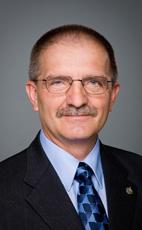
Wladyslaw Lizon

House of Commons photo

Track Wladyslaw

Your Say

Elsewhere

Crucial Fact

Conservative MP for Mississauga East—Cooksville (Ontario)

Won his last election, in 2011, with 40.00% of the vote.

Statements in the House

Canadian Museum of History Act June 17th, 2013

Mr. Speaker, they claim in their speeches that somehow we are trying to change history and show it the way we want. I am so surprised that it comes from their side. Not that long ago, it was their member who insulted our First World War veterans and praised commies.

How can anyone come up with this view of history? Communism claimed about a hundred million victims in the world. How can anyone look at the Ukrainian famine, the Holodomor, look into the eyes of the survivors of Tiananmen massacre, or the children and grandchildren of officers who were killed as prisoners of war with a single shot in the head in Katyn, Russia? How can anyone come with this kind of distorted picture of history?

Canadian Museum of History Act June 17th, 2013

Mr. Speaker, the investment would be used to renovate about half the space of the museum. Part of it would stay the way it is. The IMAX, the Children's Museum and the First Peoples Hall would stay as they are, but the rest would be renovated and we would truly be proud of it.

Canadian Museum of History Act June 17th, 2013

Mr. Speaker, the claims made by my hon. colleague are quite misleading. More than 20,000 Canadians were consulted before we took action on this.

In listening to the speeches of the opposition and their claims that somehow this would not be accepted by Canadians, that it would change the course of history or that somehow it would create a history of Canada that Canadians do not want, I do not know where it all comes from. I truly believe we should all embrace the idea and show the world that we are not a cultural desert, that we are a country with a heritage. We have a lot to be proud of and to show to the world.

Canadian Museum of History Act June 17th, 2013

Mr. Speaker, I am pleased to rise today and speak in support of Bill C-49, which proposes amendments to the Museums Act to create the Canadian museum of history.

I could talk about all the wonderful things that Bill C-49 would do. However, given some of the misleading information being spread by the opposition, I would like to take the time to talk about what Bill C-49 would not do.

The bill would make a number of necessary changes to the section dealing with the current Canadian Museum of Civilization Corporation to allow it to become the Canadian museum of history. However, one section of the Museums Act that would not change is the section that ensures the independence of the national museums, which is subsection 27(1).

Subsection 27(1) says that no directive shall be given to a museum with respect to cultural activities, including the acquisition, disposal, conservation or use of any museum material relevant to its activities; activities and programs for the public, including exhibitions, displays and publications; and research related to those activities.

The legal protection afforded to all national museums is comprehensive and includes the ability to conduct research. The independence of all the national museums has been guaranteed by law in the most comprehensive manner possible.

This is the case for all national museums. It is the case for the Canadian Museum of Civilization and it would continue to be the case with the Canadian museum of history.

The phrase “arm's length” is more than a concept. It is specific, it is comprehensive and it is the law. Bill C-49 does not propose to change section 27 of the Museums Act.

We all know that, from time to time, museums, including our national museums, present exhibitions that challenge and that arouse debate. That is the mark of a great museum.

Everyone has an opinion. That is normal. From time to time, the Minister of Canadian Heritage and Official Languages has expressed a personal opinion about an exhibition presented by one of our national museums. That is his right. What the Museums Act prohibits is political interference in decisions related to cultural activities. Bill C-49 would not change that.

Yet, there are still concerns about the curatorial independence of the Canadian museum of history. It has been proposed that we amend the bill to specify that a particular minister, the Minister of Canadian Heritage and Official Languages, and a particular government department, Canadian Heritage, could not infringe on the new museum's curatorial independence.

As we have said before, such an amendment is unnecessary and redundant because comprehensive independence already exists in the law. More importantly, this kind of amendment could have unintended consequences.

Subsection 27(1) ensures the independence of all national museums. The addition of a clause that would apply only to the new museum could call into question, or even appear to diminish by comparison, the independence of the other national museums that fall under the act. In other words, all the national museums would be independent, but one would be more independent than the others.

By singling out a particular minister and a particular department, does that somehow create the impression that others are somehow now being given the option to infringe on the independence of the museums?

As I have already said, the amendment in question was proposed in good faith, and I am sure that none of the possible results I have described were intended. However, this shows that drafting legislation is a really tricky thing. We must consider the wording in legislation very carefully. That is the job of legislative drafters and jurilinguists, professionals trained to watch for the type of unintended consequences I just described.

The independence of the Canadian museum of history would be assured under the existing subsection 27(1) of the Museums Act. Intervention by the government in its activities would be prohibited by law. The new museum would table its annual report in Parliament as a crown corporation, as is the case with all the national museums. It would be accountable to Parliament.

Let us consider the highly qualified professional staff of the museum. There would be specialists who have dedicated their careers to a particular field, whether it be archeology, ethnology, history, folklore or museology. As such, they would also be answerable to their peers. To suggest that, up until now, they have acted independently of government and that with the adoption of Bill C-49 they would suddenly develop feet of clay would be unfair. The idea that we might be seen as calling into question the integrity of the men and women who work at the museum is something I know we all want to avoid.

The Museums Act will continue to guarantee the independence of the national museums and it would guarantee the independence of the Canadian museum of history. Let us support that long-standing legal protection as it currently exists.

Our government believes in our national museums, and we recognize the tremendous value they hold for all Canadians. The Canadian museum of history would provide the public with the opportunity to appreciate how Canada's identity has been shaped over the course of our history. Above all else, Canadians deserve a national museum that tells our stories and presents our country's treasure to the world. I am calling on all my hon. colleagues to support Bill C-49 and support promoting and increasing Canadians' accessibility to our shared heritage.

Events in Mississauga East—Cooksville June 17th, 2013

Mr. Speaker, several great events took place in the riding of Mississauga East—Cooksville last Saturday.

The 13th annual Race Against Racism, hosted by Peel Regional Police diversity relations unit at Mississauga Valley Park, was a great success and provided a positive environment for members of diverse cultures and an important sense of inclusiveness. Funds raised will go toward scholarships for Peel students. Congratulations to Chief Jennifer Evans, Constable Lovejeet Bains, the entire Peel police force, volunteers and participants for a great event.

Dixie Bloor Neighbourhood Centre celebrated the 25th anniversary of its service for Mississauga communities. Its mission “to foster an atmosphere which will encourage our community as a whole to participate in and develop a positive, healthy and caring neighbourhood” describes it all.

Many thanks and best wishes to the board president and chair, Kelly McDonald, and all other board members and volunteers on this special anniversary. I thank them all for their involvement and participation.

Petitions June 12th, 2013

Mr. Speaker, it is an honour to table a petition on behalf of Ontarians, many of them Venezuelan Canadians. They would like to bring the attention of the House to the fact that since the last presidential election in Venezuela, the human, electoral and civil rights of the Venezuelan people have been shamefully violated. They are asking our government to take a strong position regarding this matter and to call for a peaceful and democratic resolution to the current crisis in Venezuela.

Pope John Paul II Day Act June 11th, 2013

Mr. Speaker, I am very emotional at this moment. I never imagined that I would have the opportunity to introduce this bill and that it would come to this point.

I would like to first thank the Minister of Canadian Heritage and Official Languages and his parliamentary secretary for their support, the committee of Canadian heritage for its work, and of course all hon. members of this House who took part in the debate on this bill. Whether they spoke in support of or against the bill, I truly value their opinion, as would the late pope because he listened to everybody equally.

I would also like to give special thanks to Father Janusz Blazejak, Father Marian Gil and Father Adam Filas, for their support and encouragement, as well as to Frank Klees, Chris Korwin-Kuczynski and Marek Kornas for their work to promote this idea.

Many thanks to my constituents and people from across Canada who contacted me, voicing their opinion on the bill, many of whom were in support of it and some who had different views than me. However, we live in a democratic country where all of the views of people and their opinions should be listened to and considered.

Therefore, in conclusion I would like to thank all members of this House for their support. I am asking them all to vote in favour of this bill.

Pope John Paul II Day Act June 11th, 2013

Mr. Speaker, of course we should not be afraid to name a day after a church leader, because it does not recognize him as a pope but for his achievements for the world, for peace in the world and for people coming together.

Pope John Paul II Day Act June 11th, 2013

Mr. Speaker, the inspiration came right at the first visit of the Pope. When he told people not to be afraid, I do not think it was fully understood at that time. It came with time. It came as a wave that pushed people for a change.

Why did he say not to be afraid? It was because fear was the tool used by Communism to keep people under control.

He helped people to lose that fear, and that is what led to huge changes. That was what led to the chain of events that ended with the fall of the Berlin Wall and the dissolution of the Soviet Union.

New countries, democratic countries, appeared on the map of the world. We have a much different world. We no longer have a Cold War. It is a world that we did not imagine we would have 30 years ago.

Pope John Paul II Day Act June 11th, 2013

Mr. Speaker, I do not quite understand why we should be afraid to designate a day for a man who, we cannot deny, was a leader of the Catholic church.

As I mentioned in my speech, he was a big part of the change in the world that we enjoy today. We cannot change history. We cannot change the fact that he was a leader of the Catholic church, but, as I mentioned in my speech, he went well beyond it.

I had the honour to experience a good part of it myself when I entered into the Solidarity movement. I would like to mention one thing that I did not mention in my speech. The Communist regimes in the Soviet Union and other countries saw him as a danger. That is why on Wednesday, May 13, 1981, at a general audience in St. Peter's Square, there were gunshots, and the pope was shot so seriously that he almost lost his life.

It was not a coincidence. Let us all remember this, and let us remember that the world we enjoy today is much different from the world we had 30 years ago.