The House resumed from June 12 consideration of the motion that Bill S-210, An Act respecting Ukrainian Heritage Month, be read the third time and passed.

Awaiting royal assent, as of Oct. 21, 2026
Subscribe to a feed (what's a feed?) of speeches and votes in the House related to Bill S-210.
This is from the published bill.
This enactment designates the month of September as "Ukrainian Heritage Month".
All sorts of information on this bill is available at LEGISinfo, an excellent resource from Parliament. You can also read the full text of the bill.
Bill numbers are reused for different bills each new session. Perhaps you were looking for one of these other S-210s:

This is a computer-generated summary of the speeches below. Usually it’s accurate, but every now and then it’ll contain inaccuracies or total fabrications.
Bill S-210 seeks to designate September as Ukrainian heritage month in Canada. Supported unanimously by all parties, the legislation aims to honor the enduring contributions and resilience of the Ukrainian-Canadian community while expediting parliamentary proceedings for its final passage.
Conservative
Liberal
The House resumed from June 12 consideration of the motion that Bill S-210, An Act respecting Ukrainian Heritage Month, be read the third time and passed.
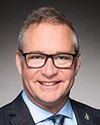
Martin Champoux Bloc Drummond, QC
Mr. Speaker, I am very honoured to be the first to rise to speak to Bill S-210 this evening. I feel like a bit of an imposter because I see some of my colleagues here who are really committed to this cause, including the sponsor of the bill in the House of Commons. I know that he cares about this cause and that he is the chair of the Canada-Ukraine Friendship Group, which I am proud to be a part of.
Before I begin my speech and speak to Bill S‑210, I too would like to take a few seconds to congratulate the new members of the Quebec National Assembly, particularly in my riding of Drummond. These two people are very dear to me: Natalie Bisaillon, who is the first woman elected as the first member in the new riding of Marie‑Lacoste‑Gérin‑Lajoie, and Charles Page, who was elected as the member for Drummond—Bois‑Francs. Some colleagues may recognize his name, because I have recognized the accomplishments of Charles Page in the House on two occasions. He is the only Quebecker and only Canadian to have climbed five of the eight tallest mountains in the world. These are mountains measuring 8,000 metres or more, including Everest, Annapurna and K2. It is a great privilege to see him conquer another mountain: Quebec City's Parliament Hill. I believe that he and Ms. Bisaillon will rise to the challenge. I wish them every success. I also want to congratulate the voters in the riding of Drummond, many of whom turned out to vote and actively participated in democracy, as several million Quebeckers did in this election.
I have never set foot in Ukraine. I have no family members or ancestors of Ukrainian descent. I knew next to nothing about Ukraine before I arrived here in Parliament in 2019.
I was a member of the Canada-Ukraine Friendship Group before the events of February 2022. It took the horror of February 24 of that year to open my eyes, and the eyes of thousands of Quebeckers and Canadians, to this great country that is fighting to protect its identity, culture and independence from a brutal attacker attempting to recapture a country that had broken free with the collapse of the Soviet Union.
First of all, let me state that Vladimir Putin is a brutal invader. His goal is to bring Ukraine, and then perhaps Europe and the world, under his sway, under the control of a dictatorship that is completely out of step with the human values that should guide today's world.
While news broadcasts and reports continue to bear witness to Russia's ongoing attacks and relentless campaign against Ukraine, which are still claiming dozens of lives and causing injuries even today, the signals we are hearing and observing suggest that support and vigilance are softening among countries that are supposedly friends of Ukraine. A kind of complacency has set in, with countries feeling like the war has dragged on long enough and that it may be time to resume talks with Russia, restart negotiations or ease sanctions. I find it deeply troubling to hear such sentiments coming from countries that still claim to be partners, allies and friends of Ukraine and the Ukrainian people.
We must never forget that Russia's invasion of Ukraine is illegal and brutal. Canada must continue throw its full support behind efforts to condemn and resist this aggression, working alongside our allies. We cannot forget that there are approximately 20,000 Ukrainian children who have been deported to Russia. For years now, many of these children have been subjected to indoctrination, stripped of their cultural identity and deprived of their identity by this regime, which we must continue to oppose.
As I said earlier, before coming here, I knew next to nothing about Ukraine. I knew it was a country in Europe that had been under Soviet rule for decades, of course, like many others. Then I discovered a wonderful country, a country with, as I said, its own unique identity and culture that its people cherish. Above all, in the face of the challenges we all know it has endured, the resilience it has shown is truly admirable.
I also discovered people, human beings, who reach out to us, who visit us regularly and tell us not to give up on them, because they are nothing less than a bulwark for Europe, a bulwark for the freedom of countries in the west. What they are going through and what they are defending is who they are and what they want to protect. They are also standing in the way of this madman who will not stop there if we give up. Their resilience is to be commended.
In short, I greatly admire the people, their culture and the things I have discovered about this country, which I look forward to visiting. Talking about Bill S‑210 and then supporting the bill is like taking a step forward.
This is a month that obviously recognizes Ukrainian heritage and, if all goes right, aims to celebrate, highlight and share the customs, identity and culture of Ukraine.
It is also a month to recognize the contribution of a pretty big community. There are 1.3 million Ukrainians living in Canada. The community is very vibrant, very active and very well established in a number of regions. In recent years especially, Ukrainians have settled in other regions, temporarily at first, but I think they have integrated nicely into their communities. Many Ukrainians have settled in Drummondville, in my region. These are people who have learned French, who have gotten involved with community activities in Drummondville and who are very much appreciated.
In short, this month would recognize the contribution of this community and also make people aware that the first Ukrainian immigrants arrived in Canada in the late 19th century.
As I said when we studied and debated this bill when it was first introduced, I think it is a great idea to designate specific months to celebrate the heritage of a given country. In the case of Ukraine, I think it takes on special significance, particularly in light of recent events. I think we need to ensure that it is not merely symbolic. That is the pitfall of this kind of bill. Often, a particular month is designated as “x heritage month” in response to a request, and then it tends to be somewhat forgotten. That is wrong.
If heritage months are to be designated, they must be worthwhile. It is important to ensure that these tools are used to showcase that heritage, to educate people and to raise awareness. We would all be greatly enriched if we used the month of September every year to showcase the culture and identity of Ukraine, and above all to honour the resilience of Ukrainians and remind everyone of the importance of supporting Ukraine in its current fight.

Heather McPherson NDP Edmonton Strathcona, AB
Mr. Speaker, I want to start by thanking former senator Stanley Kutcher and the MP for Etobicoke Centre for championing this bill.
This bill would designate the month of September as Ukrainian heritage month. September was chosen to mark the first recorded arrival of Ukrainians to Canada during the month of September more than 125 years ago. Canada is now home to more than 1.3 million Ukrainian Canadians.
Personally, I am honoured to be able to speak in this place to support this bill. I come from Edmonton, Alberta, where many Ukrainian Canadians live. I know first-hand the strong contributions they make in our community. New Democrats are proud to support a month that would recognize the significant contributions that Ukrainian Canadians have made and continue to make to Canada's social, economic, political and cultural fabric, including artistic, linguistic, culinary, religious and folkloric contributions.
The establishment of Ukrainian heritage month would not only be to celebrate Ukrainians in Canada. It would also be instrumental in educating future generations about the impactful role that Ukrainian Canadians have played and continue to play across this country.
We need this bill now more than ever. It has been four and a half years of horror in Ukraine since the further illegal invasion by Vladimir Putin and the Russian Federation. Putin's brutal genocide has killed and injured thousands of Ukrainians, displacing hundreds of thousands more.
As we speak, Ukrainians in Kyiv and other cities and communities across Ukraine continue to face bombing threats and abhorrent violence at the hands of Putin and his forces. Russian oligarchs continue to profit from this war, and Ukrainians stand bravely in defiance, defending their sovereignty and their lives.
I think about a time in 2023 when I travelled to the towns of Irpin and Bucha. I remember going into the communities. I remember standing and looking at the buildings that had been bombed. One of the things I saw was a slide in a children's playground, and it was riddled with bullet holes. This was a child's slide. It was not a military target. Russia's attacks were directed at civilians and civilian infrastructure. It was not just playgrounds. It was hospitals, schools, homes and apartment buildings.
One year later, I watched as Ukrainians worked to rebuild their communities. That same indestructible spirit led Ukrainians to Canada following the Holodomor, over the decades since those unspeakable horrors were inflicted. Now, as families seek refuge from Putin's genocidal attacks, they have come to Canada to build their lives, and in the process, they have helped to forge our nation.
In Edmonton, Ukrainian Canadians and their descendants have helped shape our city and our culture. My friend, former MLA Deron Bilous, announced the province's first official Ukrainian-Canadian Heritage Day. William Hawrelak served three separate terms as mayor, and the most beautiful park in the city, located in my riding of Edmonton Strathcona, is named for him.
The first Holodomor monument in the world rests outside Edmonton city hall. Edmonton is home to the world-renowned Ukrainian Shumka dancers and to the Canadian Institute of Ukrainian Studies at the University of Alberta in my riding. In November, the Ukrainian Canadian Congress Alberta Provincial Council will present the 29th annual Hetman Awards, honouring the many Ukrainian Canadians in Alberta who contribute so much to our communities.
As the foreign affairs critic for the new Democratic Party of Canada, I have fought hard to ensure that Canada's response to the genocide happening in Ukraine is strong. I am proud to have sponsored four motions in the House that received unanimous consent. I want to be very clear: Unanimous consent from all parties is a message we can send as parliamentarians to Putin and the Russian Federation that when it comes to Ukraine, we stand united.
I called on the government to help document Russian war crimes and crimes against humanity, to declare that the Russian Federation is committing acts of genocide, to designate Russia's Wagner Group as a terrorist entity and to honour those who gave their lives in defence of our shared values. I am proud that New Democrats and all parties in the House stood together to support Ukraine when it mattered.
Make no mistake. The threats from Russia expand far beyond Ukraine's borders. We see now how Russia is spreading misinformation online and engaging in foreign interference. These are attacks on democracy itself.
While this genocidal war rages on and attacks on civilians continue, and with the growing threat of nuclear engagement, New Democrats will continue to push the government to do what it can to end this war and to work for peace and justice. The people of Ukraine need and deserve our support, and we must recognize that democracy, not just in Ukraine but around the world, is under threat. It is under attack.
Canadians and New Democrats stand with Ukraine. We will always stand with Ukraine. We celebrate the close ties Canada has with Ukraine and with Ukrainian Canadians, remembering and celebrating the rich history binding our nations.
I look forward to passing this bill so that next September, we can celebrate Ukrainian heritage month together.
Slava Ukraini.
Ukrainian Heritage Month ActPrivate Members' Business
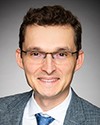
The Deputy Speaker Tom Kmiec
I will remind members of two different things.
Normally, during debates, members are not allowed to cross between the Speaker's chair and the mace on the table. This area cannot be crossed.
The second matter is on Standing Order 16(2), which is very clear. During proceedings of the House, members cannot cross between the person who is speaking and the Speaker's chair, and there was a member who did it. Not doing this makes it simpler for me to see if the light of a particular member is on, and now with the advent of television, it also makes sure that a member is not seen crossing on camera, which could spoil the use of that particular image and the speech a member is giving or the responses. I want to remind members that Standing Order 16(2) still applies during Private Members' Business.
Also, members have to be in their chair to be recognized, especially members who are next up to speak.
That being said, resuming debate, the hon. member for Lethbridge.

Rachael Thomas Conservative Lethbridge, AB
Mr. Speaker, I am honoured to stand today and speak to Bill S-210, which would designate September as Ukrainian heritage month.
Canada is home to a rich and vibrant Ukrainian culture, from beloved foods such as borscht and perogies to cherished traditions and events such as Canada's National Ukrainian Festival. Through their culture, traditions and civic engagement, Canadians of Ukrainian descent have made lasting contributions to our country and have helped shape the diverse and multicultural Canada we are all very proud to call home. Ukrainians have deep historical ties to Canada. Ukrainian immigration to Canada began as early as the 19th century, and now Ukrainian Canadians make up 1.3 million people in this nation. For more than a century, Ukrainian Canadians have contributed to the growth and prosperity of our country in countless ways.
I am often reminded of those contributions in southern Alberta, the region that I am proud to call home and that I get to represent. In my community of Lethbridge, Ukrainian Canadians played an important role in building Alberta's sugar beet industry. For those who are not familiar with this, it involves beets that get planted in the ground and are used to produce sugar. This is our only domestic source of sugar and something we should be very proud of in this country in terms of food security and being able to do that right here at home in a way that also respects human rights.
Following the Second World War, thousands of Ukrainian immigrants came to Canada through programs that brought workers to Alberta's sugar beet farms. They arrived ready to work, often under difficult conditions, and their hard work helped establish an industry that became an important part of southern Alberta and Canada's agricultural economy. These families did not simply come to Canada to work for a season; rather, they built communities, put down roots, raised families and contributed to the growth of southern Alberta.
Their journey is a powerful testament to how deeply Ukrainian Canadians have shaped the heart and history of our great country. Ukrainian Canadians have contributed to agriculture, education, business, culture and public life. They have built churches, community organizations, cultural institutions and businesses, all while preserving the traditions and heritage that connect them to their Ukrainian roots but respecting the values we have here in Canada.
Perhaps one of the most remarkable parts of the Ukrainian Canadian history is the resilience that has carried through generations. Many Ukrainians came to Canada fleeing war, persecution and political oppression. They came from a homeland where their culture, language and identity had been threatened by totalitarian rule. For decades, Ukraine was under Soviet power, yet the Ukrainian people never abandoned their desire for freedom, democracy and self-determination.
That desire for freedom is a defining part of Ukrainian history, and it is a history that Ukrainian Canadians have worked hard to preserve and to share with Canadians. This includes remembering the Holodomor, the horrific famine inflicted by the Soviet regime in 1932 and 1933, which claimed the lives of millions of Ukrainians. Ukrainian Canadians have fought for decades to ensure that this history is remembered and that the victims are never forgotten.
In 1991, after decades of Soviet rule, Ukraine declared its independence. On December 1, 1991, the people of Ukraine voted to approve that independence. The Ukrainian people chose freedom and self-determination. The following day, under the leadership of Conservative Prime Minister Brian Mulroney, Canada became the very first western country to recognize Ukraine's independence and to congratulate it on this. Canada and Ukraine have been close allies ever since, and we continue to enjoy that relationship.
Sadly, however, Ukraine's fight for independence did not end there. In 2014, Vladimir Putin illegally annexed Crimea and launched war against Ukraine. For the Ukrainian people, the threat of Russian aggression was once again at their doorstep. Canada responded. Under Conservative Prime Minister Stephen Harper, Canada was among the strongest voices in the international community to condemn Russia's aggression against Ukraine.
Prime Minister Stephen Harper took a stand with the Ukrainian people. His government imposed sanctions on Russian officials, provided financial assistance to Ukraine and supported Ukraine's sovereignty and territorial integrity. Prime Minister Harper also travelled to Kyiv in 2014, just days after the illegal annexation of Crimea, demonstrating Canada's commitment to standing with the Ukrainian people. His message was clear: Ukraine has the right to determine its own future. That principle has remained at the heart of Canada's relationship with Ukraine.
I wish things had stopped there, but they did not. In 2022, Russia launched its full-scale invasion of Ukraine. Once again, the Ukrainian people were forced to defend their homes, their families and their right to live as a free and democratic nation. Once again, Ukrainian Canadians stepped forward. Across Canada, Canadians have rallied. We have rallied in our communities, have fundraised, have welcomed Ukrainians who are fleeing the war, and have advocated for stronger support for the nation.
Ukrainian Canadians have welcomed their fellow women and men from the country. These are people who have endured tyranny, war and persecution, but they have never surrendered their desire for freedom and their commitment to democratic principles. That history is important. It is important for us as Canadians to remember. It is important for members of the House to remember. It is important because Ukrainian Canadians have contributed so much to the country we know today. They have helped build our agricultural communities, strengthen our cultural fabric and enrich our public life. It is so important, because their history reminds us that freedom and democracy cannot be taken for granted.
Many Ukrainian Canadians have preserved their culture while becoming an important part of the Canadian story. They have taught their children their language and traditions, built communities across the country and continued to stand with their homeland in its fight for freedom. Few Canadians embody this more boldly or better than Mr. Wayne Gretzky. He is not only viewed as the greatest hockey player, but he is also a proud Ukrainian Canadian. For Canadians from coast to coast, Gretzky remains a tremendous source of national pride. During his remarkable career in the NHL, he set countless records and led the Edmonton Oilers to win four Stanley Cup championships.
Even though he has been retired from hockey for 25 years, Gretzky's legacy continues to inspire generations of young Canadians. His contribution goes beyond what he accomplished on the ice. He uses his platform today to speak out in support of Ukraine. He understands that for Ukrainian Canadians, the war is not a distant conflict. Instead, it is an attack on a country for which millions of Canadians have deep family, cultural and historic ties. Wayne Gretzky is more than a hockey legend; he is an example of how Canadian Ukrainians can proudly embrace their heritage while contributing to the country we call home.
Bill S-210 gives us an incredible opportunity to honour the Ukrainian Canadian community, to celebrate its contributions to Canada and to ensure that future generations understand the important role Ukrainian Canadians have played in shaping our country. The Ukrainian Canadian story is a story of resilience. It is a story of hard work, of community and of an unwavering belief in freedom and democracy. I am proud to support Bill S-210 and to recognize the generations of Ukrainian Canadians who have helped make Canada the country we are proud to call home and who so dearly hold true to the values on which we are founded.
Ukrainian Heritage Month ActPrivate Members' Business
Taiaiako'n—Parkdale—High Park Ontario
Liberal

Karim Bardeesy LiberalParliamentary Secretary to the Minister of Industry
Mr. Speaker, it is a great pleasure to speak to this bill, which comes to us from the other place. I want to give thanks in particular for the hard work of the member for Etobicoke Centre, who has been championing the cause of Ukraine, of Ukrainian Canadians and of Ukrainians in Canada since his election here and since before then, and for his hard work to get the bill to this point in Parliament.
It is a special pleasure to speak about Ukrainian heritage, because in my riding of Taiaiko'n—Parkdale—High Park in west Toronto, Ukrainian heritage is something that is lived every day. It is lived in the context of war, which has led to a rediscovery and a reimagining of the Ukrainian heritage brought to us by people who have fled that war to find comfort in Canada. It is building on a legacy of institutions that go back decades in this beautiful corner of west Toronto and on a heritage that continues to live, to thrive and to inform not only Ukrainians and Ukrainian Canadians but, in fact, all our constituents. It is something that has been resurrected in the last few years due to the invasion and to the illegal and unjustified attempt to suppress the Ukrainian spirit and the Ukrainian language.
If someone comes to Taiaiko'n—Parkdale—High Park, as well as to other parts of west Toronto, where Ukrainian culture and language are live and living, where we continue to welcome Ukrainians who are fleeing persecution and war, they will see a heritage that cannot be defeated. It is a culture that is living. It is a heritage that we, people such as me who are non-Ukrainian, not of Ukrainian heritage, are so blessed to get to see. It is an example of the continuation of culture that perseveres in the face of a real attempt to wipe it and its language off the face of the earth. To see it resilient in Taiaiko'n—Parkdale—High Park is something for which I have the utmost appreciation.
I want to talk a bit about our culture, our Ukrainian heritage, specifically in Taiaiko'n—Parkdale—High Park and in west Toronto. Ukrainians and Ukrainian Canadians started to arrive in our part of Toronto as many immigrant communities do. They came from other parts of Toronto and other parts of Canada. In some cases, they received a bit more wealth. In some cases, they were finding jobs and opportunities in meat-packing and in trades such as roofing, plumbing, painting and bricklaying. Eventually they found each other and found places to settle in Bloor West Village and in Etobicoke. These waves of immigration continued not just after the Second World War but also into the sixties and seventies, and then more recently, tragically, as a result of the war.
The institutions of Ukrainian heritage, language and culture are everywhere in west Toronto and Etobicoke. In fact, there is a building in the riding of the member for Etobicoke—Lakeshore that is known as UNF hall. It contains dozens of Ukrainian organizations. Ukrainian civil society is alive. It is well. It is strong.
I just want to point out a couple of organizations in our riding that have recently celebrated some important anniversaries. For instance, the Levada and Orion choirs of Toronto celebrated their 40th anniversary at Runnymede United Church in Toronto just this past weekend. Ukrainian youth ensembles show the power of song and the power of voices coming together. Voices coming together is one of the ways of expressing the indomitable spirit of a people and the indomitable spirit of a language that continues to persevere even when people try to take that away. Since 1985, youth ensembles, the Levada Women's Choir, the Orion Men's Choir and the Vanguard Concert and Marching Band have been connecting people through music. They are promoting and preserving their musical culture and traditions.
We have a more recent phenomenon, which is celebrating close to its 20th anniversary: the Vyshyvanka Day parade. Vyshyvankas, of course, are the beautifully embroidered Ukrainian textiles, sweaters, dresses and other garments that a college student in Ukraine rediscovered. They decided they needed to celebrate these unique regional parts of their heritage. Ukrainian Canadians and Ukrainians will often wear vyshyvankas that come from distinct regions of Ukraine. One can tell from the distinct knitting and the distinct textiles where those vyshyvankas, such as sweaters and other garments, might come from. In High Park, Bloor West Village, we celebrate the Vyshyvanka Day parade every year.
The Bloor West Village Toronto Ukrainian Festival has been around since 1995, so we have just celebrated its 30th anniversary. It was started by Jurij Roman Klufas, who has been there since the beginning. The first festival in our riding had 300 people just in a little parking lot off Bloor and Jane streets in the west part of Taiaiko'n—Parkdale—High Park. It is now the largest annual Ukrainian festival in North America.
It takes perseverance over 30 years to take something that one truly believes in and build the institutions up. Now prime ministers, leaders of the opposition, dignitaries from all sides and the entire community are coming to west Toronto, to Bloor West Village, in mid-September to celebrate Ukrainian heritage and to see the dozens of Ukrainian organizations.
A particular conversation I had with a number of women from the Ukrainian brigades was deeply striking to me. These are Ukrainians who recently arrived in Canada. They want to go back to Ukraine, but in the meantime, they are doing mutual aid. They are selling goods. They are bringing their charitable, intellectual Ukrainian spirit to the community and raising resources that can then be brought to help with the self-defence of Ukraine.
I also want to point out the Shevchenko Museum. It is the only Taras Shevchenko museum in North America and is just down the street from our constituency office on Bloor West. Taras Shevchenko, known as Ukraine's greatest poet and artist, was exiled by the Tsarist Russian regime and sent for punitive military service in the eastern region in the 19th century. He was eventually pardoned, 10 years later. Taras Shevchenko made the bold bet of speaking and writing in the Ukrainian language, which the Russians wanted to suppress.
We are fortunate. I am very grateful to my colleague Matthew McCauley, in our office, who got from the parliamentary library the following dedication, which was read by the late prime minister John Diefenbaker at the unveiling of the monument to Taras Shevchenko in Winnipeg in July 1961. He read the following verse at that dedication:
Our souls yield not to grievous ills,
To freedom march our stubborn wills.
Though waves of trouble o'er us roll
The waves move not the steadfast soul.
Our living spirit is not in chains,
The word of God in glory reigns.
Prime Minister Diefenbaker then said the following:
These sentiments are the epitome of the yearnings of the human soul.
If Shevchenko were here today he would see the fruits of his poetry—freedom enjoyed by those of his race and all races...—the manifest manner in which those of Ukrainian descent in Canada have devoted themselves to freedom by service in two world wars, and in the days of peace in so many fields of national endeavour.
To those words from Prime Minister Diefenbaker 65 years ago, we now have to, unfortunately, add a remark: “and a war of aggression by the Russians in Ukraine, which has brought more Ukrainians to Canada, and yet they are still devoting themselves to freedom and yet are still devoting themselves in so many fields of national endeavour.”
It is that kind of endeavour that we can pay tribute to today. It is a lived heritage that is being experienced today.
Another poem from Shevchenko speaks to the yearning for freedom that underlies the spirit of this act and the opportunity to debate this act in Parliament, which is the kind of debate that our Ukrainian friends in Ukraine yearn to have publicly and openly without fear of persecution. Here is the last verse of that poem, as translated by John Weir, My Testament, by Taras Shevchenko:
Oh bury me, then rise ye up
And break your heavy chains
And water with the tyrants' blood
The freedom you have gained.
And in the great new family,
The family of the free,
With softly spoken, kindly word
Remember also me.
There is so much Ukrainian heritage that we take for granted in our communities today because it is the spirit of freedom on whose shoulders we stand. Ukrainians and Ukrainian Canadians in west Toronto, in Taiaiako'n—Parkdale—High Park, speak their language and celebrate their textiles. They bring their works to places like the Shevchenko Museum, share poetry and share innovations, despite years of war and despite being very recently arrived in Canada. They are bringing innovations, charitable endeavours and the culture and language that the Russians are attempting to suppress. They are bringing it as a living example not only of their heritage but of what it means to be Canadian, with Canadian democracy and Canadian freedoms.
To have Ukrainians and Ukrainian Canadians of decades ago, and their families and Ukrainians today, provide this to our riding of Taiaiako'n—Parkdale—High Park is something we are very grateful for, and for that reason, I urge everyone in the House to support this piece of legislation.
Ukrainian Heritage Month ActPrivate Members' Business
Winnipeg North Manitoba
Liberal

Kevin Lamoureux LiberalParliamentary Secretary to the Leader of the Government in the House of Commons
Mr. Speaker, it is such a pleasure to stand and speak to an important piece of legislation, Bill S-210, as well as to thank the member for Etobicoke Centre and the Senate for advancing the legislation to where it is today. I think the member for Etobicoke Centre embodies a lot of the good things about our Ukrainian heritage community, but he does not stand alone. There are many leaders within our Ukrainian heritage community who are second to no other in their understanding of the true value of diversity. The best thing we can do here in Canada is to share our heritage. That has blessed all of us in Canada.
When I think about the Ukrainian heritage community in Winnipeg, I think of individuals like Joanne Lewandosky, an outstanding Canadian with such a heart for Ukraine and a passion to share Ukrainian heritage with anyone who has an interest in the community.
I represent Winnipeg North. Its strength is there today, in part, because of Ukrainian immigrants from generations ago. People can drive down streets like Main Street, Burrows Avenue and McGregor to see historical churches and cathedrals that are absolutely beautiful to walk into, not to mention inspiring. The faith that takes place every week, going back generations, contributes to building and strengthening our Ukrainian heritage community in Manitoba, which is very much alive and continues to contribute in many different ways.
If people want a sense of the festivities, whether that is heritage clothing, dance or heritage buildings, they can participate in Folklorama. They have a choice, as this is one of those communities that has not one but two pavilions. In the first week, people can go to either the Kyiv pavilion or the Spirit of Ukraine pavilion, where there are performances to sold-out audiences for seven days, with four or five shows a day, depending on whether it is a Saturday or a weekday. They are virtually sold out all of the time.
There is a sense of excitement because people relate to the types of food. Personally, I found out when I was in Kyiv that pierogi are actually called varenyky. I can tell colleagues about the delighted faces one witnesses when people are biting down on borscht and pierogi. I would argue that the best pierogi in the world come from the north end of Winnipeg, from the many volunteers in the basements of our churches.
The performances, whether of dance or other arts, provide education on what is taking place in Europe today, which has already been referenced significantly, or just how our Ukrainian heritage community has made Canada a better society. All of this can be experienced over the two wonderful weeks of Folklorama, as it has every summer in Winnipeg for the last 50-plus years now.
In terms of contributions to labour and the economy, I think of the late Leo Ledohowski, founder of Canad Inns, a prominent fixture in Winnipeg and beyond, from a business perspective.
I think of the Ukrainian Labour Temple, which was constructed back in 1918 or 1919. It still stands today as a heritage site, and it is used, well used, by not only our Ukrainian heritage community but even the newer communities and our first nations. It is a focal point. It is one of the jewels of Winnipeg's north end.
It is not just the north end of Winnipeg that has benefited but some of our rural communities, such as Dauphin, in good part as a result of our Ukrainian heritage community and the many contributions it continues to make.
I could talk about those families that have been there for over 100 years, or I could talk about those who have settled over the last few years because of the war taking place in Europe today. I want to let those settlers know that they have advocates here in Ottawa who recognize the valuable contributions they make to Canadian society.
There are the many rural northern communities in the Interlake. I see that my colleague from Selkirk—Interlake—Eastman is here. If members go to Gimli, to Winnipeg Beach or to many of these communities, they will see that the settlers from the last few years are bringing more life to our Ukrainian heritage community. It is important that we do what we can to support them.
I feel a great sense of pride in the many contributions of this community that many of us feel very passionately about, 1.3 million people of Ukrainian heritage, and many more of non-Ukrainian heritage, who contribute to making Canada what it is today.
Recognizing September as a month to celebrate and recognize Ukrainian contributions is, I think, a very strong, positive thing we can do. It would provide many opportunities to recognize the community and would say to schools, to people in the workforce and to our employers that in Ottawa, in the House of Commons, we designate the month of September as an opportunity to show love for and to cherish the many contributions of our Ukrainian heritage community here in Canada.
I have found that the more we recognize the rich heritage that makes up Canadian heritage, and the more we celebrate it and promote it, the better we are as a nation. That is why I am pleased to stand today and support what the member for Etobicoke Centre has brought before the House. It would make a difference in recognizing our diversity and honouring the past, today and into the future. It is of great value for every Canadian when we do things of this nature. I thank all those who were involved in making today possible, and having this bill.
Slava Ukraini.
Ukrainian Heritage Month ActPrivate Members' Business
The Deputy Speaker Tom Kmiec
For the right of reply, the hon. member for Etobicoke Centre has the floor.

Yvan Baker Liberal Etobicoke Centre, ON
Mr. Speaker, I am honoured to rise to speak to Bill S-210, which, if passed, would declare September Ukrainian heritage month in Canada.
I would like to start by thanking the sponsor of this bill in the Senate, former Senator Kutcher. I would like to thank all colleagues for their thoughtful remarks and their support for this bill, but also their support for Ukraine at this critical time.
The first Ukrainian immigrants arrived in Canada on September 7, 1891. Since then, generations upon generations of immigrants from Ukraine have arrived in Canada. Many of them were fleeing oppression and seeking a better life. They found that life here in Canada. Canadians have supported them, and Ukrainian Canadians have made great contributions to Canada. Those contributions span our economic, political, cultural and social life.
Watching this debate at home today are leaders and members of the Ukrainian Canadian community. Some of them are immigrants to Canada from Ukraine. Some of them are children and grandchildren of immigrants to Canada from Ukraine.
My mother and my grandparents were immigrants to Canada from Ukraine. My grandparents, Ivan and Olena, came to Canada fleeing oppression and seeking a better life, like so many people who have come to Canada from Ukraine over the past 135 years. My grandparents were incredibly proud of their Ukrainian heritage, but they were also incredibly proud to be Canadian. In fact, I have said many times, and some of the members have heard me say, that my grandparents were among the proudest Canadians I have ever known.
To ensure that I learned about my Ukrainian heritage, my grandparents and my parents insisted that I attend Saturday school every week, where we would learn the Ukrainian language, heritage, culture, etc. Every Saturday, after Saturday school, my grandfather would pick me up, we would go for lunch and then he would sit down with me and help me with my Saturday school homework for the following week. When I was a teenager and when I was a kid, I was not all that fond of Saturday school, and I was not fond of doing homework on Saturdays either.
One day, I was really frustrated. I was struggling with what we were working on. I said to my grandfather, “Dido”, as I called him, “I do not want to do this anymore. I want to stop.” He said I could not stop, and he told me why. He said he was incredibly proud of his heritage, and he thought if I learned more, I would be too. He said he wanted me to learn about the history of the Ukrainian people because so many of them came here to Canada. They came before I did. They came before he did, and they helped make this country great. He wanted me to learn about the people who made Canada great.
That is one of the three reasons why I think it is so important that we adopt this bill today.
The first reason is just that. It would be a national acknowledgement of people whose contributions have shaped Canada for 135 years, as my colleagues have spoken to. Through this bill, Parliament would be recognizing these contributions.
The second reason is that it is an opportunity to celebrate Ukrainian heritage, which I know we have all experienced in our communities. Some of the members have spoken to that very experience. It is important to honour that as well.
The third reason is that since 1891, Ukrainian Canadians have come to Canada, and for 135 years, Canadians have supported them. Through this bill, Parliament would be recognizing Canadians. It would be recognizing the support Canadians have offered to that community and the support Canadians have offered to Ukraine, which go on to this very day.
I would argue that there is no more important time to pass this bill than now. For the past four years, Ukrainians have been defending themselves against Russia's brutal invasion, and Canada has been a global leader in supporting the Ukrainian people in that fight. We do that not just because it is the right thing to do but because it is the right thing for Canada. This is because Ukraine's victory is vital to Canada's security. If Russia wins, it is not going to stop at Ukraine. We know this because Vladimir Putin has told us so. Vladimir Putin, right now, is showing us so. If Russia succeeds, NATO will be next. That means Americans, Europeans and Canadians will be next, defending ourselves against Russian aggression. We can either pay a small price now to help Ukraine win or we can pay a much bigger price later in Canadian dollars and in Canadian lives.
Our government understands this, and that is one of the reasons why Canada has been a global leader in supporting Ukraine since 2022, with over $26 billion in support. That is military support, sanctions, financial aid and much more. In June, when meeting with President Zelenskyy, Prime Minister Mark Carney said—
Ukrainian Heritage Month ActPrivate Members' Business
The Deputy Speaker Tom Kmiec
I have to interrupt the member to remind him that he cannot use the Prime Minister's name in the chamber. Refer to him by his title.
I invite the member to finish.
Yvan Baker Liberal Etobicoke Centre, ON
I apologize, Mr. Speaker.
The Prime Minister said, with President Zelenskyy present, “The tide is turning as expected in this war.... Ukraine will win. It's just a question of time.” We must support the Ukrainian people until they win, because Ukraine's victory is not only vital to Ukraine but the only option for Canada as well.
Ukraine's most prolific poet, Taras Shevchenko, once famously said,
[Member spoke in Ukrainian]
[English]
Translated, this means, teach, read and learn from others, but always be proud of that which is your own.
Today, I feel the way I think my grandparents would feel, the way the people watching at home would feel, the way their parents and grandparents would feel and the way generations of immigrants would feel if they were here today. I am proud of the contributions Ukrainian Canadians have made to Canada, proud of their Ukrainian heritage and proud to be Canadian.
Ukrainian Heritage Month ActPrivate Members' Business
The Deputy Speaker Tom Kmiec
The question is on the motion.
If a member participating in person wishes that the motion be carried or carried on division, or if a member of a recognized party participating in person wishes to request a recorded division, I would invite them to rise and indicate it to the Chair.
Ukrainian Heritage Month ActPrivate Members' Business
The Deputy Speaker Tom Kmiec
Pursuant to Standing Order 98, the division stands deferred until Wednesday, October 21, at the expiry of the time provided for Oral Questions.
Kevin Lamoureux Liberal Winnipeg North, MB
Mr. Speaker, rising on a point of order, I suspect that if you were to canvass the House, you would find unanimous consent to call it 6:30 p.m. so we could move on to government business.