—we don't want to see....
Oh. Minister, can you speak about climate action, please, if there's anything left to say?

Evidence of meeting #23 for Agriculture and Agri-Food in the 45th Parliament, 1st session. (The original version is on Parliament’s site, as are the minutes.) The winning word was fcc.
A video is available from Parliament.
Liberal

Kent MacDonald Liberal Cardigan, PE
—we don't want to see....
Oh. Minister, can you speak about climate action, please, if there's anything left to say?
Liberal
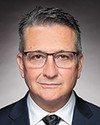
Heath MacDonald Liberal Malpeque, PE
It's beneficial to have a farmer in my caucus who's close to me. We're not related, by the way.
Look, there's a perfect point, that—
Liberal
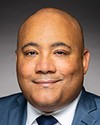
The Chair Liberal Michael Coteau
I'm going to be fair here. We have about 10 minutes left, so we're going to do four minutes and four minutes.
Go ahead on your point of order.
Conservative
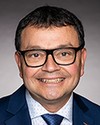
Jacques Gourde Conservative Lévis—Lotbinière, QC
Mr. Chair, I have a point of order. Could you allow the minister to send his response in writing, given the length of the question that has just been asked? It deserves at least a response. Can you give the minister permission to forward that response?
Liberal
The Chair Liberal Michael Coteau
You can make the request to the minister, but that's not a point of order.
We have nine minutes left, so I'll do three and a half minutes, three and a half minutes and two minutes. Is that fine?
It's three and a half minutes for Mr. Bonk.
Conservative

Steven Bonk Conservative Souris—Moose Mountain, SK
Thank you.
Minister, when you were here in the fall, we discussed strychnine. I asked you about it directly, and you gave a very direct answer. I asked whether you grant exemptions for strychnine use, because it's a huge problem in the Prairies right now. Your own communications department, the CBC, said that about $800 million in damage a year is caused by Richardson's ground squirrels. We have producer groups and others all wanting this program: R.J. Sigurdson, the agriculture minister in Alberta; Daryl Harrison, the former agriculture minister in Saskatchewan; David Marit, the former Saskatchewan agriculture minister; SARM; APAS; Canadian Cattlemen's Association; stock growers; and the Saskatchewan Cattlemen's Association. It's a huge problem for Saskatchewan and western Canada.
What is your response today?
Liberal
Heath MacDonald Liberal Malpeque, PE
I'll stand by my comments from the last meeting.
There's an exemption that is part of the legislation. I think that exemption should be looked at and obtained. When we dig deeper into it and see what's happening in the U.S., in places like Nevada, there are criteria that can be built around the application side of this. I think the farmers and—
February 12th, 2026 / 11:50 a.m.
Conservative
Steven Bonk Conservative Souris—Moose Mountain, SK
Excuse me, Minister.
Why was this exemption not granted?
Liberal
Heath MacDonald Liberal Malpeque, PE
That's a PMRA resolution. As you know, I don't have any control over the PMRA.
I'm an advocate—a loud advocate, in some cases—but I think there are further discussions that need to take place. There are additional things we should be able to do. Do a comparable...to other parts of the world using strychnine and using it safely. The application—
Conservative
Steven Bonk Conservative Souris—Moose Mountain, SK
Will you commit to speaking with the Minister of Health so we can get this across the line? Time is of the essence for farmers in western Canada.
Conservative
Steven Bonk Conservative Souris—Moose Mountain, SK
Thank you, Minister.
The next things I'd like to talk a little about are research centres.
I live very close to the research centre in Indian Head. Those are neighbours of mine benefiting from the research done there.
I'd like to bring up a few things with you.
One is that I know your government is very concerned about climate. I would say that it's obsessed, in some cases. We have programs like OFCAF. My colleague just mentioned this to you. He was saying how they're doing programs like cover crops and rotational grazing. That's stuff we've been doing for 30, 40 or 50 years in western Canada. This is not new. Farmers don't need help with that. We had innovations come out of Indian Head from Guy Lafond and Jim Halford. We created zero tillage, which has arguably done more for the climate, in terms of agriculture, than any other technology developed. Now you see it worldwide.
It's only $3.8 million to keep that research station viable, yet it's produced—I would argue—billions of dollars of value in agriculture. What is the rationale for closing a place like Indian Head, which has 140 years of research excellence?
Liberal
The Chair Liberal Michael Coteau
I'm going to have to stop it there and go to the Liberals for three and a half minutes.
Mr. MacDonald.
Liberal
Kent MacDonald Liberal Cardigan, PE
It's great to hear that cover cropping has been done for a long time in western Canada, but no-till has been done across Canada for a long time as well. The research into that is ongoing on both files.
Minister, do you want to speak to the climate adaptation program in P.E.I., the OFCAF program? You didn't get a chance. I'm not usually known as long-winded.
Liberal
Heath MacDonald Liberal Malpeque, PE
The hot topic here is science, obviously. I talked about more collaboration, taking science out of its silos and involving stakeholders at every level, including academia. Knowledge sharing is extremely important in agriculture and across the country, especially when we're dealing with issues like the ones we're seeing now, with droughts in some areas and changing climates.
Since 2022, OFCAF has trained approximately 3,000 agrologists in this country, and 27,000 producers have attended knowledge exchange and peer-to-peer learning activities. I don't think there are many things that are more important than programs that bring farmers, producers, growers and scientists together. I'm not saying that OFCAF is the end of the world with regard to that, but it's certainly playing an integral role in helping farmers across the country in some aspects. In other aspects, maybe it isn't so much.
There has to be a stringent evaluation done on it. I hope the national policy framework brings out that information that will help both sides of this table I'm sitting at with regard to their comments, and also shed light on how we forge ahead in the future.
Liberal
Kent MacDonald Liberal Cardigan, PE
That's a very positive way of looking at it.
Every pocket of researcher funding has a timeline, and eventually we have to move on to other ways of being a bit more efficient in delivering our programming to producers.
There's the trade diversification funding you just recently announced of $75 million over five years. Can you speak to how that's going to support market access to and supply chain readiness for these markets, particularly the ASEAN markets we've just introduced?
Liberal
Heath MacDonald Liberal Malpeque, PE
It's one aspect of it.
When you talk to producers and those representing producers and stakeholders, Canada's high commission opening an office in an ASEAN country and opening a “protein office” in Beijing.... Having boots on the ground in those countries is, without a doubt, one of the most important things.
To get those companies to the ASEAN countries, whether they're the beef farmers in Singapore or Manila, with us, it's extremely important to have them go back year after year, or maybe even more frequently, to build those relationships. Governments can only do so much. They can open the door, but they can't keep the relationship at that grassroots level. That's what we need, and we need more of that.
Liberal
The Chair Liberal Michael Coteau
Thank you.
We have two minutes for the Bloc, and then we'll finish up.
Bloc
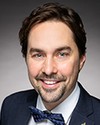
Sébastien Lemire Bloc Abitibi—Témiscamingue, QC
Thank you, Mr. Chair.
There's a lot of talk about buying local, obviously, about buying Canadian in this context. However, it's becoming increasingly difficult to do so, particularly because labelling is an issue. Products are difficult to identify. We've seen it in grocery stores many times.
In your opinion, Minister, would it be time to make a real in-depth effort to improve labelling, to ensure traceability and the true origin of products, and to address transparency issues for consumers with respect to processing or the use of GMOs?
Liberal
Heath MacDonald Liberal Malpeque, PE
With labelling, we talk about the costs to producers, processors or manufacturers in some of these cases. I think the whole system should be looked at in regard to...whether it's buy Canada labelling or what we have to do....
We also have to keep in perspective the costs that may arise from some of these initiatives. We're obviously having an affordability issue across this country, and putting more costs on a producer, a manufacturer or a processor is going to translate into more money that the retailer is going to charge the local individual coming in to buy those products.
There's a whole system that has to be looked at. It can't be just one or two things that we have an interest in.
I agree with you to the extent that it should be clear what's Canadian and what's not. That's extremely important. I think we've made a lot of headway in that regard, but obviously, there's a lot more to do.
Bloc
Sébastien Lemire Bloc Abitibi—Témiscamingue, QC
I invite you to also consider the cost of not adopting traceability labelling and, of course, the health issues it may cause. We know that traceability data are often available and quite accessible. It's just about making them available to the public.
Thank you.
Liberal
The Chair Liberal Michael Coteau
Thank you very much.
That concludes this part of our meeting.
Minister, Deputy Minister, thank you for your time, as always.
We'll suspend for five minutes.