Evidence of meeting #31 for Agriculture and Agri-Food in the 45th Parliament, 1st session. (The original version is on Parliament’s site, as are the minutes.) The winning word was agristability.

A recording is available from Parliament.

On the agenda

Members speaking

Before the committee

McKee  Senior Vice-President of Business Development, National Circle for Indigenous Agriculture and Food
Atkins  Chief Executive Officer, Agricultural Credit Corporation
Ross  General Manager, Union des producteurs agricoles

The Chair Liberal Michael Coteau

I'm going to have to stop you there.

Sébastien Lemire Bloc Abitibi—Témiscamingue, QC

Thank you very much.

The Chair Liberal Michael Coteau

I'm sorry. I gave you an extra 30 seconds.

We'll go to the Conservatives and Mr. Bonk for four minutes, and then we'll finish off with the Liberals.

Go ahead.

12:30 p.m.

Conservative

Steven Bonk Conservative Souris—Moose Mountain, SK

I'd like to talk a bit today about cross compliance and environmental programs. We know there's a lot of overlap between the two. We can take a look at some of the examples from the past. Farmers in general are some of the most environmentally conscious people you'll ever meet because we make our living from the health of our soil. We understand our farms. We understand the climate we operate in.

I can give you a quick example. Grasslands National Park is in my area. Some well-meaning scientists in Ottawa decided that there was overstocking and it was hurting the grasslands. They removed the livestock and everything got worse. With double the amount of livestock, because it's part of the ecosystem and it's how our native prairie soils evolved, things got better.

Mr. Atkins, what are some of the things you're hearing from your clients about cross compliance and how it's hurting them when they're trying to apply for some of these programs?

12:30 p.m.

Chief Executive Officer, Agricultural Credit Corporation

Jaye Atkins

In some of the programs, what we're seeing, as my colleague mentioned this morning, is there are restrictions in place such that you may not fit into that funnel exactly, and those things can force people out of the program extremely quickly.

In regard to cross compliance on them, the programs today do work well as far as business risk management programs work well together, although, as Mr. Ross said, of course the funding could be improved. I think there's an educational component to this that no one's really spoken about this morning, and I think there has to be an opportunity to apply for and allow for exemptions in specific cases. Maybe we all did pick rocks, which was a character builder, but on the other hand, each farm is different, and we need that exemption area.

12:35 p.m.

Conservative

Steven Bonk Conservative Souris—Moose Mountain, SK

If I could jump in quickly here, I'll go back to the reference margin.

I know that you worked at FCC prior to your career here and you understand Saskatchewan and the Palliser Triangle well. Right now, they're in their seventh year of qualifying for these programs. As you know, the reference margin is affected by that. How would you like to see it change so that it could better help the producers who need it?

12:35 p.m.

Chief Executive Officer, Agricultural Credit Corporation

Jaye Atkins

I think there has to be some form of a baseline there. As I mentioned earlier, there are producers in B.C. who have had four loss years. For all intents and purposes, their reference margin is zero. If we're lending on a reference margin, what do we do? How do we adjust for that?

I think there has to be an opportunity.... As I mentioned, we have a gentleman who farms and sells a million dollars' worth of product. His reference margin is $2.76. When he brings it in and we're lending our reference margin for this gentleman, what do we do with that? He has always been a good producer. In years when the crop is off, when there are losses, it doesn't work. I think for things like catastrophes, for mother nature, there has to be a way around that, because when he came to us, we said we can't do anything. We've talked with the AgriStability folks, and they said they can't do anything because that's just the way the program is.

12:35 p.m.

Conservative

Steven Bonk Conservative Souris—Moose Mountain, SK

I think I have time for just one more question. I'm going to ask very quickly about AgriInvest.

Right now it's at 1% of sales, and we all understand that this is almost useless at the moment. Producers want to look after themselves and not rely on these programs.

There have been suggestions to move it to 3%, but it hasn't moved on that yet. What do you think would be the right amount for that?

The Chair Liberal Michael Coteau

You're 15 seconds over, so give a really short answer, please.

12:35 p.m.

Chief Executive Officer, Agricultural Credit Corporation

Jaye Atkins

I think 3% is a good area to be aiming for, as 1% doesn't do much.

The Chair Liberal Michael Coteau

Thank you so much.

I'm going to go to the Liberals for four minutes.

Sophie Chatel Liberal Pontiac—Kitigan Zibi, QC

Thank you, Mr. Chair.

I'd like to welcome the witnesses and thank them for joining us for this important study. I'd also like to thank them for their advice ahead of the discussions with provincial ministers this summer.

My first question is for Mr. McKee.

Do you have a specific recommendation on how to better include indigenous voices in program development? As you said, we need to ensure that programs help communities before the program is finalized, because after that, it is too late.

Do you have any concrete suggestions? If you have any to share with us today, that would be excellent; if not, we would be grateful if you could send them to us in writing.

12:35 p.m.

Senior Vice-President of Business Development, National Circle for Indigenous Agriculture and Food

Chris McKee

Thank you.

I think there's an easy step one. For the last two years, there's been a national organization that has a lot of connection with those communities, and we'd be happy to speak to the programs. Put us around the table and let us reach out and talk to the stakeholders and the ones who are going to be utilizing these programs so that there's actually that common voice around the table as opposed to trying to talk to a nation in B.C., because you're going to get a different answer from a nation in Quebec or Ontario. Agriculture doesn't look the same across the country. We all know that. Well, let's work at being intentional and do it around the table right now, starting today.

Sophie Chatel Liberal Pontiac—Kitigan Zibi, QC

Thank you very much. We'll take note of that.

My next question is for Mr. Atkins and Mr. Ross.

This week, we heard from witnesses who described the AgriStability program as being one of the programs facing the most difficulties. It's the only program within the suite of risk management programs that takes into account global economic disruptions in the supply chain.

An additional tax credit had been proposed to cover the costs incurred in addressing these challenges, which, as we know, will unfortunately persist in the current economic and geopolitical climate. Eligible costs could relate, for example, to changes in crops to cope with the tariff on canola, the construction of new roads, storage, the exploration of new markets, transport and so on.

Any thoughts, gentlemen?

12:40 p.m.

Chief Executive Officer, Agricultural Credit Corporation

Jaye Atkins

Certainly, because of political factors, they are having to adjust and change. AgriStability is there as a whole farm insurance program for the revenues. In some cases, and I'll use the example of canola, that had nothing to do with production. That had everything to do with something that was beyond the farmer's control.

AgriStability certainly provided for that loss in farm income, because expenses still have to be paid whether the crop is in storage or whether the crop is sold. In those cases, there needs to be some form of—I hate calling it an emergency plan—an emergency fund.

Mr. Ross spoke earlier about the fact that farmers and ranchers can only manage so many things. They can't manage what's happening in the Strait of Hormuz and they can't manage what's happening in China, but they can manage what's happening on their farms.

From my standpoint, the AgriStability program needs to allow for those changes and challenges that are outside the farmer's control.

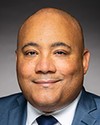
The Chair Liberal Michael Coteau

Thank you so much.

We've gone 30 seconds over time.

Sophie Chatel Liberal Pontiac—Kitigan Zibi, QC

Mr. Chair, I'd like to ask Mr. Ross to send us a written response.

The Chair Liberal Michael Coteau

Thank you.

I'd like to take this opportunity to thank our witnesses for joining us here today.

Thank you for making time and adding to this study. We appreciate everything you do for agriculture.

Is it the will of the committee to adjourn the meeting?

Some hon. members

Agreed.

The Chair Liberal Michael Coteau

Thank you.

The meeting is adjourned.