You have 24 seconds.
Evidence of meeting #32 for Agriculture and Agri-Food in the 45th Parliament, 1st session. (The original version is on Parliament’s site, as are the minutes.) The winning word was program.
A video is available from Parliament.

Evidence of meeting #32 for Agriculture and Agri-Food in the 45th Parliament, 1st session. (The original version is on Parliament’s site, as are the minutes.) The winning word was program.
A video is available from Parliament.
Conservative
Liberal
Liberal

Marianne Dandurand Liberal Compton—Stanstead, QC
Thank you, Mr. Chair.
Thank you to the witnesses for being with us. I also want to thank them for sharing their experiences with the business risk management programs and talking about the other challenges they face in agriculture.
This is for Mr. Hebert.
We rarely hear ideas like yours. I was quite surprised by a number of your recommendations, but I'm very intrigued. This is the first time I've come across a similar recommendation for the AgriInvest program.
Could you elaborate on it? How do you see the government improving AgriInvest, to help farmers become more resilient?
President, The Hebert Group of Companies Ltd., As an Individual
I'm not going to disagree with you. My ideas aren't always that wide-stream. The reason I struggle with AgriInvest is that currently, as I said, it's a $10,000 matching the minute you qualify for that, so it's implemented differently on every size of farm. Really, it's 100% return on the farmers' money given to them by the government, for which then a lot of times we hear complaints because they have to pay tax on free money when they take it out. My personal opinion is, let's take it away.
One of the greatest advantages agriculture has is cash-to-accrual accounting. We can file tax on a cash basis, so in a lot of good years for farms, they buy cattle or fertilizer before the end of the year to reduce their tax bill. It's deferred income smoothing. We're allowed to do it. I think we should be able to use AgriInvest so that instead of giving the money to a different farmer or retail, we put money in AgriInvest, which is deductible. We can invest it. Let's not just have it invest at 1%. Let's call it a 3% or a 5% guaranteed investment and let the government and the banks work together. Therefore, we'd get our win by the tax savings over the years when we do that. When we take that money out, it's taxable, so we can manage when we're going to pay tax on that when we have a weaker year. I would argue that is what AgriInvest is meant to be, which is to build up a self-insurance fund to help us in a bad year.
I also think it's a bit of a win for the government. If you have billions of dollars in AgriInvest that have been put there by farmers to pay less tax, to save money for poorer years, that's a pretty good indicator that the industry is in a good spot, specifically if they have to say whether they're a grain farmer, a cattle farmer or a dairy farmer. If there's no money in AgriInvest, because it has all been pulled out and they've been willing to pay tax on it in order to help their situation in a bad year, you guys will know the industry is not in a good spot.
I think it's a win for farmers. I think it's a win for the government. Lastly, I'm sure it's a win for banks, because they seem to love billions of dollars of our money in it, both the government's and mine.
Liberal
Marianne Dandurand Liberal Compton—Stanstead, QC
That's a really interesting perspective. I'd ask that you submit all of your proposals to the committee in writing so we can consider them. You covered a number of recommendations in your opening remarks, but I don't think five minutes was enough time. You seem to have a lot of ideas that you've given a lot of thought. If you could submit them to us in writing, it would be particularly helpful and relevant when we're drafting our report.
Now I'd like to talk about AgriRecovery. There are still questions about the timeliness of the support. It was tested in British Columbia, among other places. Following a disaster, a certain percentage, based on a preliminary assessment, was provided to help roll out the support quickly. Afterwards, a full assessment was done and adjustments were made.
Do you think that approach could be applied more widely, to all the situations covered by AgriRecovery?
President, The Hebert Group of Companies Ltd., As an Individual
For sure, I think AgriRecovery could be adapted. My perfect world is one where we have two or three programs that are good already and we don't have to do AgriRecovery. AgriRecovery means that we're having to do it ad hoc, which means something is wrong, or something has come up that we haven't thought about.
For instance, if an AgriStability program is built correctly and allows enterprise accounting so that operations that have separate units aren't being penalized and you have early payments allowed in AgriStability.... Today's world of bookkeeping is significantly different. We do the books on a 40,000-acre farm in fewer hours than we used to on a 1,000-acre farm. Now farms need to step up and do a better job of having books done correctly, but I think technology would allow government to do interim payments very rapidly through a well-run AgriStability program, with some changes that, to be honest, have a potential to no longer require AgriRecovery. You're going to have the odd one because of a major event or an industry that has four or five bad years back to back, because their margins would be gone, but as I said, in a perfect world, we should adjust our current programs so that AgriRecovery is not needed as often.
Liberal
Marianne Dandurand Liberal Compton—Stanstead, QC
That leads me to ask you a more general question.
My sense is that, over the years, the business risk management programs were designed to address fairly exceptional circumstances that are increasingly becoming structural risks—in other words, more and more extreme weather events happening at more and more frequent intervals.
Do you agree with me that one of the issues with the business risk management programs is that they aren't suited to the new reality facing farmers when it comes to climate risks?
President, The Hebert Group of Companies Ltd., As an Individual
I think the crop insurance, or the AgriInsurance program, is set up for climate risk. I mean, for us in Saskatchewan and western Canada, that is mainly drought or too wet. I'm pretty lucky; I farm in an area where I've been affected by drought only once. I own way too many $1,000 tow straps to pull my equipment out, because we're too wet. Those are the climate events we deal with.
Personally, I think the biggest issue with the programs is that they haven't adapted to the rapid increase in the cost of production. For instance, in AgriStability specifically, a cap of $3 million is one of the craziest ideas I've ever heard of. There's no cap on—
Liberal
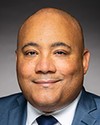
The Chair Liberal Michael Coteau
I'll have to stop you there. We're over time. I'm sorry about that.
We'll go to the Bloc for six minutes.
Bloc

Sébastien Lemire Bloc Abitibi—Témiscamingue, QC
Thank you, Mr. Chair.
Mr. Lafontaine, I'm especially proud to be hearing from you today. A few years ago in our region, the winter frost, drought and wildfires—which, I would remind everyone, hit Abitibi‑Ouest especially hard—all came together to create the perfect storm. It led to dire situations, such as people having to move herds immediately, to say nothing of the mental toll on farmers' and the consequences for their well-being.
You led an important effort, alongside Maxime Fontaine, Mathieu Dumont and Alexandre Bégin. I'm talking about the red letter, which I have with me here. It starts with a petition signed by every, or just about, farmer in Abitibi‑Ouest. In the letter, you were sounding the alarm. You were trying to make your voice heard. You were trying to put Abitibi‑Ouest on the map, because you weren't on the radar. The programs weren't being deployed in a timely way, which had major consequences.
I'd like to know the consequences you're still living with today. You talked about it in your opening remarks.
Further to my colleague Mr. Gourde's questions about your pastures or grazing, I'd like you to tell us about the consequences of that situation.
Farmer, Ferme Lafontaine-Noël, As an Individual
The drought was actually so serious that our oldest pastures died completely. Currently, there's no forage there, but we still have to feed our herd. We can't renew all our pastures in the same year. It's also very expensive. It costs almost $200 an acre to replant a pasture, and we have at least 1,200 acres. What's more, it takes five or six years to do all that, as I said.
We now have additional expenses because we have to replant the pastures, on top of having to buy hay. Our pastures can't provide what we need. We now have 50 fewer cattle, and with the current calf price, that's nearly $200,000 in revenue we don't have.
Bloc
Sébastien Lemire Bloc Abitibi—Témiscamingue, QC
At the time, we met with Minister MacAulay together. Overall, the minister was receptive and listened to your concerns, as you said earlier. Obviously, the federal government contributes 60% of program funding, with the provinces and territories providing 40%. The department officials following these proceedings know they have a responsibility.
We were basically told that the federal government sets out the guidelines but that it was up to the other government to implement them, in this case, the Quebec government. As you mentioned, Quebec's response was about the same, saying that it couldn't do anything under the framework it had been given. At the end of the day, farmers are the ones who suffer the consequences. Still, some changes were made. I remember going to see you and you showing me the numbers.
How did the governments adjust the programs, and what effect did it have on your business?
Farmer, Ferme Lafontaine-Noël, As an Individual
When we met with the minister, we showed him the numbers, but everything the government did ultimately produced little.
The government ended up providing what it considered to be fair compensation. Quebec ended up compensating us through a ministerial initiative, because it couldn't find a way to resolve the matter and it didn't want to open the crop insurance program. However, it had the ability to do so, since we were above the 15% difference with the weather station data.
Personally, I expect my insurance provider to cover me if I'm paying for insurance. If my house burns down, I expect the insurance company to pay for the damage. I don't expect the insurance provider to pay for just half the damage and then have to find another program.
Bloc
Sébastien Lemire Bloc Abitibi—Témiscamingue, QC
You're saying that you would have needed double or triple the amount. You were given up to $50,000 or $135 per head, which was nowhere near how much you needed.
Adjustments were then made. I'd like to highlight how ridiculous the situation was. It rained on May 1 or June 1, if I recall correctly, so that meant farmers weren't short of water, even though the effects of the drought were visible. Almost the entire field was grey.
How were the programs, the indicators, adjusted in subsequent years? What was the financial impact on your profitability?
Farmer, Ferme Lafontaine-Noël, As an Individual
They adjusted the program midstream, but they cut the compensation grid by almost half.
In the end, the program still isn't responsive. It's worse than it was before, I think.
Bloc
Sébastien Lemire Bloc Abitibi—Témiscamingue, QC
When it comes to farmers' needs, communication between the governments has been impacted. That's what I'm hearing today.
Thank you.
Liberal
The Chair Liberal Michael Coteau
Thank you very much.
We'll go to the Conservatives for five minutes.
Conservative
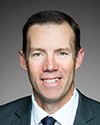
John Barlow Conservative Foothills, AB
Thanks, Mr. Chair.
I want to start with Mr. Fagan.
You were talking about the importance of programs like a livestock insurance program. Conservatives have been pushing for a national insurance program for quite some time. It's good to hear that it may be implemented as early as tomorrow.
I would assume that market certainty would also be very important to you as a producer. The current government allowed the United Kingdom accession to the CPTPP. Beef imports from the United Kingdom are up by 150% over one year, with zero Canadian beef going to the United Kingdom. Over the next few months, the government is looking at signing a trade deal with Mercosur, which includes Brazil and Argentina. Imports of low-quality, cheap Argentinian and Brazilian beef into Canada are up by 300%, despite a 26% tariff. I think it could be devastating to the Canadian cattle industry if the government signed a free trade agreement that would eliminate that tariff. We would see a massive influx of low-quality South American beef into Canada, which would displace Canadian products that are produced at a much higher standard.
Would this raise some concerns with you as a cattle producer about the impact this could have on your business?
Farmer and Butcher, Beothuk Land & Cattle Company, As an Individual
With regard to marketing, there is no federal slaughterhouse at home. We're all provincially regulated, so we sell within our province. I have my market secured. I travel around rural Newfoundland. I have 21 stores, and counting, that carry my products. Keeping the animals on the island and attaining them at a fair price is the problem.
As for the rest of the country, the boys are going to be in trouble if that happens.
Conservative
John Barlow Conservative Foothills, AB
They would be bringing Brazilian beef into slaughterhouses here—or trim—mixing it with Canadian beef and selling it across the country. There's not a part of the country that would be safe from this.
Thank you very much for that answer.
I'm going to pass the rest of my time to my colleague, Mr. Bonk.
Conservative

Steven Bonk Conservative Souris—Moose Mountain, SK
I have a question for Kristjan Hebert.
A few years ago, we were chatting, and I remember that you mentioned at the time that the biggest risk to your farming operation was government policy. Then we sat down and we talked a lot about private insurance, as opposed to government-funded insurance. I'm just wondering if you could tell us a bit about your experience, because you've dealt with a lot in that industry and you understand it very well.
Could you compare the two, what we currently have with our BRM products that are funded by the government and those that are private?
President, The Hebert Group of Companies Ltd., As an Individual
The main private product that most people understand is hail insurance, but there's Global AG Risk Solutions, and another one called Agi3. They are variations of AgriStability or revenue insurance. They work quite well at building around the current government programs. The detriment to private products, if we wanted to take away a bunch of the liability and operational risk, is that the subsidy for crop insurance that the federal and provincial governments pay is so astronomical.
If I were to give you what I would do for transformative change, I would go to a voucher type of system. I would make the provincial crop insurance companies run as subsidiaries, no different than SaskTel having to run as a subsidiary in the province of Saskatchewan and competing against Bell and Rogers. As a farmer, as I decide which insurance works best for me, I buy it. I submit my receipt, and I get the exact same subsidy whether I buy private crop insurance or whether I buy AgriStability. They wouldn't replace government insurance, but they would build products that work very well for different types of operations and different regional changes all around the government programs, and they would remove liability and improve timeliness on some of the stuff.
On top of that, I think you could really look at reinsurance diversification. The federal government could look at taking on catastrophic risk, from a reinsurance standpoint, for all of the products combined, and through that diversification would probably get significantly better reinsurance rates, for both the private companies and themselves.
Conservative
Steven Bonk Conservative Souris—Moose Mountain, SK
Could you maybe expand on the reinsurance side of it? We had that in the first round. We talked a little bit about it. Can you expand on that and how you think that could help us with minimizing our risk?