We can do that.
Evidence of meeting #9 for Agriculture and Agri-Food in the 45th Parliament, 1st session. (The original version is on Parliament’s site, as are the minutes.) The winning word was products.
A video is available from Parliament.

Evidence of meeting #9 for Agriculture and Agri-Food in the 45th Parliament, 1st session. (The original version is on Parliament’s site, as are the minutes.) The winning word was products.
A video is available from Parliament.
Conservative
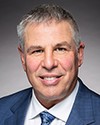
Dave Epp Conservative Chatham-Kent—Leamington, ON
Thank you, sir.
That is huge for my riding, for my greenhouse industry, which I'm going to next. They're listening. With $1.7 billion traded across the border annually, efficient and harmonized regulatory processes are critical for market access to the U.S. Will you support a harmonized pest risk assessment with the U.S. to allow the establishment of a North American pest and disease perimeter?
Deputy Minister, Department of Agriculture and Agri-Food
I think the issue here is that we each have our separate legislative framework. It would be more than just a matter of harmonization. It would actually have to involve thinking about the legislation as well.
Conservative
Dave Epp Conservative Chatham-Kent—Leamington, ON
I understand, but the U.S. is very quick to block imports when there's a pest involved. Unfortunately, our CBSA is not so quick. That's why the industry is pushing for a North American perimeter that's harmonized.
On the topic of harmonization with the U.S., do you support harmonized organic production standards with the U.S.? Right now production is moving to the U.S. so the organic production can be imported into Canada.
Liberal

Heath MacDonald Liberal Malpeque, PE
Let me take a step back to your first question, Mr. Epp, if I could. Most recently, in China, one of the impediments and barriers I found was the regulatory alignment of two countries—exactly what you're talking about, only it's the U.S. We agreed, actually, to have SENASICA, which is their representative in Mexico.... We basically told SENASICA and CFIA that within three months, I think it was, they have to sit down and meet, and we have to go through our regulatory alignment—
Conservative
Liberal
Heath MacDonald Liberal Malpeque, PE
Well, that's what I'm getting at, Mr. Epp. If there's an opportunity at the right time to do that, it would make my job a heck of a lot easier if we could do something like that. At some point, when we get through the next phases of the trade issues that we're facing, I would be more than happy to sit down with my counterpart to see if we can devise that.
Liberal
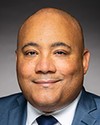
The Chair Liberal Michael Coteau
We have to move on. Thank you very much.
Now we'll go to MP Harrison, who is online, for five minutes.
That is a beautiful backdrop.
Liberal

Emma Harrison Liberal Peterborough, ON
Hi, committee. I miss you all.
Thank you for joining us, Minister.
I join you today from my small farm in the riding of Peterborough. You can see that we've started setting out the bales. We'll be starting the bale grazing soon.
As a member of Parliament for Peterborough, I have had the opportunity to speak to many farmers in my community. Being a beef farmer myself, one of the concerns I've heard, especially from the beef farmers of Canada, is their need for reliable access to the international markets for beef. I have to tell you that people are delighted to hear about all your trade missions and how you have been moving very quickly all across the globe, talking about agriculture everywhere.
I'm wondering if you could please share with the committee some details about your most recent trade mission to Mexico. Could we hear about the importance of these missions and what you have accomplished in visiting?
Liberal
Heath MacDonald Liberal Malpeque, PE
Thank you.
Mexico is a very interesting country. When you do these trade missions, as many know around the table, you're never quite sure what to expect. I can tell you that the Mexico mission was very fruitful, and I think we accomplished quite a bit.
I'll go back to Mr. Epp. First and foremost, when I walked away from the meeting, after we agreed to have a regulatory alignment of some description and have them meet in that regard, most producers who right now export to other countries were pleased with that assessment.
The other aspect of this is.... Mexico City is where we were stationed for the first little while. It has 23 million people, with a growing middle class, which is extremely important. They import a little over 40% of their food, so there are opportunities for us. We have to find ways to build on that, to reduce the impediments that are there and to make trade much easier. We've agreed to do that.
Another thing is that, as many of you are aware, JBS, along with the Canadian Cattle Association, was there moving beef into 41 Costco stores. This was going on for about a year. It was a very good initiative to get across the line. They are planning on building three more stores in the next year, I believe.
There were many things that happened on that trip. With a bilateral agreement with us, Mexico reached trade for about $6.9 billion, a 44% increase since 2019, driven by complementary exports and imports. Having our Prime Minister go there with a comprehensive strategy for the new President and form that relationship was extremely important. It laid the groundwork for us to be able to go in and deal with it.
Relevant to the beef, that's an opportunity, but there have been opportunities in canola as well. There have also been opportunities in oats going to Mexico. We were in one plant that had a long line of modified equipment for an innovative process of packaging granola bars. They were doing 800 granola bars a minute. They were using Canadian oats. They were working around the clock, seven days a week.
There is potential there. I look forward to further communications with the minister to see what we can do on the front of, first and foremost, ensuring that phytosanitary certificates are similar in both countries and providing information back to CFIA to ensure that our due process is in line with theirs.
We also had the opportunity to get pet food across the line, which wasn't allowed in Mexico. Again, it's further to our beef industry, and it allows them to utilize all of the animal. We then had apples from the east coast that would have access to Mexico.
It's moving in the right direction. People are willing to do business. I look forward to heading back there soon and doing more business, because the opportunities are endless. It's not just with beef; it's with other sectors as well.
Liberal
Emma Harrison Liberal Peterborough, ON
I don't think that's enough time to ask a question.
The minister answered more than I was expecting, so thank you very much, Minister.
Enjoy your committee, everybody.
Bloc

Yves Perron Bloc Berthier—Maskinongé, QC
Thank you, Mr. Chair.
Minister, I'd like to talk about the issue of food.
Organic farming, which is a very important sector, has immense potential for growth, but it’s being held back by regulatory barriers that are stifling growth and competitiveness.
As part of the reform to reduce barriers, what is your department doing to unlock the potential of organic farming?
Perhaps one of the things that can be done is to stop fighting for funding to review the organic standard every five years. It would be easy to make this funding permanent. Data should also be made available to support the formulation of a comprehensive plan.
Liberal
Heath MacDonald Liberal Malpeque, PE
I had a couple of meetings in my office with the organic sector, as I have organic farms in my riding. The organic trade is obviously growing. We'll certainly ensure that the organic sector has an opportunity to talk within the policy framework as well. I'm learning more about the organic sector, to be quite honest. The funding every five years was something that they raised with me, and it's something that we'll look at.
Yves Perron Bloc Berthier—Maskinongé, QC
Thank you, Minister.
My next question is on the proper labelling of foreign products.
We have had some discussions about the non-tariff barriers imposed by some countries, which restrict our ability to export meat to Europe and the U.K. Our warehouses in Quebec are full of carrots and yet supermarkets are selling carrots from China. The source of the vegetables on our shelves is often unclear, and this is a major concern.
While a significant part of this issue is a provincial responsibility, the entry of foreign products into the country is under federal jurisdiction, and so I think the government could look into reciprocity in terms of compliance with standards.
How come we allow the large-scale import of products treated with pesticides and herbicides, and yet our farmers are prohibited from using these substances?
Robert Ianiro Vice-President, Policy and Programs, Canadian Food Inspection Agency
Thank you for your question, which comes up regularly.
The bottom line is that any imported product needs to meet the same standards domestically. If there are any situations with carrots or any other products, the requirements are very clear. If there are any requirements you're aware of, either on pesticide limits or on not meeting our labelling requirements, that would be a contravention. We uphold the same standards for imported products as for domestic ones. If you aware of any, we would definitely look into those and take action.
Liberal
The Chair Liberal Michael Coteau
Thank you very much.
Next we go to the Conservatives for five minutes.
Go ahead, Mr. Gourde.
Conservative

Jacques Gourde Conservative Lévis—Lotbinière, QC
Thank you, Mr. Chair.
Thank you for joining us today, Minister, and congratulations. You have a prestigious title, but it comes with enormous responsibility.
Do you know the number of farmers in Canada, all sectors combined?
Conservative
Conservative