I appreciate it. Thank you.
Mr. Penner, again, I'm sorry.
You were saying more power generation is being built.

Evidence of meeting #13 for Environment and Sustainable Development in the 45th Parliament, 1st session. (The original version is on Parliament’s site, as are the minutes.) The winning word was vehicles.
A recording is available from Parliament.
Conservative

David Bexte Conservative Bow River, AB
I appreciate it. Thank you.
Mr. Penner, again, I'm sorry.
You were saying more power generation is being built.
Chair, Energy Futures Institute
Yes. We're spending a lot of money, and it's borrowed money, so there's going to be interest and lots to pay in the future.
Just to go back to what we're talking about here, how do we make it possible and make Canadians comfortable to purchase electric vehicles, if that's what we want them to do? I think we've put the cart before the horse. The EV mandates are restricting the supply of non-electric vehicles before we have the infrastructure in place to make it convenient, affordable and reliable for Canadians to plug in their vehicles.
Again, if you live at home, in a stand-alone, picket-fence kind of house, that's one thing, but in an apartment building that's 50 years old, in an urban setting, it's very difficult to get your own reliable access to charging.
Conservative
David Bexte Conservative Bow River, AB
I totally agree with what you're saying, and I understand that there's a huge dilemma in society about how we're going to manage this. A big part of this is underpinned by the general grid availability and how much electricity is in the grid.
You alluded to how there are 7,000 megawatts of unserviced commercial and industrial demand in B.C., which comes with its own opportunity cost related to how much GDP is not being produced because that opportunity is not being pursued. You coupled that with incidents such as Brookfield looking like it's privatizing some power generation or exporting that power, which exacerbates the problem.
We spoke a bit about weather and climate impacting low-income people first and worst. All of these other things, the economy and more debt, are impacting low-income people first and worst with high grocery prices. Could you please comment on which regulations and regulatory models need to change in order to move this ball down the field a bit?
Chair, Energy Futures Institute
I think we need to differentiate between market signal and government directives. We've heard some talk here today about the market signal the government is sending. That's not a market signal; it's a government directive. That's quite different. The market signal right now is that consumer consumption of electric vehicles is dropping in market share in Canada. Statistics Canada is reporting that. The market share has gone down by a quarter in the last 12 months. That's the market signal we're seeing right now.
A lot of it is tied to affordability. We did some polling and hired Ipsos to do a poll this summer. The number one reason British Columbians aren't electing to buy an electric vehicle is the cost. The purchase price is an average of $8,000 to $10,000 more than is it for a comparable non-electric vehicle. The other top two concerns are charging access and range anxiety. It is ironic that although the range has improved in electric vehicles, at the same time, public concern about range has been going up. Even though the range is getting better, public concern is getting stronger about that issue.
November 6th, 2025 / 1:05 p.m.
Conservative
David Bexte Conservative Bow River, AB
There's a real disparity between what goes on in the Lower Mainland and the GTA versus in the rest of Canada. It is not a 17-minute average commute. When your job is in your truck, going from well site to well site or field to field, it's not 17 minutes, and that is a great issue.
Is there anything else you'd like to add in the time I have left? It's an open forum.
Chair, Energy Futures Institute
If we look back at what's worked so far, electric vehicles took off without a government directive. Cellphones became popular without the government telling phone manufacturers they couldn't make land lines anymore. It was consumer demand. Improved technology sold itself without government subsidies and without mandates.
Liberal
Conservative

Ellis Ross Conservative Skeena—Bulkley Valley, BC
Thank you, Mr. Chair.
I move:
That, notwithstanding the usual practices of the committee concerning access to and distribution of documents: a) up to three associate members of the committee per party be authorized to receive the notices of meetings and notices of motion and be granted access to the digital binder; b) the associate members be designated by the offices of the whips of each recognized party and sent to the committee clerk; and, c) the provisions of this motion expire as of January 26, 2026, unless otherwise ordered.
(Motion agreed to)
Liberal
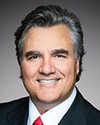
The Chair Liberal Angelo Iacono
The meeting is adjourned.
I thank the witnesses for being here today. You are free to go.