[Inaudible—Editor] Mr. Leslie.
As you guys are talking on top of each other anyway and you are out of time, we will move to Mr. Grant for three minutes, please.

Evidence of meeting #52 for Environment and Sustainable Development in the 45th Parliament, 1st session. (The original version is on Parliament’s site, as are the minutes.) The winning word was process.
A recording is available from Parliament.
Liberal

The Chair Liberal Shannon Miedema
[Inaudible—Editor] Mr. Leslie.
As you guys are talking on top of each other anyway and you are out of time, we will move to Mr. Grant for three minutes, please.
Liberal

Wade Grant Liberal Vancouver Quadra, BC
Thank you, Madam Chair.
I got my reading glasses, but I forgot them in my office, so I have to take my glasses off.
Ms. Farrell, I attended at the B.C. Assembly of First Nations the day after you were there. It was a large room with a large number of chiefs. I spoke to a lot of them after as well. I myself am first nations, from the province of British Columbia.
I know my colleagues already touched on this, but I really want to give you an opportunity to further explain that some may have interpreted your comments at that meeting as expressing doubt about Canada's ability to advance major projects. Is that really an accurate reading of your remarks, or were you instead recognizing the skepticism you've heard from indigenous communities and emphasizing that governments must earn trust through concrete results, rather than just promises?
Chief Executive Officer, Major Projects Office
Yes, I've been involved with first nations in a number of negotiations and consultations since around 2000. Of course, in this role, we are heavily involved in first nation consultations across the country—over 300. What we're seeing from the nations is pretty fantastic.
I know the first nations are nervous about the time frame, how much we're trying to get done and how quickly we're trying to do it. I know they're not used to that, because a lot of consultations were taking years, and a lot of projects weren't getting done.
They have every right to be, in my mind, skeptical around what the intentions of the Major Projects Office are. We're new. We're not proven yet. We haven't shown them what our intentions are, and we haven't followed through yet and made sure that the work we do is as we say it's going to be.
I was more expressing that I know they don't trust us, and it's up to me to do the work and to show them. I didn't say it well enough, and I regret that.
Liberal
Wade Grant Liberal Vancouver Quadra, BC
I appreciate that, Ms. Farrell.
I want to go to Mr. Van Walleghem.
We talk about the skepticism that a lot of first nations have. It sometimes has to do with being too overwhelmed and overburdened to respond. We're trying to give them an opportunity to respond quicker. How does the MPO ensure that the efforts to accelerate project approvals remain consistent with the Crown's constitutional obligations, applicable treaty commitments and the rights of indigenous people?
General Counsel and Vice-President, Indigenous Affairs, Major Projects Office
I'm a big believer in breaking down the components of FPIC. I believe that all nations and all indigenous people need to have good information, and they need to be free to enter conversations and make decisions. They need adequate capacity to do that.
They need the information early, so a major part of our effort here is to make sure that discussions are early. As Ms. Farrell was saying, communities are not used to proponents showing up with little information, but that's the point. We don't want proponents showing up in communities with plans that are so far down the road that they're intransigent because they've invested too much money in developing them. We want indigenous people to be involved in the co-development of these projects, so—
My time is up.
Liberal
The Chair Liberal Shannon Miedema
Thank you for your answer.
Thank you, Mr. Grant.
Mr. Bonin, the floor is yours for two minutes.
Bloc

Patrick Bonin Bloc Repentigny, QC
Ms. Farrell, you were the president and chief executive officer of Trans Mountain, the pipeline that cost $34 billion in public funds because the private sector didn't want to invest in it. Now, we have a new pipeline that will cost $43 billion at the very least, in which Pembina Pipeline Corporation, a private sector company, only wants to invest 10%. The rest is public money.
Can you explain why the private sector doesn't want to invest in this pipeline?
Chief Executive Officer, Major Projects Office
I think that with Trans Mountain, they didn't want to invest because our regulatory processes were very difficult and unclear.
Bloc
Patrick Bonin Bloc Repentigny, QC
I'm talking about the new pipeline that will cost $43 billion. Why doesn't the private sector want to invest in it?
Chief Executive Officer, Major Projects Office
I think the process we're undertaking here will provide a lot of certainty as we go through the process and provide a conditions document. My expectation is, to the extent that we all do what we say we're going to do, you'll see more private sector investors in the new pipeline.
Bloc
Patrick Bonin Bloc Repentigny, QC
I'll start over.
You're a pipeline specialist from the private sector and you haven't assessed why the private sector is unwilling to invest in the new $43 billion pipeline. You consider this a project of national interest, yet private companies are unwilling to invest in it, and you haven't assessed why.
Why do you think the private sector doesn't want to invest in this project?
Chief Executive Officer, Major Projects Office
Frankly, Pembina's coming in for 10%, and potentially going as high as 20%, at the front end of this process was a very good sign that the private sector is interested in this process. This is really the first time we've undertaken this PONI process under the Building Canada Act. As we're successful under this act, that's what will bring more private sector players. That's my expertise and that's what I would say.
Conservative
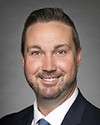
Branden Leslie Conservative Portage—Lisgar, MB
Thank you, Madam Chair.
Ms. Farrell, early in your opening remarks you mentioned a $200-billion portfolio. You're not an asset manager. Where is this $200 billion? Is that $200 billion that you've secured from the Canada Infrastructure Bank? Is that private sector commitments? What is that?
Chief Executive Officer, Major Projects Office
The $200 billion would be the capital costs of the projects that we're currently evaluating. When you add up—
Conservative
Branden Leslie Conservative Portage—Lisgar, MB
Churchill is just a wild number. These are just guesses.
Chief Executive Officer, Major Projects Office
They're not guesses. The 18 projects that we're looking at today add up to about that amount.
Conservative
Branden Leslie Conservative Portage—Lisgar, MB
You previously lamented the 10 years of consultations with first nations and an inability to get projects built. You warned first nation leaders that inadequate consultations can leave projects tied up in court for years. As my colleague mentioned, now Pacific link is already facing legal challenges concerning its designation. On a scale of one to 100, how much confidence do you have that the consultation process your office has conducted will stand up in court when it is challenged?
October 27th, 2026 / 4:30 p.m.
Chief Executive Officer, Major Projects Office
I think it's very high.
Chief Executive Officer, Major Projects Office
No, I won't. I just think it's very high.
I'd like to clarify on something you said. I am not accusing first nations leaders of anything. The way our regulatory process worked in Canada is that we had consultations through various stages of very sequential decision-making that started with impact assessments and then went through various departments, which led to long consultation processes. The first nations are as frustrated with that as I am.
What I'm telling you today about the 300 first nations we're working with on five projects, the rights holders, is that on one hand, they do not want us to rush them and they want to make sure that they've got all the information. On the other hand, they're very interested in how we can improve the process so that their rights can be addressed, we can get the right environmental aspects into the project and we can get the projects built. Many of them say they—
Conservative
Branden Leslie Conservative Portage—Lisgar, MB
How many investors for these projects whom you've talked to have said they are not going to invest unless there's government money on the table?
Conservative
Branden Leslie Conservative Portage—Lisgar, MB
Given your testimony today regarding the seconding of employees and, frankly, the difficulty understanding the processes the MPO undertakes, as well as its collaboration across departments, in your view, if you're the average Canadian watching this, would you say that the Major Projects Office is a transparent organization?
Chief Executive Officer, Major Projects Office
In my view, the Major Projects Office is providing transparency on the work we're doing through processes such as this.