Evidence of meeting #5 for Access to Information, Privacy and Ethics in the 45th Parliament, 1st session. (The original version is on Parliament’s site, as are the minutes.) The winning word was assets.

A recording is available from Parliament.

On the agenda

Members speaking

Before the committee

Greene  Professor Emeritus, School of Public Policy & Administration, York University, As an Individual

4:30 p.m.

Conservative

The Chair Conservative John Brassard

I call this meeting to order.

Welcome to meeting number five of the House of Commons Standing Committee on Access to Information, Privacy and Ethics.

Pursuant to Standing Order 108(3)(h) and the motion adopted by the committee on Wednesday, September 17, 2025, the committee undertakes its review of the Conflict of Interest Act.

Today's meeting is taking place in a hybrid format, pursuant to the Standing Orders. Members are attending in person in the room and are participating remotely by using the Zoom application.

Before we go to our witness, I want to remind members to be mindful of the microphones and the earpieces and to make sure they're away from each other so that we don't cause the interpreters any challenges.

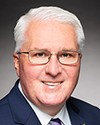
I would like to welcome our first witness today. We have, an individual, via video conference, Mr. Ian Greene, professor emeritus, school of public policy and administration, York University.

Mr. Greene, on behalf of the committee, I want to thank you for making yourself available today on such short notice. We're in that sweet spot where we make a determination of what we're going to study and then try to invite witnesses. In some cases, it's on short notice, but you, sir, have graciously given up your time today.

I invite you to address the committee for five minutes with an opening statement, which will be followed by questions.

Go ahead, sir.

Ian Greene Professor Emeritus, School of Public Policy & Administration, York University, As an Individual

Thank you very much. I'm honoured to be asked to address you today.

Mr. Chair, I'm impressed with the scholarships that you're providing for students from your riding to study programs such as political science.

4:30 p.m.

Conservative

The Chair Conservative John Brassard

Thank you, sir.

Mr. Greene, I'm sorry to interrupt. You locked up for a second there. I just want to make sure that we didn't miss anything.

I appreciate your bringing that up. My wife and I have been doing that for the better part of 14 to 15 years, I think, in our community.

Go ahead, and I can give you a little more than five minutes as well, if you like.

4:30 p.m.

Professor Emeritus, School of Public Policy & Administration, York University, As an Individual

Ian Greene

I'm impressed by the public service that every one of you has done. I see that one of you has experience with the Canadian military. My dad was a soldier in World War I. He served at Vimy Ridge. When he returned, he earned a dental degree at the University of Toronto, and during summers, he worked on a ship in the Thousand Islands, which I think two of you represent in different constituencies.

One of you represents a riding in Saskatchewan, where my dad was born. Although I grew up in Alberta and I got my undergrad degree from the University of Alberta, I attended Bishop's University in Sherbrooke, Quebec, on exchange for a year; I learned to love Quebec. One of you has a degree from the University of Toronto, which is where I earned my Ph.D. studying our justice system.

The motion that set up today's meeting asks whether changes are needed to the Conflict of Interest Act regarding the disclosure of assets of public office holders and whether changes are needed regarding blind trusts or ethics screens. In his annual report for 2024-25, Commissioner Konrad von Finckenstein made recommendations for changes, which I agree with and will discuss in more detail in a few minutes.

I'd like to begin by emphasizing that the principle of mutual respect is the fundamental principle underlying all ethics standards in successful democracies. Mutual respect also underlies our basic constitutional principles of the rule of law, legislative supremacy and fundamental justice.

The precise application of these principles based on mutual respect cannot be etched in stone but evolves over time. Sometimes the evolution is positive as we achieve higher levels of civilized behaviour; sometimes it's negative as we abandon the lessons of history because of ignorance, hubris or human frailty.

I'd like to let you know how I became engaged in the study of ethics in politics.

My interest in these subjects was kindled in 1968, when I was the campaign manager for Bob Thompson, who had jumped ship from the Social Credit Party to the Progressive Conservatives. My two qualifications for this job were that I had just finished the second year of a political science degree and my dad was Bob's dentist. I was 20—too young to vote in those days, but not too young to learn about the challenges of ethics in politics. I spent at least 10% of my time as campaign manager trying to stop unethical behaviour by either my campaign workers or those of other parties.

In 1972, I was the assistant to an Alberta cabinet minister. He was the chair of an all-party legislative committee investigating whether discriminatory legislation aimed at the Hutterian Brethren could be legally or ethically justified. The committee concluded that discrimination could not be justified, and a liaison committee was set up to promote mutual respect. It worked.

A few years later, my Ph.D. at the University of Toronto centred on how to improve the justice system by minimizing unnecessary delays. I've always considered unnecessary delay in courts an ethics issue.

I was hired at York University in 1985 to teach courses on the Charter of Rights, public administration and public service ethics.

The late 1980s was a time of numerous political scandals federally, provincially and municipally in Canada that I feared threatened our democracy. In our country, it was a period of polarization and venom not unlike what is currently going on in the U.S. I conducted a study of media stories about conflicts of interest in federal, provincial and municipal politics. I had to take breaks from my study because after reading hundreds of media stories about conflicts of interest, I often felt sick.

In 1987, the Ontario government appointed John Black Aird, the former lieutenant governor, to investigate and report. He recommended the creation of Canada's first independent ethics commissioner. Aird wrote that most people in public life think they behave ethically, but they don't always understand ethical standards in the same way. He wrote that an independent ethics commissioner is necessary to clarify the standards and to advise and support members of the legislative houses.

After further research, I found that after the appointment of Ontario's independent ethics commissioner in 1988, conflict of interest scandals in Ontario became stunningly less frequent. As well, MLAs eventually came to see the commissioner as a friend—someone who, through sound advice, would keep them from making mistakes.

I then began to publish articles and books on ethics and, especially, conflict of interest. Since that time, I've written or co-written four books.

I found that Ontario's model soon spread to all the other provinces, but Parliament was the last holdout. Part of the delay in creating ethics commissioners for the House of Commons and the Senate was caused by an attempt by the Chrétien government to create one commissioner for both chambers. Quite rightly, the Senate objected and held out for a separate commissioner.

Finally, the Conflict of Interest Act for public office holders, as well as the code of conduct for MPs, came into effect in 2006. The Conflict of Interest Act, the code of conduct for MPs and the Senate conflict of interest regime have substantially reduced the incidence of conflict of interest scandals at the federal level. However, the incidence of conflict of interest scandals for federal cabinet ministers and MPs has been above the provincial level on a proportionate basis.

Eight provinces require annual meetings between the ethics commissioner and individual members of provincial legislatures. According to my interviews with provincial ethics commissioners, these meetings are critical to prevent conflicts of interest. Required meetings occur in the Canadian Senate, and, according to the former Senate ethics officer, Jean Fournier, they are critical to the success of the Senate ethics regime.

However, conflict of interest scandals have continued to occur in the realm of Canadian cabinet ministers and MPs of all stripes. My analysis is that this is because compulsory annual meetings between individual cabinet ministers and MPs and someone in the Office of the Conflict of Interest and Ethics Commissioner are not required, but are optional. Currently, there are advisers appointed by the Office of the Conflict of Interest and Ethics Commissioner for every cabinet minister and MP. Is this enough to prevent conflicts of interest, or should there be mandatory meetings between the adviser and MPs, including cabinet ministers? I think this is an important question that you should look into.

At the September 15 meeting of this committee, the Commissioner stated that the changes to the act to require public office holders to sell assets rather than putting them into a blind trust would be counterproductive. I agree. His comment that this might result in large income tax bills, which would discourage good people from getting into politics, is a good point. Nevertheless, some public office holders will give their trustees the freedom to sell assets and reinvest. What is important is to ensure that an ethics screen is in place to prevent a public office holder from being directly involved in decision-making that might benefit assets that remain in the trust.

In the case of Prime Minister Carney, the ethics screen was set up by the Commissioner and is administered by the Prime Minister's chief of staff and the Clerk of the Privy Council.

First, given Commissioner von Finckenstein's extensive background in business law, the justice system and the Federal Court, I can't think of anyone more qualified to set up an effective screen mechanism.

Second, in Canada there is a strong tradition that the Clerk of the Privy Council is completely non-partisan, so I think his role in the screen is appropriate.

The chief of staff is partisan and is trusted by the Prime Minister. I think it is important for the Prime Minister to have someone involved in the screen mechanism he can trust to make the trust work, and who will likely advise the Prime Minister out of an excess and an abundance of caution.

In his annual report, the Commissioner made a number of recommendations. He proposed adding a provision for the “appointment of an interim commissioner” when no permanent commissioner has been appointed; “adding apparent conflicts of interest” to the definition of conflicts of interest that must be avoided by public office holders; relaxing provisions regarding certain types of assets; harmonizing “the definitions of 'private interest'” in the act and the code; “expanding allowed outside activities”; and “increasing administrative monetary penalties”.

I agree with all of these recommendations and I hope your committee will work to expedite the legislative changes needed to bring them about.

I think that the proposed change that you should examine most closely is the one regarding apparent conflicts of interest.

The current accepted definition of “apparent conflict of interest”, as noted by the Commissioner, is a situation in which “there is a reasonable perception, which a reasonably well-informed person could properly have, that a public office holder's ability to exercise an official power or perform an official duty or function will be, or must have been, affected by his or her private interest or that of a relative or friend.”

Thirty-five years ago there was a consensus among those studying conflicts of interest that apparent conflicts of interest should not be prohibited, because the definition was too vague. Thinking has changed since that time, mostly because of public outrage over the technicalities of the differences between real and apparent conflicts of interest. Apparent conflicts of interest are prohibited by the code, and it makes no sense that they would not be prohibited by the act as well.

This leads to another point I'd like to make. Conflict of interest scandals have been more frequent among federal MPs and cabinet ministers than among those at the provincial level. I think this is primarily because in most provinces, elected members are required to meet with their ethics commissioners within two months of being elected and then on an annual basis after that.

During my career, I've interviewed many of these commissioners. They've all told me how important these meetings are to clarify the conflict of interest rules. The meetings also encourage elected members to consult the commissioner whenever they are unsure about a potential conflict of interest.

For you, these meetings, in my understanding, are optional. However, every MP and cabinet minister has an adviser appointed by the commissioner. I think it would be worthwhile to look into whether the adviser system needs to be beefed up in some way. Should in-person meetings with the advisers be made compulsory?

In 1990 to 1991, the Mulroney government established the Royal Commission on Electoral Reform and Party Financing. The commission did great work, which included 12 volumes of research reports. I wrote a paper for the commission about how to determine the maximum amount allowed for individual and corporate donations to candidates and parties. Is it time for another royal commission to look into such complex matters as how to prevent apparent conflicts of interest, how to set up effective blind trusts and how to establish effective ethics screens? These are very complex questions that would benefit from such a thorough study.

I study ethics in politics because the more our system is perceived by the public as ethical, the more likely it is that good people like you will get involved in politics. Please keep up the good work.

4:45 p.m.

Conservative

The Chair Conservative John Brassard

Thank you, Mr. Greene, for your opening remarks.

We're going to go to our rounds of questions now. We're going to start with Mr. Barrett for six minutes, followed by Madame Lapointe.

Ms. Lapointe will share her time with Mr. Sari.

Mr. Barrett, go ahead for six minutes, please.

4:45 p.m.

Conservative

Michael Barrett Conservative Leeds—Grenville—Thousand Islands—Rideau Lakes, ON

Professor Greene, thanks very much for taking a moment to personalize your appearance today. I appreciate the connection to your father's military service and to the Thousand Islands region, which I have the honour to represent. Of course, I have a kinship with your father through the opportunity that I had to serve as well.

I'd also like to quickly observe the photo behind you. That's lovely, and while we've read about your background, I think that photo probably says more than I read in your biography about you, so I appreciate that very much, sir.

I have five minutes remaining for questions, so I'd like to get through four, if I could.

On blind trusts, you mentioned.... Perhaps I could characterize it as a perception of inefficiency in having a designated public office holder sell their assets instead of placing them in a blind trust. During the Commissioner's appearance, which you're familiar with, he said that the trustees generally don't sell what's placed in the trust, so the public office holder knows exactly what went into it.

Is there an issue with not just the characterization of it being a blind trust, but also with the reality that they and their advisers, their cabinet colleagues and other officials know exactly what went into it?

4:45 p.m.

Professor Emeritus, School of Public Policy & Administration, York University, As an Individual

Ian Greene

Well, that's a very important question. I have talked with a former public office holder who, having very high ethical standards, had told his trustee, “You can sell anything in my trust. I just don't want to know whether my assets are still in there or if they've changed.” Then, after he became free of being a public office holder, he was quite shocked at what had been sold and what he thought was a very poor decision of the trustee about the replacement.

It's a chance that public office holders take. Having these required divestments—and the blind trust being one possibility in politics—is only about 30 years to 40 years old. We're experimenting. This is why I think it might be good to have a major study of various different systems in Canada and other countries. What works best? What needs to be changed? It's a complex issue.

Once again, I think the focus is mostly on the screens that have been set up for Mark Carney and whether they will work. Will they create problems? Only time will tell—

4:50 p.m.

Conservative

The Chair Conservative John Brassard

I'm sorry, Mr. Greene, but Mr. Barrett has a question.

4:50 p.m.

Conservative

Michael Barrett Conservative Leeds—Grenville—Thousand Islands—Rideau Lakes, ON

You raised the Prime Minister and his screen. During the most recent campaign, the Prime Minister said—and it was reported on—that he had crafted the Liberal Party platform. Now, at that time he was just exiting his private sector career and of course was very aware of all of the investing that he had done and what was inside the investments and those particular funds that he had created for Brookfield Asset Management. At that time, the screens weren't in place yet, so Mr. Carney's election as leader of his party, his appointment as Prime Minister and then the subsequent election campaign all took place before these measures had been taken, but the political document that underpins the government's policy documents was written by him without any space in between.

Does the system protect public confidence in our institutions in a case like that?

4:50 p.m.

Professor Emeritus, School of Public Policy & Administration, York University, As an Individual

Ian Greene

We are never going to get a system that is perfect. We have to experiment. We really have to depend on the integrity of public office holders to make difficult decisions like this.

My experience of looking at political scandals federally and provincially is that the people we have to worry about are those whose finances are close to the line. They might be tempted to do something unethical to make sure that they have a nest egg when they retire. If someone is very, very well off, they're much less likely to be tempted to benefit themselves, because they're already pretty well off.

As I say, you raise legitimate questions, and they're something worth looking into more thoroughly.

4:50 p.m.

Conservative

The Chair Conservative John Brassard

Thank you, Mr. Greene.

Thank you, Mr. Barrett.

Ms. Lapointe, you have six minutes, and you can share it.

Linda Lapointe Liberal Rivière-des-Mille-Îles, QC

Thank you, Mr. Chair.

Good afternoon, everyone.

Witnesses, welcome to the Standing Committee on Access to Information, Privacy and Ethics. Thank you for being here.

Mr. Greene, you just said something about blind trusts. If I understand correctly, you talked about someone who is close to the line. What do you mean by “line”? Are you saying that someone who is more financially constrained would be more likely to break the conflict of interest rules?

4:50 p.m.

Professor Emeritus, School of Public Policy & Administration, York University, As an Individual

Ian Greene

In a blind trust, a trustee has control over all the assets and makes decisions without being in touch with the person who owns the assets.

Linda Lapointe Liberal Rivière-des-Mille-Îles, QC

I understand very well what you mean by the role of a trustee in a blind trust.

What I wanted to know is what you meant by someone who is close to the line.

4:50 p.m.

Professor Emeritus, School of Public Policy & Administration, York University, As an Individual

Ian Greene

What I meant is that they are aware of the assets that went into the blind trust.

Linda Lapointe Liberal Rivière-des-Mille-Îles, QC

Earlier, it was mentioned that people were aware of what was in the trust. Has anyone taken the time to find out whether, over the years, the trustee has actually made transactions within the trust? Has anyone checked that?

4:55 p.m.

Professor Emeritus, School of Public Policy & Administration, York University, As an Individual

Ian Greene

That's something I assume the Conflict of Interest and Ethics Commissioner would do. The trustee has specific responsibilities. That's certainly at arm's length from the person who owns the assets.

I'm a trustee for a couple of trusts for handicapped people. I'm aware of my obligations, and they're very, very strict. I want to make sure that I always honour those obligations. If I didn't, I would get into legal trouble.

Linda Lapointe Liberal Rivière-des-Mille-Îles, QC

The trustees could continue making transactions similar to the person's previous ones, when they were in charge of their investments.

4:55 p.m.

Professor Emeritus, School of Public Policy & Administration, York University, As an Individual

Ian Greene

The trustees look into the financial viability of the assets, from my experience. If they wanted to sell assets and buy new ones, they would look into something similar. The important point is that if they sell the assets, the owner of the assets would not know about the sold assets or new assets.

Linda Lapointe Liberal Rivière-des-Mille-Îles, QC

Thank you.

I will now turn the floor over to Mr. Sari.

Abdelhaq Sari Liberal Bourassa, QC

Thank you.

Mr. Greene, thank you for being here. I also want to thank you for taking the time to share your knowledge with us.

In your opening remarks, you mentioned the Conflict of Interest Code for Members of the House of Commons and the Conflict of Interest Act.

In your opinion, should the Conflict of Interest Act be much broader and apply to all members? Should the Conflict of Interest Code for Members of the House of Commons be updated to better reflect the standards set out in the act, but also to reflect the very significant changes that have occurred over time?

4:55 p.m.

Professor Emeritus, School of Public Policy & Administration, York University, As an Individual

Ian Greene

That's a very good question.

It's very confusing to have sets of rules in the act that differ from those in the code. I think the recommendation that apparent conflicts of interest be included in the act, as they are in the code, makes it slightly less confusing. You folks have to live with the code and cabinet ministers have to live also with the act, so it's really up to you in your experience, in consultation with the Commissioner, to decide whether there should be more of a confluence between the two documents.

I think it's confusing for the general public to see two different documents and see some reports coming out under the act, others coming out under the code, and some coming out under both. Perhaps there could be a way of merging these in a more seamless manner.

Abdelhaq Sari Liberal Bourassa, QC

I read your past testimony, and I saw you also emphasized how important it is for ethics commissioners to be perceived as non-partisan. Do you think that automatically granting the Commissioner of Lobbying an interim role as a replacement in the event of absence, incapacity or a vacant office, as proposed in new section 82(3), could undermine this perception of independence, or would it instead strengthen it?

4:55 p.m.

Professor Emeritus, School of Public Policy & Administration, York University, As an Individual

Ian Greene

I'm sorry; will you repeat that question?

Abdelhaq Sari Liberal Bourassa, QC

In your testimony, you talked a lot about the role of the Ethics Commissioner. Do you think that automatically granting an interim role to the Commissioner of Lobbying, through proposed section 82(3), could undermine this perception of independence, or would it instead strengthen it?