Thank you, Ms. Tesser and Mr. Aquilino.
What was that about a moment...?

Evidence of meeting #55 for Access to Information, Privacy and Ethics in the 45th Parliament, 1st session. (The original version is on Parliament’s site, as are the minutes.) The winning word was companies.
A video is available from Parliament.
Conservative
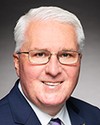
The Chair Conservative John Brassard
Thank you, Ms. Tesser and Mr. Aquilino.
What was that about a moment...?
Legal Counsel, Office of the Conflict of Interest and Ethics Commissioner
It was a momentary oasis of sober reflection.
Conservative
The Chair Conservative John Brassard
—just before I walked down the aisle. Thirty-seven years later, it's worked.
Mr. Thériault, you have the floor for two minutes and thirty seconds.
Bloc
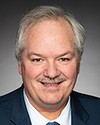
Luc Thériault Bloc Montcalm, QC
Thank you, Mr. Chair.
We are discussing here the highest office in the Canadian state. When you came to give evidence while we were reviewing the Conflict of Interest Act, you told us the following regarding the management of section 3: “…the Prime Minister was a very successful businessman, a former international banker, a former governor of the Bank of Canada and the Bank of England, those are positives.” You may have forgotten to mention that he is also the former head of Brookfield.
Next, you said this: “That's a competent person. That's what I'm supposed to make sure of.” I nearly fell off my chair when I read that again. I didn't remember you saying that. Do you really need to ensure that the Prime Minister is competent?
You went on to say the following: “I also have to make sure that he has no conflict.” I thought your main task was to ensure that there is no conflict of interest, first and foremost, and that it is up to the people to decide whether an elected representative is competent or not and whether to elect them or not, in accordance with democratic principles.
Commissioner, Office of the Conflict of Interest and Ethics Commissioner
You are absolutely right. I apologize; I do not recall saying that, but if I did, it was a misuse of words. Exactly as you say, it is the people who decide on competence. For my part, I decide whether or not there is a conflict of interest.
Bloc
Luc Thériault Bloc Montcalm, QC
It reassures me to hear you say that, although I do have reservations about the appropriateness and relevance of paragraphs 3(d) and 3(e). You and I have already discussed this, and I told you that it is not the primary role of an ethics commission to facilitate the transition from the private to the public sector or to recruit people deemed competent. The competence of a public office holder is something that is established through examinations and interviews. For my part, I do not expect an institution such as an ethics commissioner's office to do that.
It has therefore been proposed to remove paragraphs 3(d) and 3(e) from the act. I imagine that, if you agree with me that it is not useful to know whether the prime minister is competent, you will agree that paragraphs 3(d) and 3(e) should be removed.
Commissioner, Office of the Conflict of Interest and Ethics Commissioner
I have already said that I agree with you. I do not recall using that particular expression. If you are quoting me, it is obviously because I said it, and that is an unfortunate mistake.
The act refers to encouraging people who are deemed to have the necessary experience and skills. That is the purpose of the act, and I am applying the act. When a person is deemed competent by the public, as in the case of an MP or an appointed representative, my role is to ensure that that person is not in a situation of conflict of interest.
Conservative
The Chair Conservative John Brassard
Thank you, Commissioner.
Thank you, Mr. Thériault. I gave you a little more time so that you could get an answer.
We're going to go to Mr. Gunn for five minutes.
Over the next hour, for the second round, you will be allocated five minutes, Mr. Thériault.
Mr. Gunn, go ahead.
Conservative

Aaron Gunn Conservative North Island—Powell River, BC
Thank you, Mr. Chair.
Commissioner, do you believe it's reasonable for Canadians to expect that if their elected leaders or their elected prime minister violates the conflict of interest code, there should be real consequences for that kind of behaviour?
Do you, by extension, also think it's reasonable for Canadians to expect that those consequences should be more severe or serious if those found guilty or found to be in violation of the code have done so repeatedly or after explicit warnings not to do so?
Commissioner, Office of the Conflict of Interest and Ethics Commissioner
As you know, the code requires that if there is a breach of contract, I expose it, in the case of an MP, to the Speaker, or in the case of an official, to the Prime Minister. They then apply whatever measure they think is appropriate under the circumstances. If it's a repeat offender, presumably whatever measure is applied will be more severe than the first time.
Conservative
Aaron Gunn Conservative North Island—Powell River, BC
That's right.
What I'm trying to get at is just how you're enforcing the code more broadly. I'm confused by.... You answered the first question and said that you believe there should be consequences or that it's reasonable for Canadians to expect that there are, yet there was an instance where there were no sanctions and no consequences placed on a Liberal MP, Lori Idlout, who was found by your office to have violated section 8 of the conflict of interest code on five separate occasions by using her taxpayer-funded constituency office budget to purchase more than $2,000 in artwork and trinkets from her own business.
There was also documented evidence from your office that she explicitly knew about this provision. Her compliance adviser recorded in writing, all the way back in 2022, “I also advised her she could not purchase gifts from the indigenous art gallery she owns with her Member's Office Budget. She was very much aware of this.”
Why were there no sanctions and no consequences for this abuse of taxpayer money?
Commissioner, Office of the Conflict of Interest and Ethics Commissioner
First of all, the amount, as you quite rightly said, was $2,000. That's the purchase value of the goods. The profit to her would be minimal. I have no idea what the profit element of the—
Conservative
Aaron Gunn Conservative North Island—Powell River, BC
It was a repeated violation of the code when she already had warnings of it.
With all due respect, when Canadians vote for their elected officials, they're placing an enormous amount of trust in us to manage taxpayer money ethically and judiciously. I think, with that trust, comes an enormous amount of responsibility, so I just couldn't understand....
After talking to Canadians in my riding, I know that they certainly think that the conflict of interest code is very important. They believe you're a very important part of our parliamentary democracy. I think they struggle to understand, when someone repeatedly violates that code after being warned not to and is found to have done that by your office and the judicious work that you did, how there could possibly be no sanctions and no consequences.
Commissioner, Office of the Conflict of Interest and Ethics Commissioner
As I keep telling you, the act provides for exposure. It has been exposed. My report is a public document. You have the resources—
Conservative
Commissioner, Office of the Conflict of Interest and Ethics Commissioner
No, I do not. It would be the Speaker who would impose the sanctions. I cannot impose anything, except for—
Conservative
Commissioner, Office of the Conflict of Interest and Ethics Commissioner
I didn't recommend any sanctions. I have specifically, under the act, the discretion to decide whether, under the circumstances, sanctions are appropriate or not over these—
October 28th, 2026 / 5:15 p.m.
Conservative
Aaron Gunn Conservative North Island—Powell River, BC
Why did you think it was appropriate for no sanctions to be placed on a Liberal MP who was found to have repeatedly violated section 8 of the code even with forewarning from your office?
Would you apply that same standard if the Prime Minister, at some point in the future, is found to have violated the Conflict of Interest Act to further his own private interests? Can you guarantee that you would recommend sanctions in that case, or might he just get off with a stern warning?
Commissioner, Office of the Conflict of Interest and Ethics Commissioner
I tried to explain, when you interrupted me, to say that it's a very minimal amount that was of benefit to her. She immediately—
Commissioner, Office of the Conflict of Interest and Ethics Commissioner
Let me just—
Conservative
Aaron Gunn Conservative North Island—Powell River, BC
She violated it repeatedly. How many times does someone have to violate it for there to be a sanction? How much money does someone have to borderline embezzle from the federal government, from taxpayers, for you to recommend a sanction?