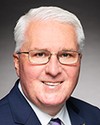
Evidence of meeting #55 for Access to Information, Privacy and Ethics in the 45th Parliament, 1st session. (The original version is on Parliament’s site, as are the minutes.) The winning word was companies.

A video is available from Parliament.

On the agenda

Members speaking

Before the committee

von Finckenstein  Commissioner, Office of the Conflict of Interest and Ethics Commissioner
Aquilino  Legal Counsel, Office of the Conflict of Interest and Ethics Commissioner
DeMoor  Director, Advisory and Compliance, Office of the Conflict of Interest and Ethics Commissioner

4:35 p.m.

Conservative

The Chair Conservative John Brassard

Good afternoon, everyone. I'm going to call the meeting to order.

Welcome to meeting number 55 of the House of Commons' Standing Committee on Access to Information, Privacy and Ethics.

Pursuant to Standing Order 108(3)(h) and the motion adopted on Monday, June 15, 2026, the committee is meeting today to study the quarterly reports of the Privy Council Office in relation to the application of the Prime Minister's conflict of interest screen.

I'd like to welcome our witnesses for today.

From the Office of the Conflict of Interest and Ethics Commissioner, we have Konrad von Finckenstein, who is the commissioner. We also have Lisa DeMoor, director, advisory and compliance; and Michael Aquilino, legal counsel.

Commissioner, I want to welcome you and your team to the committee this afternoon. I understand you have an opening statement for the committee members. Go ahead with your statement now, sir.

Thank you.

Konrad von Finckenstein Commissioner, Office of the Conflict of Interest and Ethics Commissioner

Thank you.

Honourable Chair and honourable members of the committee, I'm pleased to appear before you today.

Thank you for inviting me to discuss the Privy Council Office's most recent quarterly report on the Prime Minister's conflict of interest screen.

Perhaps it would be useful to start by recalling what conflict of interest screens are and how they work.

A screen is an agreed-upon tool that the Office of the Commissioner can put in place when it is likely that an appointed representative will be called upon to participate in discussions or decisions where there is a conflict of interest.

However, we don't manage the screens. The people who do that are two senior officials from the affected department or agency who have been approved by the Office of the Commissioner.

The screen administrators make sure that matters related to any conflict described in the screen are not brought to the official's attention. They give the files to other designated people to handle. They also keep the official out of any discussions, decisions, debates or votes about those files. The administrators of the Prime Minister's screen make sure he does not see any files or attend any meetings related to the companies identified in the screen. In effect, they handle his schedule.

The Conflict of Interest Act requires appointed officials to recuse themselves from a discussion, decision, debate or vote in which they have a conflict of interest. Recusing means leaving the room physically or virtually. I can't emphasize it enough—recusing means leaving the room physically or virtually.

The screens help these people prevent conflicts of interest and avoid having to recuse themselves.

If an appointee is handling a file that should have been subject to the screen or is involved in any other matter in which they have a conflict of interest and it's not detected by the screen, that person must recuse themselves. Recusals must be reported to my office. They will be published on our website.

The Prime Minister put all his assets in a blind trust. However, he, of course, knows what assets are in the trust. To avoid that he knowingly takes decisions that have an effect on those assets, he established a conflict of interest screen. The Prime Minister's conflict of interest screen is designed to prevent any conflicts of interest involving Brookfield Asset Management; Brookfield Corporation; Stripe, Inc.; and any companies owned or controlled by them. It is administered by his chief of staff and by the Clerk of the Privy Council.

The administrators are responsible for properly applying the screen. It's in their interest, as it is in the Prime Minister's, to make sure that he complies with the Conflict of Interest Act. Although my office is not involved in the management of the conflict of interest screen, we provide advice on it when requested.

I'd be happy to answer any questions that you have.

Thank you.

4:40 p.m.

Conservative

The Chair Conservative John Brassard

Thank you, Commissioner.

We'll start with Mr. Hardy for six minutes.

4:40 p.m.

Conservative

Gabriel Hardy Conservative Montmorency—Charlevoix, QC

Thank you all for being here with us today. I really appreciate it.

There are a number of questions that come to mind and that our constituents also ask. I'll start with an easy one, a softball question.

On March 1 and 2, 2026, the Prime Minister stayed at the Leela Palace Hotel in New Delhi. The hotel is owned by Brookfield. That raises some questions. Were the decisions that were made reviewed? In this case, again, a Prime Minister stays at a hotel that belongs to his group. Were you made aware of that? Is there a process in place? Were any questions asked?

4:40 p.m.

Commissioner, Office of the Conflict of Interest and Ethics Commissioner

Konrad von Finckenstein

As you know, we are sent reports from the committee set up by Michael Sabia and Marc‑André Blanchard to administer the screen. When there is an occasion to apply the screen, they give us the results. If there are questions, they ask me and I advise them. The advice I give them is confidential.

4:40 p.m.

Conservative

Gabriel Hardy Conservative Montmorency—Charlevoix, QC

In this case, Commissioner, a reasonable person might ask questions. Why is it okay for the Prime Minister to give contracts to his own group or travel to hotels that belong to his own group? In this case, you're telling me that the decision whether or not to trigger the screen will depend on his two direct employees.

I think my question is fair. Here, we're talking about something as simple as choosing a hotel that will not compromise the Prime Minister. If this choice doesn't raise any questions, it is clear that the screen has giant holes. That would be the first thing to consider, if we want to make sure that the perception of our democracy or the perception of the choices being made is not impaired by the Prime Minister's decisions. After applying the screen, they ultimately chose to send the Prime Minister to a hotel that belongs to Brookfield. I would reckon there are other hotels in the area.

Don't you think it's a bit of a reactive approach, whenever you're asked questions, to always wait for confirmation that the screen was actually applied?

4:40 p.m.

Commissioner, Office of the Conflict of Interest and Ethics Commissioner

Konrad von Finckenstein

The situation is a little different. The screen is established and these two people are responsible for administering it. If they have any questions, they will ask me and I will give them my opinion. I have no idea what happens after that. If it's a situation where the screen must be applied and has been applied, those two people will prepare a report. As you saw, the last report dates from August 14. The report mentions what the occasion was.

Gabriel Hardy Conservative Montmorency—Charlevoix, QC

Basically, it's a bit retroactive. That makes sense to me.

4:40 p.m.

Commissioner, Office of the Conflict of Interest and Ethics Commissioner

Konrad von Finckenstein

That's how it's set up. The screen tool has been approved by the Federal Court.

4:45 p.m.

Conservative

Gabriel Hardy Conservative Montmorency—Charlevoix, QC

Yes, but it has often been criticized here. It's been almost 18 months. We talk about it regularly here at the Standing Committee on Access to Information, Privacy and Ethics. After analyzing the screen, many people felt that it had gaping holes.

I'll now go back to as recently as October 8, when the Prime Minister announced a $2-billion investment in a heat pump fund. Meanwhile, we learn that Enercare, a company owned by Brookfield, is a big player in the rental, sale and maintenance of heat pumps. As a result, we wonder whether the screen has been triggered, because the Prime Minister himself announced a measure that will indirectly help a company he owns.

Once again, did the two people administering the screen, who are both direct employees of the Prime Minister, consider whether they should consult the relevant people or at least trigger the screen? How could the Prime Minister go so far as to make an announcement that has indirect repercussions on his own company?

4:45 p.m.

Commissioner, Office of the Conflict of Interest and Ethics Commissioner

Konrad von Finckenstein

Mr. Hardy, I can't disclose the advice I gave to the people responsible for administering the screen. They have a whole system that they've set up in their offices. The screen was sent to all departments. Naturally, that requires—

4:45 p.m.

Conservative

Gabriel Hardy Conservative Montmorency—Charlevoix, QC

In fact, it went through the process. Basically, what you're saying—

4:45 p.m.

Commissioner, Office of the Conflict of Interest and Ethics Commissioner

Konrad von Finckenstein

That's the procedure. I know nothing about what you said. I don't know if the screen was applied or if it should have been applied. As I said, if something should have been detected by the screen but hasn't been applied, at that point, the deputy minister must declare it, say that the screen didn't work and must recuse himself. Then I will post it on my website.

4:45 p.m.

Conservative

Gabriel Hardy Conservative Montmorency—Charlevoix, QC

That is still a reactive approach.

Section 45 of the Conflict of Interest Act allows you to undertake a study on your own initiative when you have reason to believe that someone has contravened the act. You are still able to act, based on all the elements that have been presented to the committee for your consideration over the past 18 months. On 10 occasions, we raised the fact that there may be problems.

How many times did you personally initiate the section 45 mechanism because the Office of the Conflict of Interest and Ethics Commissioner, even though it wasn't notified, thought there was something to look into? How many times have you triggered it on your own in the last year or year and a half?

4:45 p.m.

Conservative

The Chair Conservative John Brassard

I need a very quick response.

4:45 p.m.

Commissioner, Office of the Conflict of Interest and Ethics Commissioner

Konrad von Finckenstein

You're absolutely right, I have the power to do that. However, I can't do it just because I read something in the newspapers or listened to something. There has to be a minimum amount of evidence before I can invoke that section.

4:45 p.m.

Conservative

The Chair Conservative John Brassard

Thank you, Commissioner and Mr. Hardy.

Mr. Al Soud, you have six minutes.

Go ahead, please.

Fares Al Soud Liberal Mississauga Centre, ON

Thank you, Chair.

To all of you, Commissioner, thank you, as always.

Welcome back. You have always made yourselves available to this committee, and it is truly valued and appreciated.

In the spirit of collective benefit, I'd like to briefly review the record regarding the Prime Minister's conflict of interest screen with you.

Before this committee adopted a motion in June 2026 requiring quarterly reports from the Privy Council Office, the committee had already been receiving updates on the application of the Prime Minister's screen. In fact, the Privy Council Office provided letters to the committee in November 2025, February 2026 and May 2026, after which it subsequently provided its first quarterly report in August of 2026. In that August report, the Privy Council Office indicated that the Prime Minister's conflict of interest screen had been applied in 25 situations.

Commissioner, to your knowledge, have I accurately summarized the sequence of events?

4:45 p.m.

Commissioner, Office of the Conflict of Interest and Ethics Commissioner

Fares Al Soud Liberal Mississauga Centre, ON

That's great.

Looking at these reports and the frequency with which the screen has been applied, would it be fair to say that the Prime Minister's screen has been actively implemented? In other words, is the screen working in the way that it should?

4:45 p.m.

Commissioner, Office of the Conflict of Interest and Ethics Commissioner

Konrad von Finckenstein

On the basis of all I know and the evidence that has been furnished, yes, it's working fine. It is invoked when necessary to keep the Prime Minister from making decisions that put him in a conflict of interest situation.

Fares Al Soud Liberal Mississauga Centre, ON

That's fantastic.

As Parliament's independent officer responsible for administering the Conflict of Interest Act, you are uniquely positioned to assess not only whether public office holders comply with the act, but also whether the preventative measures put in place are working as intended. What is the purpose of screens of this nature from your perspective and what do they mean for the Canadian public?

4:45 p.m.

Commissioner, Office of the Conflict of Interest and Ethics Commissioner

Konrad von Finckenstein

As I said in my opening remarks, the Prime Minister has put all his assets in a blind trust, but of course he knows what is in the blind trust. What we try to make sure of is that he doesn't make decisions that benefit him by increasing the value of the assets he put in the blind trust.

The screen is there to do that so that when something comes up that directly implicates what he's put in the assets, he cannot make the decision. He doesn't even find out that a decision about that will be made. His two closest advisers, the Clerk of the Privy Council and his chief of staff, will keep it from him and will say, “No, let's make sure this doesn't go to the Prime Minister.”

Once the decision is made, and only once the decision is made, is he informed. Otherwise, if they said, “Here is this decision but you can't rule on it,” he could indirectly influence it and do something. Therefore, the idea is to keep him out of it. He knows nothing about it. Once a decision is made, yes, because he is the head of the government—he is responsible for it, etc.—but he was not involved in it. The decision may affect what's in the blind trust or not, but he was kept out of the decision-making process.

Fares Al Soud Liberal Mississauga Centre, ON

Thank you, Commissioner.

Is it then safe to say that Canadians can trust that by virtue of the existence of this screen, the Prime Minister is well within the Conflict of Interest Act as written?

4:50 p.m.

Commissioner, Office of the Conflict of Interest and Ethics Commissioner

Konrad von Finckenstein

Yes. I mean, this is the best tool we have, and it's a tool that was approved by the court.

I'm not aware of another tool that we could use, because after all, the man is in charge of the government, and the decisions that we.... He has put everything in trust. It would be unreasonable to ask him to sell everything and take a huge loss on income, the tax burden, etc. He put it in the trust and we make sure he can't do anything that can have any implication or effect on his assets in the trust.