Evidence of meeting #24 for Fisheries and Oceans in the 45th Parliament, 1st session. (The original version is on Parliament’s site, as are the minutes.) The winning word was industry.

A recording is available from Parliament.

On the agenda

Members speaking

Before the committee

Mavin  Commercial Harvester, As an Individual
Sproul  President, Bay of Fundy Inshore Fishermen's Association
Kierce  General Manager, Coast Tsimshian Fish Plant Ltd
Archambault  Scientitic Director of the ArcticNet Network, As an Individual
Rigg  Director and Owner, Atlas Ocean Tours
Nickerson  Director and Owner, Atlas Ocean Tours

11 a.m.

Liberal

The Chair Liberal Patrick Weiler

I call this meeting to order.

Welcome to meeting number 24 of the House of Commons Standing Committee on Fisheries and Oceans.

I want to start by acknowledging that we are gathered on the ancestral and unceded territory of the Algonquin Anishinabe people. I express gratitude for being able to do the important work of this committee on lands they've stewarded since time immemorial.

Pursuant to Standing Order 108(2), the committee is meeting to continue its study of marine and coastal protections.

I would like to thank today's witnesses for their understanding when the committee meetings were cancelled on February 11 and for reorganizing their schedule to be here in person or virtually.

Today's meeting is taking place in a hybrid format, pursuant to Standing Orders. Members can join in person and remotely using the Zoom application.

Before we continue, I would like to ask all in-person participants to consult the guidelines written on the cards on the table. These measures are in place to help prevent audio and feedback incidents and to protect the health and safety of all participants, but particularly the interpreters.

Pursuant to our routine motions, I would like to advise the committee members that all witnesses appearing virtually today have successfully conducted the required technical testing.

I will make a few comments for the benefit of the witnesses and the members.

Please wait until I recognize you by name before speaking. For those participating by video conference, click on the microphone icon to activate your mic, and please mute yourself when you're not speaking.

If you're participating through the Zoom application and would like interpretation, at the bottom of your screen, you can choose floor, English or French. For those in the room, you can use the earpiece and select the desired channel.

This is a reminder that all comments should be addressed through the chair.

For members in the room, if you wish to speak, please raise your hand. For members participating via Zoom, please use the “raise hand” button.

With that, I'd like to welcome our witnesses.

In person, we have Doug Mavin, commercial harvester. Appearing by video conference, we have Colin Sproul, president of the Bay of Fundy Inshore Fishermen's Association. Also participating by video conference, we have Glenn Kierce, general manager of the Coast Tsimshian Fish Plant Ltd.

We're going to start with the witnesses' opening statements for five minutes or less, starting with Mr. Mavin.

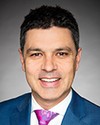
Doug Mavin Commercial Harvester, As an Individual

Thank you, Mr. Chair and honoured members of Parliament, for this opportunity.

My name is Doug Mavin. I am a commercial fisherman with over 40 years in the industry. My family actively participates in nearly all the coastal fisheries. We have also supported fisheries management through survey work and industry associations. Commercial fishing has been the backbone of our family through four generations. Commercial fishing provides fresh seafood not only for our family but also for the world.

We take great care and pride in providing high-quality seafood while practising responsible stewardship of this rich resource. We depend on strong, healthy, well-managed, viable fisheries.

Commercial fishing in B.C. is being directly impacted by the MPA process, particularly in the northern shelf bioregion. In 2019, industry participants came together at our own time and expense to develop a plan that met conservation objectives while significantly mitigating impacts to our fisheries. This was a substantial, well-organized effort undertaken by the marine planning team. We met all conservation targets while reducing impacts to our industry by approximately 75%.

Despite this, the partners in the northern shelf bioregion chose to disrespect this effort in pursuit of their own agendas. B.C. already has measures such as 164 rockfish protected areas, which have never had any form of assessment; 29 glass sponge reef closures equal in size to Ottawa; and other robust measures, such as strict bycatch quotas, world-class fisheries monitoring systems and highly adaptive management plans designed to support and protect our marine resources.

Bycatch quotas are so stringent that they have had the effect of closing large areas to hook and line ground fishing as bycatch exceeds directed catch to such an extent that it has made these areas inaccessible to many groundfish fisheries. Our fisheries have adapted to these measures well. We have learned to adjust and to avoid closed conservation areas and bycatch species to harvest our directed catch. We have world-class logbook data collection and real-time vessel monitoring systems to accurately track our fishing activities.

Unfortunately, the MPA process has chosen to use our data to identify more areas for closure. These are the areas our fisheries have adapted to, where we can still meet our fisheries' objectives for both conservation and harvests. At the same time as our fisheries are being confronted with the realities of the MPA process, we are also confronted with a number of first nations' indigenous protected and conserved areas declared outside of federal processes.

Fishermen are left on their own to deal with this issue. The DFO tells us that these areas are open to commercial fishing, while the first nations proponents threaten us directly with serious consequences if we fish. The DFO and the RCMP have chosen to pursue a policy of appeasement and non-enforcement of commercial fishing rights. In the cases of conflict, the DFO solution is to close those areas, citing a safety concern.

In total, rockfish and glass sponge reef closures, bycatch rules, MPAs and first nations' demands have condensed our fisheries into an ever-shrinking footprint. My business has been directly impacted by crowded fishing grounds and reduced productivity, resulting in increased fishing costs. Our fishing businesses are shouldering the financial burden for a UN-driven agenda supported by the Government of Canada. These and many other decisions by the department continue to wilfully undermine commercial fishing in B.C.

The human cost to our industry is tangible. Young people are leaving our industry in droves at the same time as our largest age cohort is retiring. To be clear, this issue is not a reflection of the state of our fish stocks or the health of our marine ecosystems. It is a direct response to a consistent government policy to undermine commercial fishing in B.C. Nowhere is this more evident than in my own family. Ask any one of my four children, and they will tell you that they love commercial fishing. Unfortunately, none of my children can see commercial fishing as a pursuable career, so for my family, our fishing business and all its knowledge built over four generations of hard work ends with me.

Thank you again for this opportunity, and I welcome your questions.

The Chair Liberal Patrick Weiler

Thank you very much.

Next we're going to go to Colin Sproul for five minutes.

Colin Sproul President, Bay of Fundy Inshore Fishermen's Association

Committee chair and members, thank you very much for this opportunity to share our views.

I appear before you today on behalf of the Bay of Fundy Inshore Fishermen's Association. For 30 years, we have represented owner-operator fishing families on the shores of the Bay of Fundy in Nova Scotia. Our group has a distinguished history of advocating for sustainable fishing practices and community-based fisheries management.

Over this time, our commitment to responsible use of resources has led us to partnerships with many groups in academia and the conservation community. We have a history of co-operation with governments and regulators at all levels, earning us a reputation as a valuable ally on ocean issues. Our members are proud of this legacy and committed to preserving our way of life for future generations of Nova Scotians.

We have significant concerns surrounding the development of marine protected areas. When first summoned to DFO headquarters in Atlantic Canada and presented with the department's plans, we were shocked to discover that areas of interest for the development of marine protected areas had already been identified and settled on.

Two areas in particular encompassed the most economically important fishing grounds for our members: areas they have fished responsibly and sustainably for generations. Exclusion from these fishing grounds would be a death blow to our members' way of life. The fact that these areas of interest within the Bay of Fundy were settled on without fulsome consultation with the Bay of Fundy Inshore Fishermen's Association speaks for itself.

The reason for this exclusion was clear to us: the unprincipled alliance between the department, some Canadian universities and environmental non-governmental organizations, ENGOs. The majority of these ENGOs take significant amounts of foreign funding, then use that money to lobby the Canadian government. Some universities receive massive subsidies from the federal government, then act to produce work that seeks to justify the ideological motivations of the current government surrounding ocean protection. A small group of academics familiar to each other are the dominant players within all three of these groups.

Coastal communities are left wondering whose interests are being represented by individuals who seem to move freely between their jobs as regulators, scientists and lobbyists.

We believe it's important to note that all of Canada's seas enjoy a very high level of protection, which generally exceeds that offered by the creation of marine protected areas in developing countries. Canada's commitments at the United Nations to arbitrary protection levels of 20% and 30% of our seas were made by representatives of these same ENGOs—again, without any consultation with our industry.

Previous governments had seen fit to appoint a [Technical difficulty—Editor] to represent such an important industry at these tables. None have been appointed since 2015, leaving our fishery represented by groups eager to disparage us even though we have some of the best-managed fisheries on earth.

The same behaviour continues to be exhibited by the Department of Fisheries, which seems happy to collaborate financially and otherwise with Canadian and even American ENGOs to unfairly disparage the Canadian fishing industry. Seeing our own tax dollars spent in America to damage our reputation for sustainable fishing in a market so important to us is outrageous. Fish harvesters rightly expect our own government to champion us on the international stage.

Like most of the myriad of problems we see within the Department of Fisheries today, these ones are certainly centred on a lack of engagement and consultation with fishers and their organizations and the undeserved influence of ENGOs. It's time to push pause on the development of MPAs and re-engage with coastal communities to prevent the severe economic damage that will happen, under present plans, to the most important industry in Atlantic Canada.

Trust between our industry and the department on the development of MPAs has certainly been broken. The onus is now on the Department of Fisheries to rebuild that trust.

Thank you, Mr. Chair and committee members. I invite your questions.

The Chair Liberal Patrick Weiler

Thank you very much.

With that, we're going to conclude opening remarks with Glenn Kierce for five minutes.

Glenn Kierce General Manager, Coast Tsimshian Fish Plant Ltd

Thank you, Mr. Chair and members of the committee, for the opportunity to speak today.

My name is Glenn Kierce. I am the general manager for Coast Tsimshian Fish Plant, which is solely owned by the Lax Kw'alaams First Nation. In addition, I'm the general manager of fishing operations for Lax Kw'alaams. I've worked for the nation since 2012, and I've been fishing on this coast for 44 years. I'm a third-generation fisherman. I am a director of the Deep Sea Trawlers Association of British Columbia, a director of the Canadian Groundfish Research and Conservation Society and a member of the groundfish trawl advisory board.

Through these roles, I am actively involved in co-management and decision-making processes that support the sustainable management of our trawl fishery. Fishing isn't just my job. It's my life, my family's history and the backbone of the community. Our nation has managed marine resources sustainably for over 15,000 years, guided by Tsimshian law and a seven-generation planning mindset. Conservation is not something new to us; it's who we are.

Today, I'm not here to argue against conservation. I'm here to talk about how marine protected areas are being implemented, and the very real risks this approach poses to sustainable fisheries, indigenous livelihoods and coastal infrastructure.

At the Coast Tsimshian Fish Plant, we employ 100 people full time. During peak salmon season, that number grows to 170, which is 25% of the community. These are good, family-supporting jobs in a remote community where employment options are extremely limited. Meaningful, stable employment is critically important to community well-being, and it plays a key role in supporting positive social and mental health outcomes in indigenous communities. We are also the only first nations groundfish-processing facility on the north coast. If our plant slows or shuts down, there is no alternative employer or backup plan. Jobs, income and community stability are immediately at risk.

The northern shelf bioregion MPA process includes 17 signatory first nations, yet there are 204 first nations in British Columbia, and many more nations along the coast whose livelihoods are directly affected by these decisions. This MPA network has been developed by only a small subset of first nations alongside a select group of government officials and NGOs, leaving a significant number of indigenous voices unheard. Indigenous participation in Canada's commercial fisheries is substantial, with approximately 20% to 25% of licence-holders and participants being first nations. Decisions of this magnitude risk creating nation-to-nation tensions by privileging some perspectives over others, rather than strengthening inclusive, coast-wide relationships.

We are deeply invested in our sustainable fisheries and want to ensure that they remain viable and accessible so that indigenous and non-indigenous fishing families alike can continue to participate for generations to come. That's why the northern shelf bioregion MPA process is so concerning. This will not just take away livelihoods and food security. It also risks decimating entire indigenous coastal communities.

The groundfish trawl fishery that supplies our [Technical difficulty—Editor] conservation measures in the world. In [Technical difficulty—Editor] that froze the existing fishing area and [Technical difficulty—Editor] like corals and sponges. Today, trawling occurs along less than 6% of the entire B.C. coast. That footprint is permanent. We do not [Technical difficulty—Editor] fisheries are MSC-certified across 16 species, using both bottom and mid-water gear. This certification is global recognition that these fisheries are sustainable, well managed and environmentally responsible. Despite all this, the northern shelf bioregion proposes to remove access to an additional 27% of trawl-fishing areas.

On the Pacific coast, we already have world-class fisheries management. We operate under rigorous science, real-time monitoring, enforceable rules and adaptive management that responds to changing conditions in the ocean. These systems are not theoretical; they are working every day on the water. As a third-generation fisherman with 44 years of experience, I am proud of the fisheries management system we have in place. I believe it is doing an excellent job of protecting sensitive habitats, conserving fish stocks and supporting a healthy, thriving marine ecosystem. That success should be recognized and built upon, not overridden by policies that ignore the strength of the system we already have.

I want to be very clear: You cannot keep taking away access and expect a fishery to survive. When fishing areas are closed, effort doesn't disappear. It creates congestion, safety risks and operational inefficiencies and ultimately undermines the very sustainable goals that MPAs are meant to achieve.

Thank you for letting me speak today to the committee. I welcome your questions.

The Chair Liberal Patrick Weiler

Thank you very much. That concludes our round of opening introductions.

With that, we're going to start our first six-minute round of questions with Mr. Small.

11:20 a.m.

Conservative

Clifford Small Conservative Central Newfoundland, NL

Thank you, Mr. Chair.

I'd like to thank the witnesses for coming forward for this important study.

Mr. Sproul, you've been an exceptional advocate for the fishing industry in southwest Nova Scotia for several decades. The fishing industry is worth close to $1 billion or a little more to your region: to fishing families, suppliers, boat builders and all others in your economy who rely on spinoffs created by the fishing industry.

This committee has sought answers in terms of economic impact, cost-benefit analysis and whatnot from those who advocate for the government's following of the 30 by 30 UN initiative. Have you ever seen an economic impact statement, study or whatnot about the effect that the shutting down of areas to the fishing industry would have on the fishing industry and those who rely on its spinoffs?

11:20 a.m.

President, Bay of Fundy Inshore Fishermen's Association

Colin Sproul

I think Mr. Small's question is a very important one, and the answer is no: The department freely admits, I think, that at this point they don't have a sense of the extreme economic impact from some of the ideologically motivated decisions they continue to make in fisheries management.

[Technical difficulty—Editor] generator in Nova Scotia: its largest export, biggest employer and a bedrock and backbone of the Atlantic Canadian economy. I think that members of the industry rightly expect the government to appreciate those concerns before they move forward, but as detailed in some of the testimony here today, our opinions were excluded not only on the sustainability/conservation side, but also on the economic side.

What we see is that the chief motivation for the development of the MPAs has come from ENGOs, which seem to act as an echo chamber for Liberal government policy. What we see is an attempt by this government to achieve social licence for their ideologically motivated aims on conservation with communities that they certainly have no social licence in.

Let me be clear that the coastal communities I speak for do not support the development of these areas on our most important fishing grounds when it's possible to still protect our oceans and reach our targets in places that aren't so economically important to the fishing industry. It seems like the parallels on the land are that when we protect forests, for instance, we protect old-growth forests, not a place that's very important for forestry.

11:20 a.m.

Conservative

Clifford Small Conservative Central Newfoundland, NL

Mr. Sproul, are you saying that the current government could achieve its 30 by 30 objectives to appease the United Nations by protecting areas that are basically pristine and pure and never fished, versus areas that have been fished and where over the years, as happens with land use, sometimes the damage is hard to repair? To the point you made earlier, how much ocean do you think is out there that's basically never been touched by industry of any form and that's available for 100% protection?

11:20 a.m.

President, Bay of Fundy Inshore Fishermen's Association

Colin Sproul

Yes, we certainly have the space in Canada to reach our UN targets without affecting the economically important fishing grounds. We've seen that same approach used by the United States. During the Obama administration, they protected a huge swath of American ocean without having any effect on commercial fishing. It comes back to the initial consultation period where we weren't asked about areas that we thought would be important to protect, but also, just as important, that would not affect our members' bottom line.

It takes you to another really important point. We have generational knowledge of the ecologically sensitive areas that we believe should be protected: for instance, the nursery grounds of our lobster industry. We were never offered the chance to offer input on which areas we thought were ecologically sensitive before the development of the areas of interest, which seems beyond reason considering our members' generational knowledge of what areas are important.

11:20 a.m.

Conservative

Clifford Small Conservative Central Newfoundland, NL

Could you answer quickly, Mr. Sproul? The time is short.

We've heard testimony from advocates of 30 by 30 marine protection that shutting down areas to fishing will increase opportunities outside of those areas. Do you believe that?

11:25 a.m.

President, Bay of Fundy Inshore Fishermen's Association

Colin Sproul

I want to point out that we have the best managed fishery on earth. The lobster fishery of Atlantic Canada, right now, is the most valuable fishery that has ever existed in history, anywhere on earth, and it's because of organic management from within the industry by fishermen.

The idea that the ocean needs to be protected from us is wrong-headed thinking. Fishing families will always be the best stewards of the resource, and the reason is clear: Generations of our families have relied on it, and we intend to have our children and future generations rely on it. There are no greater stewards of the industry than us.

I totally reject the false narrative that MPAs are needed to protect the ocean from fishing in Canada, where we have some of the most regulated fisheries on earth.

The Chair Liberal Patrick Weiler

Thank you very much, Mr. Small.

Mr. Cormier, you have the floor for six minutes.

Serge Cormier Liberal Acadie—Bathurst, NB

Thank you, Mr. Chair.

First, let me welcome our new colleague, Mr. Chris Bittle, who is replacing Mr. Morrissey today.

I'm going to start with Mr. Sproul.

Thanks for being with us again.

I said to your colleague, Mr. MacPherson, in a previous meeting that you're here so often that I think we're going to have to give you a points card for attending so many meetings. Your input is always welcome.

You talked about the challenges regarding those MPAs, and I think you're talking about the Bay of Fundy. For the proposed MPAs you're talking about, in your opinion, is that just a proposition of some areas that we want to maybe close to fishing? Is this something you will be able to discuss in upcoming meetings with DFO officials and with fishing organizations in terms of what these MPAs will look like? What is the problem you see right now with those proposed MPAs?

11:25 a.m.

President, Bay of Fundy Inshore Fishermen's Association

Colin Sproul

Thank you for the great question.

It comes back to a lack of trust. There's definitely been a broken bridge of trust in the industry between its representative associations and the department. While the areas I'm talking about are proposed areas of interest and have not yet been first ranked for the creation of an MPA, there's no trust within our membership that our interests will be considered at this point.

I've seen MPAs begin to be developed, and fishermen have asked for simple things like whether trap fisheries or hook and line fisheries would still be allowed to be active there and if they would write it in stone for us. However, the department continually deflects from clear answers on that and refuses to put it in writing for the industry. I really think that the members' concerns are all founded in a lack of trust between us and the department.

To rebuild that trust, we need to start over at ground zero and be able to offer our input about where we think areas of interest should be. I'll point this out again. I think my members recognize that there are ecologically important areas where we don't fish within our own fishing grounds, but we know they're important for nursery grounds and for other important life-cycle processes that we'd like to see come forward.

I would say that the answer to your question is to rebuild that trust.

Serge Cormier Liberal Acadie—Bathurst, NB

In terms of trust from your members, when you arrive at a meeting, the officials put a map on a table and say, “Hey, guys. By the way, this zone is where we want to close to fishing.” Is that what I'm hearing from you? Is that how it happens in meetings?

11:25 a.m.

President, Bay of Fundy Inshore Fishermen's Association

Colin Sproul

That is how it happens.

The other thing that's important to us—and perhaps the most ominous—is this. When we arrive at those tables, we see representatives of ENGOs that are getting almost the entirety of their funding from American sources, sitting at the table with the same stakeholder status that we have. They have already been given an opportunity, privately, to offer input before the meeting even happens.

When I go home and search the World Wide Web for the board of directors for those groups, I frequently see that they're on a who's who list of former staffers from Justin Trudeau's government. It leads us to question their motives.

Serge Cormier Liberal Acadie—Bathurst, NB

Thank you, Mr. Sproul.

Mr. Mavin, I'm not very familiar with B.C. fishing, but my dad was a fisherman on the east coast all his life.

I think you mentioned it in your speech, but what kind of fishing enterprise do you have?

11:30 a.m.

Commercial Harvester, As an Individual

Doug Mavin

Presently, I commercially fish salmon and have done for years. I've been active in herring fishing and halibut and groundfish hook and line, including rockfish species and lingcod. I also commercially fish prawns.

Now that I'm a little older, I don't fish as much as I used to. I used to spend approximately seven months of the year at sea.

Serge Cormier Liberal Acadie—Bathurst, NB

Are you saying that some of those zones in the B.C. area are closed to some of your fishing?

11:30 a.m.

Commercial Harvester, As an Individual

Doug Mavin

Yes, very much so.

Serge Cormier Liberal Acadie—Bathurst, NB

You were also talking about the bycatch, and you said that you managed to adapt to it. How did you do that? People who know the industry know that it is a little difficult to manage when you fish for a certain species and you catch so many others. How did you manage to make that happen?

11:30 a.m.

Commercial Harvester, As an Individual

Doug Mavin

In B.C. currently, there are areas that most of us know. Our industry is highly collaborative. We fishermen co-operate with each other tremendously because we have to. It's out of necessity. In the old days, we used to keep secrets, but that doesn't work because we have to assist one other to harvest our catch. We give one another information on where we can fish and where we can't fish.

There are now tremendous areas in B.C. where the volume of bycatch is so high and the stocks are so strong that you can't access your directed catch there. As an example, with halibut, to fish halibut you have a quota to catch, but you have a very small and very tightly regulated bycatch of rockfish to work with, and that precludes a tremendous amount of fishing grounds. What has happened is that our halibut fishery has become concentrated onto the fishing grounds where we can actually get the job done and work within the rules.

The Chair Liberal Patrick Weiler

Thank you very much, Mr. Cormier.

Mr. Beaulieu, welcome to the committee. You have the floor for six minutes.

Mario Beaulieu Bloc La Pointe-de-l'Île, QC

Thank you, Mr. Chair.

Thank you witnesses for joining us.

I have a fairly general question.

Mr. Sproul, it sounds to me like you're saying fishers are not being consulted. How could the process be improved? Do you have any other specific proposal to make to ensure the fishing industry is actually consulted in the development of marine and coastal protected areas?

The other witnesses can also answer the question if they wish.

11:30 a.m.

President, Bay of Fundy Inshore Fishermen's Association

Colin Sproul

I think the best way to rebuild the process is, first and foremost, to have ENGOs and other people who clearly do not have a direct stake in the conservation of our oceans removed from those tables.

It's also to bring more transparency to the interactions between researchers at Atlantic Canadian and other Canadian universities who are doing the research on which the government's proposals are founded. We need more transparency on the interactions among them, the ENGOs and the government to rebuild trust.

As well, press reset on the MPA development process and ask the industry for areas that we feel are economically important to be excluded and for areas that we think are ecologically important to be included, because neither of those ever has happened yet.

Mario Beaulieu Bloc La Pointe-de-l'Île, QC

Does anybody else want to add something? It doesn't look like it. I'll move on to my next question, then.

Mr. Sproul, you also talked about lobbyists in the process. You say they were met before you took part in the consultations, and that they employed former public servants from the Trudeau years, among others. Naturally, that promotes distrust. Have you been able to verify if this complies with the Canadian government's ethics rules?

11:35 a.m.

President, Bay of Fundy Inshore Fishermen's Association

Colin Sproul

That would be outside of my area of expertise, but what I'd say is even more important are the perceptions of coastal communities in the fishing industry. I think it's a reasonable expectation for us to be able to see a transparent process about the interactions among all of them.

What's also important is that, if an ENGO intends to lobby the Canadian government to influence Canadian government policy, especially when it comes to things like transborder fishery stocks, we should rightly expect those ENGOs to have to publicly declare where the money is coming from that is funding their activities and the direction they're taking. Those seem to be reasonable safeguards to build a better process in the future.

Mario Beaulieu Bloc La Pointe-de-l'Île, QC

Thank you.

My question was also for the other witnesses: Do you think the fishing industry is being consulted enough and is the industry's point of view being taken into consideration?

The Chair Liberal Patrick Weiler

Mr. Mavin, do you want to answer that?

11:35 a.m.

Commercial Harvester, As an Individual

Doug Mavin

With respect to the northern shelf bioregion in particular, in 2019, our industry came together at our own personal expense. It was a considerable effort in B.C. organized by our marine planning team. Numbers of us—I think there were up to 700 participants, if memory serves me correctly—went back and forth to Nanaimo all winter long. We sat in a room full of other fishermen with their charts out, and we talked about the areas we could lose and the areas we had to keep. We developed a plan that would have met the target for conservation while mitigating the impacts on our industry. When we submitted it at the end of the day, none of that was gazetted, and it was all turfed out the window. We were told by the northern shelf bioregion partners that they were just going to do what they saw fit.

That's how industry is perceived. That's what's going on in B.C. There's not a lot of collaboration. You go to the meetings, and they tell you how it's going to be. That's what we have in B.C.

Mario Beaulieu Bloc La Pointe-de-l'Île, QC

What you're saying is that there isn't really any consultation, that you organize meetings yourself, and that your point of view isn't taken into consideration. Is that correct?

11:35 a.m.

Commercial Harvester, As an Individual

Mario Beaulieu Bloc La Pointe-de-l'Île, QC

Do the other witnesses agree?

The Chair Liberal Patrick Weiler

You still have 30 seconds, Mr. Beaulieu.

Mario Beaulieu Bloc La Pointe-de-l'Île, QC

Okay.

Mr. Sproul, you've already talked about this, but usually when there are consultations, does the department publish a report outlining your recommendations, even if it doesn't take them into consideration?

11:35 a.m.

President, Bay of Fundy Inshore Fishermen's Association

Colin Sproul

I attend management meetings at places like the maritimes region lobster advisory committee, and frequently, when the minutes come back, I see our comments and our key concerns excluded or somewhat edited by managers within the department. I would also point out that these managers are within that same small group of academics from specific universities within Atlantic Canada who circulate through management, ENGOs and government.

The Chair Liberal Patrick Weiler

Thank you, Mr. Beaulieu.

That concludes the first round of questions.

We're going to start the second round of questioning with Mr. Arnold for five minutes.

11:35 a.m.

Conservative

Mel Arnold Conservative Kamloops—Shuswap—Central Rockies, BC

Before you start my timer, Mr. Chair, I'd like to welcome our colleague Mr. Moore from Fundy Royal to the committee today.

I'd also like to ask if the clerk has received a response from the minister on our request for her to appear on this study.

The Chair Liberal Patrick Weiler

We don't have a response yet from the minister on this study.

11:35 a.m.

Conservative

Mel Arnold Conservative Kamloops—Shuswap—Central Rockies, BC

Okay, thank you. I'll start my time then.

Mr. Mavin, do you see one group of Canadians receiving more than others from some of the decisions with the way this MPA process has been working so far?

11:40 a.m.

Commercial Harvester, As an Individual

Doug Mavin

I very definitely do. When the commercial fishing industry makes suggestions or tries to contribute, our suggestions are minimized tremendously. There's been a definite agenda of listening to the voices that the government of the day chooses to listen to. I don't know how to elaborate further than that.

11:40 a.m.

Conservative

Mel Arnold Conservative Kamloops—Shuswap—Central Rockies, BC

Would the impact of these proposed MPAs in some of the most productive fishing areas be similar to, say, creating a national park that covers some of our most productive agricultural areas, such as the blueberry fields or cranberry bogs in the lower Fraser?

11:40 a.m.

Commercial Harvester, As an Individual

Doug Mavin

One of the areas that's scheduled to be a marine protected area is the body of water off Frederick Island on the west coast of Haida Gwaii.

I've never fished in the Maritimes, but that area off Frederick Island is easily the most fish-rich area in B.C. and, I would bet, likely in Canada. Everything that we fish is there. There's halibut, rockfish and lingcod. The salmon migrate by there in the millions. It's extremely critical to commercial fishing and it's one of the areas they've chosen to turn into a marine protected area. If we lose that, the volume of fish that would be displaced and the earnings that would be displaced would be profound.

11:40 a.m.

Conservative

Mel Arnold Conservative Kamloops—Shuswap—Central Rockies, BC

Would that require you to spend more time at sea, be more at risk from weather and burn more fuel, etc., to meet the same catch and incomes that you have now? I'm not talking just about you, but about the fleet, basically.

11:40 a.m.

Commercial Harvester, As an Individual

Doug Mavin

I don't think we could replace the catch if we lost that area. You could burn as much fuel as you wanted and fish as hard as you could elsewhere and you would not come close to catching the harvest that we get in that area.

11:40 a.m.

Conservative

Mel Arnold Conservative Kamloops—Shuswap—Central Rockies, BC

Mr. Sproul, would you like to comment on how much time would have to be spent if the most productive areas were to close?

11:40 a.m.

President, Bay of Fundy Inshore Fishermen's Association

Colin Sproul

I would point out that the extreme effects on our conservation because of the previous government's direction in fisheries have moved our membership to a point of barely being profitable. If they're forced to go further to try to catch lobster or fish, our businesses won't be profitable. Fishermen and our industry have been brought to their knees by the application of ideology in fisheries management.

We need to come back to the application of sound science that's transparent and that can be trusted by everybody who relies on healthy fisheries. The truth is that there's a reason that some of these grounds have been fished for generations. The species that we harvest are very abundant there. The idea that we can just go somewhere else and conduct our activity is ridiculous. Again, it points to the lack of consultation during the early stage of the process.

11:40 a.m.

Conservative

Mel Arnold Conservative Kamloops—Shuswap—Central Rockies, BC

Mr. Kierce, you were saying that you're the only fish plant operating now in that area of the coast and that you felt that the bands in your area hadn't been consulted. Has DFO made an attempt to put everyone in the same room to talk about these proposals so that everyone could hear each other's sides of this or has it been isolated consultations with different user groups?

11:40 a.m.

General Manager, Coast Tsimshian Fish Plant Ltd

Glenn Kierce

I'll make just a little correction. We're actually the only first nations groundfish fish plant in B.C. We're not the only fish plant.

We haven't been in a room with all the first nations to have a talk together.

11:40 a.m.

Conservative

Mel Arnold Conservative Kamloops—Shuswap—Central Rockies, BC

Have you been in the same room with other non-indigenous harvesters or other user groups on these proposals?

11:40 a.m.

General Manager, Coast Tsimshian Fish Plant Ltd

Glenn Kierce

Yes, we have.

The Chair Liberal Patrick Weiler

Thank you, Mr. Arnold.

Next we're going to go to Mr. Klassen for five minutes.

Ernie Klassen Liberal South Surrey—White Rock, BC

Thank you very much, Mr. Chair.

Thank you to all the witnesses for being here today. It's a wealth of information that you provide to us.

Mr. Sproul, I believe it was you who talked about how there's more than a fair share of ENGOs at the table and that we need to start the process all over again without any ENGOs.

Do you not see any relevance...? What do you think would be the appropriate makeup of the group that's making these decisions?

11:45 a.m.

President, Bay of Fundy Inshore Fishermen's Association

Colin Sproul

I think that people who sit at management tables need to be people who have a direct stake in the resource. I would say, in terms of judgments against specific ENGOs, that Canadians should have transparency surrounding their funding and their intent so that we can all make those judgments ourselves based on them. I certainly would have more willingness to create a space within management—not at a stakeholder table—for an ENGO if it was getting its funding from Canadians and was lobbying on behalf of Canadian interests. I think we should accept that when you are taking huge amounts of funding from foreign countries, you will be lobbying for interests within that country and not for those of Canadians.

It's important to point out that, while it's maybe not our area of interest here today, within my own community I see ENGOs having undue influence and holding back the development of many other industries in Nova Scotia, like mining, forestry and agriculture. I think, as Canadians, they need to be reckoned with. We need to make sure that money that is lobbying in Canada is Canadian money and that it's lobbying on behalf of Canadians' interests. As for whether those interests are environmental or industry-related, that's a different question. I think that as Canadians, especially in this time and place, we should reject totally the influence of American money on the management of Canadian fisheries.

Ernie Klassen Liberal South Surrey—White Rock, BC

Mr. Kierce and Mr. Mavin, you're both third-generation harvesters, fishers.

I'll start with Mr. Mavin.

You mentioned that you have four children and that none of them are planning to stay within the industry. What kinds of changes would you think would have to be made in order to make it viable for a fourth generation of your family to continue in the industry?

11:45 a.m.

Commercial Harvester, As an Individual

Doug Mavin

It comes down to opportunity. We don't get that in B.C. anymore. In B.C. this year, the Fraser River returned one of the biggest sockeye runs in recent memory. A huge volume of sockeye went up the Fraser River. My family has fished the Fraser River for four generations. My grandfather fished the Fraser River. This year, everybody got to fish the Fraser River sockeye except for Canadian commercial fishermen. The Americans fished full bore. First Nations fished full bore. Recreational fishermen got to fish. When we finally got an opportunity, it wasn't an opportunity that the minister offered us. It was an insult; it was a teaspoon of fish. That's what's happening in B.C. We can't abide that any longer. We need to have viable fisheries, managed scientifically. We don't want to overharvest. Not one of us does; we never have. However, when the opportunity presents itself, we need to get it. That has been happening for a great many years now.

Ernie Klassen Liberal South Surrey—White Rock, BC

I have a follow-up question.

I think you talked about the areas where you need to do the harvesting, and there's a huge number of fish there. With your input, if we reduce the areas that are designated as MPAs so that we can ensure that conservation continues but that fishing and harvesting are available, how would you see the fishers in your area responding to something like that?

11:45 a.m.

Commercial Harvester, As an Individual

Doug Mavin

We already did respond very positively. As I said before, we came together and developed a plan that would work. It was no small undertaking. It took quite a bit of effort on our behalf and no small amount of sacrifice. We've done that. The work is there. The information has been provided to the department. It's just up to the department to choose whether or not it wants to adopt it.

Ernie Klassen Liberal South Surrey—White Rock, BC

You would be prepared to give up some of the area but just not to the extent that you're seeing.

11:50 a.m.

Commercial Harvester, As an Individual

Doug Mavin

Yes, absolutely. We've been clear on that.

Ernie Klassen Liberal South Surrey—White Rock, BC

Thank you.

The Chair Liberal Patrick Weiler

Thank you very much, Mr. Klassen.

Mr. Beaulieu, you have the floor for two and a half minutes.

Mario Beaulieu Bloc La Pointe-de-l'Île, QC

My question is for all the witnesses.

Are there tangible benefits when fishers get compensated? How does that work? What do you think about compensation when marine protected areas are being developed?

Mr. Sproul, do you want to go first?

11:50 a.m.

President, Bay of Fundy Inshore Fishermen's Association

Colin Sproul

At least in our case in Nova Scotia, as far as I'm aware, there is no compensation framework proposed for the development of MPAs.

11:50 a.m.

Commercial Harvester, As an Individual

Doug Mavin

It's the same for B.C. There has been no compensation offered.

Mario Beaulieu Bloc La Pointe-de-l'Île, QC

Do you think compensation could help when those types of projects put you at a disadvantage? It would certainly be the case.

11:50 a.m.

President, Bay of Fundy Inshore Fishermen's Association

Colin Sproul

No, I don't think it's possible for compensation to make up for the generational loss of wealth to these communities. If we were to compensate the fishermen of today, that would be the end of it.

Let me be clear. I'm really concerned with the statement by my colleague from British Columbia about the inability of his family to continue in the generational family business. Everything we do at the Bay of Fundy Inshore Fishermen's Association is directly because of that. We feel we have a duty to our children and to the next generations to preserve this resource, and taking compensation today is not in keeping with that duty. We also have a debt to our grandfathers, who worked their fingers to the bone to create this profitable and sustainable industry for us. Those are our most important concerns, not compensation in the short term.

11:50 a.m.

Commercial Harvester, As an Individual

Doug Mavin

I agree with Mr. Sproul's comments wholeheartedly.

Fishermen in B.C. don't want compensation. We're proud Canadians. We would like to work. We're proud to work. We want opportunity. We don't want compensation.

The Chair Liberal Patrick Weiler

Thank you very much, Mr. Beaulieu.

We have a short last round. We'll do four minutes and four minutes.

Mr. Gunn, you have the floor for four minutes.

11:50 a.m.

Conservative

Aaron Gunn Conservative North Island—Powell River, BC

Thank you, Chair.

Mr. Mavin, how long has your family been involved in commercial fishing, how many generations?

11:50 a.m.

Commercial Harvester, As an Individual

Doug Mavin

On my mother's side, it's four generations now.

11:50 a.m.

Conservative

Aaron Gunn Conservative North Island—Powell River, BC

Can you see that business, that wealth of knowledge being passed down to your children?

11:50 a.m.

Commercial Harvester, As an Individual

Doug Mavin

I've done my best with it. I can pass down the knowledge, the information and the business, but I can't pass down the opportunity. That's where my hands are tied.

11:50 a.m.

Conservative

Aaron Gunn Conservative North Island—Powell River, BC

Can you convey to people why the next generation isn't getting involved in fishing, why they don't see those opportunities and instead see uncertainty? Perhaps you could mention how the northern shelf bioregion, this network of underwater parks, or MPAs, is contributing to that.

11:50 a.m.

Commercial Harvester, As an Individual

Doug Mavin

The network of underwater parks is forcing concentration in our fisheries. Our fishing grounds have become more congested. In our halibut fishery, which starts in March every year, our fishery is down to a number of spots, and it's a steady stream of boats rotating over those spots. If you're third in line, your productivity is much less than that of the guy who is first in line.

Our herring fishery, for example, is not managed to science anymore. It's managed to politics. Our salmon fishery is not managed to science anymore. It's managed to politics. There are decisions made about who gets to fish and when that are outside of scientific rules and are more to do with political goals.

11:50 a.m.

Conservative

Aaron Gunn Conservative North Island—Powell River, BC

Does it seem to you in general that policy-making at DFO is being driven by politics and activists as opposed to science and common sense?

11:50 a.m.

Commercial Harvester, As an Individual

Doug Mavin

Absolutely, it is.

11:50 a.m.

Conservative

Aaron Gunn Conservative North Island—Powell River, BC

Does it frustrate you when you see that these foreign-funded or government-funded activist groups seem to be driving the decision-making, even though they don't have a stake in the industry? It's not their jobs on the line. It's not their way of life on the line. It's fishermen like you who have fished for generations who are suffering the consequences, both the real-world closures and all of the uncertainty that this is creating.

11:55 a.m.

Commercial Harvester, As an Individual

Doug Mavin

I'm frustrated beyond words. It's extremely frustrating that the Canadian government would pander to this.

The Liberal Party gave us Brian Tobin at one time. In the 40-plus years that I've been a fisherman, he's the only good fisheries minister that I've seen come from the Liberal Party. What has followed has been a succession of oceans ministers, who focus on the ocean and not the fisheries. It would be nice to have a fisheries minister again.

11:55 a.m.

Conservative

Aaron Gunn Conservative North Island—Powell River, BC

Thank you, Mr. Mavin.

Mr. Kierce, we keep hearing over and over again from this government that first nations along the coast are in support of these massive MPA spatial closures in the northern shelf bioregion, but upon closer inspection, it seems that is not the case. In fact, some of the first nations that are most experienced with fishing and most invested in it are actually opposed, including Lax Kw'alaams and We Wai Kai.

Can you talk about why the Lax Kw'alaams First Nation is opposed to these large closures? If they go ahead, what will be the real-world consequences for your community?

11:55 a.m.

General Manager, Coast Tsimshian Fish Plant Ltd

Glenn Kierce

For one thing, it's about the 17 signatories they have in place. Currently, they have FRRAs in place—reconciliation framework agreements. Those are the 17 signatories.

We don't have one in place. We're quite concerned, because we're a fishing village. This has the potential to have huge cultural and social impacts on the community. If they continue on this path forward, a substantial reduction in fishing will bring significant social harm to the community and will further disconnect the people of Lax Kw'alaams from their heritage and culture.

Like I mentioned in my testimony, in 2012, we had a trawl footprint that was implemented. It's been doing very well. We have a bycatch of coral and sponges. It's about 4.5 tonnes annually. If you look back over the catch history, there's still 96% or 98% remaining of that every year. These trawl footprints that we have in place seem to be doing a great job.

The Chair Liberal Patrick Weiler

Thank you.

I'm sorry, but I'm going to have to jump in here.

We're going to end with Mr. Cormier.

You have four minutes.

Serge Cormier Liberal Acadie—Bathurst, NB

Thank you.

Mr. Sproul, I'm going to go back to you.

I know you said that you were not happy with the past government, and you named the former prime minister. A new government is in place and a new Prime Minister is in place. A lot of groups who came to this committee or who we met with seem to be a little bit happier with the way DFO is making some decisions right now—maybe not all of them, but some of them.

For example, in your area on the Bay of Fundy, a lot more arrests are being made. When it comes to illegal fisheries, thousands of lobsters were seized and put back in the water.

Do you actually see a little bit of a difference in your area when it comes to enforcing the law?

11:55 a.m.

President, Bay of Fundy Inshore Fishermen's Association

Colin Sproul

Thank you for the question, Mr. Chair.

What I would say in response to Mr. Cormier is that's not the basis for the meeting today, but since he asked, I'd be happy to answer.

What I see is similar—

Serge Cormier Liberal Acadie—Bathurst, NB

Just a minute—before you respond, I think it fits right into the meeting, because the creation of MPAs protects the resources that you are fishing as an industry and as a group.

Can you please just answer my question? I'll come back to you after that.

11:55 a.m.

President, Bay of Fundy Inshore Fishermen's Association

Colin Sproul

Firstly, I haven't seen any MPAs proposed for St. Marys Bay or St. Peters Bay, which continue to be fished on an industrial scale out of season.

While I appreciate that there have been some increases in enforcement in our area, they still seem to be only to generate the appearance of enforcement in the media. If the minister and the department intended to end the illegal fisheries in our communities, they would go to places like St. Peters Canal and Saulnierville harbour and arrest the people engaged in the illegal activity and seize the boats, and maybe they would drag the sunken, oil-spewing boats out of the harbour that were left there again last winter.

Serge Cormier Liberal Acadie—Bathurst, NB

I think we've all seen what was done in terms of arrests for illegal fishing. That was a start. I think we want to see more enforcement done.

Coming back to MPAs, Mr. Sproul, my first question was about the map that was proposed to your group when you went into these meetings. What will you want to see done differently in terms of the creation of those areas? How do you want the government to proceed with that going forward?

Noon

President, Bay of Fundy Inshore Fishermen's Association

Colin Sproul

I think the path forward is clear.

First, the government needs to conduct socio-economic studies of the fishery to see what the proposed impacts would be on coastal communities. Then we need a new engagement process that puts harvesters first and gives us the ability to have a veto over certain areas that we know we can't remain economically viable without. Then we should see the science that's being used to justify the areas that are being proposed by the government so we can understand that it's based on conservation, not ideology. I think that's the way forward.

Noon

Liberal

Serge Cormier Liberal Acadie—Bathurst, NB

In your opinion, do you think MPAs can be good for an industry like lobster, for example?

Noon

President, Bay of Fundy Inshore Fishermen's Association

Colin Sproul

I think MPAs have tremendous value in the developing world, in places where there are no protections for the ocean at all. That was a lot of the reason for the development at the United Nations.

We didn't have representatives of the industry at those tables. We had ENGOs at those tables, saying that the Canadian industry is terrible from an environmental sustainability viewpoint, when they should have been saying that every square mile of our oceans in Canada has an incredible level of protection when compared to the developing world.

I think you first need to have that lens on how you look at this and recognize that the benefits of MPAs to Canadian sustainability will never be as great as they are in the developing world, where there are no protections at all.

Noon

Liberal

The Chair Liberal Patrick Weiler

Thank you very much, Mr. Cormier. That's going to end our first panel.

I'd like to thank all of our witnesses for being here today in person and by video conference. Again, thank you for your flexibility in rescheduling from our prior time.

I want to mention that your testimony is going to be very helpful as we put together the report and recommendations to government that will flow from that as well.

You're welcome to stay in the room to watch our second panel, but at this point we're going to briefly suspend while we welcome our new witnesses.

The Chair Liberal Patrick Weiler

I call the meeting back to order.

Welcome back.

I want to make a few comments for the benefit of the new witnesses.

First, I would like to thank you for your understanding when the committee meetings were cancelled on February 11, and for reorganizing your schedules to be here today.

Please wait until I recognize you by name before speaking. For those of you who are participating by video conference, which is everybody, click on the microphone icon to activate your mic, and please mute yourself when you're not speaking.

If you're participating through the Zoom application and would like interpretation, at the bottom of your screen, you can choose floor, English or French.

As a reminder, all comments should be addressed through the chair.

With that, I'd like to welcome our witnesses.

From the ArcticNet Network, we have Mr. Philippe Archambault, scientific director.

We also have James Nickerson and Catherine Rigg, directors and owners of Atlas Ocean Tours.

We'll begin with opening remarks from the witnesses. You will each have five minutes or less for your presentation.

Mr. Archambault, you have the floor.

Philippe Archambault Scientitic Director of the ArcticNet Network, As an Individual

Thank you, Mr. Chair.

Ladies and gentlemen, my name is Philippe Archambault. I am a full professor at Université Laval and the Canada Research Chair in biodiversity and the behaviour of transforming marine ecosystems. I'm also scientific director of the Canadian ArcticNet network, one of the world's largest Arctic research networks. In all of these positions, I work directly with fishers' associations in the St. Lawrence and the Arctic, as well as with local communities.

Marine protected areas have a direct impact on coastal communities, especially those that depend on fisheries and resources. That said, it is essential to remember that, outside commercial fisheries, the central role of fisheries in food security, culture and the continuity of traditional knowledge in many indigenous communities in the Arctic, as well as on the Pacific and Atlantic coasts.

The stability of commercial fisheries as a livelihood depends directly on the state of marine ecosystems. International and Canadian scientific synthesis shows that in highly protected areas, fish biomass can be two to five times higher than outside protected areas, and the average size of fish increases, which significantly enhances reproductive potential. This doesn't just benefit commercial markets; it also increases the availability of resources for communities who depend on the sea for their livelihood.

Let me give you a simple analogy. A marine protected area is like a bank account, a savings account. The spawning fish you protect and retain is your capital. The fish and juveniles that come out of the area and support the surrounding fisheries are your interest. If you consume all your capital, there's no more interest. I'm sure you'd rather live on your interest than eat into your capital.

The effectiveness evaluation of marine protected areas is based on scientific and regulatory methods recognized in Canada and around the world.

First is regulatory compliance. A protected area can only be effective if those rules are followed. It's very important.

Second is ecological monitoring. According to the International Union for Conservation of Nature recommendations, the assessment includes size of fish, abundance of species, biodiversity, state of sensitive habitats such as corals—species of fish will spawn on these corals—and habitat behaviour.

The Department of Fisheries and Oceans, in co-operation with universities, industries and research networks, uses scientific harvests for this monitoring, and there should be more of these harvests. Analysis published in scholarly journals, such as Science, shows significant increases in biomass, size and diversity in protected areas. These references serve as a comparative framework for our performance in Canadian waters.

Third, the adequacy of marine protected area objectives must be assessed. Under the Oceans Act, each area must have specific and consistent objectives.

Fourth, the assessment is based on adaptive management, meaning the possibility of adjusting limits or rules based on new scientific data. This principle is in line with Canada's commitments under the convention on biological diversity and the Kunming-Montreal global biodiversity framework, both of which focus on measurable effectiveness, not the area to be protected.

To summarize, the effectiveness of a marine protected area is measured not by size but by adherence to rules, improved ecological indicators, consistency of objectives and adaptability.

In closing, I'd like to talk about the Arctic.

In the Arctic, the challenges of marine protected areas go far beyond conservation. As everyone knows, geopolitical tensions in the Arctic have intensified. In this context, active governance of Arctic spaces is a core issue of sovereignty.

Marine protected areas fall directly under the United Nations convention on the law of the sea, which Canada has signed. This convention recognizes the sovereign rights of coastal states over their exclusive economic zone and continental shelf, while forcing members to protect and preserve the marine environment.

For example, the designation and active management of marine protected areas in the Arctic, such as Tuvaijuittuq or Tallurutiup Imanga, is an actual exercise of Canadian jurisdiction. They demonstrate an ability to regulate, monitor and manage these spaces in a rapidly changing strategic context.

Scientific monitoring associated with marine protected areas, whether it be biodiversity, seabed, ocean conditions or human activities, also contributes to operational knowledge of the territory for defence purposes. This knowledge supports civilian governance, but also indirectly strengthens maritime security and surveillance capacity in the north.

In an environment where international competition for access and influence in the Arctic has increased, marine protected areas are not just environmental tools: They're a structuring instrument of state presence, stability and international credibility.

Thank you.

The Chair Liberal Patrick Weiler

Thank you very much.

I apologize, there were some technical issues with the sound.

We're going to continue with the opening remarks from Atlas Ocean Tours.

Ms. Rigg, you have the floor for five minutes.

Catherine Rigg Director and Owner, Atlas Ocean Tours

Greetings from the west coast. My name is Catherine Rigg. I am before you today with my husband, James Nickerson. We are small business owners on Haida Gwaii, an archipelago located off the north coast of British Columbia.

Our primary [Technical difficulty—Editor] company offers kayak mother ship trips in Gwaii Haanas National Park Reserve, National Marine Conservation Area Reserve and Haida Heritage Site. Gwaii Haanas is the southern third of Haida Gwaii and is only accessible by boat or [Technical difficulty—Editor] our boat, MV Atlas, to explore the nooks and crannies of the edge of the world, as we like to call it.

Our knowledge of Haida Gwaii is drawn, however, from a diversity of experience. As a small business in a remote [Technical difficulty—Editor] is that of a tourism operator, but we have also worked for DFO as prawn fisheries monitors, and we have held a contract to count salmon returns on the west coast for almost a decade. We've measured herring spawn and removed marine debris. We've worked with the Haida Nation and for the Haida Nation in different capacities—

The Chair Liberal Patrick Weiler

I'm sorry, Ms. Rigg. I'm going to have to stop you very briefly here. We do have a point of order.

Mario Beaulieu Bloc La Pointe-de-l'Île, QC

The interpretation isn't working. We're being told that the sound quality isn't good enough.

The Chair Liberal Patrick Weiler

Ms. Rigg, I'm sorry. I'm afraid we're going to have to briefly suspend so that we can look into the technical issues we're facing. We're having some gaps in sound coming through, and that's creating issues for everybody, including for interpretation.

The Chair Liberal Patrick Weiler

Colleagues, we're back. Again, I apologize for the delay. We are experiencing some technical issues. We've been making some efforts to try to improve matters.

Ms. Rigg was just in the process of delivering her opening remarks. At this point, she has about three minutes and 40 seconds left.

If you'd like to pick up where you left off, we can go from there.

12:20 p.m.

Director and Owner, Atlas Ocean Tours

Catherine Rigg

All right, thank you. I will just pick up right where I was.

As I mentioned, we've worked with the Haida Nation. James was a commercial fisherman when I met him 25 years ago. While we now work in tourism, our business has been consistently augmented by other consulting and contracting work.

With that introduction, I will address the questions posed by the committee.

First, how have protection initiatives affected coastal communities?

You could ask 100 people on Haida Gwaii if the overall state of the ocean is improving, stable or declining, and 100 people would say that it is in decline. The causes may be debated, and the impacts are variable on different species and in different locations, but the reality is that the oceans are in trouble, and everybody knows it.

We've seen declines in local salmon runs, herring stocks and prawn populations, as a few examples. We also know that there's no quick fix to that problem, but of all the safe bets, reducing human impacts by establishing protected areas is one that people can wrap their heads around. Implementing marine protection allows ecosystems to regain balance and resilience. This is common sense. This, communities do understand.

In our view, Haida Gwaii communities are generally in favour of marine protection. We know it is not enough on its own, but if we can design protection in a way that makes sense, we will comply with marine zoning, accept restrictions and place that bet on our future.

Second, are the methods used to measure protection objectives effective?

In short, resourcing for ongoing monitoring is limited and insufficient. Many of these areas are remote, and data collection is challenging and expensive. Not everyone can do this work. DFO needs to provide sufficient resources and partner with local first nations to design and implement effective monitoring programs.

The final question is whether the government's objectives have been achieved.

Ecologically, these initiatives safeguard benthic and rearing habitats and protect species like rockfish and abalone. If we are all honest with ourselves, we know that to allow a place to sit, to rest, without the pressure of human extraction, has value unto itself.

Politically, marine protection balances the government's economic and conservation commitments. It can also build relationships with first nations and advance reconciliation. Socially, marine protection connects people to place. It builds trust and confidence that we're taking responsibility and being respectful of the place we live in.

Economically, marine protection is an investment in our future and in our children's future, both as tourism operators and as fisherman. Yes, objectives are slowly being achieved, but some take more time than others.

In closing, marine protection has been a long time coming and very slow to progress.

Let's take Gwaii Haanas, for example. The Haida Nation designated the marine and terrestrial area a Haida heritage site in 1985. Parks Canada followed with a national park reserve designation in 1993. Gwaii Haanas was finally designated a national marine conservation area reserve in 2010, but comprehensive marine zoning did not actually happen until 2018, 33 years after the original Haida designation, and 25 years after federal protection of the land.

Almost all of this work has been led by the Haida Nation with the support of Parks Canada and, only more recently, the involvement of DFO. The truth is that DFO has not led ocean conservation on the west coast. It has followed. It has followed first nations; it has followed the province; and it has followed coastal communities and residents.

Now, it is time to lead. It is time for DFO to deliver on the promise of responsible stewardship. It is time to work with first nations and coastal communities to move forward because the alternative, reversing course, will set us back decades.

We all, each and every one of us, have a collective duty to look after our marine front yard, not to make excuses about why we cannot do so.

Thank you. Haawa. We are now both available to answer any questions you may have.

The Chair Liberal Patrick Weiler

Thank you very much. That will conclude our opening remarks.

We're going to go right into the first round of questioning, a six-minute round with Mr. Arnold.

12:25 p.m.

Conservative

Mel Arnold Conservative Kamloops—Shuswap—Central Rockies, BC

Mr. Chair, I'd like to remind the committee that we passed a motion for this study back in September. In that motion, the committee called for the minister to appear. We started this study on January 28, months after the motion was made. The minister appeared on short notice on February 2, on Bill C-15. She made time in her schedule on fairly short notice for that.

At that meeting, multiple members asked her about appearing. Three weeks later, the minister has not responded. Today, we heard that the clerk hasn't had a response. Today is meeting four out of six. Perhaps the parliamentary secretary could update the committee on whether he's had discussions with the minister about her appearance with this committee on this study.

Ernie Klassen Liberal South Surrey—White Rock, BC

I have not specifically asked her about coming here on this study, but I'll get an update for the next meeting.

12:25 p.m.

Conservative

Mel Arnold Conservative Kamloops—Shuswap—Central Rockies, BC

Seeing as that hasn't happened, I'd like to move a motion that the committee direct the clerk to resend the committee's request for the minister to finally appear for our current study.

The Chair Liberal Patrick Weiler

I'll pause your time here.

A motion has been put on the floor. Are there any members who would like to speak to this motion that's been put forward?

Bobby Morrissey Liberal Egmont, PE

We're okay.

The Chair Liberal Patrick Weiler

Are we all in agreement?

(Motion agreed to [See Minutes of Proceedings])

12:30 p.m.

Conservative

Mel Arnold Conservative Kamloops—Shuswap—Central Rockies, BC

Thank you. We look forward to the response.

Ms. Rigg and Mr. Nickerson, I took a look at your website for your company and your ocean tours. I noticed that the tour prices are there. Could you describe what the prices are for your tours now and how you derive them?

12:30 p.m.

Director and Owner, Atlas Ocean Tours

Catherine Rigg

James, would you like to answer that?

James Nickerson Director and Owner, Atlas Ocean Tours

Yes. We operate eight-day, eight-night tours in the Gwaii Haanas National Park Reserve, National Marine Conservation Area Reserve and Haida Heritage Site. Essentially, it's the bottom third of Haida Gwaii. The tours are eight days and eight nights, and we offer kayaking and village site visitation with the Haida Gwaii watchmen program. They're essentially a mix of whatever guests really want to do during that time.

Our price for the 2026 season is $5,800 per person plus GST, and that's inclusive of all equipment and food and lodging while on board.

12:30 p.m.

Conservative

Mel Arnold Conservative Kamloops—Shuswap—Central Rockies, BC

Does that include transportation to your site, or is that something clients book on their own? If they book it on their own, what would the estimated cost of that be?

12:30 p.m.

Director and Owner, Atlas Ocean Tours

James Nickerson

Clients book their own transportation to and from Haida Gwaii. During the summer months, at this point, a flight on Air Canada from Vancouver to Sandspit is roughly $1,200 return. They would also need accommodation on Haida Gwaii for a bare minimum of two nights, so they'd have one night on either end of our tour. That's at an absolute minimum.

12:30 p.m.

Conservative

Mel Arnold Conservative Kamloops—Shuswap—Central Rockies, BC

Quickly adding in my head, I see about $6,000 for your tour, plus a few hundred dollars for a flight and then accommodation, and I don't imagine accommodation is very inexpensive on Haida Gwaii.

It's almost touching on $10,000 for an eight-day, eight-night tour. Would that be a rough estimate?

12:30 p.m.

Director and Owner, Atlas Ocean Tours

James Nickerson

Yes, that's a fair estimate. I would like to note that we're also the least expensive option currently operating large vessel tours in Gwaii Haanas. It can range from our price point to over $12,000 per person for an eight- or nine-day tour in Gwaii Haanas.

12:30 p.m.

Conservative

Mel Arnold Conservative Kamloops—Shuswap—Central Rockies, BC

It doesn't sound, to me, that it would be very accessible for an ordinary, average-income earning British Columbian, let alone for a Canadian coming from across the country. Where would your clientele be from? Would they be domestic or foreign clients?

12:30 p.m.

Director and Owner, Atlas Ocean Tours

James Nickerson

There are other tour operation options in Gwaii Haanas. They're much less of a time and money commitment. There's anything ranging from single day tours for $500 to $600 to two- to four-day tours in the $3,000 to $4,000 range with various operators.

For us, about 60% to 70% of our clients are from Canada—mostly from the provinces of Ontario, Alberta and B.C.—and the other roughly 30% of clients are predominantly American, with some Europeans.

12:30 p.m.

Conservative

Mel Arnold Conservative Kamloops—Shuswap—Central Rockies, BC

I'm trying to put this in the context of the current affordability crisis we're seeing in Canada. A lot of Canadians can't afford to put food on the table, yet these MPAs are potentially going to shut down our fishing industry. We've heard from many witnesses who say if the MPAs and coastal protections come in as proposed, it could be the end of a lot of these fisheries on the west coast.

It's a totally different playing field here. Average Canadians can't afford to put food on the table, yet we're going to shut an MPA down for someone who can afford a $10,000 trip. It just doesn't seem to add up.

Can you square that circle for me?

The Chair Liberal Patrick Weiler

I'm sorry, but I'm going to have to jump in here.

If you'd like to provide an answer in writing, that would be much appreciated, but we are over time.

Mr. Cormier, you have six minutes, please.

Serge Cormier Liberal Acadie—Bathurst, NB

Thank you, Mr. Chair.

Mr. Archambault, in your introduction, you talked about the impact on coastal communities when marine protected areas are created or when the department decides to allocate or reduce quotas.

You said a marine protected area is like a savings account for fishers, most of whom will be affected. At the end of the day, communities are worried. Fishers are concerned that they're not always consulted before these types of proposals are made.

Have you participated in some of those meetings on proposed marine protected areas in certain regions of Atlantic Canada or in your region, in Quebec?

12:35 p.m.

Scientitic Director of the ArcticNet Network, As an Individual

Philippe Archambault

Yes, I've participated in a number of assessments, including one by the Canadian Science Advisory Secretariat on marine protected areas, whether in the marine protected areas networks on the Atlantic coast or in the Arctic, between Greenland and Canada, including Inuit communities.

We're also working with fishing communities in the Gulf of St. Lawrence, especially the St. Lawrence Estuary, on fishing exclusion zones for lobster fishing, for example. We looked at the effectiveness of those areas and whether they're actually cost-effective for fishers. This is done in co-operation with fishers, academics and Fisheries and Oceans Canada. So the industry is fully involved.

We've shown that lobsters were larger and stronger in those areas, and that females had a lot more eggs. As I was saying, it's like a savings account. That's where I got that analogy. Because there's no fishing in those areas, there where we find large spawning lobsters and females with more eggs. Outside and around those areas, smaller lobsters are caught, because some of that [Technical difficulty—Editor] is removed.

I'm heavily involved in those assessments, and it seems to be working.

Serge Cormier Liberal Acadie—Bathurst, NB

Why has virtually every group since the beginning of this study—I'm talking more within the industry itself—said they don't feel they're being really consulted or that they're not part of the proposed solutions?

They say that, unfortunately, if a marine protected area is defined, they won't be able to fish in that area. That said, we know fishing will probably be allowed in certain areas. As you just said, there may be some around that area as well.

Why are most stakeholders, especially those in the fishing industry or fishers, telling us that they're not involved in these discussions and that, most of the time, they find out after the fact?

12:35 p.m.

Scientitic Director of the ArcticNet Network, As an Individual

Philippe Archambault

I think associations are partly right: some assessments lack transparency. They must be more involved. I completely agree with them on that.

The Department of Fisheries and Oceans collects data, sometimes from fishers, research communities or non-governmental organizations, and that data should be shared. Canada needs an independent fisheries assessment agency, because if there's an election, as mentioned before, the new government might be more inclined to allocate higher quotas. Another year, it could be another fishery and the quota could be reduced. It could vary depending on policy.

I think the important thing is to have an independent organization and to further involve fishers' associations at every stage of the process. We do it for indigenous reconciliation, so I don't see why we couldn't involve the associations from the outset. That's where communication needs to improve. Everyone knows things are moving very quickly. Decisions need to be better informed and many more stakeholders need to be involved.

Serge Cormier Liberal Acadie—Bathurst, NB

Some fishers' organizations and fishers were also asked about the loss of revenue related to potential marine protected areas. We see it in other sectors of the Canadian economy, such as the automotive, steel and aluminum sectors. When those sectors are significantly affected, we always have a safeguard plan or bailouts. Should we do the same thing if, as you said, we create marine protected areas in the gulf or in certain regions of Quebec?

Fishers will no longer be able to fish in these marine protected areas, which means they'll lose revenue. Do you think, along with these efforts to create marine protected areas, there should be some kind of compensation if these fishers' incomes drop in the first few years, that is, before these marine protected areas produce the desired results?

12:40 p.m.

Scientitic Director of the ArcticNet Network, As an Individual

Philippe Archambault

I completely agree with the idea of compensation. We do it for a number of other industries, and I don't see why we wouldn't do it for fishers.

I think we have to stop having a short-term mentality and vision. Marine protected areas don't start working the day after they're created. There's a delay. As an example, it takes six or seven years for lobster to reach commercial size. Therefore it's normal for fishers to be compensated until things improve.

Serge Cormier Liberal Acadie—Bathurst, NB

Thank you, Mr. Archambault.

The Chair Liberal Patrick Weiler

Thank you very much, Mr. Cormier.

Mr. Beaulieu, you now have the floor for six minutes.

Mario Beaulieu Bloc La Pointe-de-l'Île, QC

Thank you, Mr. Chair.

Mr. Archambault, as my colleague said, pretty much all the witnesses today said there's no consultation and their recommendations are not being taken into consideration. Why do you think that is?

12:40 p.m.

Scientitic Director of the ArcticNet Network, As an Individual

Philippe Archambault

I just think it's because there are a lot of associations and consultations. Organizations need time to prepare. I think that's what DFO's trying to do, but I think there's definitely a lack of transparency and there needs to be more communication.

I also believe that there needs to be an organization devoted to gathering information from fishers, not just at one point in the year, but also a few months before the fishing season, as is currently done, and that organization needs to be involved from the get-go. The fishing season will begin in a few weeks in some regions of the country. Consultations would have to start well in advance. Consultations in preparation for the coming summer should've started last September. I think consultations take some time and there's a time lag.

Mario Beaulieu Bloc La Pointe-de-l'Île, QC

You're suggesting an arm's length government organization should conduct consultations to make proposals regarding protected areas.

12:40 p.m.

Scientitic Director of the ArcticNet Network, As an Individual

Philippe Archambault

I would even go so far as to say it should be a body independent of government.

I listened to the first panel of witnesses, and I think everyone agreed that a government organization could be both judge and jury. If we had an independent organization, as in some European countries that cast a much wider net, or in Norway, perhaps fishing organizations would have more confidence in the system. That's my opinion.

Mario Beaulieu Bloc La Pointe-de-l'Île, QC

At least one witness told us that lobbyists who were at the consultations appeared to have been consulted prior to the meetings with the fishers. We were also told that former government officials who attended these meetings were working for those lobbyists. What do you think of that situation? Did you observe the same thing?

12:40 p.m.

Scientitic Director of the ArcticNet Network, As an Individual

Philippe Archambault

While there are lobbyists for ocean protection organizations, there are just as many for the fishing industry. I'm no expert on lobbying, but I've always seen lobbyists on both sides. I would therefore prefer to exclude this criterion, because the side that pays the most will have the best lobbyists. Personally, I would exclude that from the equation.

Mario Beaulieu Bloc La Pointe-de-l'Île, QC

You would exclude environmental organizations as well as lobbyists.

12:40 p.m.

Scientitic Director of the ArcticNet Network, As an Individual

Philippe Archambault

Exactly. In both cases, that would be ideal.

As previously mentioned, we need scientific data and we need to consult with various stakeholders, whether they're fishers' associations or any organization that would be affected by a marine protected area. We need to consult with those who will be affected, whether they're in the tourism industry—I am thinking of the other witnesses here today—fishers, residents, indigenous communities, and, of course, scientists. We need evidence-based data and adequate decision-making in this case.

Mario Beaulieu Bloc La Pointe-de-l'Île, QC

Earlier, we talked about compensation. The fishers who came to testify didn't seem to be in favour of this measure at all, but they also said that no one had received any compensation.

To your knowledge, has there ever been compensation for fishers who are penalized and losing income because of protected areas? Do you think they might accept it?

12:45 p.m.

Scientitic Director of the ArcticNet Network, As an Individual

Philippe Archambault

I've never received any information on that, and I'm not qualified to answer the question about compensation. I'm very sorry.

Mario Beaulieu Bloc La Pointe-de-l'Île, QC

All right.

In your opinion, how could we garner more support among fishers for establishing protected areas?

12:45 p.m.

Scientitic Director of the ArcticNet Network, As an Individual

Philippe Archambault

I think we should take them out to sea with us, on the same boat as scientists and various stakeholders. When I'm out at sea with lobster harvesters in a no-fishing zone, and we show them that the lobsters are all bigger and the females have more eggs, I guarantee you that they suddenly find this option quite interesting.

Mario Beaulieu Bloc La Pointe-de-l'Île, QC

You seem to be suggesting that they don't fully understand the impact of protected areas and that's why they react negatively.

12:45 p.m.

Scientitic Director of the ArcticNet Network, As an Individual

Philippe Archambault

I think everyone knows that the purpose of a marine protected area is to protect and preserve resources. We need to raise awareness and demonstrate the benefits of these areas more effectively. There are countless international studies that demonstrate them, but, as the saying goes, the grass is always greener elsewhere.

We therefore need to conduct more specific studies in our own Canadian waters to convince our people. Everyone wants the study to take place in their own backyard. People always say that things are different at home. International studies that compile data on everything have value because they allow us to compare ourselves to others, but if we conduct our own studies here, it is much easier to believe what is happening in our own waters, in our own backyard, than if we look at studies conducted in Norway, Australia, or elsewhere. Often, what those studies show is much harder to believe. We tell ourselves that it's far away, that it's warm, and that it's different from our own waters.

Mario Beaulieu Bloc La Pointe-de-l'Île, QC

Thank you.

Ms. Rigg, have you ever attended consultations? What do you think of the relationship between the department and the fishers?

The Chair Liberal Patrick Weiler

Ms. Rigg, please give a very brief answer because we are at time here.

12:45 p.m.

Director and Owner, Atlas Ocean Tours

Catherine Rigg

In Gwaii Haanas, for example, the fishing community was the most singularly consulted group when the marine zoning was decided. There were fisheries liaisons, commercial fisheries liaisons, and an advisory committee that had different sectoral representation, including fisheries. There were bilateral meetings with different sectors and then there was also the DFO IFMP process that engaged fisheries. It was an exceptionally consulted sector when the zoning for Gwaii Haanas was done, much more so than marine tourism tour operators, for example.

That said, I want to be clear. I support that.

The Chair Liberal Patrick Weiler

Thank you very much.

That will finish our first round.

We're going to go into an abridged second round for four minutes, four minutes and two minutes, because of the time.

With that, I'll pass the floor to Mr. Small for four minutes.

12:45 p.m.

Conservative

Clifford Small Conservative Central Newfoundland, NL

Thank you, Mr. Chair.

I welcome the witnesses.

Mr. Archambault, first nations in the north are in numerous joint venture arrangements for harvesting Greenland halibut, also known as turbot, and prawns. This is an important part of their interaction with the ecosystem, to earn a living by harvesting the oceans of the north. It's an important part of reconciliation with our first nations in the north.

Why do you want to prohibit their fishing, their earning a living and the reconciliation process that's been undertaken by giving them more access to fishing in partnership with other groups in the north?

12:45 p.m.

Scientitic Director of the ArcticNet Network, As an Individual

Philippe Archambault

Thank you for the question.

First of all, I never said “prohibit”. I want to correct you. I just said we need to protect some areas. That's quite different from prohibiting someone fishing. I think it's really important in this case that we evaluate, especially for the Arctic, where everything is changing at a pace.... Then we don't have the data. We have some information but not enough to make some decisions. Presently in the north, we're going to measure some of these variables, some of the changes, once a year.

12:50 p.m.

Conservative

Clifford Small Conservative Central Newfoundland, NL

You just said that you don't have the data, that you don't have the necessary parameters outlined to make these decisions. Why do you want to continue on the path you're on when you just said that, basically, it doesn't make sense?

12:50 p.m.

Scientitic Director of the ArcticNet Network, As an Individual

Philippe Archambault

I'm trying to find the right term. When it comes to protection consultations, we don't want to destroy something from the outset before even knowing what can be excluded. I'm sure you'd rather see your doctor once a week to check on your health than go once a year.

In this case, we currently don't have the information we need to say that we can continue to harvest the resource at a very sustained pace, but I never said that there should be no harvesting at all. We want adequate parameters to be established before we dip into our capital, as I mentioned earlier.

12:50 p.m.

Conservative

Clifford Small Conservative Central Newfoundland, NL

Thank you.

Ms. Rigg, Mr. Mavin spoke earlier about the fishing productivity of the northern bioregion in the proposed protected area. That's an AOI right now.

Canadian-caught and Canadian-produced fish and seafood contribute immensely to Canadian food security. Would you agree?

12:50 p.m.

Director and Owner, Atlas Ocean Tours

Catherine Rigg

I think fishing is an important part of the north Pacific economy, absolutely.

12:50 p.m.

Conservative

Clifford Small Conservative Central Newfoundland, NL

We've had witnesses tell this committee that areas to be closed to fishing are so productive for fish harvesting that production will not be replaced outside these current and proposed protected areas. It will be impossible. Will this impact food security for Canadians?

12:50 p.m.

Director and Owner, Atlas Ocean Tours

Catherine Rigg

We heard the same thing in all these discussions around all the protected area initiatives that have happened. It's not surprising that fishermen are concerned about the precedent of having areas that they might lose access to. I think the most important thing is that fishermen are involved, as I mentioned previously, in the decision-making and the designing of marine protected areas, and that full efforts are made to mitigate impacts on all sectors, including fishing.

I think that food security in Canada is a much larger issue that is not going to be solved by allowing fishing everywhere or restricting certain conservation initiatives that are intended in the long term to benefit everyone.

12:50 p.m.

Conservative

Clifford Small Conservative Central Newfoundland, NL

I have just a couple of seconds left here.

The Chair Liberal Patrick Weiler

I'm afraid that we're already out of time here. We have just four minutes for this round.

12:50 p.m.

Conservative

Clifford Small Conservative Central Newfoundland, NL

You cut him short. You're cutting me short.

The Chair Liberal Patrick Weiler

No, I'm very much not, Mr. Small, but I am afraid we do need to move on.

Next we're going to go to Mr. Morrissey for four minutes.

Bobby Morrissey Liberal Egmont, PE

My first question is to Ms. Rigg.

Ms. Rigg, one thing that has been clear with the testimony given before this committee is that the process leaves a lot to be desired. Would you agree that there's been a lot of fearmongering around MPAs and the impact they would have on commercial fishers?

12:50 p.m.

Director and Owner, Atlas Ocean Tours

Catherine Rigg

I do agree that there has been a lot of fearmongering. I can't speak to the processes in the east, on the Atlantic coast and in the Arctic. In the north Pacific, the processes that I have been a part of and that I am aware of have been exceptionally comprehensive and have engaged fishermen from start to finish.

Bobby Morrissey Liberal Egmont, PE

You made the comment that fishers were the most consulted group in a particular area. Could you expand on that a bit, because we keep hearing that fishers were not consulted?

12:50 p.m.

Director and Owner, Atlas Ocean Tours

Catherine Rigg

I was speaking about the Gwaii Haanas area. It's a national marine conservation area reserve. The fishing sector was exceptionally involved in that process in terms of the comprehensive marine zoning that was done and completed in 2018. Other sectors were involved as well, but not to the same extent. I will say that this area allows for fishing in over half of the national marine conservation area reserve. It's only in strict protection areas that commercial fishing is not allowed.

Bobby Morrissey Liberal Egmont, PE

There's a general theme given by those who are opposed to that that fishing is not allowed in MPAs. In this particular one, to be clear for the record, is fishing allowed?

12:55 p.m.

Director and Owner, Atlas Ocean Tours

Catherine Rigg

Fishing is allowed in over half of the area in multiple-use zones—commercial and recreational fishing. It's only in the strict protection zones that it isn't. The entire area would be considered a marine protected area and contribute towards the targets that are being discussed, even though bottom trawling, for example, is allowed, if I'm being quite honest, in certain areas, and continues. That would be calculated as part of the protection initiatives that are being discussed.

Bobby Morrissey Liberal Egmont, PE

You referenced an MPA design that makes sense. Could you again expand on your definition of what would make sense? You made that reference earlier.

12:55 p.m.

Director and Owner, Atlas Ocean Tours

Catherine Rigg

It's about minimizing impacts, deciding what areas are important to protect, what the values are in those areas and minimizing impacts on users in those areas, including commercial and recreational fishermen. The design of an MPA can minimize impacts on sectors. I've heard other speakers talk about it as an attack on fisheries or a closure of fisheries. Yet the design work that we've been a part of and are familiar with has really worked to minimize impacts to below 10% to 8% of commercial fisheries.

I think you can do this work in a way that is scientifically driven, intentional and designed to try to meet the long-term sustainability of sectors across the board. Tourism isn't the answer on Haida Gwaii; it's one part of the question. We want to see fisheries there. We want to see a healthy forestry industry. We need to diversify our economies. Marine protected areas are not a threat to fisheries in the way that I've heard them presented by some people.

Bobby Morrissey Liberal Egmont, PE

I had a question for Professor Archambault, but I believe I'm out of time.

The Chair Liberal Patrick Weiler

I'm afraid you are.

Mr. Beaulieu is the last speaker and has the floor for two minutes.

Mario Beaulieu Bloc La Pointe-de-l'Île, QC

Thank you very much, Mr. Chair.

Ms. Rigg, you said there was a lot of consultation. In your opinion, did the consultation process sufficiently involve private fishers?

12:55 p.m.

Director and Owner, Atlas Ocean Tours

Catherine Rigg

Yes. There were extensive discussions with both fishing representatives and individual fishermen.

The fishing industry on the west coast, in the past, was made of small boats in coastal communities. Nowadays, it's much more quota-concentrated. A lot of that quota is owned by corporations. Even recreational fishing is owned by big businesses with deep pockets that have profited from fishing for a very long time. Finding those individual fishermen is harder these days. They have a lot to contribute because they've seen change over time.

I saw efforts to engage individual fishermen as well as sector representation in the processes I've been a part of.

Mario Beaulieu Bloc La Pointe-de-l'Île, QC

How do you explain the fact that the other witnesses seemed to be saying that they weren't consulted and that it wasn't working, whereas in your region, it works well, in your opinion?

12:55 p.m.

Director and Owner, Atlas Ocean Tours

Catherine Rigg

It is working well, and it can be done right.

I can't speak to their personal experience, but when solutions are created by a group and brought to a table, other people have a say in that too—first nations, marine transportation and tourism. All these other sectors contribute. The answer can't be dictated by one sector. It has to be a collaborative process. If individuals and groups are presenting as having not been consulted sufficiently, it could be because they're unhappy with the end design and think it should reflect their interests entirely. I'm speculating.

I think the answer is that everybody needs to be at the table to make those decisions together so that we understand why it's important to continue to allow fishing activity in certain areas, and why it's important to protect other areas in order to enable other cultural or ecological objectives to be achieved.

1 p.m.

Liberal

The Chair Liberal Patrick Weiler

Thank you very much, Mr. Beaulieu.

That concludes our second panel.

I want to thank the witnesses for taking the time to be here today, and for their flexibility with some of the technical difficulties we were experiencing. Their testimonies are going to be very helpful as we finalize our report and the recommendations to government that will be flowing from that.

We are going to briefly suspend in order to move into the last part of our meeting in camera. Members of the public and witnesses will therefore need to leave the room before we get started with that.

[Proceedings continue in camera]