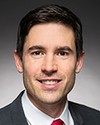
Evidence of meeting #6 for Fisheries and Oceans in the 45th Parliament, 1st session. (The original version is on Parliament’s site, as are the minutes.) The winning word was certainly.

A video is available from Parliament.

On the agenda

Members speaking

Before the committee

Joanne Thompson  Minister of Fisheries
Gibbons  Deputy Minister, Department of Fisheries and Oceans
Burns  Assistant Deputy Minister, Fisheries and Harbour Management, Department of Fisheries and Oceans

The Chair Liberal Patrick Weiler

I call this meeting to order.

Welcome to the sixth meeting of the Standing Committee on Fisheries and Oceans.

As always, I want to start by acknowledging that we are gathered on the ancestral and unceded territory of the Algonquin Anishinabe people. I express gratitude that we are able to do the important work of this committee on lands they've stewarded since time immemorial.

Pursuant to Standing Order 108(2), the committee is meeting for briefing with the Honourable Joanne Thompson, Minister of Fisheries.

Today’s meeting is being held in a hybrid format. In accordance with the Standing Orders, members may participate in person or over Zoom.

I think we're all here in person today.

Before we continue, I would like to ask all in-person participants to consult the guidelines written on the cards on the table. These measures are in place to help prevent audio and feedback incidents and protect the health and safety of all participants, especially the interpreters. You will also notice a QR code on the card, which links to a short awareness video.

I would like to make a few comments for the benefit of the witnesses and members.

Please wait until I recognize you by name before speaking.

For witnesses in the room, you may use the headset and select the desired channel.

This is a reminder that all comments should be addressed through the chair.

If members present in the room wish to speak, they must raise their hands.

I would now like to officially welcome our witnesses.

First, we have the Honourable Joanne Thompson, Minister of Fisheries. From the Department of Fisheries and Oceans, we have Adam Burns, assistant deputy minister of fisheries and harbour management; Annette Gibbons, deputy minister; and Richard Goodyear, assistant deputy minister and chief financial officer.

Before we get started, I'm going to do something a bit differently today. So that we can keep track of our time, when there are 30 seconds left in your time for questions, I'm going to raise this folder, and when we get to the end, I'm going to raise this other folder.

I'll hand the floor over to the minister for her opening remarks for five minutes or less.

8:15 a.m.

St. John's East Newfoundland & Labrador

Liberal

Joanne Thompson LiberalMinister of Fisheries

Thank you and good morning.

Before I begin, I would like to say what an honour it is for me to be the Minister of Fisheries and have a chance to lead a department with such a profound economic, environmental and cultural importance to Canadians, our country and the world.

Mr. Chair, as you know, our new government is on a clear path to transform the economy and strengthen prosperity.

I'm sorry. I'm still working on my French, but it's important for me to do that.

I'm proud to join—

The Chair Liberal Patrick Weiler

We're going to have to stop. We're having some issues with the translation.

We're going to do a short test.

I will speak in French to see if the interpretation is working.

Is it coming through now? Great.

I apologize for that. Let's start over from the top.

Minister, I'll hand the floor back over to you for your opening remarks.

Joanne Thompson Liberal St. John's East, NL

Thank you. If there are any challenges, you can stop me again.

Good morning.

Before I begin, I want to say what an honour it is for me [Inaudible—Editor] this issue and have the chance to lead a department [Technical difficulty—Editor] country.

Do you want me to start from the beginning again? Okay.

Mr. Chair, as you know, our new government is on a clear path to transform the economy and strengthen prosperity.

I was proud to join the Prime Minister in St. John's last month for the announcement of the regional tariff response initiative, which will help businesses throughout Atlantic Canada, including the seafood sector, deal with the impacts of tariffs. We have so many innovative seafood companies in Canada that ship our sustainable seafood to more than 100 countries. The amount of $7.6 billion is how much our companies exported to the world last year. In these challenging times, the Government of Canada will be there to help establish new markets, strengthen ties with existing one, and create new and innovative products.

I have been across the country this summer listening to harvesters, workers, community members and stakeholders from across this sector. These meetings were focused on the pressing issues facing Canadian fisheries and coastal communities. These meetings have also helped to inform my own priorities. I'd like to highlight some of them this morning.

Let's begin with economic prosperity. As minister, I am committed to driving economic growth in coastal, rural and indigenous communities. I want to make sure that the benefits of fisheries go to the people who do the fishing and to the people in their communities. By collaborating with provinces, territories, indigenous partners, industry and stakeholders, we can grow fishing economies in ways that are economically, environmentally and socially sustainable.

In June I announced an increase to the total allowable catch, TAC, for northern cod in Newfoundland and Labrador based on input from partners and the latest scientific data. As a Newfoundlander, this was an especially proud moment for me. My sincere hope is that with a renewed and vibrant cod fishery, young people will return to seeing fish harvesting as more than just a recreational activity but as a sustainable and fulfilling career. Additionally, I increased the TAC for herring in southwest Nova Scotia after receiving additional scientific data, allowing for more prosperity in that region.

This is good news for coastal communities. These decisions take a responsible path—backed by science—increasing economic prosperity for harvesters, processors and coastal communities.

I also want to take a moment to place some emphasis on our government's commitment to the owner-operator model. Owner-operator is not just a way of doing business; it is a way of life. Ensuring that owner-operator is sustained at status quo is not enough. We must, and will, do more to close the loopholes that are being abused and further strengthen the owner-operator regulations on the east coast. On the west coast, the government remains firmly committed to modernizing the fishery and conducting thorough and thoughtful consultations with industry and indigenous communities. Furthermore, our government is committed to building a unified and strong Canadian economy by leveraging our natural and human resources, including three oceans and one-fifth of the world's fresh water.

Canada's greatest strength remains its people—highly skilled, educated, innovative and diverse. By creating the right opportunities and by removing burdensome red tape, we can help boost the Canadian economy during difficult periods of tariffs and trade tensions. To that end, I will work with my cabinet colleagues to advance major infrastructure projects quickly, safely and responsibly through the Major Projects Office. I'll also advocate for policies that support safe shipping corridors and maintain strong environmental protections as we grow the economy.

I will also say that DFO has heard loud and clear that people want us to enforce the Fisheries Act to ensure that we are holding everyone accountable and to ensure that when someone is fishing against the rules, there are consequences. Progress has been made, but there's more work to do. My priority is to ensure that our fisheries officers have clear rules and licence conditions to enforce and that they have the tools necessary to do this.

I realize that I'm running out of time. I'd be happy to talk in more depth as we move through the next hour.

Please know that these are not just goals. They are paths to a stronger, more prosperous Canada. I look forward to working with all of you to that end.

Thank you.

The Chair Liberal Patrick Weiler

Thank you very much, Minister.

With that, we'll start our first round of questioning with the Conservative Party.

Mr. Small, you have six minutes.

8:25 a.m.

Conservative

Clifford Small Conservative Central Newfoundland, NL

Thank you, Mr. Chair.

“They have eyes that don't see and ears that don't hear.” That's how a prominent fishing industry stakeholder from Newfoundland describes DFO in terms of its management of the mackerel fishery after 10 years of Liberal rule and seven ministers.

During the last election, Minister, Mr. Carney committed to listening to what he hears at the wharf. While you use the power of your authority, and instead of listening to your ENGO-inspired entourage, listen to the fishing industry and commit to reopening the mackerel fishery in Atlantic Canada here today in this committee. Reopen that fishery this fall, Minister.

Joanne Thompson Liberal St. John's East, NL

Mr. Chair, through you to Mr. Small, thank you for the question.

I was very fortunate this summer to spend time across the country coast to coast to coast and in my province. I met with harvesters, visited plants, spoke with processors and spoke with plant workers. Across all of those conversations, there was a shared commitment that we would work together.

Obviously, science needs to be paramount in all decisions and it is a process, but I also believe and respect that we need to link with harvesters, the people on the water who are invested so much in ensuring we have stocks in good order to be able to continue fishing. I have asked—

8:25 a.m.

Conservative

Clifford Small Conservative Central Newfoundland, NL

Thank you. Your officials—

Joanne Thompson Liberal St. John's East, NL

Excuse me. I have asked industry to provide me with scientific data—

8:25 a.m.

Conservative

Clifford Small Conservative Central Newfoundland, NL

Mr. Chair, I think we're supposed to have equal amounts of time for asking a question and getting a response. I think it's getting a little out of balance here already.

The Chair Liberal Patrick Weiler

I'm sorry. I'll pause the time, Mr. Small.

It is your time. You're able to ask the questions. The minister is going to respond as she may, but it is your time to use as you see fit. I'll go back—

8:25 a.m.

Conservative

Clifford Small Conservative Central Newfoundland, NL

Yes, and on behalf of the fishing industry, I'd like to express the disappointment that's been coming to me from the fishing industry to pass on to the minister here this morning. The industry has been begging the minister. They've had multiple consultations this year with the aim of reopening the mackerel fishery.

The evidence is there. People in her department have been at sea during surveys and they've seen it acoustically. Samples have been sent to Mont-Joli. When will you reopen the mackerel fishery and stop listening to ENGOs?

Joanne Thompson Liberal St. John's East, NL

I will assure you that when I met with industry I asked them to provide me with their scientific data, and then I'm happy to look at that, and—

8:25 a.m.

Conservative

Clifford Small Conservative Central Newfoundland, NL

You have the scientific data. The data was gathered with equipment that was placed on a harvester's vessel. Your scientists were on board. They saw the mackerel acoustically. Unlike what your officials said to us in 2022—that mackerel could not be observed acoustically—they now know that mackerel can be seen acoustically. They saw it in great quantities.

You've seen social media. You've been around the province. You've been throughout Atlantic Canada. You know the mackerel is there. That's not the question. Why won't you reopen that fishery, Minister?

Joanne Thompson Liberal St. John's East, NL

All science decisions, Mr. Small, or all decisions on a fishery are based on science and consultations. I did see the videos. I did speak with industry. They are coming with their science. Obviously, the video—

8:25 a.m.

Conservative

Clifford Small Conservative Central Newfoundland, NL

But it's your science: It's in your hands. It was taken with your equipment. Why won't you listen to those who have been on the water? Prime Minister Carney said that he'd listen to what he heard at the wharves. You've listened to it. You've heard it loud and clear. Why will you not reinstate the mackerel fishery?

Americans have landed around 12,000 tonnes since we shut down our fishery in 2022. Why will you not commit today to reopen that mackerel fishery for the people who sent you here? You have an opportunity to make a positive impact. You talked about tariffs, but tariffs don't matter to the mackerel fishermen and the processors. It doesn't matter. They have nothing to catch. A tariff on zero is zero.

Will you commit right now to reopening that mackerel fishery?

Joanne Thompson Liberal St. John's East, NL

I commit to looking at all data points to make a decision that will ensure we have a strong mackerel fishery in the future and the science supports reopening of the fishery.

8:30 a.m.

Conservative

Clifford Small Conservative Central Newfoundland, NL

Do you consider shutting down a fishery, leaving it closed and losing that valuable data-gaining opportunity a rebuilding measure?

Joanne Thompson Liberal St. John's East, NL

I support ensuring that we have a strong fishery into the future so that the next generations of harvesters are able to enjoy the livelihood my generation has enjoyed. I will ensure that we have science-based decisions in consultation—

8:30 a.m.

Conservative

Clifford Small Conservative Central Newfoundland, NL

How do you feel the mackerel fishermen are enjoying their livelihood right now? Do you think they're enjoying their livelihood as they sit here watching this, when they could be on the water today, harvesting mackerel? They're absolutely more numerous than they've ever been in history.

Seeing is believing. Why will you not believe your eyes and use your ears to listen, as you've committed to doing? The time is now, and it needs to happen.

Will you commit to reopening the mackerel fishery?

Joanne Thompson Liberal St. John's East, NL

Mr. Small, I lived through the cod moratorium. I have no intention of doing anything that will compromise an industry. We need to ensure that the mackerel we're seeing are of an age that will allow for a sustainable fishery.

I take this very seriously.

The Chair Liberal Patrick Weiler

Thank you very much, Mr. Small.

Next, we're going to Mr. Connors for six minutes or less.

Paul Connors Liberal Avalon, NL

Welcome, Minister.

I'm going to start by talking about the cod fishery. In your opening statement, you talked about doubling the quota. What concerns have been raised about increasing the total allowable catch from 18,000 tonnes to 38,000 tonnes or how the TAC was allocated?

You've travelled around the province and different parts of Atlantic Canada. How has that fishery gone this year?

Joanne Thompson Liberal St. John's East, NL

As a Newfoundlander and Labradorian, it was so hopeful for me to be able to support doubling the TAC this year. I travelled around the province and Atlantic Canada, and certainly for Newfoundland and Labrador, it has been a strong boost to our economy.

I was at Icewater in Arnold's Cove and saw the plant working. We're probably at close to 12 months this year. There's a strong economic benefit to the plant workers, Newfoundlanders and Labradorians, who are able to stay at home in well-paying jobs. That was really quite encouraging.

As we move forward, it's important to always ensure that the decisions made are decisions that will ensure the stock remains strong and we have a cod fishery into the future. I look forward to seeing the data from this season. It will be very helpful as we engage on all of these decisions. We will engage with all stakeholders as we look to next year, but it certainly appears that it's been a very successful season.

Paul Connors Liberal Avalon, NL

Thank you very much. That's good news for the fishers of Newfoundland and Labrador.

My next question is about new entrants. I recently met with some folks from Newfoundland who are involved with the fishery, and they have big concerns about new entrants. They are wondering what you're planning in order to attract new entrants or make it affordable for new entrants to be able to enter into the fishing industry.

Joanne Thompson Liberal St. John's East, NL

I referenced this in my opening comments. In every opportunity I have now to sit with stakeholders, I talk about this very important reality that the demographic within the industry is such that we need a succession plan now to ensure that in five years and 10 years, we still have a strong harvester population and demographic in the industry.

I sat this summer at town halls and on wharves, and if there was one young person under 35 in the room, that was a good thing. There was not half a room or half a wharf of young harvesters, and that's a worry.

We know the fisheries are an economic boost for rural, coastal communities and indigenous communities, and we have to ensure that in short order, we work together. We're only going to do this when we come together, collaborate and work in a coordinated way to ensure that young harvesters see this as an economic future. It also speaks to the importance of managing the resources so that there is the opportunity for the next generation to once again see the fishery as a career, and as a career that will support families.

I invite all members of this committee, and all those connected to the sector, to please work with us. This is quite urgent. We need a succession plan as our harvesters age out.

Paul Connors Liberal Avalon, NL

I'm wondering if, in support of the industry, the department will be looking at such other sectors as the agricultural industry, which has done a pretty good job of succession planning and attracting new entrants to the field. Do you have any thoughts on that?

Joanne Thompson Liberal St. John's East, NL

I look forward to all conversations. That's what I did this summer. Actually, that's what I've done throughout my career. We work in collaboration, we put ideas on the table, we collectively find tangible solutions and we move forward. I am committed to the work. I think we need to be quite specific in terms of our timelines and what it is we need to do to ensure that five years from now we are seeing those younger harvesters, workers and plant workers throughout Atlantic Canada, certainly, for our fisheries here and also throughout the country, because it is a national problem.

Paul Connors Liberal Avalon, NL

I don't have very much time left, so I'll finish off by saying that I think we should look at other industries and sectors to see what's been successful in those areas to attract new entrants.

The Chair Liberal Patrick Weiler

Thank you very much, Mr. Connors.

Mr. Deschênes, you have the floor for six minutes.

Alexis Deschênes Bloc Gaspésie—Les Îles-de-la-Madeleine—Listuguj, QC

Thank you very much, Mr. Chair.

Good morning, Madam Minister. Thank you for joining us.

This summer, like you, I travelled around my beautiful riding of Gaspésie—Les Îles-de-la-Madeleine—Listuguj.

During my tour, I often heard people talk about the Quebec fisheries fund. This initiative will invest approximately $40 million over five years to drive innovation and advance the fishing industry in my region.

Can you confirm today that the Quebec fisheries fund will be renewed?

Joanne Thompson Liberal St. John's East, NL

As you know, we have a budget coming November 4. I will say that the fisheries fund has been a phenomenal resource for the industry across all aspects of the industry. I was pleased this summer to speak with the harvesters who were able to benefit from having cold storage on a vessel, which allowed for greater capacity to reach their individual quotas and for innovation.

It is an important fund that really sits across the sector. On November 4 we will see.

Alexis Deschênes Bloc Gaspésie—Les Îles-de-la-Madeleine—Listuguj, QC

We agree that this is a great initiative.

In my riding, many people are expecting the fund to be renewed, and they want to prepare their grant applications.

Today, you are telling me that you are unable to confirm that your government will renew the fisheries fund.

Is that correct?

Joanne Thompson Liberal St. John's East, NL

Obviously, that decision sits with the finance department. I would encourage you to certainly write to the minister. The perspective is important. However, it is a budget decision, and that sits with Finance.

Alexis Deschênes Bloc Gaspésie—Les Îles-de-la-Madeleine—Listuguj, QC

I can understand that the upcoming austerity measures could affect the fisheries fund.

Is it possible that it will not be renewed?

Joanne Thompson Liberal St. John's East, NL

I would encourage you to write to the Minister of Finance. It is a budget decision. I can't speak to that. But I certainly can say that I saw indications across the country from the different funds...but certainly in my region, I saw indications of its success.

Alexis Deschênes Bloc Gaspésie—Les Îles-de-la-Madeleine—Listuguj, QC

It would be very poor public policy on the part of your government not to renew it.

Wouldn’t it?

Joanne Thompson Liberal St. John's East, NL

Please put those thoughts in writing and send them to the finance minister.

Alexis Deschênes Bloc Gaspésie—Les Îles-de-la-Madeleine—Listuguj, QC

I will be happy to do so, Madam Minister.

However, you need our help to convince the Minister of Finance. At present, he does not seem convinced that the fisheries fund should be renewed.

Is that correct?

Joanne Thompson Liberal St. John's East, NL

I can't answer to what's in the budget, but certainly it's always helpful to speak publicly about programs that have been successful.

Alexis Deschênes Bloc Gaspésie—Les Îles-de-la-Madeleine—Listuguj, QC

Thank you, Minister.

I would like to address another topic.

In your presentation, you mentioned the importance of diversifying export markets. In Quebec, 85% of what we pull from the sea is exported to the United States. However, Quebec’s fishing industry does not have a specific budget to help it diversify its export markets and conduct marketing missions abroad.

There is a program that has been put in place, called AgriMarketing. However, in recent years, we have noticed that the Quebec fishing industry has been systematically excluded and has not had access to these funds.

Can you commit to a specific program for Quebec? This would allow us to diversify our markets, which is a priority for both of us.

Joanne Thompson Liberal St. John's East, NL

Thank you.

In my opening remarks, I referenced the recent announcement of the tariff response initiative. That's $1 billion total, and I'm certainly pleased to work with you. I don't have the number for Quebec at the moment, but I will turn to the deputy in a moment to see if she does. However, I will certainly get that for you and give it to you in writing. I believe there are opportunities within that funding stream to be able to help. We have to diversify markets, and that's intended from coast to coast to coast.

I'll ask the deputy if she has the exact amount for your region.

Annette Gibbons Deputy Minister, Department of Fisheries and Oceans

I don’t have the exact figure, but it would be Canada Economic Development for Quebec Regions that would administer this fund. This initiative would help small and medium-sized businesses in Quebec diversify their markets and innovate.

Alexis Deschênes Bloc Gaspésie—Les Îles-de-la-Madeleine—Listuguj, QC

So you are confirming that this envelope will include funds specifically earmarked to help the fishing industry carry out marketing missions?

8:40 a.m.

Deputy Minister, Department of Fisheries and Oceans

Annette Gibbons

The funds are intended for businesses in general, and those involved in fish processing will certainly be eligible.

Alexis Deschênes Bloc Gaspésie—Les Îles-de-la-Madeleine—Listuguj, QC

Madam Minister, I will now turn to Bill C‑5

This bill was passed under closure. It stipulates that if your government decides that a project is in the national interest, it does not have to undergo certain assessments.

According to the Fisheries Act, which is included in the appendix to this bill, a project in the national interest does not have to be reviewed under the Fisheries Act, for example.

Were you consulted before the Fisheries Act was included in Bill C‑5 ?

Joanne Thompson Liberal St. John's East, NL

What I have been working on with my colleagues, and certainly at the cabinet table, are the processes that we will undertake to ensure that we are more timely in decision-making. We still need to respect species, species at risk and fishing habitats, but we can move in a much more timely manner, and that's been my focus on this. I've been working with the department to look at ways that we can streamline some processes so that we can get to conversations on offsetting and mitigating in a much more timely fashion.

The Chair Liberal Patrick Weiler

Thank you, Mr. Deschênes.

That concludes the first round of questions.

With that, we're going to start the second round, the five-minute round, starting with Mr. Arnold for five minutes or less.

8:40 a.m.

Conservative

Mel Arnold Conservative Kamloops—Shuswap—Central Rockies, BC

Thank you, Mr. Chair.

Thank you, Minister, for being here, albeit only for an hour, after this committee has repeatedly asked for a two-hour attendance by yourself.

Minister, who owns Canada's fisheries resources?

Joanne Thompson Liberal St. John's East, NL

The people of Canada.

8:40 a.m.

Conservative

Mel Arnold Conservative Kamloops—Shuswap—Central Rockies, BC

Minister, according to the Constitution, who is ultimately responsible for managing Canada's fisheries resources?

Joanne Thompson Liberal St. John's East, NL

That would be me, as minister.

8:45 a.m.

Conservative

Mel Arnold Conservative Kamloops—Shuswap—Central Rockies, BC

Thank you.

How much has your department's budget increased over the last 10 years?

Joanne Thompson Liberal St. John's East, NL

I'll look to the deputy.

8:45 a.m.

Conservative

Mel Arnold Conservative Kamloops—Shuswap—Central Rockies, BC

I can provide the answer. It's actually tripled, from $1.7 billion to $6 billion. This was in the main estimates. It more than tripled.

Would you agree that stock assessments are a core function of your department's work?

Joanne Thompson Liberal St. John's East, NL

Yes.

8:45 a.m.

Conservative

Mel Arnold Conservative Kamloops—Shuswap—Central Rockies, BC

In early July, a concerned citizen contacted me because your department had not signed contracts with river walkers who count salmon in B.C. These delays dragged on through the summer and caused the cancellation of numerous stock assessment programs for sockeye salmon and others. Why has your department abandoned fisheries science that is essential to managing and conserving fisheries like Pacific wild salmon?

Joanne Thompson Liberal St. John's East, NL

I can assure you that science and conservation are still primary goals for me. For that particular question, I'll look to the deputy.

8:45 a.m.

Deputy Minister, Department of Fisheries and Oceans

Annette Gibbons

I would clarify, on the budget increase, that a lot of that increase was for the Coast Guard, particularly in the last couple of years.

8:45 a.m.

Conservative

Mel Arnold Conservative Kamloops—Shuswap—Central Rockies, BC

I want to go back to the question about stock assessments. Why weren't they done?

8:45 a.m.

Deputy Minister, Department of Fisheries and Oceans

Annette Gibbons

On the river walkers, we did have some difficulty with timeliness and with getting those signed this year. Once we were aware of what the logjam was, we rectified it.

8:45 a.m.

Conservative

Mel Arnold Conservative Kamloops—Shuswap—Central Rockies, BC

The budget was there. The contracts were there. They just needed signatures.

8:45 a.m.

Deputy Minister, Department of Fisheries and Oceans

Annette Gibbons

We are very aware of that. It had to do with hiring processes, but we did fix the problem.

8:45 a.m.

Conservative

Mel Arnold Conservative Kamloops—Shuswap—Central Rockies, BC

Minister, this committee has done a lot of work over the past six years, especially in examining the need for licence reforms in the Pacific region. This committee tabled reports, agreed to by all members of the committee, in 2019, 2020, 2021 and 2023, all of which contained recommendations for licence reform in the Pacific region.

The Liberal government's responses suggested it would act in line with the report recommendations, but it has not. In the meantime, in B.C., prawn licences have gone up 187%, crab licences have gone up 321%, halibut quotas are up 89% and the list goes on. The government's inaction is putting B.C. harvesters out of jobs.

When will you and your government deliver licence reforms for B.C. harvesters?

Joanne Thompson Liberal St. John's East, NL

I think it's very important and I referenced this in my opening comments. I spent time in B.C. this summer and I'll be there next week. The modernization of the Fisheries Act in B.C. is very important to me.

In my opening comments, I spoke about my commitment to owner-operators on the east coast. I realize that modernization on the west coast will be different and it will happen through intensive engagement.

I agree with you that we need to ensure that I'm doing this work now and I—

8:45 a.m.

Conservative

Mel Arnold Conservative Kamloops—Shuswap—Central Rockies, BC

Is your department doing the work?

Joanne Thompson Liberal St. John's East, NL

I work in close collaboration with the department and I set priorities. There is very much an understanding that the department works with me to support the work, and I can assure you—

8:45 a.m.

Conservative

Mel Arnold Conservative Kamloops—Shuswap—Central Rockies, BC

I hope you understand the importance of this to B.C. fishermen.

Joanne Thompson Liberal St. John's East, NL

I heard that loud and clear this summer.

Thank you.

8:45 a.m.

Conservative

Mel Arnold Conservative Kamloops—Shuswap—Central Rockies, BC

Thank you.

Your department estimated the 2025 Fraser summer sockeye run to be slightly over two million fish, but the actual run ended up being between seven million and 10 million fish. Despite this abundance in the return, you refused optimal access for harvesters, who have directly sacrificed so much in rebuilding the stocks. They've done everything they can to see the return and the restoration of these stocks. When the stocks did return in abundance, they were denied access.

Why is that?

Joanne Thompson Liberal St. John's East, NL

This year's run was very promising. Certainly, we are optimistic and hopeful that we'll see this next year, but we need to be incredibly careful before we quickly increase quotas, in order to ensure the stock is in a place where it can be sustainable.

8:45 a.m.

Conservative

Mel Arnold Conservative Kamloops—Shuswap—Central Rockies, BC

We have people with 40 years of experience who have provided information to the panel but who are resigning because they are so frustrated with the system and the lack of access.

Why is that?

The Chair Liberal Patrick Weiler

I'm afraid the time is up. The question and a response can be submitted in writing, but we need to move on to our next questioner.

The next speaker is Mr. Cormier.

Excuse me. It's Mr. Morrissey for five minutes or less.

Bobby Morrissey Liberal Egmont, PE

Thank you, Mr. Chair.

Madam Minister, I'd like to quote another great minister of fisheries from Newfoundland, the Honourable John Crosbie. He had to oversee the end of a nine-year Conservative government mismanagement of the fishery on the east coast, which led to the historic collapse of the cod fishery in Newfoundland. When I questioned him about that, he said that, often, it's the bluster that comes from the opposition of the day that pushes ministers to make decisions that are not in the best long-term interest. We have to avoid that. I do not want to see decisions that result in that kind of disastrous impact for any fishery.

With some species, there's a growing divide between department science or data and what fishers are observing on the water.

Could you give us your opinion on how you're going to blend what fishers are observing in their data, which is real, with the science, in order to make decisions that protect the management of the fishery and the resource?

Joanne Thompson Liberal St. John's East, NL

I remember the cod moratorium. I remember the chill of that night. I also certainly well remember the devastation for the families and the communities. I, in no way, ever want to see that happen again.

I am quite firm in my resolve that decisions will be based on science and conservation but through consultation. That is why I have travelled as much as I have since I've been in this role. We have to consult with the expertise on the water—the harvesters and those invested in the industry. Where there are discrepancies, we need to be able to sit together and look at what's missing and what that middle piece is. I've done that on two occasions for particular decisions and I will continue to do that by working closely with the department.

My commitment is that we will have a fishery for the next generation. We all have a role to play here.

Bobby Morrissey Liberal Egmont, PE

Thank you, Minister. This summer in particular, fishers observed and I observed what looked like a rebounding stock of mackerel and herring in the gulf region, and that should be taken into consideration as we move into next year's decisions on quota. I'm pleased to see that you will take that into consideration.

Minister, on a second point, currently in my province, the oyster fishery, which is a long-standing fishery, an old fishery, is in dire shape given the outbreak of MSX and dermo. Can you give this committee some indication of how the department will work with this industry to make sure there is a future for this industry? We know that it has rebounded in other areas, but this is an industry that will need assistance to ensure it's still there in five years and these fishers will be there.

There are a number of options on the table. Could you give us an opinion on how you see the department working with the Province of P.E.I. and the industry?

Joanne Thompson Liberal St. John's East, NL

Obviously I know that this is an important issue. It's important across all of Atlantic Canada.

I have been meeting with my counterparts in all regions. I met with Minister Bell a number of times on this and will continue to. Obviously there are other departments involved here, but I think I'm certainly comfortable saying that there's a commitment that there is an issue and we'll work together. I certainly know the significance of the sector to your province of P.E.I. Just know that I will continue to be actively engaged.

Bobby Morrissey Liberal Egmont, PE

Thank you, Minister.

I was pleased to see you so firm on ensuring the Fisheries Act would be enforced and violations would be severely charged. I'm concerned that in the very lucrative lobster fishery one of the threats that could be detrimental to this fishery is illegal activity. Will you commit to this committee to ensure illegal harvesters are dealt with to the fullest extent of the law?

Joanne Thompson Liberal St. John's East, NL

I can commit to that. I think the evidence will show that from the moment I became minister, we engaged actively with the department to ensure that authorized fishing only would be accepted. That was followed through with action, and I really want to thank the fisheries officers from coast to coast to coast, who have been actively involved in ensuring we have authorized fishing and they do the work of enforcement. I thank them for the work they've done. It is making a difference.

The Chair Liberal Patrick Weiler

Thank you very much, Mr. Morrissey.

Mr. Deschênes, you have the floor for two and a half minutes.

Alexis Deschênes Bloc Gaspésie—Les Îles-de-la-Madeleine—Listuguj, QC

Thank you, Mr. Chair

Madam Minister, I would like to address the issue of the exploratory lobster fishing licence program. Licences were granted on the Côte‑Nord and in the Gaspé Peninsula in 2024 and 2025. The committee is currently reviewing this issue.

According to the testimony we have received since the beginning of the study, many people are complaining about a lack of transparency and a lack of explanation from the department. Groups have been excluded without knowing why, and a residency criterion is not being applied consistently across fleets.

Do you agree with me that we could do better?

Joanne Thompson Liberal St. John's East, NL

Thank you.

I can assure you that I work in a manner that is engaged and collaborative and I am prepared to work with all stakeholders. I can't speak to what predecessors did, obviously, but management decisions are based in science and consultation. I am committed to that process.

Alexis Deschênes Bloc Gaspésie—Les Îles-de-la-Madeleine—Listuguj, QC

Are you listening to fishers and fishers’ groups?

Some have been excluded from the process. They would have liked their names to be included in the draw, but they were excluded. They would have liked answers from your department, but they never got any.

Are you listening to these complaints?

Joanne Thompson Liberal St. John's East, NL

I'm going to turn to the deputy, because she would have been more engaged in that process.

8:55 a.m.

Deputy Minister, Department of Fisheries and Oceans

Annette Gibbons

Depending on the area where they are located, some fishers with commercial licences have accepted our decision, while others have not.

Alexis Deschênes Bloc Gaspésie—Les Îles-de-la-Madeleine—Listuguj, QC

My question concerns the people who were excluded without explanation.

8:55 a.m.

Deputy Minister, Department of Fisheries and Oceans

Annette Gibbons

We conducted extensive consultations on exploratory fishing licences for all areas. We had ambitious goals regarding succession, struggling fleets and first nations. This was considered a priority.

To select eligible fishers based on where they live, we established criteria such as residential address—

Alexis Deschênes Bloc Gaspésie—Les Îles-de-la-Madeleine—Listuguj, QC

However, this was not done uniformly for all groups.

Is that correct?

8:55 a.m.

Deputy Minister, Department of Fisheries and Oceans

Annette Gibbons

I think we made a few exceptions where we gave a little more weight to where certain people had fished in the past.

The Chair Liberal Patrick Weiler

Thank you very much, Mr. Deschênes.

Next, we're going to go to Mr. d'Entremont. We'll give about five and half minutes.

8:55 a.m.

Conservative

Chris d'Entremont Conservative Acadie—Annapolis, NS

I'll go with five because I have about 10 minutes worth of questions.

Minister, thank you for being with us today. Thank you for being in southwest Nova Scotia on a couple of occasions this summer.

As you know, all politics are local, so I have a number of questions for you.

Since I was first elected in 2019, I've raised the ongoing issues with data on lobster stocks, especially when it comes to unreported and unregulated fishing, and conditions governing first nations' FSC fishing in St. Marys Bay. I've raised it with a number of your predecessors and, more recently, with you. After more than six years of raising these critical issues, I find it very worrying that, despite multiple requests, I have yet to receive a clear and comprehensive response, especially given the serious implications on the safety of fishers and community residents and, more importantly, on the sustainability of our fisheries.

Given the reports of unreported and unregulated fishing in St. Marys Bay, what enforcement actions has your department taken to protect lobster stocks?

9 a.m.

Liberal

Joanne Thompson Liberal St. John's East, NL

As you know, I was in the area this summer. We and the department alongside have been actively engaged in ensuring that we have a fishery that remains within the quotas. We have enforcement when we feel there is unauthorized fishing.

Again, I want to thank the fisheries officers who have really stepped up to ensure that it is a safe and lawful fishery. It's obviously been a very difficult situation in the past, but I am committed to ensuring that we have an authorized fishery. Again, I want to thank the fisheries officers, who have done such strong work in enforcement. I believe that we are seeing the results of that.

9 a.m.

Conservative

Chris d'Entremont Conservative Acadie—Annapolis, NS

Has the department published up-to-date comprehensive data on lobster stock health and catch volumes of the lobster fishery?

We haven't seen a whole lot, so it's leaving the communities without the necessary information on the sustainability of that fishery.

9 a.m.

Liberal

Joanne Thompson Liberal St. John's East, NL

I'm going to turn to the deputy for exact numbers—if they are available—from this year.

I want to make the point that I am aware that we need to be able to understand what's coming out of the water if we're going to have a fishery into the future. That's clearly how we manage our quotas and the health of the species going forward.

In terms of any information from this summer, Deputy, do you have something you would like to share?

9 a.m.

Deputy Minister, Department of Fisheries and Oceans

Annette Gibbons

We certainly make public our science data on the stock assessments that we do, and we make public data on catch. All of this is traced and available to people.

9 a.m.

Conservative

Chris d'Entremont Conservative Acadie—Annapolis, NS

Can we have a written submission to the committee on that?

While I'm at it, can I ask for the first nations band total allowable catch for that fishery in district 34?

There are a number of bands there, but nobody has an idea of what their total allowable catches or quotas are in that bay. If I could have that written to the committee, it would be appreciated. Since the commercial fishery associations feel that the aboriginal licensing policy for eastern Canada only serves to corporatize the indigenous fishery, and results in a corporate takeover and possible foreign ownership, can you or someone from the department submit it to the committee in writing as well?

9 a.m.

Deputy Minister, Department of Fisheries and Oceans

Annette Gibbons

Yes, we will certainly do our best with your questions.

9 a.m.

Conservative

Chris d'Entremont Conservative Acadie—Annapolis, NS

Can you explain how the department is currently monitoring lobster stocks in southwest Nova Scotia, specifically in St. Marys Bay, given the recent assessments indicating that there is decline? Despite commitments to sustainability, there is a decline.

What's happening in St. Marys Bay is pushing fishers farther out into other zones or other parts of the district, and it's pushing other fishers out. There's definitely a domino effect with what's happening in all of that district at this point.

9 a.m.

Liberal

Joanne Thompson Liberal St. John's East, NL

I'm going to turn to the deputy for specific details, but of course, this is linked to the priorities of authorized fishing and the work that's been happening out of season in enforcement.

Deputy, do you have specifics on the science?

9 a.m.

Deputy Minister, Department of Fisheries and Oceans

Annette Gibbons

Yes. We certainly do the stock assessments and have that information available.

With some of the changes that we've seen in southwest Nova Scotia.... There are a lot of conversations with the industry, as well, on the long-term trends and how we approach that collectively.

9 a.m.

Conservative

Chris d'Entremont Conservative Acadie—Annapolis, NS

I see we're almost there.

Can I ask for as much information as possible?

The problem that we're running into in the southwest is that there's a lack of information dissemination. A regular fisher on a boat is not hearing what the fisheries department is saying or what it is doing, so of course, there's a lot of disinformation that floats around, and we spend a lot of time trying to debunk disinformation about what's going on.

All I ask is that we take this issue seriously because it is important for the economy of southwest Nova Scotia and for the lives of families from one end of my riding to the other.

9 a.m.

Liberal

Joanne Thompson Liberal St. John's East, NL

Thank you.

I agree with you and certainly will follow up.

9 a.m.

Liberal

The Chair Liberal Patrick Weiler

Thank you very much, Mr. d'Entremont.

Next we'll go to Monsieur Cormier.

Mr. Cormier, you have the floor for five and a half minutes.

9 a.m.

Liberal

Serge Cormier Liberal Acadie—Bathurst, NB

Thank you, Mr. Chair.

Madam Minister, welcome.

Thank you again for visiting my region this summer with your deputy minister and some of your staff. It was greatly appreciated by both residents and members of associations, as well as by the municipal officials we met. As you know, we often meet with members of fishing associations. Fishing also supports many businesses in our regions.

I would like to talk a little about small craft harbours and the Quebec fisheries fund. There is something that bothers me a little. Perhaps it is because my colleague from the Bloc Québécois is new here. Earlier, he talked about investments in the Quebec fisheries fund. He travelled around his riding this summer and saw the investments made in small craft harbours. He owes that to the former minister of fisheries, who made significant investments in his region.

When he asks questions about the fisheries fund, it makes me smile. He should not be addressing the Minister of Fisheries, but rather his own leader if he wants funds to be included in this budget. On top of that, his leader probably won’t even support the new budget.

At the end of the day, we have made substantial investments in harbours and fisheries, and I think we will continue to do so.

Madam Minister, I will address the issue of small craft harbours. We have discussed this, you and I, and we have also discussed it with your deputy minister.

We can say that the fishing industry generates billions of dollars in landings and exports, but if the necessary infrastructure is not in place at the right time, when we need it, we will not be able to obtain the expected returns on our investments.

Would it be possible to speed up the work on these ports?

Joanne Thompson Liberal St. John's East, NL

I appreciate the question.

I know, from my own riding and certainly from being a Newfoundlander and Labradorian, how important small craft harbours are. They are often the lifeblood of rural communities. Sustaining those harbours—the infrastructure—in a manner that is able to ensure that they can withstand the effects of climate change, the changes that we're seeing in sea surges and tides, is incredibly important.

Part of my focus in the work that I am undertaking with the department is a review of the processes around timing. I've seen this as well, so we are doing that work.

If any of the members here have requests on small craft harbours, I certainly encourage you to please put your priorities on paper and send them to us.

Serge Cormier Liberal Acadie—Bathurst, NB

That's perfect. Thank you for that.

Minister, some colleagues around the table were talking about more science, more data and making decisions based on science and data. I want to talk about the striped bass a little bit.

First of all, thank you for the decision you made earlier this year that gaspereau fishers can retain more striped bass in their nets. I think everybody around this table will agree that striped bass are a problem. They're a problem for salmon, they're a problem for lobster and they're a problem for many other species they eat.

What frustrated me, Minister, is that, in the last couple of years, we've had a lot of scientists here at our committee, and we've also had some officials and, back the day, some those people were saying that striped bass are not eating salmon or lobster. I can guarantee you that, back then, I was questioning whether it was true or not. We were seeing photos on social media, for example, of striped bass that had lobster in them when they were gutted. I was questioning if it was true or false, but I've seen with my own eyes the past two summers that it's real. I have a photo here of my brother on a Restigouche fishing trip this summer. This is probably 45 kilometres up the river. We caught three striped bass in one morning. They're in our rivers; they're everywhere. They're badly hurting some of the other resources that fishers depend on.

Thank you for that decision. Can we push it a little bit further? The responsibility of DFO, of course, is protecting and managing resources, but when a species is above what it's supposed to be, don't we have a responsibility to make sure it doesn't hurt other species, Minister?

Joanne Thompson Liberal St. John's East, NL

I heard this loud and clear this summer and, obviously, fish health depends on the broader ecosystem. Yes, I've heard that.

I'm going to turn to the deputy for any additional comments, but I understand what you're saying.

9:10 a.m.

Deputy Minister, Department of Fisheries and Oceans

Annette Gibbons

The department has tried to be responsive, as you know. This is still in the critical zone—the signs still say it's in the critical zone—but we've provided these fishing opportunities by increasing recreational fishing and increasing first nations communal commercial fishing, and we've done the bycatch retention pilots in lobster fisheries and the gaspereau bycatch retention. We've been trying to do these different things. Every season, there's new information, and we look to see what we can do. I think we'll continue to pay attention to that.

The Chair Liberal Patrick Weiler

Thank you very much, Mr. Cormier. I'm afraid that wraps up your time and completes the second round.

I want to exercise the chair's discretion to ask one question before we wrap up here.

I want to pick up on something that Mr. Arnold brought up before.

Minister, we've been hearing reports of abundant salmon runs across the province of B.C. I was hoping you could speak to those numbers and explain what this will mean for communities across the province.

9:10 a.m.

Conservative

Mel Arnold Conservative Kamloops—Shuswap—Central Rockies, BC

I have a point of order, Mr. Chair.

We have five minutes remaining, so we can start the next round.

The Chair Liberal Patrick Weiler

I'm exercising my chair's discretion to ask one question here. We have less than four minutes left. I gave the Conservatives some extra time in the last round, and there will be time with the officials afterwards to ask questions for another hour.

Minister, can you speak to these numbers? Further, can you explain what this will mean for communities across the province, the health of our ecosystems and particularly those who fish recreationally?

Joanne Thompson Liberal St. John's East, NL

Thank you. It's an important question. As I indicated earlier, I'm going to be in B.C. next week because I want to meet with harvesters, fishers and all stakeholders involved. I have already heard clearly of the concern. Certainly, I know that salmon is a species of concern, and it is so important to so many in British Columbia.

In terms of the specifics, I'm going to turn to the deputy for updates on numbers.

9:10 a.m.

Deputy Minister, Department of Fisheries and Oceans

Annette Gibbons

I don't have the numbers, but I'm happy to provide them.

As a general comment, though, on the Fraser sockeye, it's great to see a significant increase in abundance. We were able to provide more fishing opportunities for first nations food, social, ceremonial and recreational fishing.

The constraint on further fishing opportunities was really around the stocks that migrate with the Fraser sockeye salmon. They're a salmon species of concern in particular, and, in allowing higher fishing opportunities, we would have endangered those stocks. That is a key thing that kicks in, which is really unfortunate, but it means that, to conserve those other stocks, we have to limit the opportunities on a stock that is otherwise abundant.

The Chair Liberal Patrick Weiler

Thank you.

I do want to emphasize what Mr. Arnold mentioned before, that this has been a hard number of years for recreational fishers without the access to retention that sustains a lot of businesses and communities. The hope is that with these types of numbers, there will be those opportunities in due course, keeping in mind that we do need to make sure that we have sustainable fisheries and we meet our conservation objectives.

Mr. Arnold, please go ahead.

9:10 a.m.

Conservative

Mel Arnold Conservative Kamloops—Shuswap—Central Rockies, BC

I see by the clock that we have a couple of minutes left. We also had technical difficulties. They still have not been able to get the translation to work on this device.

I'd like the balance of the time that should have been there provided to Mr. Gunn, please.

The Chair Liberal Patrick Weiler

Given that we don't have enough time to do a round, why don't we do one question from each party before we wrap here? Then we'll move into questions from the officials.

With that, I will give one question to Mr. Gunn.

Afterwards, I will give the Liberals and Mr. Deschênes, respectively, an opportunity to ask a question.

Mr. Gunn, please go ahead.

9:10 a.m.

Conservative

Aaron Gunn Conservative North Island—Powell River, BC

Thank you, Mr. Chair.

I have two questions for you, but I'll presuppose your answer to the first one. The department is committed to reconciliation with indigenous Canadians: That's a yes, I'm assuming.

Joanne Thompson Liberal St. John's East, NL

Yes.

9:10 a.m.

Conservative

Aaron Gunn Conservative North Island—Powell River, BC

Why, then, are you forcing salmon farms and the associated jobs out of the traditional territories of first nations that support them?

Joanne Thompson Liberal St. John's East, NL

This summer, ISED led...but we did over 110 engagements on the sector. The report is sitting with ISED. I can tell you that I am looking forward to reading it. We'll make decisions from there.

9:15 a.m.

Conservative

Aaron Gunn Conservative North Island—Powell River, BC

Has that decision not been made yet, then?

Joanne Thompson Liberal St. John's East, NL

No.

The Chair Liberal Patrick Weiler

Thank you very much, Mr. Gunn.

I now want to give an opportunity to one member of the Liberal Party here.

Mr. Cormier, you can ask one question.

Serge Cormier Liberal Acadie—Bathurst, NB

Minister, we talked about striped bass, but I think you know that seals are also a big concern to a lot of fishers in our area. What is the status on that?

Joanne Thompson Liberal St. John's East, NL

Regrettably, markets are still not strong. I'm a Newfoundlander. I well know the overabundance of seals. I really welcome input from all engaged on how we can move forward. It is a problem, but our markets are still weak for the product.

The Chair Liberal Patrick Weiler

Thank you very much, Mr. Cormier.

We will conclude with you, Mr. Deschênes. You may ask a question before this part of the meeting ends.

Alexis Deschênes Bloc Gaspésie—Les Îles-de-la-Madeleine—Listuguj, QC

Thank you, Mr. Chair.

I have not been here long, but I think my Liberal colleague is mixing things up. When I ask a question about the Quebec fisheries fund, I am not talking about small craft harbours. It is not the leader of the Bloc Québécois who will be preparing the budget, but rather my colleague’s government. I am surprised that we have not yet received confirmation of an injection of money into this fund. We will wait for confirmation from Mr. Cormier.

Madam Minister, with regard to phase 2 of the exploratory fishing permit program, do you have data from first nations fishers to determine whether it is possible to begin this second phase this year?

Joanne Thompson Liberal St. John's East, NL

What I can say to you is that I'd be really pleased to continue those conversations with you. The decision is not made. Certainly, let's continue the dialogue about this.

The Chair Liberal Patrick Weiler

Thank you, Mr. Deschênes.

That will finish our first panel.

I want to thank the minister for being here today to share priorities, as was requested by our committee.

We will continue with one more hour of questioning for the officials. We will briefly suspend as we move some people in and out.

The Chair Liberal Patrick Weiler

I call the meeting back to order.

I would like to welcome a new witness who is joining us. From the Department of Fisheries and Oceans, we have Niall O'Dea, senior assistant deputy minister for strategic policy.

We will jump right into our first round of questioning. This will be a six-minute round.

I will hand the floor over to Mr. Small.

9:20 a.m.

Conservative

Clifford Small Conservative Central Newfoundland, NL

Thank you, Mr. Chair.

Foreign-funded ENGOs, such as Oceana, Oceans North, Sierra Club and Ecology Action Centre, have been given an increasing number of seats at stock advisories, seats as stakeholders. They're groups that have no science budget, no investment in the fishing industry, but they are getting the ear of the Minister of Fisheries more and more. Who makes the decision to let these ENGOs come in as stakeholders when they have absolutely no skin in the game?

9:20 a.m.

Deputy Minister, Department of Fisheries and Oceans

Annette Gibbons

The department deals with a lot of stakeholders. The stakeholders come to us with the work that they do that is of pertinence to the department, so they're coming to us in any event.

In terms of specific presence of different groups on advisory committees, the department definitely makes the call on who attends. There are advisory committees on fisheries, on fish decisions, where there is a fair bit of a strong sense of collaboration among the groups and an interest in having everybody there. There are others where it is a point of contention.

9:20 a.m.

Conservative

Clifford Small Conservative Central Newfoundland, NL

I wonder if the deputy minister understands the concerns of Canadians about foreign influence in our democracy and in our economy. For these ENGOs that are foreign funded, the majority of their funding, in some cases, comes from the U.S. Why are you letting Americans fund groups to destabilize the fishing industry in Canada?

9:20 a.m.

Deputy Minister, Department of Fisheries and Oceans

Annette Gibbons

Mr. Chair, the department welcomes, and is open to, the viewpoints and the expertise of lots of different groups of people in fisheries.

9:20 a.m.

Conservative

Clifford Small Conservative Central Newfoundland, NL

Lots of groups of people, including Americans—

9:20 a.m.

Deputy Minister, Department of Fisheries and Oceans

Annette Gibbons

We work internationally. We have participation—

9:20 a.m.

Conservative

Clifford Small Conservative Central Newfoundland, NL

—and including the French.

9:20 a.m.

Deputy Minister, Department of Fisheries and Oceans

Annette Gibbons

We work with international fishery organizations. We jointly manage—

9:20 a.m.

Conservative

Clifford Small Conservative Central Newfoundland, NL

Who's funded by the U.K.?

9:20 a.m.

Deputy Minister, Department of Fisheries and Oceans

Annette Gibbons

—stocks, so there's a very strong international dimension to fisheries. That is also the case in terms of perspectives on different fisheries in Canada.

9:20 a.m.

Conservative

Clifford Small Conservative Central Newfoundland, NL

Mr. Chair, I'll turn my time over to Mr. Arnold at this point.

Thank you.

9:20 a.m.

Conservative

Mel Arnold Conservative Kamloops—Shuswap—Central Rockies, BC

Thank you, Mr. Small.

Ms. Gibbons, the minister, in her testimony earlier, mentioned that the modernization of the Fisheries Act in B.C. is very important to her. What direction has she given you and your department for modernization of the act?

9:20 a.m.

Deputy Minister, Department of Fisheries and Oceans

Annette Gibbons

The minister has certainly asked the department to accelerate the work on this. We have been engaged with communities for quite some time. We've done a variety of different pieces of work. For example, we did a survey on foreign ownership of fishing licences in fishing businesses on the west coast. We're now moving on, at the minister's direction, to a more detailed assessment of the impacts of possible changes on the west coast. It's looking at a more granular level in fisheries.

9:20 a.m.

Conservative

Mel Arnold Conservative Kamloops—Shuswap—Central Rockies, BC

Thank you.

I wrote the minister, back in August, about the contracts that hadn't been signed for stock assessment work in British Columbia. I just received an answer, finally, on October 8. The letter I got back referred to more cost-efficient stock assessment methods. Can you provide the committee with the details on those new stock assessment methods that apparently are going to be more efficient than having someone actually walk a stream and determine how many spawners escape to the streams?

9:25 a.m.

Deputy Minister, Department of Fisheries and Oceans

Annette Gibbons

I can provide further detail to the committee on that.

9:25 a.m.

Conservative

Mel Arnold Conservative Kamloops—Shuswap—Central Rockies, BC

Thank you.

When does the department expect to see any substantive work on owner-operator and fleet separation, basically modernization of licensing on the Pacific coast?

9:25 a.m.

Deputy Minister, Department of Fisheries and Oceans

Annette Gibbons

We are continuing those engagements with all of the players in the industry.

9:25 a.m.

Conservative

Mel Arnold Conservative Kamloops—Shuswap—Central Rockies, BC

When should we expect to see anything significant out of that?

9:25 a.m.

Deputy Minister, Department of Fisheries and Oceans

Annette Gibbons

I can't really provide a specific timeline. We will continue the engagement this fall, and then we will look at next steps after that.

9:25 a.m.

Conservative

Mel Arnold Conservative Kamloops—Shuswap—Central Rockies, BC

One question I always ask is this: When will the department finally recognize the risk of the spread of aquatic invasive species in western Canada?

Just recently there was a mussel-fouled boat found entering British Columbia. It was only through the work of the provincial government that the vessel was stopped, partially decontaminated and then further decontaminated and quarantined in British Columbia.

The federal government has a responsibility to manage the salmon stocks that are so prevalent. Okanagan Lake has finally seen a restoration of sockeye salmon returning to that system. The effect of zebra and quagga mussels could be absolutely detrimental.

Why hasn't the department recognized the need for fair and equitable distribution of resources for aquatic invasive species?

The Chair Liberal Patrick Weiler

We're over time here. It's an important question, so I hope that the department can submit that answer in writing.

With that, we're going to move to our next questioner.

Mr. Cormier, you have the floor for six minutes.

Serge Cormier Liberal Acadie—Bathurst, NB

Thank you very much, Mr. Chair.

Deputy Minister Gibbons, thank you again for visiting us this summer. I think you saw that the associations and municipalities we met with have legitimate concerns and want to work collaboratively with the department. I think that in recent years, there may have been a lack of openness in this regard, but we are starting to see a little more openness on the part of the department.

Today, I want to better understand the mechanisms by which changes could be made because, in the near future, the committee will be studying Fisheries and Oceans Canada’s 2025–2026 Departmental Plan and reviewing the Fisheries Act.

Lately, I have seen many posts on social media reporting that fishery officers have made seizures or arrested people who were illegally fishing for crab or lobster, among other species. These posts include the names of the individuals apprehended, their violations, and the amount of the fine they were given. I really think this is something that should be done more often. That way, people might think twice before fishing illegally. The possibility of having their name appear in social media could discourage many people.

However, I find the fines insufficient. For example, let’s take someone who goes lobster fishing after hours and brings back a catch that includes females: the fine is $250. I would go back the next day, and the day after that, and the day after that. How can these fines be increased? Is it your department that decides? I assume it’s not just you and that the Department of Justice must also be involved.

In short, I would like you to explain how we could modernize all this.

9:25 a.m.

Deputy Minister, Department of Fisheries and Oceans

Annette Gibbons

The department is studying this issue. The committee’s review of the Fisheries Act will also provide an opportunity for the department to review this matter. The department is also in the process of reviewing and making changes based on stakeholder proposals for amendments to the act, regulations and departmental policies. All of this is on the table, and it is in this context that we could look at these issues.

Serge Cormier Liberal Acadie—Bathurst, NB

Okay. That’s perfect.

Ms. Gibbons, I would like to settle once and for all another issue that I have been talking about for years, which I have discussed with you and with the minister as well: the sale of fishing licences, which are leaving our regions.

If I am not mistaken, my region has lost over 10 snow crab fishing licences over the past 10 years, which have gone to Quebec and other regions. Once again, this is due to residency requirements, among other things, which differ from one province to another, such as New Brunswick and Quebec, for example. I am convinced that if fishing licences had been taken away in Quebec, it would probably have led to a major outcry. Unfortunately, our permits are sold in Nova Scotia, Quebec and pretty much everywhere else, and it seems that we cannot stop this.

Some transactions are highly questionable. For example, some very young people or people with no fishing experience are buying $20-million licences. Where are they getting the money? Even though the Fisheries Act is intended to stop these questionable transactions, it seems that our licences continue to be sold to other regions. Recently, the sale of two other licences to other regions was under consideration.

How can we stop the sale of licences to neighbouring regions, such as crab fishing licences, which are in the ports of Shippagan and Caraquet? How can we ensure that they remain in Shippagan and Caraquet and are not sold in Gaspésie or Nova Scotia, regions that could also keep their licences?

We have been talking about this for 10 years. How can we stop this?

9:30 a.m.

Deputy Minister, Department of Fisheries and Oceans

Annette Gibbons

It is true that there are subtle differences in practices from one region to another. That is for sure. However, I will be happy to look into this issue further.

Serge Cormier Liberal Acadie—Bathurst, NB

Are residency criteria set by the provinces or by the federal government?

9:30 a.m.

Deputy Minister, Department of Fisheries and Oceans

Annette Gibbons

When you talk about the provinces, are you referring to the provincial governments?

Serge Cormier Liberal Acadie—Bathurst, NB

Yes.

9:30 a.m.

Deputy Minister, Department of Fisheries and Oceans

Annette Gibbons

The answer is no. The Department of Fisheries and Oceans is still responsible for the criteria.

However, since many fisheries decisions are made by the department’s regional offices, department practices vary from region to region.

Serge Cormier Liberal Acadie—Bathurst, NB

Could fishers’ associations play a role and request that licences no longer leave their region?

9:30 a.m.

Deputy Minister, Department of Fisheries and Oceans

Annette Gibbons

They certainly could. These differences are the result of consultations conducted over the years. Often, they are not changed because fishers in a particular region do not request it. This is what we see with the various policies—

Serge Cormier Liberal Acadie—Bathurst, NB

If I understand correctly, they are not asking for it—

The Chair Liberal Patrick Weiler

Thank you very much, Mr. Cormier. That concludes your speaking time.

Serge Cormier Liberal Acadie—Bathurst, NB

Thank you.

The Chair Liberal Patrick Weiler

Mr. Deschênes, you have the floor for six minutes or less.

Alexis Deschênes Bloc Gaspésie—Les Îles-de-la-Madeleine—Listuguj, QC

Ms. Gibbons, I would like to return to the issue of exploratory lobster fishing licences. I would like people in eastern Quebec, namely the Îles de la Madeleine, the Côte‑Nord and the Gaspésie, to be kept informed of the next steps. Phase 1 of exploratory fishing has been launched, but I would like to know the process that will lead to phase 2 and when you will have to decide whether or not to open a new exploratory fishery.

I understand that you will have to analyze the scientific data on catches, the results of which we received this week. Do these results take into account first nations catches?

9:30 a.m.

Deputy Minister, Department of Fisheries and Oceans

Annette Gibbons

We take all catches into account.

Alexis Deschênes Bloc Gaspésie—Les Îles-de-la-Madeleine—Listuguj, QC

Okay. So the first nations are providing you with the figures on this year’s catches under their exploratory fishing licence. Is that correct?

9:30 a.m.

Deputy Minister, Department of Fisheries and Oceans

Annette Gibbons

I don’t know if we have obtained them, so I can’t confirm that, but we are in discussions about it.

Alexis Deschênes Bloc Gaspésie—Les Îles-de-la-Madeleine—Listuguj, QC

Okay, but I understand that it will come.

9:30 a.m.

Deputy Minister, Department of Fisheries and Oceans

Annette Gibbons

Yes, definitely. We request this information and our policy is to obtain catch data from everyone.

Alexis Deschênes Bloc Gaspésie—Les Îles-de-la-Madeleine—Listuguj, QC

Do the first nations agree to share this data with you?

9:35 a.m.

Deputy Minister, Department of Fisheries and Oceans

Annette Gibbons

I believe discussions are under way with first nations. I think they have expressed some concerns. However, as I said, it is the department’s policy to request that catch data be provided to us.

Alexis Deschênes Bloc Gaspésie—Les Îles-de-la-Madeleine—Listuguj, QC

Okay. So discussions are under way.

9:35 a.m.

Deputy Minister, Department of Fisheries and Oceans

Annette Gibbons

Yes, that is indeed the case.

Alexis Deschênes Bloc Gaspésie—Les Îles-de-la-Madeleine—Listuguj, QC

Discussions are under way for you to receive this data, but you don’t have it yet. Is that correct?

9:35 a.m.

Deputy Minister, Department of Fisheries and Oceans

Annette Gibbons

We don’t have the data for the first phase yet. We are in the process of collecting it.

Alexis Deschênes Bloc Gaspésie—Les Îles-de-la-Madeleine—Listuguj, QC

Okay. I understand that you don’t have the data for first nations, but for other catches, by and large, it’s pretty good this year.

However, what other steps will you take to ensure that it would be safe to open phase 2 of the exploratory fishery?

9:35 a.m.

Deputy Minister, Department of Fisheries and Oceans

Annette Gibbons

We will hold consultations as we did for the first phase of awarding these licences. We held extensive consultations with the industry before moving forward. We will therefore hold consultations before moving to the second phase.

Alexis Deschênes Bloc Gaspésie—Les Îles-de-la-Madeleine—Listuguj, QC

You are going to hold consultations, okay. However, don’t you need to conduct additional scientific surveys? Will this be done to assess the state of the resource after the first harvest?

9:35 a.m.

Deputy Minister, Department of Fisheries and Oceans

Annette Gibbons

We are still conducting scientific studies. I can’t give you the exact dates of the surveys in these three areas, but the department and scientists are constantly updating the scientific data. There is also the harvest, consultations and advisory committees, which allow us to gather information from all these sources before making a decision.

Alexis Deschênes Bloc Gaspésie—Les Îles-de-la-Madeleine—Listuguj, QC

Okay.

The question of the method used to obtain accurate data on what has been caught has also been raised. For lobster fishing, we do not weigh the catch at the dock. Some stakeholders suggest that this should be done. How do you see this at the department?

9:35 a.m.

Deputy Minister, Department of Fisheries and Oceans

Annette Gibbons

I did not understand the second part of your question.

Alexis Deschênes Bloc Gaspésie—Les Îles-de-la-Madeleine—Listuguj, QC

It was about weighing lobsters dockside.

9:35 a.m.

Deputy Minister, Department of Fisheries and Oceans

Annette Gibbons

The weighing?

Alexis Deschênes Bloc Gaspésie—Les Îles-de-la-Madeleine—Listuguj, QC

Yes, I was talking about weighing, which ensures that we have the correct data on lobster catches.

9:35 a.m.

Deputy Minister, Department of Fisheries and Oceans

Annette Gibbons

Yes.

Mr. Burns, would you like to answer the question?

Adam Burns Assistant Deputy Minister, Fisheries and Harbour Management, Department of Fisheries and Oceans

It is crucial to obtain the most up-to-date data. One of the challenges with dock weighing for lobster is the number of docks where fishers land their catch. This would require a very significant investment and would also entail costs for fishers.

We use electronic logbooks. We receive data from buyers and processors. We look at all this data to determine whether it is correct and whether it is reliable data that we can use to make our management decisions.

Alexis Deschênes Bloc Gaspésie—Les Îles-de-la-Madeleine—Listuguj, QC

Do you think that the current process allows you to obtain reliable data?

9:35 a.m.

Assistant Deputy Minister, Fisheries and Harbour Management, Department of Fisheries and Oceans

Adam Burns

Yes, I think so. Our scientists conduct analyses and can provide us with information on the state of stocks in areas where commercial lobster fishing takes place.

Alexis Deschênes Bloc Gaspésie—Les Îles-de-la-Madeleine—Listuguj, QC

Ms. Gibbons, I will turn to you in closing.

Of course, there are fishers who are in the second phase and are eagerly waiting to find out if they will be able to go out and fish for lobster on an exploratory basis starting next year. In your process, when will the decision to open a second phase or not be made for the 2026 season?

9:35 a.m.

Deputy Minister, Department of Fisheries and Oceans

Annette Gibbons

I can’t give an exact date. We’re not there yet. However, we are always aware of the fact that we need to provide as much information as possible as early as possible, because fishers need to prepare for the fishing season.

Often, stock assessments are what cause us to make decisions later than would be desirable, but this is a matter of stock biology. Sometimes, we are unable to complete scientific studies before it is nearly time to start fishing. We are doing our best and are aware of the industry’s needs.

Alexis Deschênes Bloc Gaspésie—Les Îles-de-la-Madeleine—Listuguj, QC

It could go until April.

9:35 a.m.

Deputy Minister, Department of Fisheries and Oceans

Annette Gibbons

I cannot give you an answer.

The Chair Liberal Patrick Weiler

Thank you very much, Mr. Deschênes. Your six minutes of speaking time are up.

That ends the first round of questioning and moves us into the second five-minute round.

We're starting with Mr. Gunn for five minutes or less.

9:40 a.m.

Conservative

Aaron Gunn Conservative North Island—Powell River, BC

When it comes to decision-making at DFO, are the decisions based on science or on politics and ideology?

9:40 a.m.

Deputy Minister, Department of Fisheries and Oceans

Annette Gibbons

The Fisheries Act guides decision-making at DFO. Conservation of the stock is a key factor. Considerations around and the obligations for the rights of rights holders and indigenous communities are a factor. Socio-economic considerations are another area that the minister has the authority to take into account.

9:40 a.m.

Conservative

Aaron Gunn Conservative North Island—Powell River, BC

I think you were getting to this. Who has the ultimate decision-making authority when it comes to things like openings, closings and quota allocation at the department?

9:40 a.m.

Deputy Minister, Department of Fisheries and Oceans

Annette Gibbons

The decisions on fisheries are made in different ways, depending on the fishery.

9:40 a.m.

Conservative

Aaron Gunn Conservative North Island—Powell River, BC

Who has the ultimate decision-making authority?

9:40 a.m.

Deputy Minister, Department of Fisheries and Oceans

Annette Gibbons

Some decisions are made by the minister. There are other decisions that are made by regional directors general in all of our regions.

9:40 a.m.

Conservative

Aaron Gunn Conservative North Island—Powell River, BC

But the ultimate decision-making authority is the—

9:40 a.m.

Deputy Minister, Department of Fisheries and Oceans

Annette Gibbons

Under the act, the minister has the authority, and the minister sometimes delegates the authority.

9:40 a.m.

Conservative

Aaron Gunn Conservative North Island—Powell River, BC

Is the minister a scientist?

9:40 a.m.

Deputy Minister, Department of Fisheries and Oceans

Annette Gibbons

The current minister is not a scientist, but ministers can be scientists, yes.

9:40 a.m.

Conservative

Aaron Gunn Conservative North Island—Powell River, BC

Not a scientist...? Okay.

9:40 a.m.

Deputy Minister, Department of Fisheries and Oceans

Annette Gibbons

Mr. Chair, the—

9:40 a.m.

Conservative

Aaron Gunn Conservative North Island—Powell River, BC

Right now, DFO is implementing a 30 by 30 policy as it pertains to so-called marine protected areas, which means closing off 30% of Canada's waters to various economic activities. What is the scientific rationale behind 30% specifically?

9:40 a.m.

Deputy Minister, Department of Fisheries and Oceans

Annette Gibbons

The 30% is not a number derived in science. The selection of the areas that would be considered to be priorities for establishing conservation areas is determined—

9:40 a.m.

Conservative

Aaron Gunn Conservative North Island—Powell River, BC

You answered my question. That was perfect.

Has the department done a study of the economic and social impacts of these marine closures on fishermen and their families?

9:40 a.m.

Deputy Minister, Department of Fisheries and Oceans

Annette Gibbons

The department, in working on marine conservation areas, always looks at the socio-economic impacts of establishing an area, and we work very hard to try to minimize any impacts on commercial fisheries. We are constantly referring to the fact that commercial fisheries are the lifeblood of communities.

9:40 a.m.

Conservative

Aaron Gunn Conservative North Island—Powell River, BC

Why did DFO delay commercial and recreational openings this year for Fraser River sockeye when it was obvious to everyone involved early on in the results from the testing boats that the returns were many times above what was originally forecast? What per cent of the estimated Fraser River sockeye run was harvested this year?

9:40 a.m.

Deputy Minister, Department of Fisheries and Oceans

Annette Gibbons

We certainly can come back and provide further information on the statistic the member is looking for.

As I noted earlier when the minister was here, we did allow increased fishing opportunities on Fraser River sockeye this year, but we were constrained in those opportunities because there is co-migration of Fraser River sockeye with stocks of concern—salmon stocks of concern in particular—and we have to make sure we don't endanger those stocks.

9:40 a.m.

Conservative

Aaron Gunn Conservative North Island—Powell River, BC

What did DFO's own scientific studies conclude about the risk posed by aquaculture to wild salmon? Also, does DFO have any evidence or studies that demonstrate removing the salmon farms will result in wild salmon recovery?

9:40 a.m.

Deputy Minister, Department of Fisheries and Oceans

Annette Gibbons

The department is regularly updating the body of scientific knowledge on salmon farms. We've had science over many years. We've had a lot of studies on pathogens that have reached certain conclusions. We're currently doing an update on the impacts of sea lice from salmon farms on wild salmon—

9:40 a.m.

Conservative

Aaron Gunn Conservative North Island—Powell River, BC

Do you have any studies and science that show salmon farms pose a unique risk on B.C.'s coast as opposed to the coast of Atlantic Canada? Does a study exist?

9:40 a.m.

Deputy Minister, Department of Fisheries and Oceans

Annette Gibbons

There are different studies that show different things on the impact.

We've had a study on the east coast, for example, on the interactions between escapes of Atlantic salmon from salmon farms and wild Atlantic salmon. That is a different study that shows a different impact from one coast to the other. On the west coast, the salmon farms are not interacting with, interbreeding with, salmon, because they're two different species.

It's Atlantic versus Pacific.

9:40 a.m.

Conservative

Aaron Gunn Conservative North Island—Powell River, BC

What is the Fraser Salmon Management Council's role when it comes to fishery opening decisions as announced by DFO?

9:45 a.m.

Deputy Minister, Department of Fisheries and Oceans

Annette Gibbons

The Fraser Salmon Management Council provides advice to the department, so we take that advice into account.

The Chair Liberal Patrick Weiler

Thank you very much, Mr. Gunn.

Next we'll move to Mr. Morrissey for five minutes.

Bobby Morrissey Liberal Egmont, PE

Thank you, Chair.

I have one follow-up on the very valid questions that were put in the first round by my colleague from Nova Scotia on the lobster fishery and threats to the lobster fishery.

Is food and ceremonial lobster harvested by first nations allowed to be resold for commercial value?

9:45 a.m.

Deputy Minister, Department of Fisheries and Oceans

Annette Gibbons

The food, social and ceremonial fish harvest is not authorized for commercial sale.

Bobby Morrissey Liberal Egmont, PE

How do you enforce when the department has advised that the lobster caught under these fisheries is being sold and the information is sometimes blatantly shared on social media? Do you follow up on that?

9:45 a.m.

Deputy Minister, Department of Fisheries and Oceans

Annette Gibbons

Our enforcement approach is multi-faceted on all fisheries and on food, social and ceremonial. In St. Marys Bay, this year, we've had a very systematic, proactive approach. We work with the communities on the expectations and the conditions of licence around food, social and ceremonial—

Bobby Morrissey Liberal Egmont, PE

Do you actually charge? You stated earlier that the department has a responsibility to enforce the Fisheries Act for conservation. The lobster fishery is the fishery that spreads the wealth in the greatest way around Atlantic Canada to coastal communities, commercial fishers as well as first nations. If it's not protected.... We're seeing some early signs of declining stock in areas that could be attributed to overfishing outside of regulated seasons and regulated methods. What is the department doing to ensure that this practice is dealt with and does not continue for the betterment of the fishery and for all?

This has been discussed at this committee for a number of years. I see there's been some movement this year. I see some additional charges, but they are little.

9:45 a.m.

Deputy Minister, Department of Fisheries and Oceans

Annette Gibbons

We have, as I indicated, a very proactive approach. We are working with the communities on the conditions of licence to set the rules of the game, as we do in all fisheries. We are also very active in enforcement activities, whether that is on the water or on the wharf. We control access to the wharf. At Saulnierville, for example, we set up a fence and a gate this year.

We have other intelligence functions, which are not visible. They're not patrols but behind-the-scenes work that we do. We do charge people, and we publish statistics on the seizures we're making, lobsters that are returned to the water, charges that are laid and arrests that are made.

Bobby Morrissey Liberal Egmont, PE

I'll continue on this theme because of some incidents this fall in coastal New Brunswick in the lobster fishery. There was some moderate livelihood fishing that may have been outside of the negotiated terms. Are you aware of that?

9:45 a.m.

Deputy Minister, Department of Fisheries and Oceans

Annette Gibbons

Mr. Chair, I'm not sure of the exact example the member is referring to, but certainly I'm briefed by the regional directors general on all major incidents.

Bobby Morrissey Liberal Egmont, PE

What are the directors general briefing you on in situations like that? What have those briefings advised you in situations like this?

9:45 a.m.

Deputy Minister, Department of Fisheries and Oceans

Annette Gibbons

I have regular discussions with the leadership in the regions on what's happening and what we're seeing in different fisheries and violations. I have a chief enforcement officer who gives regular updates on what is happening. The regional directors general, as well, provide updates on the exchanges that are happening.

Bobby Morrissey Liberal Egmont, PE

Are you getting updates that there may be illegal activity occurring under the disguise of these fisheries?

9:50 a.m.

Deputy Minister, Department of Fisheries and Oceans

Annette Gibbons

I regularly hear about examples of concern, absolutely.

Bobby Morrissey Liberal Egmont, PE

Concern.... I'd be a bit more specific. Are you being briefed that these activities are occurring?

9:50 a.m.

Deputy Minister, Department of Fisheries and Oceans

Annette Gibbons

The specific arrests and examples of individuals are being dealt with by conservation and protection as an independent enforcement body.

Bobby Morrissey Liberal Egmont, PE

I respect the—

The Chair Liberal Patrick Weiler

I'm afraid I'm going to have to interrupt here. The time has elapsed.

With that, we're going to move on.

Mr. Deschênes, you have the floor for two and a half minutes.

Alexis Deschênes Bloc Gaspésie—Les Îles-de-la-Madeleine—Listuguj, QC

Ms. Gibbons, I would like to continue talking about exploratory permits and specifically the situation on Anticosti Island. This may also be a question for Mr. Burns.

I don’t know if you’ve been able to look at the catch data like I have, but I’ve heard that even though people often had few traps, the fishing was nothing short of miraculous in Anticosti and that it was huge. Here, people are asking for fishing to be opened up more in Anticosti, given that, when you compare the number of licences to the size of the area, it is less intensive than in the Îles-de-la-Madeleine, for example.

Is the department considering this idea of increasing the number of licences around Anticosti Island?

9:50 a.m.

Deputy Minister, Department of Fisheries and Oceans

Annette Gibbons

A second phase is officially planned only for Area 19. However, when new information becomes available, we look at the catch data and consider the possibility of increasing the number of licences. We would certainly consider it if there was a significant difference in the abundance of the resource.

Alexis Deschênes Bloc Gaspésie—Les Îles-de-la-Madeleine—Listuguj, QC

Okay.

Mr. Burns, what do you think?

9:50 a.m.

Assistant Deputy Minister, Fisheries and Harbour Management, Department of Fisheries and Oceans

Adam Burns

I have nothing to add to that.

Alexis Deschênes Bloc Gaspésie—Les Îles-de-la-Madeleine—Listuguj, QC

Does the data you are currently receiving suggest that this would be possible in the case of Anticosti Island?

9:50 a.m.

Deputy Minister, Department of Fisheries and Oceans

Annette Gibbons

I don’t know. I haven’t seen the data for the last year. I know the trends for the last 20 years regarding fishing in the various areas where new exploratory fishing licences have been granted, but I don’t know what the fishing effort associated with these new licences looks like in the Anticosti area this year.

Alexis Deschênes Bloc Gaspésie—Les Îles-de-la-Madeleine—Listuguj, QC

Okay. I imagine you will be able to let the committee know.

9:50 a.m.

Deputy Minister, Department of Fisheries and Oceans

Annette Gibbons

Yes, we will certainly do that once we have data to share with you.

Alexis Deschênes Bloc Gaspésie—Les Îles-de-la-Madeleine—Listuguj, QC

In closing, I would like to ask a question that is a little out of left field, as we say here. It concerns clam fishing, a traditional activity that takes place in Chaleur Bay, in particular, but also elsewhere. It is a recreational activity where people go out to harvest shellfish.

Unfortunately, in the Gaspésie, the areas where clam fishing can be practised are very limited because the Department of Fisheries and Oceans and the Canadian Food Inspection Agency refuse to test the water in various areas. However, we believe that there are several areas that would be suitable for this activity.

What would prevent the department from funding measures to ensure that more areas are opened up for clam fishing in the Gaspésie?

The Chair Liberal Patrick Weiler

I’m sorry, but time is up. Perhaps you can get a written response.

Next, we're going to move to Mr. d'Entremont for five minutes.

9:50 a.m.

Conservative

Chris d'Entremont Conservative Acadie—Annapolis, NS

Thank you so much.

I want to pick up where Mr. Morrissey left off when we were talking about the lobster fishery, and specifically about charges that have been laid. There were probably three charges laid and a number of traps pulled from the water that did not have the appropriate tagging on them.

I was wondering what kind of volume DFO pulled from the water to check. What are the statistics they were seeing? They were basically pulling with two vessels. I don't know how many traps they were pulling per day, how many checks they were doing or how many were legal and how many were illegal.

If you don't have that number in front of you, can you provide it to the committee?

9:50 a.m.

Deputy Minister, Department of Fisheries and Oceans

Annette Gibbons

We regularly update the traps we are inspecting and the seizures and the lobsters returned charges. For those things, we do a regular update. I won't give you a number today because it is different from one day to the next, but we have those statistics.

9:55 a.m.

Conservative

Chris d'Entremont Conservative Acadie—Annapolis, NS

When they're doing that kind of work, are they doing some scientific investigation, as well, on lobster quality? Among the challenges we've had over the last, I would say, 10 years this has been going on is whether the lobster is ready for market in the months of August and September. We have seen moulting lobsters and seeded lobsters, and we're seeing some of those being caught during those summer fisheries.

Are they being looked at for lobster quality? For the future of that fishery, if you're taking away a seeded lobster and doing God knows what with it, is this the right time of year to be fishing these lobsters?

9:55 a.m.

Deputy Minister, Department of Fisheries and Oceans

Annette Gibbons

The fishery officers' roles are enforcement, protection and conservation. When they're doing patrols on, say, lobster, what they see that may be of interest to their colleagues in science, they will certainly...there are mechanisms for those conversations to happen. That's a really important part.

They are the eyes and ears of the department on the water, so we certainly want to take advantage of that.

9:55 a.m.

Conservative

Chris d'Entremont Conservative Acadie—Annapolis, NS

Let's go to the eyes and ears for a second. The eyes and ears are not only the fishery officers and the Coast Guard folks; they're the fishers.

It seems like when we talk to associations—on redfish, we've heard from a number of folks—they feel they're not being consulted by the department. They feel that the pleas from associations and independent fish harvesters groups are falling on deaf ears. How is the department going to fix that?

This is prevalent across catch groups, whether it's on lobster or herring. They finally got somewhere on herring, but it took them years of lobbying the government to get there.

How are we going to change this? We have people on the ground, doing the work and seeing the fish stocks either declining or increasing, and we have a department that doesn't listen to them.

9:55 a.m.

Deputy Minister, Department of Fisheries and Oceans

Annette Gibbons

The department is well aware of the criticisms. It is difficult, often, to reconcile DFO's peer-reviewed science conclusions with the observations of harvesters, and we've talked about some of those examples this morning. Striped bass, for example, is one and mackerel is another. We're constantly having those conversations.

I would say that the department really values the perspective of harvesters and the information harvesters provide in the process, whether that is through formal science input—we have partnerships with harvesters and are always open to doing more of those—or our regular engagement consultation fora, such as the advisory committees.

We know we need to improve in this area. We know there are concerns about the level of engagement the department does, and we want to make sure people feel heard. We have been working on ways to be more proactive, to use plain language for our science advice and to provide opportunities for people to give feedback on the science advice in a more deliberate way.

9:55 a.m.

Conservative

Chris d'Entremont Conservative Acadie—Annapolis, NS

The department has changed its model over the last number of years. I can remember when local DFO offices had people in them. Right now, they have locked doors. You can't find a fishery officer. They're out doing their work, which is great, but there is nobody there to actually talk to. Everything is online. Most people don't have access to you by phone.

How are we, as an opposition, to push government to change its model of care? There is a model of care here that we're really falling down on. The department has to pick up this ball, because the communities that depend on the fishery feel unheard.

The Chair Liberal Patrick Weiler

I'm afraid I'm going to have to jump in. Perhaps there could be a response to that in writing.

With that, we're going to move to Mr. Connors for five minutes.

Paul Connors Liberal Avalon, NL

Thank you.

Welcome, Deputy Minister Gibbons.

My question is going to be on the transfer of the Coast Guard to National Defence.

How will the transfer affect DFO's ability to collect scientific data aboard Coast Guard boats?

9:55 a.m.

Deputy Minister, Department of Fisheries and Oceans

Annette Gibbons

We are very seized with that particular issue. We are seized with the other ways the Coast Guard supports the department's mandate, such as icebreaking to open fisheries in the spring. As part of that transfer—we're still working on this because it's a detailed piece and there are lots of moving parts—we're working on an agreement with the Department of National Defence that outlines the expectations of DFO and the service levels the Coast Guard will provide. They are our platform for science and we will certainly be continuing a regular dialogue.

The Coast Guard and the Department of National Defence have been very clear that this is a priority for them. We will make sure we have a very clear governance arrangement around this and that we continue to stay in very close contact so we can plan in real time and ensure that the needs of the department are met.

10 a.m.

Liberal

Paul Connors Liberal Avalon, NL

Do we anticipate any safety concerns, or anything like that, for DFO now?

10 a.m.

Deputy Minister, Department of Fisheries and Oceans

Annette Gibbons

We don't expect there to be any change in the situation for department officials on Coast Guard vessels.

The Coast Guard will be acquiring a new security mandate under a bill currently in the House. That is the plan. However, the Coast Guard remains very much the same civilian agency that it is now. It was picked up and moved over very much the same as it is now. This security mandate will not change the impact on DFO, in our estimation.

10 a.m.

Liberal

Paul Connors Liberal Avalon, NL

I'll go back to what was discussed earlier with the minister.

I will get your opinion on the disconnect between DFO and harvesters when it comes to information. This could be for changes in regulations and programs or in how to use new tools such as e-logs and stuff like that.

What is DFO's plan to bridge this gap so that harvesters don't feel so in the dark?

10 a.m.

Deputy Minister, Department of Fisheries and Oceans

Annette Gibbons

We're working on a number of fronts. We have engagement at all levels.

We have lots of engagement with the federation of harvesters and, at a local level, with local fish harvester organizations. I noted a couple of questions back that we are working to do a better job relaying what we're seeing on the science side and making sure people have a chance to provide their feedback on that. In the advisory committees we have, which are on the management of fisheries, we want to make sure we have the views of harvesters before we proceed to management decisions for a fishery in any given year. We're trying to make those as early as possible if there are contentious issues, in order to offer additional opportunities for exchange. There are things I mentioned such as partnerships on science—all kinds of areas where we want to make sure we are accessible and in listening mode for people.

I've been in this role for three years. It's very difficult in this department to make everybody happy. These are peoples' livelihoods and there is so much at stake for them. That is something the department has front of mind all the time. At times, for example, we're making decisions based on conservation where people fundamentally disagree and are very unhappy about it. It affects their family budget. We understand this is very difficult. At the same time, the department's mandate is to try to preserve fish stocks for the future. Those decisions are not always going to make everybody happy.

What we have to do is make sure we are accessible to people. I take the point about doors being locked. The doors are locked because we've changed the way we work and because we have had incidents of threats to employees. That's a very difficult situation. However, we still have to be very accessible and very open to the input of associations and the public on how we can do a better job on that front.

10 a.m.

Liberal

The Chair Liberal Patrick Weiler

Thank you very much, Mr. Connors.

That completes the second round. We're going to do an abridged third round. It will be three and a half minutes for the Conservative Party and the Liberal Party, then two minutes for the Bloc Québécois.

I'm going to turn the floor over to Mr. Arnold.

10 a.m.

Conservative

Mel Arnold Conservative Kamloops—Shuswap—Central Rockies, BC

Thank you, Mr. Chair.

Deputy Minister, you referenced potential impact on other stocks of concern being the reason for not expanding access to the summer-run Fraser sockeye this year. Early indications were of an incredible run size. We heard of seine test nets coming in with 10,000 fish per seine. The recommendations and indications were that those summer-run fish could have been accessed much earlier to avoid the late-fall run that you seem to reference as being of concern.

After 40 years of dedicated service to Pacific salmon fishery management, Mike Griswold resigned from the Pacific Salmon Commission's Fraser River panel in August because he could no longer support the government's mismanagement of Fraser River sockeye.

Why has Pacific salmon management failed so badly that trusted veteran experts are resigning in protest?

10:05 a.m.

Deputy Minister, Department of Fisheries and Oceans

Annette Gibbons

Salmon science, consultations in B.C., the number of stocks, the different states of different stocks and the fact that they migrate together are all things that make it a very complex environment. We do a tremendous amount of engagement on this and—

10:05 a.m.

Conservative

Mel Arnold Conservative Kamloops—Shuswap—Central Rockies, BC

Why were the decisions so slow? Were there other reasons the decisions weren't made to increase access to those extremely abundant stocks of summer-run sockeye?

10:05 a.m.

Deputy Minister, Department of Fisheries and Oceans

Annette Gibbons

In my experience, we are often up against the clock on salmon decisions. It is partly when the science is done. It is partly the engagement and the consultation we do for the various mechanisms. This is something the region is very aware of and really tries to prevent, but it is one of those areas where it is very difficult to provide—

10:05 a.m.

Conservative

Clifford Small Conservative Central Newfoundland, NL

Ms. Gibbons, where do fish harvesters and processors get their funding from to cover their costs to attend stock advisory meetings?

10:05 a.m.

Deputy Minister, Department of Fisheries and Oceans

Annette Gibbons

Mr. Chair, I don't believe the department funds people to come. I think they pay for themselves.

10:05 a.m.

Conservative

Clifford Small Conservative Central Newfoundland, NL

They fund themselves.

Who funds your department to cover the cost of these advisory meetings?

10:05 a.m.

Deputy Minister, Department of Fisheries and Oceans

Annette Gibbons

Mr. Chair, the departmental officials, when they're working, are paid their salaries—

10:05 a.m.

Conservative

Clifford Small Conservative Central Newfoundland, NL

It would be taxpayers.

10:05 a.m.

Deputy Minister, Department of Fisheries and Oceans

Annette Gibbons

—and they're paid for travel if they have to travel for meetings.

10:05 a.m.

Conservative

Clifford Small Conservative Central Newfoundland, NL

Where do the NGOs receive their funding from so that they can attend stock advisory meetings?

10:05 a.m.

Deputy Minister, Department of Fisheries and Oceans

Annette Gibbons

Mr. Chair, I'm not an expert on NGO funding.

10:05 a.m.

Conservative

Clifford Small Conservative Central Newfoundland, NL

Well, most of their funding comes from outside Canada. Would you not agree that groups being funded by foreigners amounts to foreign influence in our fishing industry?

10:05 a.m.

Deputy Minister, Department of Fisheries and Oceans

Annette Gibbons

In response to a previous question on this, I indicated that there are lots of people with expertise and perspectives on fisheries in Canada. It's international—

10:05 a.m.

Conservative

Clifford Small Conservative Central Newfoundland, NL

But why would they need to have their funding come from outside Canada?

The Chair Liberal Patrick Weiler

I'm afraid we're over time here, Mr. Small.

If there are any answers to that question, they should be submitted in writing along with the others that were brought up today.

With that, we'll move to Mr. Morrissey for three and a half minutes.

Bobby Morrissey Liberal Egmont, PE

Thank you, Chair.

Ms. Gibbons, there's a growing concern on the east coast about foreign takeover of fish processing and buying companies, and indirectly as it relates to fishers. Does the department have any intelligence on the number of companies that would now be foreign owned, directly or indirectly?

10:05 a.m.

Deputy Minister, Department of Fisheries and Oceans

Annette Gibbons

The department certainly tries to remain current with trends in the processing sector. The regulatory responsibility for the processors is with the provinces, so of course they lead on policy and law.

Bobby Morrissey Liberal Egmont, PE

But is this an issue that's raised at federal-provincial meetings? It is a growing concern. I'll not pinpoint any particular country, but it's widely known at the wharves of a growing presence at the ownership level. If you have enough control, then you can significantly impact the price being paid. This is the concern, that there's too much control. Is that raised at the federal-provincial meetings?

You are correct that the licensing of buying and processing is a provincial jurisdiction. Who's monitoring this? It is a growing concern. It concerns me, because if you have too much control, then the people who are going to pay the price are the primary producer—the fisher—because there will be no competition.

10:10 a.m.

Deputy Minister, Department of Fisheries and Oceans

Annette Gibbons

The primary role of DFO is around the harvesting and management of fish stocks. Certainly, as I noted, we're aware of the trends. We do have discussions in the context of foreign ownership in the discussions on modernizing west coast fisheries management frameworks. We certainly have had discussions with various provinces about this at different times, and we'll continue to do so.

Bobby Morrissey Liberal Egmont, PE

You are correct, but the federal government has the overall responsibility for the fishery. Are the provinces, in the discussions you're having with provincial ministries, raising this as an issue?

10:10 a.m.

Deputy Minister, Department of Fisheries and Oceans

Annette Gibbons

This certainly has come up at different times in discussions. I understand that the Newfoundland government has been doing some work on that issue of foreign ownership. Really, I have to defer to them. It's their jurisdiction.

Bobby Morrissey Liberal Egmont, PE

Yes.

That's fine, Chair.

The Chair Liberal Patrick Weiler

Thank you very much, Mr. Morrissey.

I now give the floor to Mr. Deschênes for two minutes.

Alexis Deschênes Bloc Gaspésie—Les Îles-de-la-Madeleine—Listuguj, QC

Thank you, Mr. Chair.

Ms. Gibbons, pelagic herring and mackerel fishers in the Gaspésie have been subject to a moratorium since 2022. This summer, I spoke with a fisher who was tasked with conducting scientific surveys. What is the current state of our scientific knowledge on the status of herring and mackerel resources in the Gaspésie?

10:10 a.m.

Deputy Minister, Department of Fisheries and Oceans

Annette Gibbons

I’ll let Mr. Burns tell you about the mackerel situation, because I don’t want to get it wrong. I think I was mistaken earlier about striped bass when I said that its situation was critical. Its situation is rather worrying.

From a scientific point of view, the state of the stocks is still a cause for concern. Fishers have seen greater abundance in certain areas, so we conducted additional surveys in those areas to see if there were more eggs and larvae. The results of these studies did not change the scientific opinion or the scientific advice. However, we will continue our discussions with fishers about their observations and we will update the scientific data on mackerel and herring.

Alexis Deschênes Bloc Gaspésie—Les Îles-de-la-Madeleine—Listuguj, QC

At the moment, there are not enough resources.

My last question concerns Atlantic salmon. We are seeing a drastic decline in runs, particularly in the salmon rivers of the Gaspésie. The Quebec Federation for Atlantic Salmon is asking to conduct scientific tests in the Strait of Belle Isle, between Labrador and the island of Newfoundland, because that is where the problem seems to lie, according to various estimates. I know that the federation has already approached you, but it has said that there has been no co-operation. In the Strait of Belle Isle, would it be possible to ask capelin fishers if tests could be carried out on bycatch of salmon fry?

10:10 a.m.

Deputy Minister, Department of Fisheries and Oceans

Annette Gibbons

We are always open to considering such requests and seeing whether or not they can be included in survey updates. At this point, I don’t know. Money is always a factor when it comes to the number of surveys we can conduct, but we are open to looking at what is feasible and possible.

The Chair Liberal Patrick Weiler

Thank you very much, Mr. Deschênes.

That takes us to the end of our second panel. I want to thank our witnesses for being here today and for answering questions. There were a number of questions that were asked and there was no time for an answer. Please, in due course, submit those answers in writing for the committee's consideration.

Our next meeting is going to be on October 21, where we'll have the last witnesses for our study on the redfish quotas and exploratory lobster licences. And then, on October 23, we're going to begin our study on the review of the Fisheries Act, which, of course, was started in the last government.

With that, is it the will of the committee to adjourn?

Some hon. members

Agreed.

The Chair Liberal Patrick Weiler

The meeting is adjourned.