Evidence of meeting #27 for Government Operations and Estimates in the 45th Parliament, 1st session. (The original version is on Parliament’s site, as are the minutes.) The winning word was sandbox.

A recording is available from Parliament.

On the agenda

Members speaking

Before the committee

Matthews  Secretary of the Treasury Board of Canada, Treasury Board Secretariat
DeJong  Assistant Secretary, Regulatory Affairs, Treasury Board Secretariat
Legault  Legislative Clerk
van den Berg  Committee Researcher

Shafqat Ali Liberal Brampton—Chinguacousy Park, ON

I think there are a lot of misconceptions around regulatory sandboxes. This tool is there to help regulators test new ideas safely before deciding on a permanent rule change, so it is—

11:25 a.m.

Conservative

Kelly Block Conservative Carlton Trail—Eagle Creek, SK

Thank you.

I understand that you have some talking points you have to provide us around these regulatory sandboxes, but what it says in the BIA is clear, and I think parliamentarians are very concerned when you start to provide these kinds of powers. They're called the King Henry VIII powers. Canadians are concerned, and parliamentarians are concerned.

Shafqat Ali Liberal Brampton—Chinguacousy Park, ON

Thank you, my colleague. I don't want to get into that—

11:25 a.m.

Conservative

Tamara Jansen Conservative Cloverdale—Langley City, BC

I'm sorry. I thought you were going to answer the question, so maybe I can start my questions instead.

Shafqat Ali Liberal Brampton—Chinguacousy Park, ON

I was going to...talking points, just to respond to that.

11:25 a.m.

Conservative

Tamara Jansen Conservative Cloverdale—Langley City, BC

Minister, at the last meeting, I was asking about the new exemption power, which some are calling the King Henry clause, and whether it would reduce red tape for small and medium-sized businesses. It's a disaster right now out there in B.C., with bankruptcy at 10%, and we've found out that it doesn't simplify a federal form, it doesn't shorten approval times and it doesn't shorten reporting requirements, yet it's the only concrete red tape reduction measure in the entire budget.

When they're at this point, why this? Why is it just for the big guys? I know you talked about how SR and ED was going to be wonderful for small guys. No coffee shop, no plumber and no construction worker will ever use SR and ED. Why is this just for the big guys?

Shafqat Ali Liberal Brampton—Chinguacousy Park, ON

I understand that my colleague is more interested in getting clips for her riding rather than working—

The Chair Conservative Kelly McCauley

I'm going to interrupt you, sir. I'm sorry. It's inappropriate to make such a comment to a member asking a straightforward question.

Please respond.

Shafqat Ali Liberal Brampton—Chinguacousy Park, ON

If I'm here to respond to questions, I should be given the opportunity to respond.

11:25 a.m.

Conservative

The Chair Conservative Kelly McCauley

Minister, I'm going to interrupt here again. It's not about the time to respond; it's about the comment about the clip. I think it's rather demeaning and inappropriate, but I will allow the extra time.

Please go ahead and respond, sir.

Shafqat Ali Liberal Brampton—Chinguacousy Park, ON

Chair, if you like, do you want to give me a written script that I can read in my response? Is that what you want?

11:25 a.m.

Conservative

The Chair Conservative Kelly McCauley

We'll allow you time to respond, sir.

Shafqat Ali Liberal Brampton—Chinguacousy Park, ON

I think when the member asks a question, I should be given the time to respond to that question.

There are a lot of misconceptions. Regulatory sandboxes help regulators test new ideas before deciding on permanent rule changes.

11:30 a.m.

Conservative

The Chair Conservative Kelly McCauley

We'll go to Ms. Sudds, please.

Jenna Sudds Liberal Kanata, ON

Thank you, Chair.

Thank you, President Ali and officials, for being with us here today.

I'm going to switch gears slightly, just to touch on the recent decision around return-to-office requirements for public servants.

As I know you know, President Ali, thousands of public servants live in my riding who do incredible and critical work every day serving Canadians. I feel deeply for them in this moment and for their families. I realize this decision is creating uncertainty for employees in an already challenging time.

I've worked in the public service. I started my career right out of school in the public service and spent 13 years doing that work, so I understand the dedication and commitment it takes to serve Canadians in that capacity, whether they're in the office, remote, virtual or hybrid. Going forward, I will continue to work with you, with our government and with my national capital region colleagues to call for meaningful flexibility as this policy is being implemented.

I also know, President Ali, that our government has multiple meetings coming up with union leadership. Seeking their input on implementation to help ensure that employees have the tools and supports they need in their workplace is critically important.

I look forward to working with you, and please know that I'll continue to be advocating for flexibility as this policy is implemented.

Having said that, voluntary measures are being prioritized in the workforce adjustments. How are these being managed primarily through attrition rather than through involuntary departures?

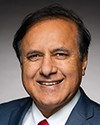
Shafqat Ali Liberal Brampton—Chinguacousy Park, ON

That is a very important question.

I understand that a majority of your constituents are public service employees, and I'd like to thank them and all public service employees for their hard work, for their dedication in serving Canadians and for their contributions to Canada.

We all know we're going through a global shift and through different times where we have to change the course of working. We made a commitment during our election campaign to spend less and invest more, to grow the strongest economy in the G7 and to balance our operational budget in three years. Therefore, we're taking a transformative approach to the public service to deliver on priorities that Canadians want.

At this critical time, I think working together on site is necessary to build strong teams and effective collaborations. Of course, we'll continue to engage with unions on how best to implement that. Our obligations and commitments to meet accommodations and the needs of employees remain unchanged.

Since I took office, I have had multiple meetings with union leaders, and my team is continuously in touch with them. We will be getting their feedback and will see how best we can implement this.

Jenna Sudds Liberal Kanata, ON

Can you speak to the voluntary measures that are being offered specifically so that we're mitigating involuntary departures?

Shafqat Ali Liberal Brampton—Chinguacousy Park, ON

I can ask Bill to briefly speak to this.

11:35 a.m.

Secretary of the Treasury Board of Canada, Treasury Board Secretariat

Bill Matthews

Departments have identified positions that will be reduced. In order to reduce them—and it's based on the work they do—the first line of defence is to notify employees, and they can put up their hands and voluntarily depart. This is why those letters are going out. Early retirement incentives, if approved by Parliament, are also coming, and that will be another option for those employees. The goal is to use those two vehicles to maximize voluntary departures.

To the extent that there are still employees left above what is in the budget, we will use selection processes to go down to the right number, but the first wave is voluntary and early retirement incentives.

11:35 a.m.

Conservative

The Chair Conservative Kelly McCauley

Thanks.

Madame Gaudreau, go ahead, please.

Marie-Hélène Gaudreau Bloc Laurentides—Labelle, QC

Thank you very much, Mr. Chair.

Let me go back to criteria.

There is reference to economic prosperity. The government says it wants to act fast and that it has to be efficient. They want to run this like a business, and not a country governed by the rule of law. That is what we're seeing now.

I'll give an example. What would be the criteria, and who would give the approval, if we want to build a nuclear reactor in my riding of Rivière‑Rouge? In the regulatory sandbox, we could say that since the project has potential and it's justified on the grounds of economic prosperity, the environment and social acceptability can be pushed aside.

In short, what are the preliminary criteria so that this type of decision won't ever happen?

Shafqat Ali Liberal Brampton—Chinguacousy Park, ON

That authority will be under the minister responsible, who will be using a regulatory sandbox for any experiment or innovation idea before putting the rules in place.

I think this is more of a technical question you're asking me. If you will allow me, I can ask Mike, who is an expert in this particular area, to explain this for your understanding and for Canadians watching at home.

11:35 a.m.

Assistant Secretary, Regulatory Affairs, Treasury Board Secretariat

Michael DeJong

There are very strict requirements associated with all regulatory sandboxes. First, the minister must be assured that the regulatory sandbox is in the public interest. For example, it is important—

Marie-Hélène Gaudreau Bloc Laurentides—Labelle, QC

I'm going to stop you right there. We've already asked about what determines whether something is in the public interest, and the answer was that there was no definition.

What is in the public interest?

11:35 a.m.

Assistant Secretary, Regulatory Affairs, Treasury Board Secretariat

Michael DeJong

The concept of public interest is not defined anywhere in federal or provincial legislation. Court rulings have clarified that the term “public interest” is always contextualized in the legislation in question.

In the example you gave, the minister would have to be assured that there is an analysis of the costs and benefits, that risks are identified and mitigated, and consultations have been undertaken with the other policy makers and stakeholders, such as indigenous peoples.

There are also requirements for transparency. The intent behind the regulatory sandbox must be published in regulatory plans. When a sandbox is launched, it must be posted on the website. Lastly, the President of the Treasury Board must prepare an annual report listing all regulatory sandboxes.

That would also apply to the example of a nuclear reactor.