Evidence of meeting #49 for Government Operations and Estimates in the 45th Parliament, 1st session. (The original version is on Parliament’s site, as are the minutes.) The winning word was housing.

A video is available from Parliament.

On the agenda

Members speaking

Before the committee

Freeman  Acting Assistant Deputy Minister, Strategic Policy, Planning and Performance Branch, Department of Veterans Affairs
Pham  Director General, Field Operations, Department of Veterans Affairs
Lowther  Chief Executive Officer and Co-Founder, Veterans Emergency Transition Services
Field  President, Homes For Heroes Foundation

11 a.m.

Conservative

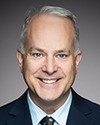
The Chair Conservative Kelly McCauley

Good morning, everyone. Welcome back. I hope everyone had a wonderful summer.

We are now at meeting number 49 of the House of Commons Standing Committee on Government Operations and Estimates, the mighty OGGO, the only committee that truly matters.

We welcome four new members to our committee.

Ms. Fancy, Mrs. Cobena, Mr. Bragdon and Mr. Mazier, welcome to OGGO.

Before we start, I'll give a very quick reminder since we've been away for a bit. Keep your hands and the earpieces away from your microphones so that we can protect the hearing of our very valued interpreters.

Pursuant to the order of reference from the House of Commons and the motion adopted by the committee on June 16, we're undertaking a study of the use of underused and surplus federal lands and buildings for services for veterans.

We have two witnesses to start. We'll do one hour. We'll then suspend briefly and bring in the next batch of witnesses.

We have Mr. Freeman and Ms. Pham.

Who's doing the opening statement?

Mr. Freeman, the floor is yours for five minutes. Go ahead, please.

Mitch Freeman Acting Assistant Deputy Minister, Strategic Policy, Planning and Performance Branch, Department of Veterans Affairs

Thank you so much, Mr. Chair.

Members of the committee, thank you for the invitation to appear before you today. My name is Mitch Freeman. I'm the assistant deputy minister of commemoration and public affairs and strategic policy and planning at Veterans Affairs Canada. I'm pleased to be here today with my colleague Nathalie Pham as part of your study of motion M-16. The study provides the occasion to explore the opportunities, challenges and best practices associated with providing services, supports and resources for veterans. It is also an opportunity to identify successful models and consider, alongside other federal departments, how assets might better serve veterans and the communities in which they live.

Veterans Affairs Canada's mandate is to support the well-being of veterans and their families and promote recognition and remembrance of the achievements and sacrifices of those who have served Canada in times of war, military conflict and peace. Our mission is to provide exemplary client-centred services and benefits that respond to the needs of veterans and their families while ensuring that the memory of their service and sacrifice remains alive.

Today, Veterans Affairs Canada administers a broad range of benefits, programs and services designed to support veterans throughout the postservice life. These include disability benefits, rehabilitation services, income supports, health care benefits, transition supports, case management, and education and training benefits, among others. We provide those services through an extensive national network. Currently, veterans can access support through 38 Veterans Affairs Canada locations across the country, Service Canada locations, 28 transition centres located on or near Canadian Forces bases, operational stress injury clinics, our national contact centre and our secure online platform, My VAC Account. Combined, these service channels form more than 700 points of service available to veterans and their families from coast to coast to coast.

Each year, approximately 7,800 members of the Canadian Armed Forces transition out of military service, including roughly 2,000 medical releases. While most veterans transition successfully, we know that some experience challenges adjusting to civilian life. Research indicates that nearly one in five veterans reports experiencing difficulties during that transition. Therefore, supporting a successful transition is a critical aspect of the department's work and requires collaboration among federal departments, provinces and territories, municipalities, employers, health care providers, community organizations and, of course, the veteran's family.

It is within this broader context that Veterans Affairs Canada welcomes the committee's study of motion M-16. However, we know the transition extends beyond access to programs and benefits alone. Veterans often tell us that access to housing, meaningful employment, social connection, health services and peer support are all important determinants of well-being. These are often areas in which municipalities, communities and organizations, provincial and territorial governments, and local service providers play an essential role.

Housing is a particularly important consideration, and this is why we have collaborated with Housing, Infrastructure and Communities Canada to support the veteran homelessness program to ensure eligible veterans receive the supports they need. We support organizations that identify and assist veterans who are experiencing or are at risk of experiencing homelessness, helping them access housing, income supports, health and mental health services, and other benefits for which they may be eligible. The department also provides emergency assistance services directly to vulnerable veterans to address their immediate financial challenges.

Experience has shown that homelessness is rarely solely a housing issue, though. Long-term success often depends on access to integrated supports that address health, wellness, employment, financial security, social connection and community belonging. These are areas in which community organizations, municipalities, provinces and territories, and other partners frequently play an essential role.

From our perspective, one of the strengths of this study is, in fact, the focus on evidence and collaboration. For that reason, hearing directly from veterans, veteran-serving organizations, municipal leaders, property experts and federal partners will be critical to understanding both the opportunities and the practical considerations associated with repurposing federal assets. As the committee undertakes this work, it will be important to consider factors such as long-term stability, accessibility, operating costs, local demand, governance arrangements and partnerships. Although Public Services and Procurement Canada is the department responsible for federal real property, Veterans Affairs Canada has extensive experience working with veterans, their families and organizations that support them, and we are committed to contributing expertise to the committee's study.

Further, this study comes at an important time. The government is making significant investments in the Canadian Armed Forces. Motion M-16 recognizes that an increase in military personnel today will ultimately result in a growing population of veterans in the years and decades ahead. The motion, therefore, invites us to think proactively about how we can continue to support those who have served Canada.

Canadians who serve in uniform—

11:05 a.m.

Conservative

The Chair Conservative Kelly McCauley

I'm sorry, Mr. Freeman. You're past your time. Can I get you to wrap up, please?

11:05 a.m.

Acting Assistant Deputy Minister, Strategic Policy, Planning and Performance Branch, Department of Veterans Affairs

Mitch Freeman

Yes.

Canadians who serve in uniform make extraordinary contributions on behalf of our country. They deserve the systems to help them remain healthy, connected and engaged.

Mr. Chair, we appreciate the opportunity to contribute to the study and look forward to supporting the committee in its work.

Thank you very much.

11:05 a.m.

Conservative

The Chair Conservative Kelly McCauley

Thanks, Mr. Freeman.

We'll start with Mr. Mazier for six minutes.

Welcome to OGGO, sir.

11:05 a.m.

Conservative

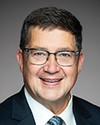
Dan Mazier Conservative Riding Mountain, MB

Thank you, Chair.

Hello to everyone across the way. It's my first time here at OGGO. Here we go.

Mr. Freeman, how many veterans does the government estimate are currently experiencing homelessness in Canada?

11:05 a.m.

Acting Assistant Deputy Minister, Strategic Policy, Planning and Performance Branch, Department of Veterans Affairs

Mitch Freeman

Thank you so much for the question.

The current information we have from Housing, Infrastructure and Communities Canada indicates that approximately 1,700 to 1,800 veterans are experiencing homelessness throughout the year. I would qualify—

11:05 a.m.

Conservative

Dan Mazier Conservative Riding Mountain, MB

Thank you, Mr. Freeman. That's good.

According to the government, the veteran homelessness program was introduced to prevent and reduce veteran homelessness in Canada. What is the total number of veterans who have attained stable housing through this program to date?

11:05 a.m.

Acting Assistant Deputy Minister, Strategic Policy, Planning and Performance Branch, Department of Veterans Affairs

Mitch Freeman

In terms of the veteran homelessness program as administered by Housing, Infrastructure and Communities Canada, the last count I have indicates that through the program, 233 veterans have received supports to receive stable housing.

11:05 a.m.

Conservative

Dan Mazier Conservative Riding Mountain, MB

Mr. Freeman, we have obtained a departmental briefing note showing that last year, the government had over $3 million in veteran homelessness program funding sitting unused. According to the department, “All opportunities to allocate this funding within the [veteran homelessness program] have been exhausted.”

Does the government really believe there wasn't a single veteran who could have benefited from this money?

11:05 a.m.

Acting Assistant Deputy Minister, Strategic Policy, Planning and Performance Branch, Department of Veterans Affairs

Mitch Freeman

I suspect that the reference is to HICC's program and is probably best suited to commentary from them, as they administer the veteran homelessness program.

11:05 a.m.

Conservative

Dan Mazier Conservative Riding Mountain, MB

What are your thoughts on that? You didn't think there would be any veterans who...? You're in charge of the department. You have lots to do with Veterans Affairs. Would you think any veterans could have benefited from that money?

11:05 a.m.

Acting Assistant Deputy Minister, Strategic Policy, Planning and Performance Branch, Department of Veterans Affairs

Mitch Freeman

As noted, I don't administer the veteran homelessness program. That is administered through Housing, Infrastructure and Communities Canada. Any budgetary situation in that program would be best suited for them.

Dan Mazier Conservative Riding Mountain, MB

Are you aware of any organizations across Canada that could have used the $3 million to benefit veterans?

11:05 a.m.

Acting Assistant Deputy Minister, Strategic Policy, Planning and Performance Branch, Department of Veterans Affairs

Mitch Freeman

As I said, the delivery model for the veteran homelessness program is to utilize external expertise across the country. The question of how that is delivered would be best suited to Housing, Infrastructure and Communities Canada.

11:05 a.m.

Conservative

Dan Mazier Conservative Riding Mountain, MB

The question was this: Are you aware of any organizations across Canada that could have used this $3 million to benefit veterans? Are you aware of any? It's simply yes or no.

11:10 a.m.

Acting Assistant Deputy Minister, Strategic Policy, Planning and Performance Branch, Department of Veterans Affairs

Mitch Freeman

I appreciate the question, but I would still come back to my response that this is best suited for Housing, Infrastructure and Communities Canada as the administrator of the veteran homelessness program.

11:10 a.m.

Conservative

Dan Mazier Conservative Riding Mountain, MB

Are you the administrator of the veteran homelessness program?

11:10 a.m.

Acting Assistant Deputy Minister, Strategic Policy, Planning and Performance Branch, Department of Veterans Affairs

Mitch Freeman

I am not.

11:10 a.m.

Conservative

Dan Mazier Conservative Riding Mountain, MB

What are you responsible for? Do you ever talk to that program at all?

11:10 a.m.

Acting Assistant Deputy Minister, Strategic Policy, Planning and Performance Branch, Department of Veterans Affairs

Mitch Freeman

The relationship between Veterans Affairs and Housing, Infrastructure and Communities Canada is very collaborative in nature. The program's delivery model is to utilize two streams of work. The first is around services and supports; our colleagues at HICC have implemented programming across the country, with expertise—

11:10 a.m.

Conservative

Dan Mazier Conservative Riding Mountain, MB

I guess you are aware, then.

Why was the unallocated funding for the veteran homelessness program not transferred to the veterans emergency fund instead, given that this fund specifically supports veterans with food, clothing and shelter?

11:10 a.m.

Acting Assistant Deputy Minister, Strategic Policy, Planning and Performance Branch, Department of Veterans Affairs

Mitch Freeman

The veterans emergency fund is a fund administered by Veterans Affairs Canada. It provides funding to veterans who find themselves in financial crises. That fund is funded through Veterans Affairs and has sufficient funds for the demand that is required.

11:10 a.m.

Conservative

Dan Mazier Conservative Riding Mountain, MB

Did anybody from Veterans Affairs ever pick up the phone and say, “Hey, we could use that $3 million”?

11:10 a.m.

Acting Assistant Deputy Minister, Strategic Policy, Planning and Performance Branch, Department of Veterans Affairs

Mitch Freeman

As I mentioned, that program has sufficient funds for the demand of veterans using that program, the veterans emergency fund.