Now we go to the next questioner, who is Mr. Thériault.
You have the floor for six minutes.

Evidence of meeting #9 for Health in the 45th Parliament, 1st session. (The original version is on Parliament’s site, as are the minutes.) The winning word was federal.
A video is available from Parliament.
Liberal

The Chair Liberal Hedy Fry
Now we go to the next questioner, who is Mr. Thériault.
You have the floor for six minutes.
Bloc
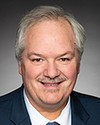
Luc Thériault Bloc Montcalm, QC
I would like to welcome the witnesses.
Earlier, Dr. Eyolfson asked you whether it would be appropriate for the federal government to make targeted investments to increase care. If that improves the situation, fine, but if it means the government has to make cuts elsewhere in the health care system, is that really desirable?
You talked about all the issues earlier, including the fact that health care funding hadn't increased in line with population growth. You talked about a loss of 3,000 beds. Should money be injected into the system to keep 35,000 beds, or should there be targeted investments determined by the federal government, which doesn't know the needs of the provinces on the ground?
There's currently a health transfer trend where the federal government tells the provinces that it will give them money, but that it will decide where they should invest it, as if it had the necessary authority to determine that. You're on the ground, and you see what's happening. The federal government is telling the Conservatives that immigration has no impact on service delivery, that it isn't right to say such a thing, and that they're trying to stigmatize people who come from elsewhere. You told us earlier about the problems related to that. It's important to treat the people who come here with dignity.
Who has the jurisdiction to decide where the money should be invested, then? We say that it's the people on the ground who provide the care. That's the issue that's emerging from our work: The federal government wants to decide everything and tell the provinces where to invest the money it gives them.
What's your reaction to that?
Emergency Physician, As an Individual
It's interesting to listen to French and English interpretation at the same time. I'll do my best to answer your questions.
The idea that the federal government should provide funding to provincial governments in order to target health care expenditures and spending and address these problems is certainly a good idea, but I don't believe giving money for the sake of giving money will solve the problem. Certainly, it should be targeted toward programs that will be beneficial, but what we have is also not necessarily an issue of money. I do believe provinces have a lot of funding, but it's not necessarily being allocated responsibly. I also believe we do have—
Bloc
Luc Thériault Bloc Montcalm, QC
You say that the money is not being allocated in the most responsible way. Can you give me some examples?
Emergency Physician, As an Individual
We have certain metrics that the provinces meet and are being given funding for and that I don't know necessarily improve outcomes. Just off the top of my head, I believe certain hospitals are given money for attaining certain sickle cell metrics that hospital systems do work very hard in order to meet, but on a grand scheme of population-level base care and meeting wait time needs, I'm not really sure that is where our money needs to be spent.
Bloc
Luc Thériault Bloc Montcalm, QC
However, those discussions are taking place on the ground. You have directors and a very strong public service that manage the health networks. Some choices may not be the best, but who has the jurisdiction to manage the health care system? Is it those who aren't accountable for the results, or is it those who are accountable? Who knows what the needs are, is it the provinces or the federal government?
That's a basic principle, because money is limited. The provinces said they wanted an additional $28 billion per year for the next 10 years to ensure the network's strength, and the federal government offered them $4.6 billion a year for all of Canada.
Do you think that's a responsible attitude, as we come out of a pandemic?
Emergency Physician, As an Individual
I think that both federal and provincial governments have a responsibility to work together in order to meet these demands.
Liberal
The Chair Liberal Hedy Fry
Thank you very much.
I now go to the next round. It's a five-minute round, starting with Mr. Strauss for the Conservatives.
You have five minutes, please.
Conservative

Matt Strauss Conservative Kitchener South—Hespeler, ON
Thank you, Chair.
Dr. Padmos, that was very interesting testimony. Just for some housekeeping, I want to ask, have you ever received any sort of compensation, salary or funding from the Government of the Kingdom of Saudi Arabia?
Executive Vice-President, American Canadian School of Medicine
Certainly, when I worked there, I was treated very well financially, and, in fact, many of my colleagues enjoyed the same privilege. Since returning to Canada, no, I have not received any funding from Saudi Arabia.
Conservative
Executive Vice-President, American Canadian School of Medicine
I was there for 15 years.
Conservative
Matt Strauss Conservative Kitchener South—Hespeler, ON
I also see you're listed as being on the medical board of an outfit called iGan Partners. Is that accurate?
Executive Vice-President, American Canadian School of Medicine
iGan Partners is a Toronto-based venture capital firm. They have a clinical advisory panel, which meets occasionally. It hasn't met for the last year. It talks about medical devices and how they might be commercialized.
Conservative
Matt Strauss Conservative Kitchener South—Hespeler, ON
I see, on iGan's website, that they recently launched a $250-million fund called iGan Arabia, which was hosted at a Riyadh conference. Are you aware of that $250-million fund, and what amount of that—
Executive Vice-President, American Canadian School of Medicine
I'm aware of it. I haven't participated in any activities related to its function.
Conservative
Matt Strauss Conservative Kitchener South—Hespeler, ON
Do you know how much of that $250 million comes from the King of Saudi Arabia?
Executive Vice-President, American Canadian School of Medicine
Well, I think their plan is to attract $250 million from Saudi Arabian investors, in order to bring them into that ecosystem of health innovation.
Conservative
Matt Strauss Conservative Kitchener South—Hespeler, ON
How much money would you say, in total, you've received in compensation from iGan Partners?
Executive Vice-President, American Canadian School of Medicine
iGan Partners, for the advisory board, pays expenses and a stipend of $1,000 a day. That might be, in the most...year, would be four days at $4,000, but it hasn't met in two years, so nothing recently.
Conservative
Matt Strauss Conservative Kitchener South—Hespeler, ON
For the 15 years you were in Saudi Arabia, what would you say your total compensation was from the kingdom?
Executive Vice-President, American Canadian School of Medicine
Well, I know that, in the first year I went, which would have been 1978, I think my salary was just under $100,000. When I left, 15 years later, I think my salary was in the neighbourhood of $300,000. I'd say that was comparable to my cohort in Canada. The difference was that we were also provided with housing and transportation benefits, which made it, financially, quite attractive to be there. That was one of the advantages. The other advantage was that the sun shone almost every day.
Conservative
Matt Strauss Conservative Kitchener South—Hespeler, ON
Those sound like significant advantages.
In your work at medical schools and the Royal College.... My understanding of this whole visa training program is that the Saudis send extra money to have these trainees, and then that money rolls into the general funds of the medical school programs. Was your compensation at these medical schools in any way from the Government of Saudi Arabia as well?
Executive Vice-President, American Canadian School of Medicine
Well, I wasn't working for a medical school, in the sense that I have a privileged appointment at medical schools, but receive no salary as a result.
When I was in Nova Scotia, my salary was paid from the department of health, but for my administrative work, not from the university for an academic appointment. That's why I'm an adjunct professor, not a full professor in the university, and that's been through the Royal College. When I was there, of course, I was a salaried employee of the Royal College.
Conservative
Matt Strauss Conservative Kitchener South—Hespeler, ON
You were never a salaried employee of a medical school.