Evidence of meeting #48 for Indigenous and Northern Affairs in the 39th Parliament, 1st session. (The original version is on Parliament’s site, as are the minutes.) The winning word was consultation.

A recording is available from Parliament.

On the agenda

Members speaking

Before the committee

Ghislain Picard  Regional Chief, Assembly of First Nations of Quebec and Labrador
Angus Toulouse  Ontario Regional Chief, Chiefs of Ontario

12:40 p.m.

Ontario Regional Chief, Chiefs of Ontario

Chief Angus Toulouse

Some of those self-government agreements you spoke about had extensive negotiations, extensive consultation, extensive dialogue for many years—some for as much as 30 years. They had specific discussions leading up to how individual rights were going to be viewed and collective rights. So in their whole consultation process in negotiating self-government arrangements, they had opportunities to dialogue over an extended period about the effect of it and how the interpretative provisions, if you will, were going to fit in, and how they were going to work on those. So that's the work they did leading up to self-government agreements. Those are the discussions they've had.

So in those particular instances they did have specific discussions around the very issue.
12:40 p.m.

Conservative

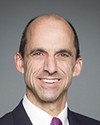
Steven Blaney Conservative Lévis—Bellechasse, QC

Do you wish to add something?

12:40 p.m.

Regional Chief, Assembly of First Nations of Quebec and Labrador

Vice-Chief Ghislain Picard

I agree with my colleague and support his comments. On the other hand, self-governance agreement negotiations also involve a major overhaul of the financial relationship between the Government of Canada and the communities concerned.

Of course, these considerations were taken into account, which is not necessarily the case for communities that are not a part of this framework. There is more than one type of financial agreement between our communities and the federal government, depending on the specific circumstances of the respective communities. Once again, I wish to repeat what my colleague has said: in many cases, these discussions are not concluded overnight.

12:40 p.m.

Conservative

Steven Blaney Conservative Lévis—Bellechasse, QC

Therefore, there were prior talks, but following the adoption of the bill, problems did not necessarily crop up.

Mr. Chairman, do I have any time left?

12:40 p.m.

Conservative

The Chair Conservative Colin Mayes

It was a question I asked the witnesses from the Canadian Human Rights Commission when they were in attendance.

On some of the issues around human rights for aboriginals, Mr. Picard, you talked about adequate housing. But what is adequate housing and how is it going to be determined? On reasonable access to education and appropriate health care, how are they going to be determined?

Those things are unknowns. As we move forward, how are they going to be determined? Will it be in a court of law? Can we really negotiate what they would be? The unknowns are the challenge.

Mr. Toulouse, you mentioned the concern you have about those unknowns and about moving forward without more consultation. For instance, when aboriginal communities were given the right to collect taxes for improvements on leased land, there was no provision for the communities providing service within those municipalities to be paid for the service they were delivering to those lands.

The former government went ahead with the legislation, with those unknowns out there. There were court cases. Our community was involved in one to determine what a proper servicing agreement was for those properties, because the aboriginal community was collecting the improvement tax or property tax on those leasehold properties.

Do you really think there can be enough consultation to give a definite understanding or legal framework around these issues?

12:45 p.m.

Ontario Regional Chief, Chiefs of Ontario

Chief Angus Toulouse

As I indicated earlier, if afforded the time to work on this, with adequate resources, yes, we can deal with those issues. Again, those other reports talked about a three-year timeframe to deal with outstanding matters. It's still something that I am saying.

Along with the conditions I've raised, I think we can move forward.

12:45 p.m.

Regional Chief, Assembly of First Nations of Quebec and Labrador

Vice-Chief Ghislain Picard

My feeling is that all of the examples you referred to are clearly measurable, in my view.

In terms of what is considered to be adequate housing, obviously, to me, it's what any Canadian knows as being the acceptable average. If it's three to five per house, when you compare it to the situation for aboriginal communities, which is almost double that, then there is obviously an equivalency that is not met.

In terms of consultation, we have more than one example in our recent history where people on our side considered they were properly consulted. I referred earlier to the royal commission, and it's a form of consultation. It took five years and more than 500 recommendations, yet ten years later we are still waiting for one of those recommendations to be implemented.

It seems to me that we're always at the losing end. We always express a willingness to adhere to processes that pretend to consult with our people, yet there are very few results.

12:45 p.m.

Conservative

The Chair Conservative Colin Mayes

Thank you.

Mr. Lemay.

Marc Lemay Bloc Abitibi—Témiscamingue, QC

I've been listening for the last hour, and I have heard everything. I want to ask you a very specific question.

Under the Canadian Human Rights Act, all employers or service providers subject to federal regulation are prohibited from discriminating against anyone based on race, national origin, colour, creed, age, gender, sexual orientation, marital status, family status, physical or mental disability, past or current addiction to drugs or alcohol, and even against a woman who is pregnant or about to give birth.

If Bill C-44 were adopted tomorrow morning, section 67 of the Indian Act would be repealed. As such, would your communities be ready to deal with possible lawsuits stemming from the provisions of the act I have just read to you?

12:45 p.m.

Regional Chief, Assembly of First Nations of Quebec and Labrador

Vice-Chief Ghislain Picard

Mr. Lemay, earlier, I gave you a few examples, and I believe our communities would be vulnerable in some of these situations. Those examples will not disappear once the act is enforced, and it may even provide additional ammunition to this type of group so that certain demands and claims possibly labelled as illegitimate may be advanced. It is a situation that has already begun to surface in our communities.

Marc Lemay Bloc Abitibi—Témiscamingue, QC

Chief Toulouse, do you wish to add something?

12:50 p.m.

Ontario Regional Chief, Chiefs of Ontario

Chief Angus Toulouse

Is there going to be a significant change the minute we have this new bill? I can't see that it's going to change into something the next day. Right now, as I said earlier, with respect to first nation governments and first nation organizations, for the most part, as far as individual first nation members go, they are treated fairly at the community level. The bigger issue is how we ensure that collectively, the first nation people are getting what other Canadian or other provincial individuals are getting. I think this is probably where we're wanting to look at the inequities that are there.

Child welfare is the example I used earlier. This is going to be our concern. Why is it that our first nation children are getting 22% less than anybody else in relation to child welfare issues?

That is going to be our big concern: our situation in relation to any other person in Canada and in each of the provinces. It's not so much that there will be change and that we are going to see a whole bunch of cases started or initiated by community members against the band council immediately. No. I think what we are going to see, really, are the inconsistencies that have been there historically--again allowing the discrimination of the Indian Act towards our people--in relation to different standards that are applied to and are met for other people in this country.

Marc Lemay Bloc Abitibi—Témiscamingue, QC

Thank you.

12:50 p.m.

Conservative

The Chair Conservative Colin Mayes

Can I shut questions down now? Has everybody had an adequate opportunity?

Thank you very much to our two regional chiefs, Mr. Picard and Mr. Toulouse, for your attendance. We really do appreciate that.

We are adjourned.