Thank you very much.
This brings us to Dr. Ramsay for five minutes, please.

Evidence of meeting #27 for Indigenous and Northern Affairs in the 45th Parliament, 1st session. (The original version is on Parliament’s site, as are the minutes.) The winning word was consent.
A recording is available from Parliament.
Liberal

The Chair Liberal Terry Sheehan
Thank you very much.
This brings us to Dr. Ramsay for five minutes, please.
Liberal

Jacques Ramsay Liberal La Prairie—Atateken, QC
Good morning.
This is all very informative and very reassuring from a legal standpoint.
You were here during the first hour and you heard Amanda Therrien propose an amendment. Among other things, she was concerned about the use of the word “permanent” and the fact that sterilization procedures had also been performed on men.
Did you find this proposal relevant? What are your comments on that?
Senior Counsel, Criminal Law Policy Section, Department of Justice
I would like to point the committee to proposed subsection 268.1(2) of Bill S-228, which says, “or any other procedure performed on a person that results in the permanent prevention of reproduction”. We call that a basket clause in law. It means that all procedures that result in permanent prevention of reproduction, or sterilization, would be caught by the definition. This would include a non-consensual vasectomy as well.
In relation to her other concerns, I would say that the clause in which NAWL has suggested a limitation isn't necessary precisely because of what we've shared with you today. Bill S-228 doesn't alter the existing criminal law. We don't see provisions like this in the criminal law now, because we know that all medical procedures that are consented to are not criminal. They're not criminal now, and they wouldn't be criminal under Bill S-228. It's our view, then, that the provision would not be necessary.
Liberal
Jacques Ramsay Liberal La Prairie—Atateken, QC
When I listen to you, Attorney Levman—I imagine that's your title because, from the way you speak, I'm sure you're a lawyer—I get the impression that Bill S‑228 is not necessary at all.
Senior Counsel, Criminal Law Policy Section, Department of Justice
Perhaps I will answer with respect to some of the testimony you've heard before this committee.
Many stakeholders have told you that clarifying the law in this regard is very important to them, given the history you have heard. We've heard it from impacted people and from the sponsor of the bill. We've also heard it from certain members of the medical community who also feel that clarifying the law would assist with raising awareness and with facilitating the development of very important educational measures that are required to prevent this from happening in the future.
Liberal
Jacques Ramsay Liberal La Prairie—Atateken, QC
I follow you, but when you tell us that certain things are not necessary, we could say the same thing about vasectomies in the case of other people. I'm thinking of people with Down's syndrome who may have had vasectomies. We could also say, for clarification purposes, that there are people who have been mistreated in this regard, as well. In my opinion, this might warrant the same openness as that required for Bill S‑228.
Liberal
Jacques Ramsay Liberal La Prairie—Atateken, QC
Okay, I appreciate that. It clarifies things, but I just wanted—
Senior Counsel, Criminal Law Policy Section, Department of Justice
It doesn't change anything. A non-consensual vasectomy is already an assault.
Liberal
Jacques Ramsay Liberal La Prairie—Atateken, QC
Okay.
I have a question that is perhaps more important. There's been a lot of concern here about the availability of family planning services for everyone. We heard from Dr. Brassard that it was a struggle to get a younger woman sterilized.
I understand that this is a Senate public bill and that it does not fall under the Department of Justice, but beyond the legal implications, have there been any concerns about the social implications of this bill?
Senior Counsel, Criminal Law Policy Section, Department of Justice
My view is that fundamental criminal law principles protect people from non-culpable behaviour, behaviour that serves a social function.
Any medical professional who is providing a procedure consensually to a patient is not at risk. They're not at risk now. They would not be at risk under Bill S-228 either. In light of your first question, in contrast, it would—as I understand it—help certain stakeholders feel that their rights are recognized in the law.
Liberal
Jacques Ramsay Liberal La Prairie—Atateken, QC
Absolutely.
We've also heard many times that, sometimes, decisions on procedures must be made in a few seconds. So there is no time for doubt and second-guessing; action must be taken quickly.
Could Bill S‑228 have an impact on that? I am well aware that it is covered; I understood that. However, the word “consent” is not specifically used in Bill C‑228, and you're referring to another provision, which I believe is section 265 of the Criminal Code.
To clarify matters, shouldn't we first use the word “consent” in Bill C‑228, given that that health care professionals may have to act quickly and don't have the luxury of reflecting to determine whether the actions they're about to take will comply with Bill C‑228?
Liberal
The Chair Liberal Terry Sheehan
Please provide a very brief answer. You can also submit something in writing afterwards, if you feel that you don't have the time.
Senior Counsel, Criminal Law Policy Section, Department of Justice
Thank you.
That is the current state of the law. The current state of the law protects medical professionals who have to make difficult decisions in emergency situations for the benefit of their patients. Nothing in Bill S-228 changes that.
I want to stress that fundamental principles of criminal law foist criminal liability on to people who not only do a wrong—meaning they perform a non-consensual surgery—but who also know or who are reckless as to whether the person has consented. Just because there might be a misunderstanding about consent doesn't mean criminal liability will flow. You have to make out both of those elements beyond a reasonable doubt to establish criminal liability. The existing criminal law protects medical professionals right now in the same way that it would protect medical professionals under Bill S-228.
Liberal
The Chair Liberal Terry Sheehan
Thank you very much.
That brings us to the end.
Does anybody else have anything pressing they would like to say right now? Nope. I'm seeing nothing.
When we're back after the two constituency weeks, we'll pick up where we left off. As a reminder, we will be getting at Bill S-2 when we're done this. Friday is the deadline to get your witnesses' names in.
Go ahead, MP Morin.
Conservative

Billy Morin Conservative Edmonton Northwest, AB
I have a quick question, Chair.
There were comments before the meeting started. Kashechewan, as per the motion, would request an hour on the 14th when we get back. I don't know the process to acknowledge whether that can happen.
Liberal
The Chair Liberal Terry Sheehan
I recognize that. We will take it up with the ministry, if the minister is available on such a date. We recognize the motion you had put forward, and the date.
Thank you.
Liberal
Bloc

Marilène Gill Bloc Côte-Nord—Kawawachikamach—Nitassinan, QC
Thank you, Mr. Chair.
To make our work easier, would it be possible to get a schedule of meetings until the end of spring? Even if it's not complete, it will at least give us an idea of what's coming.
Liberal
The Chair Liberal Terry Sheehan
Perfect.
The clerk has work to do over the next couple of weeks as well. We will get it to you. I'll also consult with the vice-chairs as we develop the calendar.
Go ahead.
Conservative
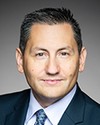
Jamie Schmale Conservative Haliburton—Kawartha Lakes, ON
Thank you, Chair.
This is to confirm that the week we come back is the week of April 13. Is that correct?
Conservative
Jamie Schmale Conservative Haliburton—Kawartha Lakes, ON
As my colleague mentioned, the minister would talk about Kashechewan on the 14th, if that's possible.