Yes.
Evidence of meeting #42 for Indigenous and Northern Affairs in the 45th Parliament, 1st session. (The original version is on Parliament’s site, as are the minutes.) The winning word was costs.
A video is available from Parliament.

Evidence of meeting #42 for Indigenous and Northern Affairs in the 45th Parliament, 1st session. (The original version is on Parliament’s site, as are the minutes.) The winning word was costs.
A video is available from Parliament.
Associate Professor and Canada Research Chair in Housing, Community and Health, McGill University, As an Individual
Yes.
Bloc

Marilène Gill Bloc Côte-Nord—Kawawachikamach—Nitassinan, QC
In your work, you also talked about the issue of community self-determination, which could be a cornerstone of housing construction.
Once again, can you give us more details? You have about a minute left to do so, but you could also send us your comments in writing.
Associate Professor and Canada Research Chair in Housing, Community and Health, McGill University, As an Individual
That's actually a big question. It's a short question, but the self-determination of indigenous peoples when it comes to housing is a big question.
Again, it's about listening to the needs of the north. There's a lot of money going north right now, but what are the priorities and needs of the communities? They will vary. How are the needs determined and measured? There will be variations there as well.
I'm going to take the time to answer that question properly in writing and to send you some potential solutions, or rather some food for thought, let's put it that way.
Liberal
Conservative

Billy Morin Conservative Edmonton Northwest, AB
Thank you, Chair.
I'm going to go to Mr. Watson first.
I liked what you said about how high diesel prices don't just hurt at the pump in the north, but they also hurt at home. Certainly, I'd like to see diesel taxes lowered for an extended period of time, but there are diesel taxes that have been lowered by the federal government, most recently.
Would you categorize these as band-aids for a wound that's bleeding a lot more in that regard? How has it affected, for instance, planning beyond three, four or six months? Does it affect not only your business but also general operations in the north?
President, Integrated Resource Technologies Ltd.
Tax savings are always good in the short term. We have a problem right now that we're trying to sort out with the cost of living, so they do help. In the long term, I think we really have to look at substantially lowering the cost on an annual basis, so it can be budgeted for rather than always having spikes and having to look to buy fuel in December in order to get some cost savings down the road.
Tax relief is a good thing. It's a short-term band-aid, but I think we really have to look at where the fuel is built and how it's built, as well as how we can continue it to be a lower cost of living for people rather than looking at it as the price of fuel.
Realistically, trying to lower the price of fuel should be one of the biggest things that we look at right now, because it's a variable. One day it could be $1.85, and the next day it could be $2.85. We live in the north, and we're used to the spikes. I drive around every night to find out what the lowest price is, and that's where I go to buy fuel. Giving the communities the ability to purchase cheaper fuel ends up putting more money back into the communities where it needs to be spent, so it's not spent driving down the road or things like that.
Ultimately, I think we need to look at how we build the fuel rather than what the real cost is.
Conservative
Billy Morin Conservative Edmonton Northwest, AB
Thank you. Building on what you said, I have a question for Mr. Hutchinson.
We had Mr. McBryan here from Buffalo Airways. He had some great stories about how he services the north. He threw out something really tangible, which I like. I would categorize it as low-hanging fruit. He described how upgrading runways by paving and extending would tangibly bring down costs. It's just something that I think a government can wrap its head around as opposed to some of the challenges with permanent fixes, tax relief and things of that nature.
I might be asking you to repeat yourself, but can you expand on storage? Is that something as tangible as fixing a runway in terms of being one temporary thing the government could invest in that would systematically, or for a while, bring some more permanent relief? Do you have any idea of what some of those costs would be to upgrade the storage capacity?
Director, Petroleum Products Division, Government of Nunavut
Yes. Thank you for the question. On a cost basis, as with many projects, we are certainly seeing the cost of our infrastructure going way up. We built a new tank farm about 11 years ago in Cambridge Bay at a cost of about $25 million. That was a good-sized facility. Today we're planning another facility build in a community. It's roughly the same size, and maybe a little smaller, but it's more than double the price, where we're at now.
There's a lot of pressure there. Unfortunately, when we go to expand these facilities, we end up competing with other priority projects of the government that need to advance.
Conservative
Billy Morin Conservative Edmonton Northwest, AB
Would you categorize tank storage as something that would be a tangible investment? I realize that the prices have gone up, but is this something that permanently, or at least for decades—like that $25-million one—would lower the cost of living across the board? Do you see it as a first, tangible priority versus maybe some of the other things that are being invested in?
Director, Petroleum Products Division, Government of Nunavut
I think so. On the pressures we're seeing on our infrastructure and the need for that investment, if there's a predictable capital stream to help us invest and expand those facilities, it certainly helps for affordability. Otherwise, we would find ourselves having to get creative around funding capital projects—even the consideration of a reserve or something that would be funded through retail prices, like you see in the south. A sustained flow of capital dollars to our infrastructure certainly helps with affordability.
October 20th, 2026 / 5:25 p.m.
Conservative
Liberal

The Chair Liberal Terry Sheehan
We will now go to the Liberals.
Brendan, you have five minutes, please.
Liberal

Brendan Hanley Liberal Yukon, YT
Thank you, Chair.
I want to thank all the witnesses for this panel. It's been a very constructive and very coherent panel on the various aspects of the challenge with energy and how it relates to everyday affordability. I really appreciate the testimony.
Mr. Savoie, I'll go back to you. What you said really echoed the minister's testimony in the last panel on the need to build energy capacity and, therefore, reduce or at least stabilize energy costs. Maybe this is a chance to dig into some areas a little deeper. Really, when you talk about the cost of electricity generation, it obviously is affected by multiple inputs. The price of fuel is one, but you referred also to the capital spending for upkeep or for adding new capacity. I know that people are very concerned about how much they are actually paying for energy.
To operate the Yukon grid from source to household—I'm talking about where the grid exists—it of course involves the Yukon government, involves the energy corporation and also involves, for much of the grid, the private corporation ATCO as a distributor. I wonder if you can comment here. Between these various players, how are rates ultimately determined and subsidized—or not?
Chair, Board of Directors, Yukon Energy Corporation
For quite some time, Yukoners have enjoyed legacy investment by the federal government that can be traced back decades, often associated with resource extraction. That set the grounds for what I mentioned earlier about three hydro facilities really forming the backbone of the electricity grid. The fact that those facilities have been maintained and functional throughout the decades established for quite some time what was really a favourable situation.
In recent years, since the demand and population have increased so much, we're now into constructing—pursuing new capital projects at much higher construction costs than they once were. We're also having to repair this aging infrastructure. When we contemplate the mix of all of the different effects that go into determining a rate at the end of the day, we have to bear in mind that there has been historical federal investment that helped immensely.
The other inputs that are more variable and more current, such as the price of diesel, are very much real. These are becoming more and more prevalent, particularly as we run out of capacity from our hydro sources and are having to use more thermal plants. We have an LNG facility and multiple diesel facilities, so there's a pretty straight-line correlation between the cost of fuel inputs and electricity outputs.
You asked about how the prices are ultimately determined. There are these multiple players involved. We've talked now about the capital investment side. Yukon Energy is a publicly owned organization that is the primary generator of electricity that is largely sold to ATCO at a wholesale rate. ATCO then distributes it, so ATCO owns that final infrastructure that gets the electricity from the substations through the communities and delivered to homes. All the rates are reviewed by the Yukon Utilities Board. Every time there's a proposed rate increase, it has to be justified, and there has to be a demonstration of value through that board, whether it be Yukon Energy's rates or ATCO's rates.
Collectively, all of these things—from the inception of capital investment to the operational inputs and the distribution costs—form what we see as the rate.
I hope that answers the question.
Liberal
Brendan Hanley Liberal Yukon, YT
That's very helpful. Thank you.
We only have about 30 seconds left, but I wonder if you can talk about.... You again referred to opportunities for the Yukon, critical mineral resource development being one of them.
What are the load considerations, in addition to population needs, if we are to harness the amazing critical mineral opportunities that are ahead of us?
Chair, Board of Directors, Yukon Energy Corporation
They are potentially very large, depending on the potential mine, of course. There are 31 critical minerals on Canada's list of critical minerals. Yukon has identified resources of 12 of those and occurrences of another 13. Some of those large potential mines scale to the point of actually representing the current full demand of the entire territory. The potential is game-changing.
Liberal
The Chair Liberal Terry Sheehan
Thank you very much.
MP Gill, you have two and a half minutes, please.
Bloc
Marilène Gill Bloc Côte-Nord—Kawawachikamach—Nitassinan, QC
Thank you, Mr. Chair.
Once again, this will be a very brief intervention for you, Professor Riva, but you have a few minutes. I will let you use the two minutes to talk to us about colonization, which we have addressed, or any other subject you would like to address for the benefit of the committee.
Associate Professor and Canada Research Chair in Housing, Community and Health, McGill University, As an Individual
In fact, we are seeing that colonial approaches continue to this day when projects from the south are imposed on the north and local people are not consulted. I would like to believe that this is not done intentionally, but sometimes thinking a little more about the consequences of actions could have a positive impact.
I'd like to give you an example. This is not a colonial practice, but when Quebec, for example, decided to legislate against all diesel furnaces, it did so at the expense of indigenous people who need diesel to heat their homes. The consequence for the communities of Nunavik, for example, is that it is increasingly hard to find the equipment needed to repair furnaces or the skilled labour to maintain them.
We have to think about the consequences of the decisions made in the south. Take Build Canada Homes, for example. That's all great. However, as we've seen in the housing booms in the north, the housing crisis has been an ongoing issue since colonization.
If we don't give indigenous communities, territories and governments all the decision-making powers when it comes to housing, from design to construction, not to mention maintenance, we're going to perpetuate certain inequities, including some very long-standing ones.
People talk about a housing crisis in the north, but in fact, the word “crisis” indicates something acute. Housing has never been adequate. Giving full authority to indigenous territories and governments to have self-determination over housing breaks the wheel of colonialism.
Liberal
The Chair Liberal Terry Sheehan
Thank you.
For the last two spots, it's a rapid round, as we say. MP Dalton will have a very short question and answer period. It will be about a minute long. If you don't quite get the answer out, you can put it into writing as well, but the questions need to get on record. Following that, the Liberals will have MP Lavack for a one-minute rapid round.
Thank you.
Conservative
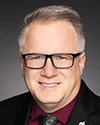
Marc Dalton Conservative Pitt Meadows—Maple Ridge, BC
Thank you, Chair.
Congratulations, Rob, on your acclamation last Saturday.
Conservative
Marc Dalton Conservative Pitt Meadows—Maple Ridge, BC
We've been hearing a lot about diesel from all of the different witnesses and the importance of it. I found very fascinating the potential of a microrefinery for diesel in Fort Nelson. You're on the line toward Whitehorse, the Yukon and even Fort Simpson.
You may have to send this in, but is this being looked at seriously? Is the private sector interested? It just seems like there's a real opportunity here. Are you having push-back? Let us know a bit about that.
Mayor, Northern Rockies Regional Municipality
Thank you for the question.
It has very recently been brought to our attention. It fits exactly with our economic diversification strategy. We really can support Ken, and I believe our indigenous neighbours are also interested in new opportunities for the resources that we have. I can't speak for them, but I know that with the new councils that are there, they're willing to participate.