Qujannamiik, Iksivautaq. Thank you, Chair.
Tunngasugit. Welcome to the committee.
I'm curious. Does the Minister of Northern and Arctic Affairs have control over food prices?

Evidence of meeting #44 for Indigenous and Northern Affairs in the 45th Parliament, 1st session. (The original version is on Parliament’s site, as are the minutes.) The winning word was subsidy.
A video is available from Parliament.
October 27th, 2026 / 4:55 p.m.
Liberal

Lori Idlout Liberal Nunavut, NU
Qujannamiik, Iksivautaq. Thank you, Chair.
Tunngasugit. Welcome to the committee.
I'm curious. Does the Minister of Northern and Arctic Affairs have control over food prices?
Deputy Minister, Department of Crown-Indigenous Relations and Northern Affairs
She does not.
Liberal
Deputy Minister, Department of Crown-Indigenous Relations and Northern Affairs
We do not.
Liberal
Lori Idlout Liberal Nunavut, NU
When you're talking about these subsidies, then, what is it that you're doing? Are you responding to these food prices? What is it that you're trying to do with things like the nutrition north program?
Deputy Minister, Department of Crown-Indigenous Relations and Northern Affairs
Maybe I could turn to Georgina for more detail.
Essentially, this subsidy does just that. It creates a reimbursement mechanism for retailers to be able to offset the cost of food that is shipped and that they provide in their particular location.
I can turn to you, and you can discuss the methodology around the northern food basket, Georgina.
Georgina Lloyd Assistant Deputy Minister, Northern Affairs, Department of Crown-Indigenous Relations and Northern Affairs
Thank you for the question.
Absolutely, the subsidy as it is today is organized by high, medium and low. Indigenous partners work with us through meetings to be able to define different items that should be included at the high rate, medium rate and low rate of subsidy, and that varies by region. Then those costs are applied by kilogram of food. Then retailers provide that to Canada, and Canada reimburses it at a subsidized rate. The objective of the overall subsidy is to provide food security measures to support food security across the north.
Liberal
Lori Idlout Liberal Nunavut, NU
Thank you.
Since you don't have control over what end up being the food prices in Canada, are there any ways or considerations that are helpful to you, such as knowing, for example, some external factors like Russia's invasion against Ukraine and what happened in the Strait of Hormuz? Do these kinds of external factors help you make any decisions about the subsidy?
Deputy Minister, Department of Crown-Indigenous Relations and Northern Affairs
We will track uptake of the subsidy and demand for the subsidy, which is why, a few years ago, we did get a $30-million top-up to the subsidy, because demand increased. At that time it was largely driven by the Inuit child first initiative. You'll recall that. We can be responsive, then, to increased demands of the subsidy, 100%.
I think one of the things that we heard during the engagement approaches was the need to consider recalibration of the subsidy so that there is more consistency in terms of the percentage of the cost of food that is subsidized across communities, as well as consider communities that have different accessibility challenges. The lack of reliability of certain winter roads today, for example, as a result of climate change, is not something that we would have necessarily thought about 15 years ago, but it has become an increasing pressure for some communities.
We need to be able to be responsive to those, but there's a lot of call for increasing competition as well, which is why we have increased food bank access and increased the eligibility. It is something that is a continuous challenge, particularly in the northern context.
Liberal
Lori Idlout Liberal Nunavut, NU
I wonder if you could share with us some of the announcements that were made at that food summit that was mentioned earlier. Some research programs were announced, and I wonder if you could give us that list of those research projects that were announced and maybe any update on how well they're doing to date.
Deputy Minister, Department of Crown-Indigenous Relations and Northern Affairs
I'll have to turn to Georgina. I was there. I don't remember the list.
Go ahead, Georgina.
Assistant Deputy Minister, Northern Affairs, Department of Crown-Indigenous Relations and Northern Affairs
Thank you.
This is phase two of the research program. Phase one is completed. They are two-year research programs, and all of the research is northern led, so it really is about self-determination-based research. We've let communities decide the priorities of what they'd like to invest in. We've heard very clearly that northerners' solutions and what the capacities are have to be driven on the ground. That is why we want the research to be focused from the community-based level as well.
At the summit, there was $2 million of research funding announced for nine different projects. Those nine projects have all been implemented right now, and they will run until 2028.
Really quickly, they include Foxe Basin Kivalliq North and the KKETS in northern Ontario. Matawa First Nations is delivering a project. Niksik in Igloolik and Pirurvik Preschool, the society in Pond Inlet, have projects. The Sambaa K'e First Nation in Northwest Territories has a food-sharing research project.
The Southeast Resource Development Council, which has eight first nation members in northern Manitoba, is partnering with academic institutions: University of Toronto, Toronto Metropolitan University, and the universities of Victoria and Waterloo.
Liberal

The Chair Liberal Terry Sheehan
Thank you very much.
Madam Gill, we have two and a half minutes for you, please.
Bloc

Marilène Gill Bloc Côte-Nord—Kawawachikamach—Nitassinan, QC
Thank you, Mr. Chair.
Ms. Gideon, I'd like to ask one last question, in the two and a half minutes I have, on the whole issue of cross-cutting files. Obviously, Minister Chartrand has to focus on the north, and we agree that it's extensive, so to speak. We talked about transportation earlier. I listened to you talk about climate change and the environment. We're talking about food, housing and income. I talked about the deduction, for example.
I wonder if there were any formal mechanisms in place. Indigenous and Northern Affairs Canada needs to talk to other departments, but that's harder when there are silos. Are there formal mechanisms that don't involve discussions with a minister? Are there frameworks? Are there meetings with the minister and other ministers, for example? Is there a kind of northern caucus, for example? How does that work? What assurances do we have that the ministers concerned will be able to discuss all cross-cutting issues among themselves, without letting them slip through the cracks, perhaps unintentionally? What formal mechanisms exist to ensure that all files are handled by the ministers concerned?
Deputy Minister, Department of Crown-Indigenous Relations and Northern Affairs
At the deputy minister level, the president of the Canadian Northern Economic Development Agency and I co-chair an Arctic committee that has been around for a number of years. It is very well established and very well structured. There is also a subcommittee of assistant deputy ministers that meets regularly. We maintain an inventory of all activities, of existing federal actions that are funded across the Arctic. These are some examples.
Bloc
Marilène Gill Bloc Côte-Nord—Kawawachikamach—Nitassinan, QC
Does anything happen among the ministers? What interests me is whether they also meet, or whether deputy ministers meet without a formal meeting between ministers to discuss these issues together.
Deputy Minister, Department of Crown-Indigenous Relations and Northern Affairs
I would say that there is no particular cabinet subcommittee, but ministers do discuss shared portfolios on a very regular basis. It's also a requirement that there be support between ministers for policy proposals or budget proposals that have cross-cutting impacts, as you mentioned.
Liberal
The Chair Liberal Terry Sheehan
Thank you.
For the Conservatives, we'll go back to MP Schmale for five minutes.
Conservative
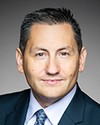
Jamie Schmale Conservative Haliburton—Kawartha Lakes, ON
Thank you, Chair.
I'll continue with my line of questioning here. I want to go back to the diesel fuel issue and how you're trying to wean communities off diesel fuel. The goal is seven million litres by 2030. In the four years covering 2022 to 2026, your department has weaned off only about a million litres of diesel fuel—970,000, to be exact—according to your departmental plan. How do you reasonably expect to achieve the goal of seven million in the same four-year period?
Deputy Minister, Department of Crown-Indigenous Relations and Northern Affairs
The departmental plan shows an annual amount, but it's cumulative since the target was set. It started in 2020-21. That's why the minister was saying that it's not.... The amount you're citing, let's say for 2024-25, would be 1,800,000 litres, but that's in addition to all the litres that have been avoided over the time period starting in 2020. It's cumulative.
Conservative
Jamie Schmale Conservative Haliburton—Kawartha Lakes, ON
Okay. Thank you for clarifying.
At the same time, the amount of diesel fuel is still substantial. How do you expect to offset hitting that target of seven million litres while not driving up the cost for the people who use it?
Deputy Minister, Department of Crown-Indigenous Relations and Northern Affairs
We're cumulatively now at the 6.7-million mark.
I'll turn it over to Georgina. She can give you some specifics on the strategies.
Assistant Deputy Minister, Northern Affairs, Department of Crown-Indigenous Relations and Northern Affairs
What I would say is that this precise target of offsetting diesel is really connected to the northern responsible energy approach for community heat and electricity program. That program is really designed to be a community-driven capacity-building program. Really, the objective of that program is to build, at the community level, capacity feasibility and implementation of renewable energy sources. So far we have invested in 288 projects since the program began.
Earlier on, in our measurement of offsetting diesel, the numbers were not as high as they are today. The reason for this is that it takes time to build that capacity at the community level. Projects needed to be built. Now that they're built, we saw the range of 1.8 million to 2.1 million last year of offset diesel. That will continue to grow as more communities move through the feasibility phases and implement projects.
Conservative
Jamie Schmale Conservative Haliburton—Kawartha Lakes, ON
Concerning those 288 projects you just mentioned, what was spent on them? What was the number?