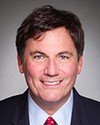
Evidence of meeting #4 for International Trade in the 45th Parliament, 1st session. (The original version is on Parliament’s site, as are the minutes.) The winning word was agreement.

A video is available from Parliament.

On the agenda

Members speaking

Before the committee

Dominic LeBlanc  Minister responsible for Canada-U.S. Trade, Intergovernmental Affairs and One Canadian Economy
Maninder Sidhu  Minister of International Trade
Moen  Associate Assistant Deputy Minister, Trade Policy and Negotiations, Department of Foreign Affairs, Trade and Development
McDonald  Director General, North America Trade Policy Bureau, Department of Foreign Affairs, Trade and Development
Hutchison  Director General, Trade Strategy Bureau, Department of Foreign Affairs, Trade and Development

Maninder Sidhu Liberal Brampton East, ON

The EU just signed a trade agreement with Mercosur, and you know how the French are with their agricultural sector. There are active negotiations in terms of what we will stand up for, and we will always protect Canadian workers and the agricultural sector. This unique opportunity that we're in.... Mercosur is a trading bloc of over 250 million potential consumers, a huge trading bloc and a huge world of opportunities that we must unlock, but not at the expense of our agricultural sector. We will always stand up for our workers, and we will always stand up for supply-managed sectors as well.

Simon-Pierre Savard-Tremblay Bloc Saint-Hyacinthe—Bagot—Acton, QC

I hear you, and I'd like to thank you for your commitment.

Mr. LeBlanc, I imagine I don't have much time left, but the chair will be able to cut me off fairly quickly, knowing her.

My question is about CUSMA. It's unclear whether there will be partial or total renegotiations, all of that is very piecemeal. I heard the calls from my colleagues, both Liberal and Conservative, who told you that the committee wanted to work with you. I'll say it again, and we would also like you to work with us.

Can we expect some transparency on your part? Is there a time in your schedule when we, as elected officials, can find out what your priorities are for a possible review or renegotiation of the agreement? By that I mean what you'll push to the fore, the sectors that will be on the table, and so on.

Dominic LeBlanc Liberal Beauséjour, NB

Mr. Savard-Tremblay, the answer to your question is yes. I think an all-party approach helps Canada in these circumstances. As I said, I appreciate my colleagues' support and the sincerity of their offer. I won't say it again, since we don't have time.

We're preparing Canada's position, its various options, including consultations with the provinces and territories. As you know, I'm also the Minister of Intergovernmental Affairs, so I often talk to the provincial premiers and certain ministers, such as Minister Simon Jolin‑Barrette, from Quebec. We're in the process of coordinating the consultations and digging deeper. I'm sure there will be times when I can reappear before the committee to publicly share what was heard during those consultations and to present the Government of Canada's priorities. That's always a bit tricky, but we'll no doubt find a way to do it. I look forward to working with your chair on that.

I'm venturing a bit, but this meeting is open and public. Trade negotiation experts tell me that public negotiation is rarely—and I won't say never—to a country's advantage. However, if we have parliamentarians' support, and we can have honest and open discussions, I'm prepared to find the mechanisms to hold more of these discussions.

The Chair Liberal Judy Sgro

Thank you very much.

We'll move on to Mr. McKenzie, please.

Simon-Pierre Savard-Tremblay Bloc Saint-Hyacinthe—Bagot—Acton, QC

If you absolutely have to tell us some information, we can always ask for an in camera meeting.

Dominic LeBlanc Liberal Beauséjour, NB

Exactly. That's what I was thinking. That can also be done informally.

The Chair Liberal Judy Sgro

Mr. McKenzie, you have the floor for five minutes.

4:15 p.m.

Conservative

David McKenzie Conservative Calgary Signal Hill, AB

Thank you, Madam Chair.

My first question is for Minister LeBlanc.

I echo those in the room who have expressed their appreciation for your time today.

I have to believe that there are voices in the United States—and many of them—who are expressing their displeasure with the direction that the U.S. administration has taken with respect to dismantling the rules-based structure that we have had. Are these voices reaching you? Are you reaching them? Are they coalescing to oppose the depth of tariffs in particular that is being imposed on us?

Dominic LeBlanc Liberal Beauséjour, NB

Mr. McKenzie, thank you for the question and for the comments.

I hope so. Your question is a very good one, and you're right. We see, publicly and privately, legislators, including senior members of the Republican leadership. You can think of border states. You can think of certain governors whom I've had a chance to talk to. However, to your point, American business leaders, organizations that represent American businesses—as significant as the U.S. Chamber of Commerce and sectoral organizations—and large American corporations have spoken out publicly and privately to the administration.

Our ambassador, Kirsten Hillman, does terrific work in Washington. She has a depth of contacts and a depth of a network with business leaders, big and small, in the United States. She updates us regularly on those conversations. They are, in their own economic interest, telling members of the administration.... I imagine—they tell us—they say it privately to them. Many of them say it publicly. I've thought for a long time, Mr. McKenzie, that this will be one of the most effective ways to have the American administration adjust the course. Whether it's because of the impact on the cost of living for Americans or because of the impact on the markets or on sectors of the economy where President Trump has indicated a priority, I think that we should.... You asked whether we are looking for and engaging with those allies. The answer is yes. Some will say things privately to their administration, their government, and some will say things publicly, but it's all value added to trying to get to an agreement that's in the interests of both economies.

David McKenzie Conservative Calgary Signal Hill, AB

Thank you very much.

I represent the riding of Calgary Signal Hill in the delightful province of Alberta. I'm not going to compete with my friends about which province is better or which part of it. Alberta is a major energy exporter of both crude oil and natural gas to the United States. Can you give assurances that energy will not be a bargaining chip in future negotiations?

That might be a question for Minister Sidhu as well.

Dominic LeBlanc Liberal Beauséjour, NB

I totally recognize the importance of the Alberta economy, the energy sector in your province. It's critical to the economic security of Canadians. There are an awful lot of people from the region I represent in Parliament who earn a living there, and some travel back and forth. I often see them on the planes to Moncton. I totally accept the importance of that sector for the economy of the country, the whole country. You're lucky enough that it's in your province, but the benefits are shared across the country.

The Prime Minister and I have been clear in our conversations with the Americans. We said at the beginning, and we repeated it publicly, that we don't start a conversation by saying that a particular sector, a particular region, cannot contribute to a solution that puts the Canadian economy in a better place. However, one of the discussions with the Americans that makes me hopeful that we can make progress is precisely on the energy security that the Americans are seeking, and they talk to us about all kinds of examples from your province and other provinces, such as natural gas.

There is an active discussion around energy collaboration with the United States. President Trump talks about “energy dominance”. In all those circumstances, Canada can be a constructive partner for the United States, and I am encouraged by those conversations. It's hard to imagine a scenario where it would become anything other than an advantage to impressing on the American administration our desire to collaborate with them on things as important as their energy security. I have had this conversation with your premier, who has also been very active and constructive in her engagements with the American administration and with senior members of the administration as well.

I'm hoping that all of that comes together to give us a better negotiation position across the Canadian economy. It's very much an advantage, as opposed to.... It's by no means a sword. It's a very positive shield.

The Chair Liberal Judy Sgro

Thank you very much.

Madame Lapointe, you have five minutes, please.

Linda Lapointe Liberal Rivière-des-Mille-Îles, QC

Thank you very much, Madam Chair.

Welcome, Ministers.

I'd also like to welcome the people who support team Canada. It's very kind of you to be here.

I'm very pleased to be a member of the Standing Committee on International Trade. I used to sit on the committee from 2016 to 2018. I was there when we signed the Canada-European Union Comprehensive Economic and Trade Agreement, the Comprehensive and Progressive Agreement for Trans-Pacific Partnership and the Canada-United States-Mexico Agreement.

Mr. LeBlanc, there's been a lot of talk about defence and the investments that the government can make. You've been to my region, in the Lower Laurentians. It has a major aerospace industry, but it also has a transportation industry.

I'd like to know how we can ensure that our defence investments lead to benefits. Yes, there's the United States, but if we invest so much, how can we ensure benefits in our markets?

That's very important in the Montreal area.

Dominic LeBlanc Liberal Beauséjour, NB

You're absolutely right. I've had the privilege of visiting some businesses and meeting with you entrepreneurs in your region. I am well aware that Quebec, like other regions of Canada, has a capacity for innovation in aerospace, in the shipbuilding sector, and so on. I was very encouraged by the meeting I had with Premier Legault. He was very keen to work with us to further the benefits of a defence industrial strategy or policy.

We made a commitment to increase spending for the Canadian Armed Forces, and we have done that. The important thing is to maximize the benefits for businesses and workers in Canada over the long term.

That said, we can do both. I'm not an expert in defence procurement, but some very specific products or systems will probably always be easier to access through certain suppliers in the United States or other European partners. However, we also have a tremendous opportunity to develop long-term industries in Canada.

Our discussions indicate that the Americans are happy with our increased spending on the armed forces. They are always talking to us about American industries that could partner with Canada. We also talk to them about an important sector for us, a domestic sector in Quebec and everywhere else in Canada, that should improve co-operation between our two countries when it comes to defence industries. It will also help strengthen co-operation with other partners that the Prime Minister met with in Europe.

Perhaps Mr. Sidhu could add to that.

Maninder Sidhu Liberal Brampton East, ON

It's a very important sector. Aerospace in Quebec is huge. I sat down to talk about opportunities in defence with Bombardier and with MDA Space. In about 10 days, I'll be taking a delegation to Italy. Many of those delegates will be coming from Quebec—companies based in Quebec—to showcase what we have to offer. Italy is an important partner.

When you look at defence spending overall, as countries hit their 2% targets for NATO, what role do Canadian companies have to play in that? There are going to be procurement opportunities worth over $1 trillion, which is a huge market, so we need to be seen there. At the CANSEC defence trade show here in Ottawa, there were over 50 international delegations looking at Canadian possibilities and Canadian innovation. There is a lot of work to be done there, and you see the Prime Minister out there showcasing some of the opportunities and showcasing the innovation that Canada has.

Coming back to it, I think it's about jobs on the ground. If you sell a bunch of planes, what does that mean for folks in Quebec? What does that mean for the opportunities it could present in other parts of the country? MDA Space is in Brampton. That's why I want to highlight them. They do a lot of work with satellites and with dual-use defence capabilities.

How are we utilizing our in-house partners, like EDC? How are they supporting the defence sector? I have been giving strategic direction to EDC that we need to support our defence sector and asking about what we are doing internally, as a government, to help with some of the procurement opportunities here in Canada.

We know that the defence industry won't be sustainable without exports. Within our defence industrial strategy, we'll have a defence export strategy as well to make sure that we're out there promoting our defence industry, our aerospace and some of the dual use, because we know there are going to be a lot of opportunities for a lot of workers in communities across Canada.

The Chair Liberal Judy Sgro

Thank you very much.

Thank you to the ministers for that information. I am sure you will be back to spend time with us over the next while.

Dominic LeBlanc Liberal Beauséjour, NB

We look forward to it, Madam Chair. Thank you for the invitation.

The Chair Liberal Judy Sgro

Thank you very much.

We'll suspend for a minute so that the witnesses can come to the table, please.

The Chair Liberal Judy Sgro

I have already acknowledged some of the folks who are here, but I want to welcome Pierre Marier, director general, market access and trade controls bureau; and Lynn McDonald, director general, North America trade policy bureau. Welcome to our committee. Thank you so much for getting yourselves in place quickly. The members always have a lot of questions, and we try to maximize every minute we have at our committee.

Does anyone want to make opening remarks? I'm not seeing any opening remarks.

We will open the floor for questions from the members. I will start with Mr. Groleau, who is online.

4:30 p.m.

Conservative

Jason Groleau Conservative Beauce, QC

Thank you, Madam Chair.

Good afternoon, officials. Thank you for joining us and for giving us your time.

We had Minister LeBlanc and Minister Sidhu here in the last hour. They talked to us about the importance of creating new opportunities and new markets, which is in itself a very noble goal.

My region, Beauce, is on the U.S. border. Our companies have been doing business with the Americans for generations. Exports to the United States account for 50% of many of these companies' activities. There's a lot of talk about creating new markets in the future. However, we now have the issue of U.S. tariffs.

You're our trade negotiations strategists for Canada, if I'm not mistaken. My question is simple: What is the status of the negotiations on U.S. tariffs on steel and softwood lumber?

Martin Moen Associate Assistant Deputy Minister, Trade Policy and Negotiations, Department of Foreign Affairs, Trade and Development

Thank you for your question.

It's definitely a very important question right now. We are very much aware, of course, of the current situation for many Canadian exporters—certainly for the softwood lumber industry, steel and aluminum, and the auto sector, but also for many more. We've already heard about other issues, such as de minimis, etc. There are many issues. We're very aware that these issues are pressing and that diversification is an option, of course, but it's not an immediate option for many industries, so we are working very hard in all of these areas to see what is possible, to see where the solutions might be found.

We are also looking at the question of predictability over the longer term, because for many, as was mentioned earlier, it is not simply a question of their access today to the United States or the situation today. It's a question of how comfortable they are about the longer term and how comfortable they are about making investments. We are very much aware of that.

That's why, as we look to the review of CUSMA, which has provided some significant access to many Canadian exporters and therefore has alleviated the situation somewhat—not, of course, for the sectors that are directly affected—

4:35 p.m.

Conservative

Jason Groleau Conservative Beauce, QC

With all due respect, sir, my question is not about the Canada-United States-Mexico Agreement, or CUSMA.

Right now, very significant tariffs are being applied. Our businesses are currently struggling because of this context. I'm talking about tariffs.

I asked you the following question: What is the status of the negotiations? Are we making any progress? Are negotiations at a standstill? My questions are simple.

4:35 p.m.

Associate Assistant Deputy Minister, Trade Policy and Negotiations, Department of Foreign Affairs, Trade and Development

Martin Moen

I can say that the discussions are active and ongoing. As the minister said earlier, I don't want to say that we're going to have a result by a certain date or that it's going to look like this or that, but I can say that we are active in our engagement with the United States to try to find solutions. This is something we're working on now on all fronts. We're very much aware of these sectoral tariffs and their very negative impact on Canadian exporters.

4:35 p.m.

Conservative

Jason Groleau Conservative Beauce, QC

Thank you.

Do you think our strategy is sound? We are giving up on all the tariffs and all the measures against the United States. We visit them; you negotiate. We remove tariffs and, in turn, they add more tariffs against our industries two days later.

What is the strategy behind that? From the outside looking in, it's not encouraging.

4:35 p.m.

Associate Assistant Deputy Minister, Trade Policy and Negotiations, Department of Foreign Affairs, Trade and Development

Martin Moen

Our approach right now is to work with the United States and to engage with them to ensure that we have a level of engagement, a level of openness in our discussions and an environment that is conducive to moving forward. We're not backing off this effort, but the effort is more than just having a negotiation over a particular tariff. The effort has to be broader than that. If we're going to succeed at all in moving forward, we're also going to have to make sure, and we are, that the message gets out—through business, local government, state government, Congress, and wherever we can—about the harm that these kinds of tariffs have on a mutually beneficial relationship, the harm they have to Americans and why, for example, applying duties to deal with national security issues to Canada is actually not only unjustified, which it is, but also causing harm to the U.S.

Our view is that this effort is also very important. It's part of what we are doing. Our hope is that this message will get through to the administration, which we believe it is, and that we can make the case that our situation in Canada in terms of national security is not the same as with the rest of the world and there are solutions that could be applied to Canada that would be beneficial to both countries. That, to us, is a really important part of our efforts. I can assure you that those efforts are also continuing and are also very intensive.

It's not simply a question of negotiating over a particular tariff issue, as important as those may be. It has to be a broader effort across the board to get the message out that Canada is an excellent security partner. Depending on Canada for exports of steel, for example, is in your security interest. It's better to do that than otherwise. When you get to the issue of softwood lumber, we have to make the case, and we have made the case, that when we look at affordability of housing, softwood lumber from Canada is an important part of that reality.

I think this combination of efforts is the way we're going to have to move forward. It is something that we are working on, on all fronts.