
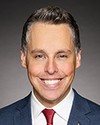
Evidence of meeting #7 for Medical Assistance in Dying in the 45th Parliament, 1st session. (The original version is on Parliament’s site, as are the minutes.) The winning word was euthanasia.

A recording is available from Parliament.

On the agenda

Members speaking

Before the committee

Jim van Os  Professor of Psychiatry, As an Individual
Wilbert van Rooij  Psychiatrist, As an Individual
Sisco van Veen  Psychiatrist, As an Individual
Joint Clerk of the Committee  Jean-François Lafleur
Pierre Dalphond  Senator, Quebec (De Lorimier), PSG
Yonah Martin  Senator, British Columbia, C
Rosemary Moodie  Senator, Ontario, ISG
Flordeliz  Gigi) Osler (Senator, Manitoba, CSG
Kristopher Wells  Senator, Alberta, PSG
Duncan  As an Individual
Long  Chief Executive Officer, Dying with Dignity Canada
Schadenberg  Executive Director, Euthanasia Prevention Coalition

Peter Schiefke Liberal Vaudreuil, QC

Thank you very much, Ms. Long.

The next question I have is for you, Mr. Schadenberg. Thank you for being here, sir.

I co-chair the all-party cancer caucus with my Conservative colleague, Dan Albas. We've both had our own personal experiences with cancer. I fully support those who are going through significant pain and have been given a diagnosis that they're near end of life. Being able to end that at the time of their choosing is something I wholeheartedly support.

What would be the argument you would give to somebody who asks that? By denying those whose sole illness is mental illness the right to access medical assistance in dying, wouldn't that be denying them their autonomy and their freedom to make the choices that they deem necessary for themselves? This is something that my colleague Madam DeBellefeuille pointed out. What would your argument be to those people who made that statement?


8:10 p.m.

Executive Director, Euthanasia Prevention Coalition

Alexander Schadenberg

I don't consider them to be identical statements, because you were talking about cancer pain, and that's a completely different thing from psychological pain. We're hearing psychiatrists say to us very clearly that to assess a grievous and irremediable medical condition for psychiatric conditions would assume that there is a clear consensus or a clear way to say that this person is not going to get better, and they say that's not possible.

We're talking about a diagnosis that is not able to be confirmed, yet the question is, can we go ahead with MAID euthanasia in those cases? If it were a physical condition, and we said that case is clearly not irremediable, they are not dying and they are not irremediable, then they would say, “We can't accept you for MAID”, yet we're saying with mental health, “Oh, well, we can't determine that, but we might go forward anyway.”

The Joint Chair Liberal Marcus Powlowski

Thank you.

Mrs. DeBellefeuille, you have the floor for five minutes.

Claude DeBellefeuille Bloc Beauharnois—Salaberry—Soulanges—Huntingdon, QC

Thank you, Mr. Chair.

Ms. Long, we know that the Quebec minister of health wrote a letter to the committee. Mr. Schiefke spoke about it. She says that the province isn't necessarily ready to expand access to medical assistance in dying. However, she also isn't asking for the removal of the possibility, under the legislation, of requesting medical assistance in dying. I think that we need to keep doing research. Perhaps this small nuance in Quebec's position wasn't emphasized. We also know that Nova Scotia told us that it was ready.

In your remarks, which touched me deeply, you said the following. Why deny medical assistance in dying to a small number of people who are suffering from a mental illness and who could have access to it? You said “a small number”. You said that the criteria recommended by the experts are fairly restrictive.

Do you think that this will apply to a small number of people?

8:15 p.m.

Chief Executive Officer, Dying with Dignity Canada

Helen Long

Yes. I think Dr. van Veen spoke to this. It would suggest a small number.

We always talk about MAID in the context of case-by-case assessments. Clinicians have to practise within their scope and expertise. Individuals in this situation have to consult with psychiatrists or psychologists, those who work in the mental health space. They can't provide MAID without that expertise. A full assessment requires that all those eligibility criteria and safeguards are reviewed.

There's also the risk of professional and criminal liability, which is certainly significant. I think this encourages clinicians to do the right work. Canadians are confident in the health care system. They're confident in their clinicians. I know we often speak as if they're running amok, but I think the system is a good system. We have clinicians who are qualified to do the work and have stated so.

Claude DeBellefeuille Bloc Beauharnois—Salaberry—Soulanges—Huntingdon, QC

As you know, we see a great deal of misinformation suggesting that a suicidal person could access medical assistance in dying. However, the expert report states that, if a person is suicidal, they can't access medical assistance in dying because they're in a state of crisis. They need to be in a stable condition. So, regarding the argument that we would be encouraging suicidal people to request medical assistance in dying, I would say that the opposite is actually true. Sometimes, people who have been suffering for many years and who have no other solution choose to end their lives by suicide, or by refusing treatment, continuing to take their medication or seeking help, knowing full well that this will ultimately lead to psychiatric palliative care.

Can you give us some examples of people who, under the current criteria, would be eligible for medical assistance in dying on the basis of a mental illness?

8:15 p.m.

Chief Executive Officer, Dying with Dignity Canada

Helen Long

Certainly. Dr. Gupta spoke to the need for clinicians to assess suicidality and ensure that the person is not in crisis.

I'm thinking about Claire Elyse Brosseau. Many of you will have seen the media today on her recent filing. This is an individual who has 35 years of significant care. She has had access to every treatment she could have wanted. She has worked extensively with multiple psychiatrists. Her psychiatrist supports her decision. That's one individual. John Scully is another. You can see information on his story on our website. Certainly, there are very few of these people. There are, perhaps, one or two others.

We talk to clinicians, psychiatrists in particular, who do this work and who have thought about their patients over the many years. One clinician, for example, said, “In my 40 years, perhaps I've seen four people who may qualify.” There are very few when you look at the numbers. I could provide some numbers related to the calls we get. We are not clinicians. We don't assess for eligibility, but I can certainly tell you that the vast majority of those who call and identify with a mental illness tell us that they either have not been diagnosed or have not received treatment. Those people would never be considered for MAID.

The Joint Chair Liberal Marcus Powlowski

Thank you, Mrs. DeBellefeuille and Ms. Long.

Senator Dalphond, you have the floor for three minutes.

8:15 p.m.

Senator, Quebec (De Lorimier), PSG

Pierre Dalphond

Thank you, Mr. Chair.

Mrs. Duncan, thank you for telling us your story.

You told the story three years ago. If my recollection is good, your mother was a psychiatric nurse.

8:15 p.m.

As an Individual

Alicia Duncan

Yes, she was.

8:15 p.m.

Senator, Quebec (De Lorimier), PSG

Pierre Dalphond

She had a car accident and suffered a concussion. After a battery of tests, she was...suffering from central sensitivity syndrome.

8:15 p.m.

As an Individual

Alicia Duncan

She was never diagnosed formally with central sensitivity syndrome. My mother believed that she had central sensitization syndrome, actually.

8:15 p.m.

Senator, Quebec (De Lorimier), PSG

Pierre Dalphond

She was living with a partner.

8:15 p.m.

As an Individual

Alicia Duncan

She was, yes.

8:15 p.m.

Senator, Quebec (De Lorimier), PSG

Pierre Dalphond

Yes.

You went to court to get an injunction to force her to be hospitalized. You got the injunction—

8:15 p.m.

As an Individual

8:15 p.m.

Senator, Quebec (De Lorimier), PSG

Pierre Dalphond

—and she was in the hospital for two days.

8:15 p.m.

As an Individual

Alicia Duncan

We received a warrant for her apprehension under the Mental Health Act for further assessment. When the MAID appointment was postponed, she attempted suicide. That's when she was sectioned in the psychiatric unit that she used to manage.

May 5th, 2026 / 8:15 p.m.

Senator, Quebec (De Lorimier), PSG

Pierre Dalphond

Then, after a few days, the doctor concluded that she could be released. She went back home and she received MAID at home in the presence of her partner.

8:15 p.m.

As an Individual

Alicia Duncan

That's correct.

8:15 p.m.

Senator, Quebec (De Lorimier), PSG

Pierre Dalphond

The partner said to CTV, “People don't realize the pain she was in.”

That's the full story, just to complete the story.

Thank you very much, Mrs. Duncan.

8:20 p.m.

As an Individual

Alicia Duncan

Yes. We don't deny that she was suffering.

The Joint Chair Liberal Marcus Powlowski

Thank you.

Senator Martin, you have three minutes.

8:20 p.m.

Senator, British Columbia, C

Yonah Martin

Thank you to our witnesses.

This is a question for Mr. Schadenberg.

Some defenders of the current regime argue that the colleges of physicians and surgeons can regulate bad practice. My family has personally experienced some medical errors with my father. He eventually passed away. It was next to impossible for us to follow that up with anything that we knew we could do. It was very difficult.

Based on the cases you have followed, has professional regulation proven to be a meaningful safeguard? I think we need these checks and balances. I'm asking based on the cases you've followed and some you've mentioned today.

8:20 p.m.

Executive Director, Euthanasia Prevention Coalition

Alexander Schadenberg

I want to make two points.

The first point deals with a comment made by the nice lady beside me, and it is that doctors can be prosecuted for this. They're very concerned about this. They have to be very careful.

In fact, when you look at the Criminal Code, it's impossible to do so. The law was written in such a way as to make it impossible, because it says that the doctor or nurse practitioner only has to “be of the opinion” that you fit the eligibility criteria of the law. That's not the only thing in the law which is concerning, but obviously, they simply have to say that they were of the opinion and that's it. It's done.

As for regulatory bodies in the provinces, there have been a few cases that have gone to regulatory bodies, but there have been no significant or any issues. The biggest issue was with a doctor in Ontario. It was a very egregious case. The Ontario college of physicians decided to say that the person cannot be involved in MAID anymore, but nothing else was done. In that case, the person continued to be a physician in every way, shape or form, but they were told they cannot be involved with MAID anymore. That's it.