You're saying—
Evidence of meeting #17 for National Defence in the 45th Parliament, 1st session. (The original version is on Parliament’s site, as are the minutes.) The winning word was million.
A video is available from Parliament.

Evidence of meeting #17 for National Defence in the 45th Parliament, 1st session. (The original version is on Parliament’s site, as are the minutes.) The winning word was million.
A video is available from Parliament.
December 4th, 2025 / 8:25 a.m.
Conservative
Liberal
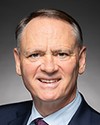
David McGuinty Liberal Ottawa South, ON
I would say as well that the actual pay schedule for pilots has been increased significantly. We're actually in a better position now to be able to compete with commercial airlines.
Conservative

James Bezan Conservative Selkirk—Interlake—Eastman, MB
Are we still, in this fiscal year...? Getting back to the supplementaries, you're saying that we're spending $46.5 billion. How much more do we need to get to 2% before the end of March? At one point, I know, it was around $9.3 billion.
Liberal
David McGuinty Liberal Ottawa South, ON
Yes, we're good. The deputy is assuring me that we're good. We're on our way to fulfilling the 2% expenditures by March 31—
Conservative
James Bezan Conservative Selkirk—Interlake—Eastman, MB
One thing the Department of National Defence hasn't been good at is spending all of the money they've been getting. We've had over $10 billion lapse. Only roughly 10% of that has ever gone back into actual operations and/or capital investments in infrastructure.
How are you going to ensure we hit the 2% and don't fall behind the eight ball?
Liberal
David McGuinty Liberal Ottawa South, ON
We're proceeding line by line, expenditure by expenditure, procurement by procurement. As I said in the House yesterday, almost 38,000 jobs are being created right now in Canada, with 15 major procurements. We're on this and watching it like a hawk. You're right to raise it. We're making sure that we're going to be delivering on time by March 31.
Liberal
Liberal

Viviane LaPointe Liberal Sudbury, ON
Thank you, Chair.
Good morning, Minister. Thank you for joining us here this morning.
Supplementary estimates include additional authorities for ongoing capital projects and infrastructure upgrades across the country. Can you tell this committee how these investments will directly improve quality of life for Canadian Armed Forces members, whether that's through housing, modernized workplaces or equipment renewal? Also, how do these improvements support both recruitment and retention?
Liberal
David McGuinty Liberal Ottawa South, ON
It's hard to know where to start, Ms. Lapointe, in terms of the volume of undertakings right now at DND and CAF. We are busy rebuilding 33 bases. We're busy driving recruitment and retention.
We brought in the largest single pay increase since 1997. It's important for Canadians to remember that armed forces members don't have collective bargaining. They can't go on strike. They're in a chain of command. They have to respond and they have to deliver.
We have to make sure the quality-of-life contributions that we can make as an “employer” are there so that we can recruit and retain. I'll give you an example. We're moving aggressively right now to make sure every base has active and powerful Wi-Fi for all members, something that heretofore has not been present over decades.
If we're going to go in and actively recruit young women and men from different locations in the country and if we want to go get more fighter pilots, as Mr. Bezan was alluding to, we need to make sure we're meeting those folks more than halfway. We need to make sure they have proper housing, which we're investing in, child care, which we're investing in, the electrification of our bases, which we're investing in, water and waste water, which we're investing in, as well as kit, ammunition, rifles, kitchens.... We're investing in all of this.
As the deputy mentioned to me a moment ago, it's line by line and project by project. We're moving 50 balls down the field at the same time.
Liberal
Viviane LaPointe Liberal Sudbury, ON
This committee has been studying and talking about increasing our defence in the Arctic and about modernizing NORAD. We note that these estimates provide additional funding tied to Canada's NORAD modernization commitments. It includes early-warning, command-and-control and surveillance systems.
Can you tell us whether these investments will keep Canada on track to meet our NORAD obligations and strengthen North American, Arctic and continental defence, at a time of rapidly evolving threats?
Liberal
David McGuinty Liberal Ottawa South, ON
We certainly plan on it. Two years ago, we launched a $38-billion NORAD modernization effort. It is well under way. We all know why. Strategic competition, climate change and new emerging technologies are driving new security challenges in the region.
If Canada is going to assert its sovereignty, it has to live its sovereignty. We're working with our Inuit. We're working with indigenous peoples. We're working with our forward-deployed folks. We're looking at setting up a series of NOSHs, northern operational support hubs, across the north. We are, of course, putting in place an over-the-horizon radar system, a $6.4-billion system, in conjunction with our Australian allies to make sure that Canada—and North America as well—is well prepared to see what might be coming at it.
This, of course, links into our discussions on integrated air and missile defence with the United States and NORAD. All of these things are aligning in a way now that we are better protecting Canada's security and sovereignty, and we're doing it conjointly with the only binational command in the world, which is NORAD.
Liberal
Viviane LaPointe Liberal Sudbury, ON
The estimates include significant investments in procurement, engineering support and sustainment activities that rely heavily on Canadian suppliers. Can you tell us how these new authorities help us build a stronger, more resilient defence industrial base?
Also, what steps are being taken to ensure that regions...and I'm going to speak specifically to northern Ontario, where we have strengths in nickel and battery materials, advanced fabrication and mining technology. How can they participate in these opportunities?
Liberal
David McGuinty Liberal Ottawa South, ON
On the northern Ontario front, I was just in North Bay, visiting our base there, looking at the infrastructure requirements there, looking at the airport and beyond. It turns out that Canada is very blessed. We have an awful lot of critical minerals. We have 10 or 11 of the required NATO critical minerals in abundance. This is something that Canada can and will use to its advantage. It is stockpiling.
We are talking to the United States and other international and NATO partners. Northern Ontario and other parts of the country are well positioned to not only exploit but also convert, adapt and manufacture using critical minerals. We know that they will be important inputs.
The time is now. This opportunity we have in front of us is, as the Prime Minister calls it, a “hinge” moment. The time is now for us to give rise to a stronger, more diverse industrial base, drawing on defence. That's exactly what we're doing with the defence industrial strategy, which will be launched shortly. It will indicate where our sovereign capabilities are, what they would look like and what our needs are. In short—for Canadians who might be watching—what is it that we need, what is it that we can produce, and what is it that we can sell and share with others?
We're going to give rise to a much bigger energy in that sector, and we are convinced that it will go beyond what we're already doing.
I'll give you the snapshot I mentioned in the House yesterday: Fifteen major procurements are already under way. That's over 38,000 jobs. Those are families, parents and young people looking for opportunities for the future, and there's more to come.
Liberal
Bloc

Simon-Pierre Savard-Tremblay Bloc Saint-Hyacinthe—Bagot—Acton, QC
Thank you, Mr. Chair.
I want to thank the minister and all of the witnesses for being here today.
Minister, we know that Canada is going to invest $17.9 billion over five years in its military capabilities, including domestic ammunition production. That is very specific area. We also know that a large number of contracts were awarded to American companies over the past year. That was documented in an article by La Presse. It was found that these were either privately awarded contracts or contracts awarded through tendering processes that were rigged so that only American companies could bid on them.
Do you commit to ensuring that the investments will create sustainable industrial capacity in Quebec and the rest of Canada and that they will not foster dependence on American supply chains?
Liberal
David McGuinty Liberal Ottawa South, ON
You are absolutely right, Mr. Savard‑Tremblay. That is exactly what we are working toward.
We have already begun this work. For example, IMT Precision now wants to manufacture 5,000 shells per month, an increase of 2,000 shells per month compared to December 2023, so this field is growing rapidly. We know that we need to improve in this regard and that Quebec has an enormous capacity. We want to ensure our military sovereignty.
Bloc
Simon-Pierre Savard-Tremblay Bloc Saint-Hyacinthe—Bagot—Acton, QC
How are we going to achieve that? It is easy to say that we have the capacity, but what strategy will the government use to ensure that we are not dependent on the American supply chain?
Liberal
David McGuinty Liberal Ottawa South, ON
The supplementary estimates (B) sets out $59.4 million to expand our capacity to produce critical ammunition here in Canada. We are working with several companies. Once we launch our defence industrial strategy, we will see a significant increase in our capabilities. We are pursuing this goal together because we recognize that investing in munitions production here at home is essential to our sovereignty.
Bloc
Simon-Pierre Savard-Tremblay Bloc Saint-Hyacinthe—Bagot—Acton, QC
When you talk about expanding capacity, are you talking about subsidies to expand manufacturing plants or to increase production, for example? How will this work?
Liberal
David McGuinty Liberal Ottawa South, ON
It will be a mix of investments that will help people expand their production capacity. We will also be investing in research. We will create top-secret research centres where people will meet to help the Canadian Armed Forces with production and research. This will create a demand for munitions manufacturing. We want to create a whole ecosystem, and we will address this much more directly when we launch our strategy.
Bloc
Simon-Pierre Savard-Tremblay Bloc Saint-Hyacinthe—Bagot—Acton, QC
The Department of National Defence is requesting $1.1 billion in the budget, including large amounts for F-35s and destroyers. I know that the F-35s have been the subject of debate for a long time.
Why are these needs not included in the main estimates?
Liberal
David McGuinty Liberal Ottawa South, ON
I would like to let one of the experts at the table answer that question. Perhaps the deputy minister or the chief financial officer can answer that.
Jonathan Moor Chief Financial Officer, Department of National Defence
I thank the member for his question.
The supplementary estimates give us additional funding over and above the main estimates. In this case, this is payment—
Bloc