Oh, oh!
Evidence of meeting #23 for National Defence in the 45th Parliament, 1st session. (The original version is on Parliament’s site, as are the minutes.) The winning word was clause.
A recording is available from Parliament.

Evidence of meeting #23 for National Defence in the 45th Parliament, 1st session. (The original version is on Parliament’s site, as are the minutes.) The winning word was clause.
A recording is available from Parliament.
Liberal
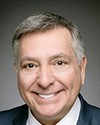
The Chair Liberal Charles Sousa
I'll surprise you on this one, Mr. Bezan.
Mr. Bezan has moved CPC-17. Do you wish to speak to it?
Conservative

James Bezan Conservative Selkirk—Interlake—Eastman, MB
Again, it's about putting in a timeline to make sure that these main positions are appointed in an appropriate amount of time. This is for the director of defence counsel services.
Liberal

Chris Malette Liberal Bay of Quinte, ON
For the sake of continuity, we'll do 120 if it's agreeable, as with the previous amendment.
(Subamendment agreed to [See Minutes of Proceedings])
(Amendment as amended agreed to [See Minutes of Proceedings])
Conservative
Conservative
Liberal
The Chair Liberal Charles Sousa
We're trying to accommodate the pressures among the members who have other commitments from—
Conservative
James Bezan Conservative Selkirk—Interlake—Eastman, MB
On clause 40, we are replacing lines 26 and 27 on page 29. Replacing them makes sure that the appointment of the director of defence counsel services has the same type of remedial action as what we would see with the director of military prosecutions, which is the same process that exists for the director of public prosecutions in the DPP Act. This would allow the Governor in Council, through the House of Commons, to remove them if they're not fulfilling their mandate.
Liberal
Chris Malette Liberal Bay of Quinte, ON
Just for clarification, does this include “with the support of a resolution of the House of Commons to that effect”?
Liberal
The Chair Liberal Charles Sousa
Is there further debate?
Shall CPC-19 carry?
(Amendment agreed to [See Minutes of Proceedings])
(Clause 40 agreed to)
Liberal
Conservative
Conservative
James Bezan Conservative Selkirk—Interlake—Eastman, MB
This one is about making sure that people who are being tried in both the civilian and military systems are treated equitably. We wanted to ensure this was included.
Major-General Holman, the judge advocate general, said, “This is an issue that Justice Arbour recognized herself. What she also recognized is that concurrent jurisdiction, particularly over Criminal Code offences, has always existed in Canada, with the exception of murder, manslaughter and child abduction.”
In the Arbour report, we see, “The CAF may want to examine whether it wishes to provide financial assistance for all its members facing charges outside the military system, not just those who will now be tried in civilian courts.”
The director of defence counsel services, Colonel Ahmed, said, “from the point of view of the director of defence counsel services...[this is] not problematic, [but] it is the practical impact that is significant. CAF members who are charged would no longer be eligible for legal representation through our offices. They'll have to represent themselves or personally fund their defence, assuming they can afford it.”
This is about making sure that there is the equitable treatment of the accused and services provided for the victim.
Liberal
Chris Malette Liberal Bay of Quinte, ON
I recall Major-General Holman's testimony. I'm not sure I interpreted it that way.
To the witnesses, would this create in some way a two-tiered system? In your estimation, how might that be, or could you give us an example?
Col Geneviève Lortie
For sexual offences under the Criminal Code that would be dealt with under the civilian justice system, if I understand correctly, the DDCS could provide services, subject to the regulations provided by the Governor in Council. That would create two tiers, considering that there are plenty of other Criminal Code offences for which a military member could be charged in the civilian system that they're not entitled....
It's already the way it's happening. There are already cases that proceed, even for the types of offences that are covered. A simple assault charge would not be covered, so there are some that would be covered and some that would not be covered.
Liberal
Chris Malette Liberal Bay of Quinte, ON
I have a question for Colonel MacMillan, if I may.
In CAF's view, what, in your estimation, would be the impact on the effectiveness of that form of discipline?
LCol Matt MacMillan
As Colonel Lortie said, it would create a two-tiered system. A member who was accused of having committed a sexual assault would be provided defence counsel, subject to regulations, through the DDCS.
As an example, a good Samaritan who defends someone in town and is subject to a charge of assault would say either, “I was acting in self-defence” or “I was protecting someone else”. They would not...as an example. In that instance, you get into a morale issue within the forces: Why are we providing defence services to someone charged with a Criminal Code sexual offence and we're not providing anyone else that same service?
Effectively, whether or not the DDCS would provide counsel is a question, but it would be somebody who was called to the bar in whatever province the matter would be tried in. That may or may not be somebody in the DDCS.