Thank you, Mr. Chair.
Mr. Balsillie, what measurable milestones and accountability mechanisms would you propose to ensure that investments in critical minerals actually translate into sovereign IP and military readiness?

Evidence of meeting #26 for National Defence in the 45th Parliament, 1st session. (The original version is on Parliament’s site, as are the minutes.) The winning word was mineral.
A recording is available from Parliament.
Conservative

Cheryl Gallant Conservative Algonquin—Renfrew—Pembroke, ON
Thank you, Mr. Chair.
Mr. Balsillie, what measurable milestones and accountability mechanisms would you propose to ensure that investments in critical minerals actually translate into sovereign IP and military readiness?
Founder, Centre for International Governance Innovation, As an Individual
This is a technical realm. One of the expressions I use is that in the tangible economy, if you get 90% right, you get 90% of the benefits, and in the intangible economy, if you get 90% right, you get 10% of the benefits. It's very easy to leak out. The answer that other nations have had for decades is to create institutions that oversee that.
For instance, Germany has the Fraunhofer institutes, with 30,000 employees, 80 research centres and one centralized manager of all the IP. You need to have it be very strategic and very structural. It's the same for your data, because data has economies of scale and scope.
The only way to do this is some kind of Crown corporation. Would you trust a private corporation with your health data? You have to govern it so that it has to be democratically accountable.
Canada was built on institutions. Then when it's right, we privatize them. We have to put that thinking cap back on in this changed world, with institutions for IP, institutions for data, and more strategic participation in the rules around the globe. Again, we're spending all the money; we're just not getting the outcomes.
You need a central locus of expertise that starts to implement this. All of those things have been absent for decades, while the rest of the world has cranked up their expertise in them.
Conservative
Cheryl Gallant Conservative Algonquin—Renfrew—Pembroke, ON
Given that agentic AI and foreign-controlled digital infrastructure are amplifying our risk to command-and-control systems and are processing our own critical minerals to power these technologies, what urgent steps should the Department of National Defence and CSE take to partner with and procure from Canadian innovators instead of foreign providers?
Founder, Centre for International Governance Innovation, As an Individual
These agentic systems are very threatening because they can be very clever in cyber-breaches, so that's a place to up our game, but we have pretty good cyber expertise in Canada. I think that's a long suit.
The more important thing you have to understand is that when it comes to AI, there's a thin line between strip mining and participating in this factor of productivity. The most important thing is that you can't separate the inference application, the data and the compute. They all blend as one now. If that's not under sovereign democratic control, like our military, police forces, hospitals and water treatment plants, then it tends to go to strip mining. It's an institutional approach for AI data.
You can allow companies to use it, just as you allow companies to use our Quebec hydro no problem, but it's a utility. Our pensions are a utility. That's the kind of thing we need to do, and then you'd put in systemic rules so that it doesn't leak out. However, right now, our farms are run by John Deere and International Harvester. Our payments and tokenization are run abroad. All of our AI systems are run abroad, so we're very vulnerable to leverage.
Conservative
Cheryl Gallant Conservative Algonquin—Renfrew—Pembroke, ON
How far off is the world from the next disruptive communication innovation, and which resources and assets should Canada prepare to have ready upon its arrival?
Founder, Centre for International Governance Innovation, As an Individual
I think we're getting it on all fronts right now. One thing I alerted you to, which surprised you, was the amount of tokenization that's going on. Then you get Jared Kushner and Witkoff, whose sons started World Liberty, meeting with Putin and the head of the sovereign fund on rare minerals. The Trumps just tokenized real estate two weeks ago in the Middle East. They're going to be tokenizing rare minerals. Do we control our own “sovereign chain”, as it's called, in tokenization? Farms are going to get tokenized. It's the new rails. It's an opportunity, so I would say that tokenization is big.
The leverage of infrastructure in AI and cloud, for who gets control of the money, is big. I'm very excited for Canada because I'm an entrepreneur, so I'm always optimistic. We have a bit of reorientation and a bit of expertise. You will see very dramatic differences in a very short period of time. This is all fixable.
Mine is an optimistic message. If we didn't have a solution, I don't think I'd come to testify, because it would just be saddening. We have all the ability to reorient here, and that's why I said you're at this nexus. Put the economy into it and really push this stuff.
Liberal
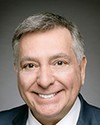
The Chair Liberal Charles Sousa
Thank you, Mr. Balsillie.
The time is coming to an end.
Mr. Watchorn and Mr. Savard-Tremblay, you can have one question each.
Liberal

Tim Watchorn Liberal Les Pays-d'en-Haut, QC
I'd like to talk with Mr. Boyd about refining and processing. Everybody is saying we have to stop extracting minerals and sending them somewhere else for processing. How do we create an environment here in Canada so that companies can process? Is there something we can do in the short term or the medium term?
Chair, Board of Directors, Agnico Eagle Mines Limited
It's going to take some time. I think the quick wins are potentially looking at older operations that already have permits in place and have tailings facilities that can be reopened. Those are the quick wins.
It's not just gold. We can see the federal government's investment in the Thompson area in Manitoba for nickel. If you look at Gaspé copper as well, there is a potential to reopen. You have to start there.
Processing is about the economics, really. We built this country based on processing facilities being next to big base metal mines. You have to find the mines and the big deposits, and then you have to be willing, in this environment, to put in processing facilities. I can tell you that the environmental standards and the ability to build these things in a more environmentally friendly way are far superior than they were four or five decades ago.
Liberal
Bloc
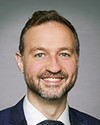
Simon-Pierre Savard-Tremblay Bloc Saint-Hyacinthe—Bagot—Acton, QC
Thank you, Mr. Chair.
My question is a broad one. We don't have time for a full round, so this question isn't for anyone in particular. Whoever puts their hand up first can answer it.
Should we make this discussion a key component of the Canada—United States—Mexico Agreement negotiations, or would it be better not to try too hard to get this down on paper, given the, at times, chaotic relationship with the United States?
Whoever wants to answer the question is welcome to do so.
Lawyer, National program Co-Lead, MiningWatch Canada
Regardless of what ends up in the next agreement with the United States, it's vital to include measures to ensure that any action related to so-called critical minerals or other minerals is carried out in a manner that respects indigenous rights and everything Canada wants to achieve. Canada wants to construct an image, but it also wants to take concrete action for national defence, national security, the economy and the environment. That must be present in any agreement with any foreign entity.
Founder, Centre for International Governance Innovation, As an Individual
In that realm, the U.S., by law, has had 26 advisory committees for the last 50 years, with 700 experts, that insert these structures. Canada has nothing. If you search for USTR advisory committees, the first sentence will literally restate what I have said. If you search for Canada international trade advisory committees, there's nothing.
If you want to advance your norms, whatever they may be, you'll have to create an infusion structure that puts them into words. I've read the USMCA. It's a million words. It was written by the U.S. over many years, and they dropped it on us.
We have to start being front-footed, because this is another set of legal frameworks. I didn't spend as much time on that as I spent on other legal frameworks, but it structures the environment, the sovereign control of IP, the sovereign control of standards and the sovereign control of data. We'll have to start to push back on these realms if we want to advance the prosperity, sovereignty and security of Canada.
Liberal
The Chair Liberal Charles Sousa
Thank you very much.
Certainly, in the comments made most recently and in our discussions on our trip to Washington, a lot of think tanks, academics and others are reinforcing that Canada has the potential and the ability, frankly, to move things forward in a more positive way, as we do.
With that, folks, if there's nothing more, with all of your concurrence, this meeting is adjourned.