Okay, that's excellent.
Is the military actively seeking out immigrants for dual-use skills like medicine or engineering and things that are more advanced?

Evidence of meeting #30 for National Defence in the 45th Parliament, 1st session. (The original version is on Parliament’s site, as are the minutes.) The winning word was language.
A recording is available from Parliament.
Conservative

Scott Anderson Conservative Vernon—Lake Country—Monashee, BC
Okay, that's excellent.
Is the military actively seeking out immigrants for dual-use skills like medicine or engineering and things that are more advanced?
LGen Erick Simoneau
Mr. Chair, in terms of enrolment, we value people who come in with skills. Regardless of whether they're a doctor or plumber, when they arrive with those skills, they're prioritized in the queue in order to be onboarded. It's one of the add-ons or the value added that they bring, absolutely.
Conservative
Scott Anderson Conservative Vernon—Lake Country—Monashee, BC
Thank you so much.
I'll turn the rest of my time, if I have any, over to James.
Liberal

The Chair Liberal Charles Sousa
Mr. Anderson, that is very kind and generous of you, but you are over your time.
Conservative
Liberal

Chris Malette Liberal Bay of Quinte, ON
Owing to my limitations in the French language, I'm going to ask one question in English and acquiesce the rest of my time to my multilingual colleagues here.
Thank you very much for your testimony today.
Recruitment in the Canadian Armed Forces, as we've heard, has increased by 13%. What initiatives have been implemented to boost francophone recruitment within the CAF? What encouraging results, if any, have you observed?
Anybody among our witnesses today can answer this.
LGen Erick Simoneau
We are in fact enrolling more applicants. We're growing the Canadian Armed Forces. Two years ago, we were at 63,000 in the Canadian Armed Forces, and as of today we're beyond 67,000. We closed the gap by close to 5,000 over the past two years. We're in good stead and on par to reach 71,500 on our reg force by 2029, as directed by the chief of the defence staff.
This is thanks to lowering barriers at entry where we could. We still need to be selective—let me make that clear up front—but we're lowering barriers where we can by accepting a certain degree of risk with the period of probation.
As part of lowering barriers, we used to treat all 107 occupations the same, with all the same medical entry standards. We went occupation by occupation to see if we could accept people with an allergy, for example. This way, we can onboard more people and have access to more people from a pool of excellent people who were otherwise ruled out previously.
As of March 31, today almost, we have a pool of 44,000 applicants who are serious. It's not people who were clicking on our site only once, but people who have gone back and forth with us to produce their age, identity, citizenship and education reports. Those are people who are actually serious. We have a database of 44,000 as we speak, thanks to all those initiatives we put in place.
We're not perfect. This was not transformation. This was tweaking the processes we had. We still need to transform. To do this, we need to digitalize the whole pipeline.
Liberal
Chris Malette Liberal Bay of Quinte, ON
Further to my question—this is going to the focus of our discussion today—are there any specific initiatives that may have been implemented or will be implemented to help boost francophone recruitment specifically?
LGen Erick Simoneau
Mr. Chair, there are some specific initiatives, but they're very localized because we have no targets for francophones. We have a good representation of francophones in the forces. They can make it right up to the top of the organization.
This being said, I'm very mindful that we need francophones, and we need quality francophones. We need to select from a broader pool. Therefore, in the resourcing of our centres in Quebec, Montreal, across the province of Quebec, and in Ontario, Manitoba and other provinces, we're ensuring that we have truly bilingual people.
I would throw in the gender aspect as well. I feel as though we don't have enough women in our recruiting centres—women in combat arms. Speaking to one ratio in which we're not doing well.... I'm going beyond your question, if you'll allow me, Mr. Chair—
LGen Erick Simoneau
With women, we've onboarded 17%. Our goal is 25%. The bulk of our positions are in combat arms. If we want to be successful to onboard women to the Canadian Armed Forces, I need to attract them to the combat arms occupations. I need to resource my recruiting centre accordingly so that they can tell the story, for those who are currently in the system.
Liberal
Chris Malette Liberal Bay of Quinte, ON
We heard some mention earlier, to my panellists, that there's a retention crisis. Do we have a retention crisis in the CAF?
LGen Erick Simoneau
I would say we don't. We attrit at a fairly healthy rate of 8%, which is on par with industry and other like organizations.
I would coin it this way: We don't have an attrition issue, but we have a retention issue in certain gates and occupations. For example—there are reasons we're studying that, and I'm gathering facts as we speak—we tend to lose our women at 15 years of service, more than men. We lose a lot of people at 25 years of service, which is understandable, because they are pensionable at that point. One of the eight initiatives I was talking about earlier will address this and provide incentives to sign for another tranche of service.
Besides this—
Liberal
The Chair Liberal Charles Sousa
Thank you.
I'm glad you were able to share your time. You and Mr. Anderson operate the same way, I see.
Mr. Bezan, I go over to you.
Conservative
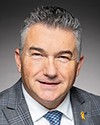
James Bezan Conservative Selkirk—Interlake—Eastman, MB
I just hope that Scott and Chris's time doesn't eat into my time and I pass along deficits.
Conservative
James Bezan Conservative Selkirk—Interlake—Eastman, MB
Anyway, thank you for being here.
Canada's most decorated indigenous soldier is Sergeant Tommy Prince, who was from my riding. He was born in Petersfield, and was a member of the Brokenhead Ojibway Nation. He was part of the 1st Special Service Force, the “Devil's Brigade”, which was a multinational Canada-U.S. special operations force, so not only was he the most decorated Canadian indigenous soldier, he was also the most decorated member of the Devil's Brigade of Canadians and Americans. Then, after World War II, he went on to fight in Korea with Princess Patricia's Canadian Light Infantry in the Battle of Kapyong, Hill 677.
It is very much a proud history and one that still resonates throughout the community, a community that has a pretty significant representation still serving in the Canadian Armed Forces as well as in the U.S. armed services. A lot of them become U.S. rangers down there. It's interesting that you see so many show up at Remembrance Day who have also been serving in the U.S.
You talked about the 2.8% of CAF that is currently indigenous. Can you break that down into how many are first nations, how many are Métis and how many are Inuit?
Director General Culture, Chief Professional Conduct and Culture, Department of National Defence
Unfortunately, I cannot break it down in that way. There are a few caveats in the way in which we collect the self-identification data. It is voluntary, and it is aggregated, which means that the most important aspect of self-identification data is to protect the individual's privacy and the reason for which the data was collected. Given the small counts in many of the units, disaggregating has some risks associated with it, and this has not been happening to date.
Currently, the way in which the information is collected and shared is through the parts of the organization. We can break things down by reg force, reservists and COATS, and we can break out rangers. We cannot provide subpopulations within those groupings at this point.
