Mr. Chair, I have a point of order.
I'm curious. We've had these questions, and we explored them when we invited the CIB CEO to talk—

Evidence of meeting #6 for Transport, Infrastructure and Communities in the 45th Parliament, 1st session. (The original version is on Parliament’s site, as are the minutes.) The winning word was shipyard.
A recording is available from Parliament.
Liberal

Chi Nguyen Liberal Spadina—Harbourfront, ON
Mr. Chair, I have a point of order.
I'm curious. We've had these questions, and we explored them when we invited the CIB CEO to talk—
Liberal
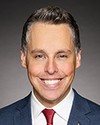
The Chair Liberal Peter Schiefke
I'm sorry, Ms. Nguyen. That's not a point of order. That's debate.
If you want the floor, I can put your name down.
Liberal
Conservative

Leslyn Lewis Conservative Haldimand—Norfolk, ON
Thank you.
Essentially, what we got back from the Liberals were pages and pages of blacked out documents. The documents from BC Ferries tell a very different story from what the former transport minister told Parliament.
At the end of the day, Canadians deserve straightforward answers. That's why this investigation is essential and is needed. The disclosed documents raise more questions than answers, and some of them are as follows: When exactly did the Liberals know about this deal? Why did they not do more to act when they were alerted to the deal by BC Ferries? When exactly did the former minister, Minister Freeland, know that the contract was going to China and that the CIB was bankrolling it? When exactly did the housing minister become aware of the same? Why were Canadian bidders ignored and no priorities or procurement processes laid out to ensure Canadian bidders were included? Why were national security interests ignored and played down by the Liberal government?
Conservatives are calling for complete and full committee investigations. Canadians deserve accountability, and they deserve full disclosure of the $1-billion deal at a time when our workers and our economy are suffering.
Thank you.
Liberal
Liberal

Mike Kelloway Liberal Sydney—Glace Bay, NS
Thank you, Mr. Chair.
It's an interesting discussion. Let's talk about a few things that were mentioned just recently.
At the beginning of the meeting, I talked about collaboration, and we talked about working together. There are a couple of things that we need to clarify here.
Number one is that I don't know if there's anyone around the table who is not pro-Canadian, pro-Quebec, anyone who doesn't want to focus on jobs for our people, on major projects for our people. It's beyond disingenuous to suggest that another party doesn't. That's an overreach, and that's what you all do sometimes. You overreach. You go too far. You make comments that you shouldn't, especially in this type of environment. I want to highlight that.
Number two is that perhaps we'll get to this at some point down the road. You know, we're all here to look at this particular study. It's now an investigation. I heard a lot of things today that were called facts. I see a lot on social media: fact, fact, fact. In many cases, it's an educated assumption, or it's an assumption altogether. We've had ministers come in. We have talked to them. They've provided their insight. I can appreciate—and I'll take everyone at their word—that they want to bring people in to hear where there might have been a breakdown in communication. Let's talk about that.
However, there comes a point when—and I hope this doesn't come this way, and I don't think it is right now—it becomes a bit of everyone wanting to be a bit of Woodward and Bernstein, and sometimes you have to be a little bit more—and I put this on all of us—thoughtful in terms of how we go about doing this. So, I would caution members, respectfully, to not state their fact. There are timelines here. We need to talk about those. Mr. Cory had some really interesting information, didn't he? Not sure where he got that from. Interesting....
It's interesting for Canadians to ask those questions, too, but they should also ask questions around BC Ferries. They should also ask questions around how this happened. We want to know. We're pro-Canadian. I want to see jobs. I want to see shipyards in B.C., Quebec and Atlantic Canada produce jobs, building Canadian ferries for BC Ferries. That's important. That's necessary.
I've read speeches before. Some of them I edited. Some of them I read verbatim. Some of them are my own. This is my own. We are going to go ahead with a study that's now turned into an investigation that already has facts. It's already built in, right? What does that feed? It starts to feel a little like social media, doesn't it? I'm not ignoring the fact that I want to know how BC Ferries didn't have its thinking cap on with respect to knowing that this is a potential.... It's not a potential problem; it's a problem. We had Minister Freeland come in. She spoke. We had the CIB, and they spoke. Things are redacted.
Here's the thing. Things are redacted. Why? The natural assumption is that there is something to hide. I don't know what's redacted. I don't know if it's commercial. I don't know if it's military. I don't know if it's personal. I agree that we should look at that. That's common sense, as the Conservatives say. It's also what my father Mick Kelloway used to say when he would go underground in the pit: that a lot of things are common sense. So, basically what I'm saying is that we stop with the rhetoric that there's one party that's pro-business. Like, we made fun just a few moments ago of a photo op with respect to a hackathon on trucking. How do you bring people together to discuss the art of the possible, to help Canadians, to put more money in people's pocketbooks? Well, you bring them together. Guess what. There are cameras there, and they take pictures.
It's not just the minister who wants the picture; it's the proponents as well, to show the people back home we're fighting for Canadian jobs. We're fighting for the Canadian economy. I know it's easy to get into the fight, but we just need to watch the phrases that we use. You're going to have your clips; we're going to have our clips. Praise be; that's fantastic, but when it comes back to one of the central themes of Minister Freeland, if we lose this vote and she comes in, I have no doubt in my mind she will be strong and lay out her facts. You can grill her. You can play whatever kind of game you may want to play in a very, hopefully, thoughtful way. We do want to get some of that information, if not all the information. It's how we do it.
I want to go back to a couple of things. Because you don't know and I don't know what was redacted, we need to be thoughtful of how best we review that, and there are ways to do that. There are ways that we see and you see to do that, I believe, that would be ethical up front and with Canadians front and centre, while at the same time knowing there have to be reasons for why those things were redacted. I want to know why. You want to know why.
I'll conclude with this. I know we've got some more hands up, but I believe that everyone is pro-worker, everyone is pro-business and we are dealing with the situation here. We're also dealing with a larger situation in terms of why there's this talk of collaboration in Canada and why premiers are working with the federal government. It's because we are at a moment and an inflection point in our economy and our life.
I'll leave it at that and yield the floor.
Liberal
The Chair Liberal Peter Schiefke
Thank you very much, Mr. Kelloway.
Ms. Nguyen, did you want to speak? Go ahead, to be followed by Mr. Greaves.
Then it will be Mr. Lauzon's turn.
Liberal
Chi Nguyen Liberal Spadina—Harbourfront, ON
My apologies. I'm still learning what the parliamentary process is, so I apologize if I incorrectly used a point of order.
I wanted to note, though, that we have heard the timeline and that the opportunity and the work to procure BC Ferries started many years ago and was delayed during COVID-19. It's not as though this decision was made quickly. That work had been done to get to that place. That's all I wanted to correct, or make sure that I had understood from the witness testimony back in the summer.
Liberal
The Chair Liberal Peter Schiefke
We will hear from Mr. Greaves next, followed by Mr. Lauzon and Mr. Albas.
Mr. Greaves, go ahead.
Liberal

Will Greaves Liberal Victoria, BC
Thank you, Mr. Chair.
I have just a couple of points to clarify and I would like to speak to the points raised by my Conservative colleagues.
First, the critical point to underscore in all of this is that this was a decision made by BC Ferries about their own business and not just a decision that was taken before the most recent election. It's false on the face of it to accuse, as the members have, this government of being implicated in this decision in some respect. It was not. The decision was taken before this government received the mandate from Canadians to govern in this 45th Parliament.
The second point I'd like to make is that we hear a great deal from our Conservative colleagues about their concerns for the Canadian steel sector and the workers whose livelihoods have been affected by the trade war that's been thrust upon us by Donald Trump and his administration. Of course, this is a point the government takes very seriously. I fully agree with my honourable colleague from Cape Breton that we should give the benefit of the doubt to everyone on this committee. We are all committed to supporting Canadian jobs, and we're also committed to supporting the Canadian steel sector in this challenging time.
It has to be said yet again, although we have heard this from our witnesses and so our colleagues are well aware, that no Canadian shipyard put in bids to build these ferries. We've been told that, if Canadian shipyards had, in fact, bid and received the contracts, it would have cost billions of dollars more and taken more than a decade longer to deliver these ferries than the procurement agreement that was ultimately struck. British Columbians who rely on these ferries every day and need them to be replaced don't have a decade to waste. I'm fascinated by this Conservative position, somewhat novel I must say, that it's in the public interest to spend more money than necessary on procurement decisions. Is this a new position for our Conservative colleagues, that we should spend more money rather than choosing the lowest bidder, that we shouldn't get maximum value for public money?
If we were to synthesize our colleagues' position on this matter, it amounts to, number one, the federal government should interfere and undermine the strategic planning of provincial agencies and, number two, the federal government should not seek to get the best value for public money. This is, I think, an interesting position for our Conservative colleagues to hold.
This position would at least have some integrity if it were consistently applied. I'm not aware of the members on this committee summoning ministers and demanding documents during the previous Parliament, when the most recent new ferry acquired for the Atlantic coast was, in fact, procured from the same shipyard. We do seem to have a very selective outrage being directed at BC Ferries with respect to this procurement that was not raised in the very recent past about an acquisition of a similar ferry for the Atlantic coast of Canada. I think the people of British Columbia have a right to know why it is that our ferry procurement decisions deserve such scrutiny, especially such scrutiny on the basis of principles that are not particularly Conservative, principles that undermine the autonomy of independent agencies or that don't support getting maximum value for money spent. This is a fascinating position for our colleagues to hold.
For all these reasons, what we are seeing here is a politically motivated attack on BC Ferries that serves a broader agenda and is using a critical service and a core piece of infrastructure that supports the economy and well-being of western Canada and western Canadians to score political points in this vendetta to undermine the Canada Infrastructure Bank. This is simply not something that is in the interest of my constituents nor in the public interest.
My final point on this is that we've heard a great deal from some of our Conservative colleagues about how this is a state-owned Chinese shipyard and how this procurement is therefore funding those dastardly communists in China. While I assure you I have absolutely limited sympathy for the Chinese government and for the communist regime in China, I think it's worthwhile that our Conservative colleagues are consistently overlooking the fact that China is Canada's second-largest trading partner and that, as we sit here, Conservative members and Conservative premiers are demanding with their full voices that the Government of Canada engage with the Chinese government in order to relieve the burden of tariffs that are punishing Canadian farmers and Canadian agricultural producers in the context of this global trade war that we find ourselves in.
While our colleagues are taking great pains to vilify the Chinese government in their attack on BC Ferries, it's not really consistent with the actual relationship that Canada has with China, which is our second-largest trading partner. It's also not consistent with the many efforts that other Conservative elected officials—at both the federal and provincial levels—are actively undertaking now to improve our relationship with the Chinese government so that we can regain access for Canadian agricultural products to the largest market in the world.
To put it mildly, there are some holes in the Conservatives' argument today. I repeat my basic point that in that context, BC Ferries is being used as a political punching bag that is not in the service of British Columbians, and it is not something that I or my constituents in Victoria can support.
Thank you.
Liberal
Liberal
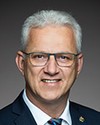
Stéphane Lauzon Liberal Argenteuil—La Petite-Nation, QC
Thank you, Mr. Chair.
I would like to continue along the same lines as my colleague, Mr. Greaves. Obviously, the Canada Infrastructure Bank, the CIB, plays a vital role in providing long‑term and low‑cost loans to help public and private companies, as well as the provinces. In this case, the CIB is helping to ease the financial burden on BC Ferries.
The minister made it clear when she came here that she would have preferred a Canadian product, made at home, using Canadian steel. All the committee members are acting in good faith and we all agree on this. However, we must remember that the loan was granted to a private company that also does business with the province. This was clearly explained to us. As my colleague, Mr. Albas, said earlier, this whole situation gives the impression that negotiations were conducted in good faith directly with China to award these contracts. That's completely false.
We need to understand the specific criteria explained during our discussions. First, as my colleague, Mr. Greaves, pointed out, the ferry service is essential to British Columbia. It's more than just a ferry. It's also an accessibility service, not only for merchants, but also for passengers and tourists, obviously. It's an economic pillar. However, the project also has an environmental component. The CEO of BC Ferries clearly explained that the ferry fleet was so outdated that all the repairs, time and money invested in maintenance came at a significant environmental cost. These factors concern us all and we all agree on this. Furthermore, remember that, if the purchase price of the ferries had been higher than the amount agreed upon, the difference would have been passed on directly to Canadians on a piecemeal basis. We learned these key pieces of information during the testimony.
That said, let us now talk about the federal government's role in this matter. Ms. Freeland clearly explained that role. The Canada Infrastructure Bank provides financial support, but it doesn't dictate how the vessels should be built. This has been clear from the start. Ms. Freeland's wishes and the fact that the vessels will come from a shipyard in China are two completely different things. We can play politics by saying that we want Canadian steel. However, we mustn't dissociate ourselves from our responsibilities with regard to the Canada Infrastructure Bank.
Do we now want to change the Canadian government's management rules? Do we want to take the committee's work further and change Canadian standards for service offerings? If so, that's a whole other debate. Today's debate is crucial in order to continue our work on the BC Ferries situation.
Yet we want to bring the minister back. Why? The idea is to play politics with a decision that falls under provincial jurisdiction in order to show clips to the public on social media claiming that the government made an irresponsible decision. In fact, the government made its decision in keeping with the current standards. According to these standards, the federal government mustn't interfere in BC Ferries' contractual decisions.
In addition, the CEO of BC Ferries came to explain the bidding process. This process didn't exclude Canadian companies and—for the benefit of my colleague, Mr. Barsalou‑Duval—Quebec companies, including the Davie shipyard back home in Quebec. Everyone was invited to submit a prequalification application.
However, the committee or the Canadian government isn't responsible for establishing criteria, logbooks or delivery deadlines. These are internal matters for BC Ferries. That isn't our role. The minister made this clear. What more could we learn from the minister? I don't know.
We may want to know more about the redactions. However, we must remember that these communications are part of a business strategy between the province and BC Ferries. It's a trade strategy. Public‑private companies don't want to disclose this type of information, since it could compromise their competitive future. Not a single company of this size that manages such large amounts of money would be willing to disclose sensitive information about its business plan. Obviously, this information must remain confidential.
When it comes to choosing suppliers, it's fair to debate the issue. However, that decision lies with BC Ferries and the British Columbia government, not the federal government. I don't know exactly what we want to achieve by talking about this. I'm listening to the discussion in the background, but I could table an amendment, if you'll allow me, Mr. Chair.
Liberal
Stéphane Lauzon Liberal Argenteuil—La Petite-Nation, QC
The Bloc Québécois and the Conservatives have already prepared this motion. However, I believe that unanimous consent could be obtained to make the following changes.
First, in part (c), I would replace the words “the Canada Infrastructure Bank's financing of new vessels for British Columbia Ferries” with “CIB's loan to BC Ferries.”
Second, I propose replacing “summon” with “invite,” for the reasons that I just explained. Third, in section (b), I propose replacing the word “financing” with “loan.” It's a loan. It isn't free financing. Fourth, I propose removing point 12 from section (b).
I'll email all these amendments to the clerk, who can send them to you in both official languages. At this point, given the issues that I raised, it would be a good idea to accept these amendments. However, if you want to take some time to discuss them, I would be happy to do so.
Liberal
The Chair Liberal Peter Schiefke
Thank you, Mr. Lauzon.
Colleagues, if it's okay with you, we'll suspend for a couple of minutes. That will give you an opportunity to review the proposal put forward by Monsieur Lauzon.
The meeting is suspended to the call of the chair.
Liberal
The Chair Liberal Peter Schiefke
I call this meeting back to order.
Colleagues, I think there have been some discussions off-line here.
Does anybody want to speak to this?
Mr. Barsalou‑Duval, the floor is yours.
Bloc

Xavier Barsalou-Duval Bloc Pierre-Boucher—Les Patriotes—Verchères, QC
Thank you, Mr. Chair.
I would like to move a subamendment to Mr. Lauzon's amendment. With regard to point 12, rather than removing it, we could instead have the officials responsible for reviewing the national security issues related to the contract between BC Ferries and China Merchants Industry Weihai Shipyards appear in camera. The goal is to protect national security interests and give these officials the chance to talk about the review process openly and transparently.
Liberal
Liberal
Stéphane Lauzon Liberal Argenteuil—La Petite-Nation, QC
After some discussion, I think that we can agree on Mr. Barsalou‑Duval's subamendment.
Conservative

Dan Albas Conservative Okanagan Lake West—South Kelowna, BC
This would allow the friendly amendment to change their amendment. Then we will discuss their amendment, correct?
Liberal
The Chair Liberal Peter Schiefke
I see no objections to the friendly amendment to Mr. Lauzon's amendment.
We'll now have a discussion on Mr. Lauzon's amendment if we're all in accordance.
Do we all agree? Okay.
The floor is open to now discuss Mr. Lauzon's amendment.
Are there any questions or comments?
Mr. Albas.
Conservative
Dan Albas Conservative Okanagan Lake West—South Kelowna, BC
I just wanted you to confirm, Mr. Chair, that the only real changes are technical changes, with the exception of our having the Minister of Public Safety for an hour in the open and then another hour with officials. That's essentially the most substantive change, but there are some minor editorial changes. Is that correct?
Liberal
The Chair Liberal Peter Schiefke
I believe that's the case.
I'll ask Mr. Lauzon to confirm the amendment.