Okay.
Madame Chartrand, go ahead.

Evidence of meeting #42 for Veterans Affairs in the 45th Parliament, 1st session. (The original version is on Parliament’s site, as are the minutes.) The winning word was civilian.
A recording is available from Parliament.
Vice-President, Student Services and Business Development, Collège La Cité
We have experience in this area. For example, we already do this with our general arts and science program, through which we train about 30 military members seeking to obtain a college certificate, year after year. Veterans simply have to submit their basic military qualification and have two years of experience in the forces. That leaves them with only four courses to take instead of 10.
As a result, we're showing military members that we're there for them, that we're able to shorten the training and that we recognize from the outset what they have done in the forces.
Liberal

Bruce Fanjoy Liberal Carleton, ON
Thank you.
What role could partnerships with the Canadian Armed Forces, Veterans Affairs Canada, employers or professional organizations play in making this process more effective?
Vice-President, Academic and Research, Collège La Cité
We have already talked about sharing information, showing the pathways that are possible. There's a lot of value in demonstrating what colleges can bring to the process and to veterans. As a result, one of the aspects is to share information.
The other aspect would be to bring together all the transition services that link veterans' knowledge to the programs offered by colleges. I think we can absolutely work together.
Vice-President, Student Services and Business Development, Collège La Cité
We're very close to many employers. In fact, the majority of our programs lead to a mandatory internship with employers, whether that internship is paid or unpaid. Our close ties with employers make us a liaison for veterans transitioning to civilian life. With how close we are to employers, I think we can certainly be a positive voice.
Liberal

The Chair Liberal Marie-France Lalonde
Thank you very much.
Witnesses, all three of you understand French, if I remember correctly.
Mr. Morrow, I know you do speak French. However, I want to make sure.
Mrs. DeBellefeuille will speak to you in French.
Mrs. DeBellefeuille, you have the floor for six minutes.
Vallée-du-Haut-Saint-Laurent, BQ
Thank you very much, Madam Chair.
I found the testimony very interesting.
Mr. Morrow, as I listened to you, I was reminded of my own experience after I lost my election in 2011. I'm a social worker by training, and to be admitted to my professional order, I was required to complete a one-year internship, despite the fact that I had served as the whip of a caucus of 49 members. People will tell you that being a whip is, in some respects, a bit like being a social worker. I prepared an application for recognition of prior learning, arguing that the skills I had acquired as a whip were transferable to my work as a social worker. My professional order agreed and waived the internship requirement. In that respect, I found my professional order to be quite progressive in recognizing my skills. McGill University, however, treated you like someone beginning their studies in education despite your many years of experience.
Ms. Chartrand, I would also like to discuss the issue Mr. Morrow raised concerning the barriers faced by veterans who have suffered an injury and may not necessarily wish to work full-time, but still want to make an active contribution to society.
Have you encountered veterans who felt that pursuing such a path might create financial insecurity because they could lose their financial support if, for example, they did not successfully complete their courses or were unable to find employment after their studies? Beyond assessing skills, do you also provide support to reassure veterans to prevent them from losing their financial assistance?
Vice-President, Student Services and Business Development, Collège La Cité
Actually, we offer a wide range of services, just as Veterans Affairs Canada provides a broad range of services. We do not replace the department; rather, we complement its work.
We assist our students in accessing financial aid through federal or provincial programs, depending on their province of residence. We also offer a wide range of scholarships and bursaries so that we can support students financially.
In addition, we provide extensive mental health services, as well as academic accommodations for students who face challenges or live with a disability, including accommodations during examinations.
Vallée-du-Haut-Saint-Laurent, BQ
If I understand correctly, beyond skills assessment and recognition of prior learning, you're also able to advise a veteran that it may not be the right time to undertake such a project and, following an assessment of their situation, not necessarily encourage them to proceed immediately.
Vice-President, Student Services and Business Development, Collège La Cité
Yes. We offer a range of services, and we work with each individual to help them pursue the path they wish to follow.
Vallée-du-Haut-Saint-Laurent, BQ
Quebec has vocational diplomas that can be obtained after high school. Then there's CEGEP, followed by university certificate programs and, finally, university.
You appear to be a model institution when it comes to supporting veterans. To your knowledge, are there any institutions in Quebec that offer the same kind of program as yours?
Vice-President, Academic and Research, Collège La Cité
Quebec's model is different from that of the rest of Canada, as is often the case. It's not better or worse; it's simply somewhat different.
There's a network of colleges across Canada. The difference between colleges elsewhere in Canada and the Quebec model is that colleges are primarily intended to help veterans, or any student, prepare for employment rather than providing a general education, although some do offer general education programs. There is also a Canada-wide network, Colleges and Institutes Canada, or CICan, which allows students to transfer from one college to another and even from college to university. Similar arrangements also exist in Quebec.
In Quebec, certain institutions do provide prior learning assessment and recognition, as well as pathways leading to employment. There are probably fewer such options within the CEGEP system, since that's not its primary mandate, although some do exist. There are also vocational diploma programs. In Ontario and elsewhere in Canada, colleges are truly at the centre of this type of model.
Vallée-du-Haut-Saint-Laurent, BQ
So, if a francophone who has served in the army wants to have prior learning recognized, my understanding is that it's easier to pursue studies in Ontario.
Vice-President, Academic and Research, Collège La Cité
I would say that there are excellent programs in Quebec as well. They are valuable partners.
However, I would point out that La Cité is the largest French-language college in Canada outside Quebec, and we're well equipped to support veterans. That much I can say with confidence.
Vallée-du-Haut-Saint-Laurent, BQ
In Quebec, many non-profit organizations specialize in skills assessment and prior learning recognition, such as job search clubs, and they receive funding from both federal and provincial sources.
To your knowledge, have these organizations received training or been made aware of the realities faced by military personnel transitioning to civilian life? Is that something we might want to look into here?
Vice-President, Student Services and Business Development, Collège La Cité
I'm not in a position to say whether they have received such training, but at La Cité, we are certainly ready to welcome military personnel and veterans.
Vallée-du-Haut-Saint-Laurent, BQ
Mr. Morrow, would you like to say a few closing words?
At the start of the meeting, I said that I had read the 2023 report, which contains a whole host of recommendations. Are you discouraged or encouraged? Deep down, I get the impression that, since 2021, we've been going round in circles a bit on the issue of the national strategy for the transition from military to civilian life. Is that the case?
Chief Performance Officer, Morrow Consulting & Training Inc.
Yes, you're right, I am a bit discouraged. In fact, that's why I'm here. I think that, slowly but surely, we'll see changes, but they'll come from the bottom up.
There will be a fairly large number of retired military personnel from my generation—the generation of the global war on terror. These people are still on active service and young—in their forties or fifties—and want to see changes. Gradually, we'll change the way Veterans Affairs Canada operates by demanding more. I'm very optimistic, and gradually, I think things will change a little.
Liberal
The Chair Liberal Marie-France Lalonde
Thank you very much.
I would like to remind all the witnesses to always look at me so that we can manage speaking times.
We have now completed our first round of questions.
We have Mr. Tolmie for five minutes.
Conservative
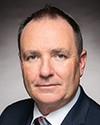
Fraser Tolmie Conservative Moose Jaw—Lake Centre—Lanigan, SK
Thank you, Madam Chair. I appreciate it.
I thank Mr. Morrow for putting me in the “young” category.
Conservative
Fraser Tolmie Conservative Moose Jaw—Lake Centre—Lanigan, SK
Yes, he did. He said, “forties and fifties”. I've told people that this is Arctic blond.
Conservative
Fraser Tolmie Conservative Moose Jaw—Lake Centre—Lanigan, SK
Thank you very much to the witnesses for coming today. We really appreciate it.
There's a lot of information we're trying to pull out. Obviously, what we want is for veterans to be able to transition into the civilian world, to use the skill sets they have, to be recognized for their service and to be given meaningful employment. For some reason, there are challenges. We feel there shouldn't be challenges, so we need to figure this out. I don't think it's very complicated.
Ms. Chartrand, I'd like to start off with you with regard to the colleges, understanding that each province has different requirements.
What kinds of conversations have you had with other provinces in trying to create a standardized system? It seems like a provincial problem and a federal problem, and there seem to be areas of responsibility that no one wants to break through, but we need to break through them.