Yes.
House of Commons Hansard #139 of the 44th Parliament, 1st session. (The original version is on Parliament's site.) The word of the day was cybersecurity.

House of Commons Hansard #139 of the 44th Parliament, 1st session. (The original version is on Parliament's site.) The word of the day was cybersecurity.

This summary is computer-generated. Usually it’s accurate, but every now and then it’ll contain inaccuracies or total fabrications.
Bankruptcy and Insolvency Act First reading of Bill C-309. The bill amends bankruptcy acts to prevent public institutions like universities and hospitals from using or being exploited by bankruptcy protection, citing concerns raised by the Laurentian University situation. 200 words.
Requirement of Royal Recommendations for Bill C-285—Speaker's Ruling The Speaker rules that Bill C-285, which amends the Employment Insurance Act to provide benefits for those losing jobs due to health decisions, requires a royal recommendation because it imposes a new charge on the public treasury. 400 words.
Telecommunications Act Second reading of Bill C-26. The bill, C-26, aims to strengthen Canada's cybersecurity defenses by amending the Telecommunications Act and creating the Critical Cyber Systems Protection Act. It proposes to add security as a policy objective for telecommunications and requires designated operators in federally regulated sectors—finance, telecommunications, energy, and transportation—to implement cybersecurity programs, report incidents, and mitigate risks. While there is consensus on the need for updated cybersecurity measures, concerns are raised about the broad powers granted to ministers and the lack of transparency and accountability in the legislation. 46100 words, 6 hours in 2 segments: 1 2.
Federal Framework on Autism Spectrum Disorder Act Second reading of Bill S-203. The bill proposes a federal framework on autism spectrum disorder, aiming to develop a national strategy for autistic persons, their families, and caregivers. It includes accountability mechanisms for the Minister of Health, focusing on areas like diagnosis, early help, education, employment, and housing. Members from all parties expressed support, though the Bloc Québécois seeks amendments to respect provincial jurisdiction and the NDP emphasizes "nothing about us without us". 7900 words, 1 hour.

Jacques Gourde Conservative Lévis—Lotbinière, QC
Mr. Speaker, the solution is to replace the Liberal government.

Rachel Bendayan LiberalParliamentary Secretary to the Minister of Tourism and Associate Minister of Finance
Mr. Speaker, we put forward a solid plan that will help vulnerable Canadians while being fiscally responsible.
The Conservatives have no plan to offer Canadians—
The EconomyOral Questions

The Speaker Anthony Rota
Order.
I will ask members to quiet down a bit. I appreciate the members' enthusiasm, but at some point they need to calm down.
The parliamentary secretary can start her intervention over again since I know that some people were unable to hear the whole thing.
Rachel Bendayan Liberal Outremont, QC
Mr. Speaker, we put forward a solid plan that meets the needs of vulnerable Canadians while being fiscally responsible.
The Conservatives have no economic plan to offer Canadians. Excuse me. Let me rephrase that. Their plan involves going after the price on pollution, our seniors' pensions and employment insurance. It also involves encouraging Canadians to invest in cryptocurrency, when we know that doing so will cause them to lose their savings.
That is ridiculous.

Taleeb Noormohamed Liberal Vancouver Granville, BC
Mr. Speaker, protecting and extending workers' rights is a priority for this government, and these rights must never be taken for granted. The House unanimously passed Bill C-3, which established 10 days of paid sick leave for all federally regulated workers.
Can the Minister of Labour tell us when paid sick leave for workers will come into effect and discuss the importance of these measures for Canadians in federally regulated sectors?

Seamus O'Regan LiberalMinister of Labour
Mr. Speaker, right around this time last year, the House unanimously committed to providing 10 days of paid sick for workers in the federally regulated private sector, and I am happy to stand here today to say we made good on that promise. Paid sick leave is now in force today for all federally regulated private sector workplaces.
This is good for all of us. It will make our economy stronger and it will make our workplaces safer. Workers should not have to choose between getting paid and getting better. I want to thank the Speaker and all members of the House.
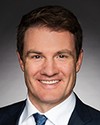
Taylor Bachrach NDP Skeena—Bulkley Valley, BC
Mr. Speaker, Terrace, B.C., has the third-highest death rate from toxic drug overdoses in our province, yet northern residents are still struggling to access detox and treatment services. People often have to wait weeks to get a bed in a facility, and when they do get a space, they have to travel hours away from home.
The Northern First Nations Alliance has a real plan for a new treatment centre right in northwest B.C. It just needs support with the cost.
Will the minister step up and ensure this project is completed as soon as possible?

Élisabeth Brière LiberalParliamentary Secretary to the Minister of Mental Health and Addictions and Associate Minister of Health
Mr. Speaker, I thank my colleague for his question.
We all know that the toxic drug and overdose crisis has a very painful effect on families and communities. We are working with the provinces and territories to put in place every tool and program we can to improve the situation.
Since 2017, we have invested over $800 million to respond to this crisis and we will continue in that direction.

Mike Morrice Green Kitchener Centre, ON
Mr. Speaker, last week Canada's federal housing advocate was clear that the national housing strategy is failing. In my community we are seeing this first-hand. Over the past three years, the number of people experiencing homelessness has tripled. Organizations across the Waterloo region are ready to build the affordable housing we need, but they are still waiting on federal funding.
Will the Minister of Housing commit to ensuring the national housing strategy actually reduces homelessness in my community and in others across the country?
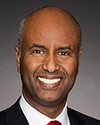
Ahmed Hussen LiberalMinister of Housing and Diversity and Inclusion
Mr. Speaker, this is a really important issue. That is why our government has prioritized investments to reduce and eventually eliminate chronic homelessness from Canada. We have doubled the federal program to combat homelessness, from $2 billion to just over $4 billion. In addition to that, we have introduced the rapid housing initiative, which has resulted in 10,250 deeply affordable homes, targeting the most vulnerable members of our communities.
We know those investments are working all across the country. Some 64,000 Canadians were prevented from joining the ranks of the homeless in this country, and 32,000 were taken out of homelessness.
Presence in GalleryOral Questions
The Speaker Anthony Rota
I wish to draw the attention of members to the presence in the gallery of the Social Sciences and Humanities Research Council of Canada 2022 Impact Award winners: Cindy Blackstock, Fannie Lafontaine, Semra Sevi, Jordan Stanger-Ross and Jan Grabowski.
Presence in GalleryOral Questions
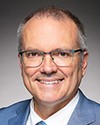
Luc Berthold Conservative Mégantic—L'Érable, QC
Mr. Speaker, during oral question period, I quoted a document from the director of the Canadian Security Intelligence Service. I decided to follow his instructions and ask for permission to openly and transparently table the report that he submitted to the Standing Committee on Procedure and House Affairs regarding foreign interference in our election.
Presence in GalleryOral Questions
The Speaker Anthony Rota
All those opposed to the hon. member moving the motion will please say nay.
The House resumed from November 30 consideration of the motion that Bill C-29, An Act to provide for the establishment of a national council for reconciliation, be read the third time and passed.
The Speaker Anthony Rota
It being 3:11 p.m., pursuant to order made on Thursday, June 23, the House will now proceed to the taking of the deferred recorded division on the motion at third reading stage of Bill C-29.
Call in the members.

Andrew Scheer Conservative Regina—Qu'Appelle, SK
Mr. Speaker, a colleague voted by the app, encountered some technical difficulties and could not log on in time to switch his vote. I am wondering if the House would allow, as we have done in the past for other members, for the hon. member for Foothills to change his vote. His intention was to vote in favour. If the House would grant consent for that change, this would be a unanimous vote in favour of the bill.