House of Commons Hansard #197 of the 44th Parliament, 1st session. (The original version is on Parliament's site.) The word of the day was chair.

Topics

line drawing of robot

This summary is computer-generated. Usually it’s accurate, but every now and then it’ll contain inaccuracies or total fabrications.

Department of Foreign Affairs, Trade and Development Act Report stage of Bill C-282. The bill seeks to amend the Department of Foreign Affairs, Trade and Development Act (supply management) by adding a clause that would prevent the Minister of Foreign Affairs from making commitments in trade negotiations that increase tariff rate quotas or reduce tariffs for supply-managed products. Its sponsor, the Bloc Québécois' Luc Thériault, argues it will protect Canada's supply management system from further concessions in future trade agreements. The Liberal government supports the bill, while the Conservatives express concerns that it could hinder broader trade negotiations and negatively impact other agricultural sectors. 7600 words, 1 hour.

Bill S-5—Time Allocation Motion Members debate a Liberal motion to impose time allocation on Bill S-5, An Act to amend the Canadian Environmental Protection Act, 1999. While Liberals and NDP argue the bill has received extensive study and debate and it's time to act for environmental protection, Conservatives and the Bloc Québécois criticize the government for limiting debate on legislation. 4900 words, 35 minutes.

Strengthening Environmental Protection for a Healthier Canada Act Report stage of Bill S-5. The bill seeks to modernize the Canadian Environmental Protection Act (CEPA), recognizing a right to a healthy environment for all Canadians and strengthening protections against toxic substances. It aims to improve chemical management, address cumulative effects on vulnerable populations, and enhance transparency. While broadly supported, some members, like the Bloc Québécois, express concerns about the bill's ambition, perceived federal overreach into provincial jurisdiction, and lack of enforceability for the new environmental right. 22700 words, 3 hours in 2 segments: 1 2.

Statements by Members

Question Period

The Conservatives criticize the government's inflationary budget and fiscal mismanagement, leading to rising deficits and a $4,200 debt per family. They highlight high food prices, housing unaffordability, and Canada's poor economic performance. They also demand answers on Chinese police stations and advocate for bail reform to keep communities safe.
The Liberals defend Canada's strongest economy in the G7, highlighting its AAA credit rating, lowest debt-to-GDP, and job creation. They emphasize investments in affordable housing, rent relief, child care, and the grocery rebate. The government is focused on combating foreign interference, improving the bail system, and supporting green industrial projects.
The Bloc criticizes the government's inaction on Chinese interference, prioritizing byelections over addressing the issue. They advocate for lower immigration targets, arguing 500,000 newcomers per year is too high and leads to inhumane processing times. They also denounce the Trans Mountain pipeline as an economic and environmental disaster.
The NDP raises concerns about jobs in Windsor and the skyrocketing rent across the country. They advocate for women veterans to be included in health guidelines and criticize the government's failure to provide services for First Nations children.

First Nations Fiscal Management Act Third reading of Bill C-45. The bill amends the First Nations Fiscal Management Act to expand the services and capacities of First Nations-led financial institutions, and establishes a First Nations Infrastructure Institute. This aims to improve infrastructure outcomes and support First Nations' self-determination and economic reconciliation by allowing them to assert jurisdiction in financial management, taxation, and access to capital markets. Some Conservatives support the bill but argue for further measures to remove federal "gatekeepers," while the NDP supports the bill as a step towards self-determination but notes it does not absolve the government's responsibilities. 5700 words, 45 minutes.

Petitions

Adjournment Debates

Air passenger rights Taylor Bachrach raises concerns about air passenger rights, citing loopholes and confidentiality clauses. Annie Koutrakis defends the government's amendments to the Canada Transportation Act, arguing that they will streamline the complaint process and increase airline accountability. Bachrach remains skeptical, while Koutrakis says the government is committed to protecting travellers' rights.
Graduate student funding Richard Cannings argues that graduate students are paid the same as 20 years ago, below minimum wage, and that the government is ignoring recommendations to fix this. Andy Fillmore says the government has invested billions in science and research and is reviewing the Bouchard report.
Nunavut clean energy projects Lori Idlout asks why the Kivalliq hydro-fibre link project has been mentioned in two budgets, but has not received direct funding. Terry Duguid says the government supports Inuit-led projects and is working closely with indigenous peoples in the north to fight climate change.

Canada Mortgage and Housing Corporation—Main Estimates, 2023-24 Members debate the Canada Mortgage and Housing Corporation's estimates, primarily focusing on the nation's housing crisis. The Conservative Party critiques the Liberal government's policies, arguing they have doubled housing costs, mortgage payments, and rent, and failed to increase supply. They also question the CMHC's performance bonuses. The Liberal government defends its National Housing Strategy, highlighting investments like the Housing Accelerator Fund, programs for first-time homebuyers, and efforts to combat homelessness, while accusing the Conservatives of voting against these measures. The Bloc Québécois and NDP raise concerns about the lack of social housing, financialization of housing, and the urgent needs of vulnerable populations and Indigenous communities. 35300 words, 4 hours.

Was this summary helpful and accurate?

FinanceOral Questions

2:55 p.m.

Conservative

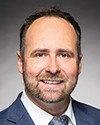
Philip Lawrence Conservative Northumberland—Peterborough South, ON

Mr. Speaker, we welcome the finance minister back to the House. However, let us be clear in that what we are asking for is two hours of her time. That is a billion dollars a minute.

We have real problems. According to a university report, we have the third-largest increase in total debt-to-GDP ratio, which has resulted in one of the lowest GDP growth ratios. In fact, going forward, we are projected to be at the bottom of the OECD. Will the minister finally come to the finance committee for two hours to explain why she has broken all her promises?

FinanceOral Questions

2:55 p.m.

Burlington Ontario

Liberal

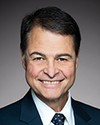
Karina Gould LiberalMinister of Families

Mr. Speaker, it is typical of the Conservatives that they will not take yes for an answer. The finance minister is going to committee tomorrow, as long as they do not filibuster it.

Let us talk about our economic record. They were talking about the OECD—

FinanceOral Questions

2:55 p.m.

Some hon. members

Oh, oh!

FinanceOral Questions

2:55 p.m.

The Speaker Anthony Rota

I am sorry to interrupt again. It is starting to get a little noisy. I am having a hard time hearing the answer. I am sure the hon. member for Northumberland—Peterborough South is having a hard time hearing a response to his question.

I am going to ask the hon. Minister of Families to start from the top.

FinanceOral Questions

2:55 p.m.

Liberal

Karina Gould Liberal Burlington, ON

Mr. Speaker, as I was saying, it is typical of the Conservatives to not take yes for an answer, as the Minister of Finance is scheduled to go tomorrow. Of course, that will depend on the Conservatives' stopping their filibuster.

Let us talk about our economic record. My hon. colleague was talking about the OECD, but when the Conservatives came into office back in 2006, they ranked 17th when it came to child poverty. By the time they left in 2015, Canada ranked 24th. They fell. I am not going to take any lessons from the Conservatives.

Currently, Canada ranks second in the OECD when it comes to reducing child poverty.

FinanceOral Questions

2:55 p.m.

Conservative

Philip Lawrence Conservative Northumberland—Peterborough South, ON

Mr. Speaker, that is great news. I look forward to having the finance minister for two hours, as she just said. That is terrific.

What we do not look forward to is the Liberal budget bonanza that is going to drive Canadians $4,200 deeper into debt per family. What will they get for that? Higher energy costs, higher food costs and a lower standard of living.

Will the finance minister finally come to the finance committee for two hours to explain why Canada's economic growth is predicted to be lower than the growth in Latvia, Chile and—

FinanceOral Questions

2:55 p.m.

Some hon. members

Oh, oh!

FinanceOral Questions

2:55 p.m.

The Speaker Anthony Rota

I am going to interrupt. I am now having a hard time hearing the question.

FinanceOral Questions

2:55 p.m.

Some hon. members

Oh, oh!

FinanceOral Questions

2:55 p.m.

The Speaker Anthony Rota

Order. When I try to calm things down, it does not mean you get to throw rocks just because you think you do not live in glass houses anymore. Please, everybody, calm down.

The hon. member for Northumberland—Peterborough South, from the top, please, so that we can hear the full question. Let us see if we can get through that.

FinanceOral Questions

2:55 p.m.

Conservative

Philip Lawrence Conservative Northumberland—Peterborough South, ON

Mr. Speaker, I am thankful for the quieting of that childish temper tantrum.

The Liberal budget bonanza is driving Canadians further and further into debt. Each Canadian family is being driven down, to the cost of $4,200 a month. What are Canadians getting for it? They are getting higher energy and food costs.

I am going to repeat this question one more time. Will the minister appear for two hours to explain her failed economic record?

FinanceOral Questions

3 p.m.

University—Rosedale Ontario

Liberal

Chrystia Freeland LiberalDeputy Prime Minister and Minister of Finance

Mr. Speaker, we should not be too troubled by not hearing the question from the Conservatives. It is the same nonsensical question we have heard and answered repeatedly. Let me assure everyone that I am looking forward to appearing before the finance committee tomorrow, as I have enjoyed questions today.

As to what Liberal economic policy is delivering for Canadians, I can say this: jobs, jobs, jobs. We have the strongest job market in Canadian history, and that is what matters to hard-working Canadians.

Natural ResourcesOral Questions

3 p.m.

Bloc

Monique Pauzé Bloc Repentigny, QC

Mr. Speaker, the Trans Mountain pipeline project continues to be a drain on public money. It is gobbling up money at an alarming rate. When the government bought the pipeline from Kinder Morgan, the estimated cost of expansion was $7.4 billion. In 2020, the estimated cost was $12.6 billion and in 2022, it was $21.4 billion. Today, the estimated cost is $30.9 billion and Trans Mountain continues to push for more.

When will it end? How deep into debt will the federal government drag the public for the sake of dirty oil?

Natural ResourcesOral Questions

3 p.m.

University—Rosedale Ontario

Liberal

Chrystia Freeland LiberalDeputy Prime Minister and Minister of Finance

Mr. Speaker, we understand how important it is to get a fair price for our resources on international markets. The government has no intention of owning the pipeline for the long term. A divestment process will be launched when the project is farther along.

Natural ResourcesOral Questions

3 p.m.

Bloc

Monique Pauzé Bloc Repentigny, QC

Mr. Speaker, not only is expanding Trans Mountain at our expense an economic failure, it is an environmental disaster. To recoup all the money thrown at this project, the Crown corporation is going to have to ship a lot of oil for a long time. Trans Mountain expects to have a capacity of 890,000 barrels of oil per day after the expansion.

It is going to take a lot of oil days to pay back a $30.9-billion debt, but who will take care of our environmental debt?

Natural ResourcesOral Questions

3 p.m.

University—Rosedale Ontario

Liberal

Chrystia Freeland LiberalDeputy Prime Minister and Minister of Finance

Mr. Speaker, our government is very proud of our green industrial plan. This plan is investing $120 billion into the green transition. It is an historic measure that will protect the climate globally and create good jobs for a generation of Canadians.

We are very proud to be the government carrying out this plan.

Public SafetyOral Questions

3 p.m.

Conservative

Larry Brock Conservative Brantford—Brant, ON

Mr. Speaker, the Minister of Public Safety falsely stated that all Beijing-backed police stations had been shut down. He now confirms that new stations may still be operating on Canadian soil.

Minister, words matter. The incompetent minister continues to mislead the House regarding this crucial issue. He has all the intelligence and security agencies at his disposal to get to the bottom of it.

I am just looking for a number. Minister, my simple question is this: How many Beijing-backed police stations are still operating in this country?

Public SafetyOral Questions

3 p.m.

The Speaker Anthony Rota

I want to remind hon. members to place their questions through the Chair and try to use parliamentary language as much as possible. Do not push it to the limit. Just try to be nice and play well together.

The hon. Minister of Public Safety.

Public SafetyOral Questions

3 p.m.

Eglinton—Lawrence Ontario

Liberal

Marco Mendicino LiberalMinister of Public Safety

Mr. Speaker, by now, I hope my Conservative colleague will have heard the answers, which have been consistent. The RCMP took decisive and concrete action to disrupt the foreign interference activities in relation to those so-called police stations. It will continue to do the same going forward.

The bigger question is about what the Conservatives did on foreign interference when they last held the reins of government. The answer is that they did nothing. On this side of the House, we will continue to make the investments and put the authorities in place so that we can protect our democratic institutions.

Public SafetyOral Questions

3 p.m.

Conservative

Pierre Paul-Hus Conservative Charlesbourg—Haute-Saint-Charles, QC

Mr. Speaker, the Minister of Public Safety said on CTV news yesterday that there could be a number of Beijing-run police stations on Canadian soil, even though he told a parliamentary committee the opposite.

The Canadian Security Intelligence Service has intelligence on this. Even the Spanish organization Safeguard Defenders has produced a report confirming the presence of Chinese police stations operating on Canadian soil.

My question is simple. How many Beijing-run police stations are currently operating in Canada?

Public SafetyOral Questions

3:05 p.m.

Eglinton—Lawrence Ontario

Liberal

Marco Mendicino LiberalMinister of Public Safety

Mr. Speaker, the opposition needs to listen to the government's responses, including my responses in committee.

As I said, the RCMP is taking decisive action to disrupt the foreign interference activities associated with those so-called police stations. Now it is important to continue to put in place the authorities to protect our democratic institutions.

The Conservatives are the only ones impeding progress on this important issue.

Public SafetyOral Questions

3:05 p.m.

Conservative

Pierre Paul-Hus Conservative Charlesbourg—Haute-Saint-Charles, QC

Mr. Speaker, I do not see how the Conservatives have been impeding things. On the contrary, we are very proactive in the debate. However, the minister just gave us an answer. He said that the RCMP is responsible for this issue.

This should have a simple answer: How many police stations run by Beijing are currently operating in Canada?

Public SafetyOral Questions

3:05 p.m.

Eglinton—Lawrence Ontario

Liberal

Marco Mendicino LiberalMinister of Public Safety

Mr. Speaker, supported by federal government initiatives and investments, the RCMP is keeping a close eye not only on foreign interference, but also on all public safety priorities. The Conservatives are the only ones who continue to impede the government's national security priorities. We must work together to protect our democratic institutions.

That is our government's priority.

TransportationOral Questions

May 15th, 2023 / 3:05 p.m.

Liberal

Sophie Chatel Liberal Pontiac, QC

Mr. Speaker, last week, the Government of Canada and the Government of Quebec announced the largest procurement of electric buses in North America. This project will put over 1,229 electric buses, which will be assembled at the Nova Bus plant in Saint‑Eustache, on Quebec roads by 2027.

Can the Minister of Intergovernmental Affairs explain how these historic investments will improve the lives of Quebeckers and contribute to Canada's transition to a green economy?

TransportationOral Questions

3:05 p.m.

Beauséjour New Brunswick

Liberal

Dominic LeBlanc LiberalMinister of Intergovernmental Affairs

Mr. Speaker, I thank my colleague from Pontiac for her question.

Canadians rely on public transit to get to where they need to be. That is why our government is investing $780 million to put 1,229 new electric buses on Quebec roads.

This historic investment in partnership with the Government of Canada will, of course, reduce our greenhouse gas emissions, support good jobs in Quebec's manufacturing industry and give Quebeckers a modern and reliable means of transportation.