House of Commons Hansard #203 of the 44th Parliament, 1st session. (The original version is on Parliament's site.) The word of the day was children.

Topics

line drawing of robot

This summary is computer-generated. Usually it’s accurate, but every now and then it’ll contain inaccuracies or total fabrications.

Statements by Members

Question Period

The Conservatives raise concerns about Beijing's police stations operating in Canada and demand action against foreign agents, criticizing the lack of a foreign agent registry. They also condemn the Prime Minister for avoiding a public inquiry into foreign interference, citing Trudeau Foundation appointments. Additionally, they accuse the government's carbon tax and inflationary deficits of increasing the cost of food, doubling housing costs, and driving Canadians to food banks.
The Liberals emphasize their serious approach to fighting foreign interference, criticizing the opposition for refusing intelligence briefings. They defend their fiscal record and investments in programs like dental care, childcare, and the grocery rebate. They also highlight their plan to combat climate change and its devastating impacts.
The Bloc accuse the Prime Minister of undermining democracy by fostering a culture of secrecy regarding Chinese interference and refusing a public inquiry. They question his motives, suggesting he's protecting Liberal friends' financial interests or Trudeau Foundation secrets.
The NDP calls for a public inquiry into foreign interference, criticizing the adviser's ethics. They raise dire Indigenous school conditions and abuse, demanding a comprehensive plan for the toxic drug crisis.

Alleged Inadequacy of Government Response to Foreign Interference—Speaker's Ruling The Speaker rules on the Durham MP's question of privilege regarding an ongoing foreign interference campaign by China, stating it should be addressed by the Standing Committee on Procedure and House Affairs, which is already investigating similar matters. 500 words.

Decorum Members debate a Liberal MP wearing a T-shirt with a slogan, raising points of order about House decorum and dress code. The Deputy Speaker clarifies rules on contemporary business attire and the use of slogans or props. 1000 words.

Criminal Code First reading of Bill C-334. The bill amends the Criminal Code, Judges Act, and Director of Public Prosecutions Act to empower survivors of sexualized violence by giving them a choice regarding publication bans on their identifying information. 700 words.

Canada Business Corporations Act Second reading of Bill C-42. The bill proposes amendments to the Canada Business Corporations Act to establish a beneficial ownership registry, aiming to combat money laundering, tax evasion, and terrorist financing. Members highlight Canada's reputation for "snow washing" and the impact on housing affordability. Concerns include the proposed 25% ownership threshold, privacy protection, and the need for a pan-Canadian approach to ensure effectiveness across all jurisdictions. 4700 words, 35 minutes.

National Strategy for Eye Care Act Second reading of Bill C-284. The bill establishes a national strategy for eye care for eye disease prevention and treatment and designates February as Age-Related Macular Degeneration Awareness Month. The strategy addresses training, research, information sharing, and treatment device review. Parties largely support it, with some raising concerns regarding provincial jurisdiction and health funding. 7500 words, 1 hour.

Canada Early Learning and Child Care Act Report stage of Bill C-35. The bill aims to establish an affordable, accessible, high-quality, and inclusive early learning and child care system in Canada, with a goal of $10-a-day care. Liberals and NDP support it, citing increased female workforce participation. Conservatives criticize it, arguing it fails to address labour shortages and accessibility issues, creates "child care deserts," and excludes private providers. The Bloc Québécois supports it but stresses respect for Quebec's jurisdiction. 47400 words, 6 hours.

Adjournment Debates

Trudeau Foundation investigation Garnett Genuis accuses the Liberals of stonewalling investigation into foreign interference and the Trudeau Foundation, questioning why David Johnston won't testify. Mark Gerretsen counters that the Prime Minister hasn't been involved in over a decade, and that the Conservative's claims are a conspiracy theory.
Carbon tax rebates Mel Arnold questions the need for a second carbon tax, arguing that the government is overspending, and any rebate is just a return of taxes already paid. Mark Gerretsen defends the carbon tax as a way to fight climate change. He claims most people receive more in rebates than they pay.
Chinese control of Canadian mining Kevin Vuong criticizes the government for allowing Chinese state-owned enterprises to acquire control over Canada's mining industry. Mark Gerretsen responds that Canada welcomes foreign investment but reviews investments for national security concerns. Vuong cites that fewer than 1% of investments are subjected to security measures.
Was this summary helpful and accurate?

Public SafetyOral Questions

2:25 p.m.

Papineau Québec

Liberal

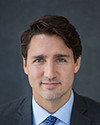
Justin Trudeau LiberalPrime Minister

Mr. Speaker, the Leader of the Opposition knows full well that the RCMP is conducting investigations and taking action against these illegal acts in Canada.

Public SafetyOral Questions

2:25 p.m.

Carleton Ontario

Conservative

Pierre Poilievre ConservativeLeader of the Opposition

Mr. Speaker, the Prime Minister admitted that there were police stations. His government said that all these stations had been shut down. We found out that is not true, that at least two were still operating and that his government had given taxpayer money for those police stations. I will ask my question for the third time: How many police stations is Beijing operating here in Canada? How many?

Public SafetyOral Questions

2:25 p.m.

Papineau Québec

Liberal

Justin Trudeau LiberalPrime Minister

Mr. Speaker, as I said, the RCMP has been tasked with conducting the necessary investigations and laying charges in due course against those attempting to interfere in our democracy. If the Leader of the Opposition is so curious about the details of foreign interference, then he should accept the briefing that has been offered to him by the intelligence services. Then he would no longer not know the details and he could learn about the serious issue of foreign interference. I encourage the Leader of the Opposition to get informed.

Public SafetyOral Questions

2:25 p.m.

Carleton Ontario

Conservative

Pierre Poilievre ConservativeLeader of the Opposition

Mr. Speaker, first of all, the number of police stations controlled by a foreign dictatorship in Canada is not a detail. It would not be a detail if any government had foreign police stations operating on our soil.

Second of all, all Canadians deserve to know the answer. The government claimed that it had shut down all these police stations. Now we know that there are two in operation and that the Prime Minister's government has given taxpayer money to help fund them.

My simple question is this: How many of Beijing's police stations are operating on Canadian soil today?

Public SafetyOral Questions

2:25 p.m.

Papineau Québec

Liberal

Justin Trudeau LiberalPrime Minister

Mr. Speaker, as Canadians well know, the government takes extremely seriously the issue of foreign interference and has done so since 2015, when we brought in significant measures to counter foreign interference. We continue to do so. The RCMP is quite rightly charged with the responsibility for investigating and following up on these reports of Beijing-funded police stations but, indeed, if the Leader of the Opposition is so—

Public SafetyOral Questions

2:25 p.m.

Some hon. members

Oh, oh!

Public SafetyOral Questions

2:25 p.m.

The Speaker Anthony Rota

I must interrupt the right hon. Prime Minister.

I just want to remind everyone of this: The way it works is that you ask a question and then you listen to the answer, whether you like it or not. You cannot keep asking the question over and over again while the person is speaking. I wanted to point that out.

The right hon. Prime Minister.

Public SafetyOral Questions

2:25 p.m.

Liberal

Justin Trudeau Liberal Papineau, QC

Mr. Speaker, if the Leader of the Opposition continues to have questions on foreign interference, as many Canadians do, I would suggest that he actually take our security agencies up on the offer they have made to him of being briefed on all the intelligence related to foreign interference. That way, he does not have to hide behind, to quote the report on this, “a veil of ignorance”, and he can actually work from the facts.

Public SafetyOral Questions

May 31st, 2023 / 2:25 p.m.

Carleton Ontario

Conservative

Pierre Poilievre ConservativeLeader of the Opposition

Mr. Speaker, the Prime Minister can brief all Canadians right now. These are police stations that exist to harass and intimidate Canadian citizens on Canadian soil. No real country would allow a foreign dictatorship to run police stations on its soil. The Americans are arresting Beijing's agents in their country.

I will give the Prime Minister the chance to answer the question one last time. How many police stations are being operated by Beijing on Canadian soil?

Public SafetyOral Questions

2:25 p.m.

Papineau Québec

Liberal

Justin Trudeau LiberalPrime Minister

Mr. Speaker, if the Leader of the Opposition were to take this issue of foreign interference seriously as an issue facing diaspora communities and Chinese Canadians, he would be interested in actually understanding the facts around foreign interference. Instead, he chooses to play partisan games. He chooses to make personal attacks against a former governor general instead of actually accepting the need to take this issue seriously. He knows full well that the RCMP's responsibility is to do these investigations and make arrests, and they are actually following up on that.

Democratic InstitutionsOral Questions

2:25 p.m.

Bloc

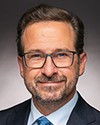
Yves-François Blanchet Bloc Beloeil—Chambly, QC

Mr. Speaker, Canada no longer has a government worthy of being called democratic.

This Prime Minister refuses to clear up any doubts about his desire to protect secrets that we are only just starting to uncover.

Let us ask the people of Xinjiang how China's dictatorship operates. Let us ask the people of Hong Kong how China operates. Let us ask the Tibetans how the Chinese Communist Party operates. Let us ask the bullied MPs how Xi Jinping, the Chinese president, operates.

Should the Prime Minister not get his act together before going down in history as pandering to a hostile foreign power?

Democratic InstitutionsOral Questions

2:30 p.m.

Papineau Québec

Liberal

Justin Trudeau LiberalPrime Minister

Mr. Speaker, like the leader of the Conservative Party, the leader of the Bloc Québécois is choosing not to look at the facts. He is choosing not to consult the information at his disposal.

We may not agree on the best way to defend our democracy, but we cannot disagree on facts. He is entitled to his own opinions, but not his own facts.

That is why we offered him a briefing on confidential information, but he refused. He prefers to make uninformed attacks rather than understanding the real facts in order to take this issue seriously.

Democratic InstitutionsOral Questions

2:30 p.m.

Bloc

Yves-François Blanchet Bloc Beloeil—Chambly, QC

Mr. Speaker, the Prime Minister is encouraging an insidious culture of secrecy; China is too.

David Johnston is making a game out of hiding secrets from Canadians and Quebeckers, like China would. The Liberals' entire strategy is now obvious: to divert attention from the close ties between Liberal power brokers and China, possibly even to protect the interests of investor friends in China by devising a strategy for accessing secret documents that keeps them secret.

It is not up to David Johnston to determine what I can or cannot see. It is not about me. An independent judge will set the terms of reference of a public inquiry.

Democratic InstitutionsOral Questions

2:30 p.m.

Papineau Québec

Liberal

Justin Trudeau LiberalPrime Minister

Mr. Speaker, we just heard directly from the Bloc Québécois leader that he is choosing not to learn the facts.

He complains about a culture of secrecy. He feels frustrated at the confidential information that our security agencies—

Democratic InstitutionsOral Questions

2:30 p.m.

The Speaker Anthony Rota

I am sorry to interrupt. I am going to ask the hon. member for Red Deer—Lacombe to keep it down, and many others as well.

I will ask the hon. Prime Minister to start over again.

Democratic InstitutionsOral Questions

2:30 p.m.

Liberal

Justin Trudeau Liberal Papineau, QC

Mr. Speaker, the Bloc Québécois leader is complaining in an extremely partisan manner about a culture of secrecy. As he is well aware, the fact is that our security intelligence agencies must operate in different ways to protect Canadians, especially when it comes to a foreign force like China.

He is choosing to remain in the dark. He refuses to accept the confidential information we are prepared to share with him so that he can contribute to this debate in a sensible and responsible way in the House—

Democratic InstitutionsOral Questions

2:30 p.m.

The Speaker Anthony Rota

I am sorry, but there is a discussion going on in the background. If members want to have a conversation, I invite them to go into the lobby or anywhere else. All I ask is that members not shout back and forth, as this should not happen in a Parliament.

The right hon. Prime Minister.

Democratic InstitutionsOral Questions

2:30 p.m.

Liberal

Justin Trudeau Liberal Papineau, QC

Mr. Speaker, like the Conservative Party leader, the leader of the Bloc Québécois would rather hide behind a veil of ignorance than understand the impact of the situation.

Obviously, he is just playing partisan games. We take the matter of foreign interference seriously and we hope that others will too.

Democratic InstitutionsOral Questions

2:30 p.m.

NDP

Jagmeet Singh NDP Burnaby South, BC

Mr. Speaker, Dan Stanton, a former CSIS counter-intelligence officer, testified in committee. He said that a public inquiry into foreign interference is necessary. He, like many Canadians, is wondering what is going on. He said very clearly that there are safeguards that can be put in place to protect sensitive information. I agree with Mr. Stanton.

Will the Prime Minister do the right thing? Will he listen to Canadians, listen to this House and listen to a former CSIS counter-intelligence officer and vote in favour of our motion calling for a public inquiry?

Democratic InstitutionsOral Questions

2:30 p.m.

Papineau Québec

Liberal

Justin Trudeau LiberalPrime Minister

Mr. Speaker, I will do one better than a former CSIS agent. Current leadership across our intelligence agencies and across the public service continues to say that the best way to move forward is not with a public inquiry, which would have to happen behind closed doors. Many who testified at committees expressed that perspective. To remove it from the political realm, we asked an unimpeachable man of integrity, a former governor general selected by Stephen Harper, to look into these matters deeply and to make a determination as to whether a public inquiry was the right mechanism. He said—

Democratic InstitutionsOral Questions

2:35 p.m.

The Speaker Anthony Rota

The hon. member for Burnaby South.

Democratic InstitutionsOral Questions

2:35 p.m.

NDP

Jagmeet Singh NDP Burnaby South, BC

Mr. Speaker, the Prime Minister is not restoring confidence with the decisions he is making. We need confidence restored.

What will it take for the government to see reason? Last week, we learned that the special rapporteur's key legal adviser is a long-time Liberal donor. Is that this government's definition of ethics?

This afternoon, the Prime Minister can do the right thing and put the country's interests before his own personal interests. He can vote in favour of our motion to launch a public inquiry. Will he do that?

Democratic InstitutionsOral Questions

2:35 p.m.

Papineau Québec

Liberal

Justin Trudeau LiberalPrime Minister

Mr. Speaker, foreign interference is an extremely serious, fundamental issue for our democracy and our institutions.

That is why we implemented a number of measures, including committees of parliamentarians, expert committees, such as the National Security and Intelligence Review Agency, a process during the election campaign and an independent expert responsible for assessing everything that we are doing and making recommendations. He found that the 2019 and 2021 elections were not compromised and he will continue his work.

Public SafetyOral Questions

2:35 p.m.

Carleton Ontario

Conservative

Pierre Poilievre ConservativeLeader of the Opposition

Mr. Speaker, a real prime minister would never allow a foreign dictatorship to have police stations on our soil. The Prime Minister has known for at least six months that Beijing has these police stations here. I will ask him the following question.

How many agents of Beijing have been arrested here in Canada because of these active police stations here in Canada? In the United States, several such agents have already been arrested.

Public SafetyOral Questions

2:35 p.m.

Papineau Québec

Liberal

Justin Trudeau LiberalPrime Minister

Mr. Speaker, the Leader of the Opposition knows full well that it is not up to the police officers to direct the police in their operations. However, we have ensured that the RCMP is following up and investigating this foreign interference and these Chinese police stations.

In the meantime, the leader of the Conservative Party chooses to remain ignorant and refuses to accept briefings on the facts in the matter of Chinese interference. He made that choice because he wants to continue to make unfounded partisan attacks.