The motion is in order.
Questions and comments, the hon. member for Battle River—Crowfoot.

House of Commons Hansard #388 of the 44th Parliament, 1st session. (The original version is on Parliament's site.) The word of the day was pension.

This summary is computer-generated. Usually it’s accurate, but every now and then it’ll contain inaccuracies or total fabrications.
Declaration of Emergency Members present reports from the Special Joint Committee reviewing the 2022 Emergencies Act declaration, including the main report, a Conservative dissenting report, and an NDP supplementary report calling for policing reforms and accountability. 800 words.
Veterans Affairs Members debate a report recommending repeal of the discriminatory "marriage after 60" clause denying survivor pension benefits to veterans' spouses who married after the veteran turned 60. They highlight the hardship caused, the government's failure to act despite allocated funds, and issues of departmental responsibility. Parties debate past actions, current priorities like cost of living, and the need for immediate change, urging the government to implement the recommendations. 23400 words, 3 hours.
Alleged Misleading Statements by Member in Committee Report Members debate a question of privilege raised by a Conservative MP alleging a former Liberal minister misled the special joint committee. The allegation concerns the minister's claim that law enforcement requested the invocation of the Emergencies Act. The MP presents contradictory evidence from multiple reports and testimonies, arguing this constitutes contempt and requesting the Speaker find a prima facie case to refer the matter to committee to clear the air. 4400 words, 30 minutes.
Access to Parliamentary Precinct NDP MP Peter Julian argues a Conservative MP's question of privilege was frivolous, improperly delayed, and used to obstruct debate, asking the Speaker to dismiss the matter. 1000 words.
Business of the House Members exchange holiday wishes and thank staff before recess. The government announces the fall economic statement will be presented next week as part of House business. 800 words.
Alleged Withholding of Documents from the Special Joint Committee on the Declaration of Emergency Members debate the government's refusal to provide the legal opinion used to invoke the Emergencies Act to a parliamentary committee. A Conservative MP argues parliamentary power to order documents outweighs solicitor-client privilege and that the refusal is a potential contempt, seeking an order for its production. 3600 words, 35 minutes.
Reference to Standing Committee on Procedure and House Affairs Members debate the government's handling of Sustainable Development Technology Canada (SDTC), following an Auditor General's report alleging mismanagement and conflicts of interest. Conservatives demand the government release related documents to the RCMP as ordered by the House, calling SDTC a "green slush fund". Liberals argue the RCMP has needed documents and accuse Conservatives of filibustering. Discussion includes government environmental targets, affordability, and institutional integrity. 20200 words, 2 hours.
Veterans AffairsCommittees of the HouseRoutine Proceedings

The Assistant Deputy Speaker (Mrs. Alexandra Mendès) Alexandra Mendes
The motion is in order.
Questions and comments, the hon. member for Battle River—Crowfoot.
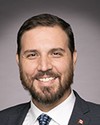
Damien Kurek Conservative Battle River—Crowfoot, AB
Madam Speaker, I appreciate the opportunity, as always, to be able to stand and ask important questions.
When it comes to the specifics, this is related to pensions and survivors benefits for veterans and military servicemen and women after the age of 60. However, it does open up the bigger conversation about many of the challenges that so many Canadians, in particular veterans, are facing when it comes to food insecurity, homelessness and, in particular, the cost of living associated with those things.
A comment was made yesterday by the Prime Minister that inflation was down. Would the parliamentary secretary acknowledge that is misleading, especially to individuals on fixed incomes, like pensioners? Inflation is not down. The costs of things are not going down; it is the rate at which costs are rising that has slowed.
Would the parliamentary secretary—
Veterans AffairsCommittees of the HouseRoutine Proceedings
Conservative
Damien Kurek Conservative Battle River—Crowfoot, AB
Madam Speaker, it sounds like the member for Kingston and the Islands also has an opinion on the matter.
Would the parliamentary secretary acknowledge that prices have not gone down when it comes to what Canadians are actually paying for things at the grocery store?

Kevin Lamoureux Liberal Winnipeg North, MB
Madam Speaker, one of the encouraging things that has been happening over the last eight or so months is that not only has inflation gone down but interest rates have also gone down.
We have also been looking at the overall performance of the economy. We continue to look at ways in which we can invest in and support Canadians. We have programs, such as the dental program, the pharmacare program and the national school food program, that are helping Canadians in a very real and tangible way. At the same time, we are able to keep tabs on inflation and interest rates.
When we compare Canada to virtually any other country in the G20, we see that we are doing exceptionally well. However, that does not prevent the government from continuing to look at ways in which we can support Canadians. A good example of that is that we are giving a tax holiday for the GST on a number of products, which, by the way, the member who posed the question voted against, along with the leader of the Conservative Party of Canada.

Xavier Barsalou-Duval Bloc Pierre-Boucher—Les Patriotes—Verchères, QC
Madam Speaker, if I were to summarize the parliamentary secretary's speech, I would simply say that we should not be talking about this today. We should not be talking about the report that recommends that survivor's pensions should be available to people who married later in life. We should not be talking about this because, in his opinion, the report should have remained on the shelf. It was collecting dust, and that was perfect. The government was happy.
We should not be talking about the Conservatives' motion of privilege either. What we should be talking about are the government's priorities, but as it happens, this report deals with the government's priorities. It has been in the ministers' mandate letters since 2015, and it still has not been resolved. It has been almost 10 years, and the government is still twiddling its thumbs.
Meanwhile, there are people who will not get a survivor's pension when their spouse dies. Today, age 60 is far from old. Today at 60 people still have a life to live, and it is normal for situations to change.
Does the parliamentary secretary understand that it is high time for the government to finally wake up and put an end to these archaic practices? In Quebec, the problem has been resolved. All people have to do is make a call, fill out a form, and it is done.
Why is it that nothing ever gets resolved in the federal government?
Kevin Lamoureux Liberal Winnipeg North, MB
Madam Speaker, as I indicated, I was in the forces, and I happen to be 62, turning 63, years old. I understand the age factor also.
At the end of the day, the member is right. The only thing he is wrong about is the fact that it is not the Liberal Party's priorities; it is Canadian priorities that we should be talking about. What we should be talking about is the type of legislation that is on the books. We should be talking about many of the private members' bills. There are all sorts of things that the House of Commons should actually not only be talking about but also taking action on. That means passing legislation and passing a fall economic statement.
There are many different things we could be doing for Canadians, but the Conservative Party and the light-blue Bloc continue to want to filibuster. It does not mean that we are not concerned about the issue at hand; I am concerned about the issue at hand, and we all are. However, there are the issues and priorities that Canadians have, and that is what I will continue to push for.

Taylor Bachrach NDP Skeena—Bulkley Valley, BC
Madam Speaker, I share my Bloc colleague's frustration with the member's attempt to distract from the issue at hand. Any attempt to suggest that there are more important things we should be talking about in the House of Commons this morning is a direct disservice to the senior women who have been denied survivor benefits for so many years, many of whom are living in poverty.
I was so moved by my colleague from North Island—Powell River's excellent speech regarding the issue, and the dedication she has shown, yet I read the government's official response to the report, and what I read is an excuse and I read tacit support for a policy that is fundamentally unjust.
Therefore I would ask the member for a very direct yes or no answer to this question: Does he or does he not support recommendation 9, “That the Government of Canada repeal the ‘marriage after 60’ clause in both the Canadian Forces Superannuation Act and the Royal Canadian Mounted Police Superannuation Act”?
Kevin Lamoureux Liberal Winnipeg North, MB
Madam Speaker, the member makes reference to recommendation 9, and there is actually a response to that recommendation. It is one sentence and two paragraphs, and it goes over to the next page. I would encourage the member to read that particular aspect.
What I do take exception to is a member's trying to put words in my mouth. It is not correct to say that I do not care about the issue. I care about the issue. It is the same as if I were to say to the NDP—
Veterans AffairsCommittees of the HouseRoutine Proceedings
The Assistant Deputy Speaker (Mrs. Alexandra Mendès) Alexandra Mendes
The hon. member for Skeena—Bulkley Valley is rising on a point of order. Exactly which standing order is it?
Taylor Bachrach NDP Skeena—Bulkley Valley, BC
Madam Speaker, I do not believe it is consistent with the Standing Orders to suggest that a member said something that the member did not say. I did not say—
Veterans AffairsCommittees of the HouseRoutine Proceedings
The Assistant Deputy Speaker (Mrs. Alexandra Mendès) Alexandra Mendes
This is a kettle and pot situation.
The hon. parliamentary secretary has the floor.
Kevin Lamoureux Liberal Winnipeg North, MB
Madam Speaker, let us put it this way: If we went through the hundreds of reports and I were to identify reports that I believe are more important to Canadians, does that mean that the New Democrats do not care about the other reports or the other issues?
I can assure the member that there are many different serious issues in concurrence reports. The one before us is an important one, and there are lots of important issues. However, passing legislation, passing a fall economic statement, dealing with private members' business and getting work done for Canadians are also important. That is what—
Veterans AffairsCommittees of the HouseRoutine Proceedings
The Assistant Deputy Speaker (Mrs. Alexandra Mendès) Alexandra Mendes
Questions and comments, the hon. member for Saanich—Gulf Islands.

Elizabeth May Green Saanich—Gulf Islands, BC
Madam Speaker, I have a couple things to say to my hon. friend the parliamentary secretary.
I want to agree with him profoundly that the cries for justice for spouses of people who have served in the armed forces should move us particularly. Equally, it makes no sense to deny spousal benefits to other classes of civil servants and other people covered by the superannuation act. The whole notion of “marriage after 60” should be stricken from all the rules around pensions.
I do say to my hon. colleague the parliamentary secretary that it is a bit much to say that some people will say the $150 million was not adequate. Not a single penny has moved toward the people who are disadvantaged by the gold digger clause that affects the widows and survivors of our veterans. It was a sham move by the former finance minister Bill Morneau to get out of doing what he promised to do, which was to remove the clause entirely.
Kevin Lamoureux Liberal Winnipeg North, MB
Madam Speaker, I respect the comments the member is making. It is one of the reasons we have standing committees, and the Standing Committee on Veterans Affairs continues on. It might be a good agenda item for that particular committee to look at the $150-million allotment that was given back in 2019, and why it has not been accessed. Maybe there are some things we can be doing to push the file through faster.
I have always believed that there are a number of areas within government we can always look at improving. I share many of the member's concerns. It is not to say that the government or Liberal members are not concerned about this issue; I genuinely believe we all are and that it crosses all political parties.
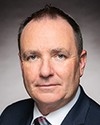
Fraser Tolmie Conservative Moose Jaw—Lake Centre—Lanigan, SK
Madam Speaker, I am very happy that you are in the chair today. I know that you have a very good sense of humour. Looking at my desk, I feel like I am having a yard sale. I forgot my own glasses at my condo, so I am using some from the lobby. They are women's glasses, so I hope I can carry them off. Maybe I could exchange with my colleague across the way.
It is truly an honour and a privilege to stand here on behalf of the people of Moose Jaw—Lake Centre—Lanigan. This is an important issue for our riding because, not only do we have two military bases, but we have a lot of veterans who live and reside within the riding. Before I go any further, I would like to say that I will be sharing my time with my colleague from Battle River—Crowfoot. I am making sure that I am dotting my i's and crossing my t's.
I appreciate everything that has been shared today by my colleagues in the NDP and in the Liberal Party on this very important subject. One of the things that was brought up was priorities. I want to focus on that for veterans right now. I am one of those members who have served. I did not serve for very long, and I did not do anything that was heroic or dramatic. I think of those who have put in a lot of time, who have served overseas, and who have encountered, seen and witnessed things that we, as Canadians, have not.
What they experience and what they bring back to this country is sometimes hard for them to understand, including the devastation that men can do to each other. They come back to this country and walk through grocery stores where things are aisled up. There is milk everywhere, and there are eggs and groceries in abundance. We live in a country of abundance, and that is what they are fighting for. However, they do not understand what they have witnessed in other countries, where people are fighting for scraps and where people are treating each other inhumanely.
That stress and that trauma manifests. One of the biggest challenges we deal with in veterans affairs is post-traumatic stress disorder. My cousin served in the PPCLI and was in the Medak Pocket, in Croatia. He came back and has faced those challenges. He shared with me what he has dealt with.
We know that it is not just the person who is serving in the military who experiences that. They bring that home with them. They come home and their spouses do not understand why their husband or their wife has changed. They could not wait for their spouse to come home and to start their lives over again. They missed their spouse. The kids missed their parents. Things happened. They were not able to spend Christmas together. They want to make up time, but there is something missing in that person. There is brokenness. Sometimes marriages fall apart, and we understand that. People can move on. They rebuild their lives, and they go and get married again. Some get married when they over the age of 60, and this is what we are here to talk about.
We are here to talk about the meaning of this gold digger clause. It has to be said that this is, culturally, an old comment made over 100 years ago. We now live in a different culture. The Canadian Forces and Canada have evolved, and our engagements, where we have been deployed and what we stand for, have changed. This is one of the issues that was brought to the veterans affairs committee for us to study.
The committee has conducted many studies. For some of these, even with my own experience as being someone who has served, I have to say I was horrified. I was horrified to hear what some of our witnesses had experienced and gone through, but it is important to keep our eyes and ears focused on the times and on what we are experiencing. Time and time again, we are hearing about the challenges veterans are dealing with upon retirement.
The cost of living crisis is impacting veterans. More veterans are using food banks than ever before because of, as my colleague from Battle River—Crowfoot mentioned earlier, inflation. Inflation has impacted veterans, who are on fixed incomes. If they have remarried and their spouse is helping them out, as we talk about this gold digger clause, which I will get to, they are finding their dollar, their buying power, is not going far enough. It is not meeting the needs of today's grocery prices, and veterans are finding challenges. They are cutting corners. They are cutting meals.
I have heard heartbreaking stories of the spouses who have had to care for them. They have fallen in love. They love their partner and need to care for them. They made a commitment. They made an oath in front of the church, in front of their families, that they would stand by them through sickness and in health. Many of these veterans are dealing with issues related to the war, because of, for example, carrying backpacks, or they have physical or mental ailments. These spouses over the age of 60, who are there to care for them, are being left out. We understand that, so that is why it was so important for us to do this report. It was important for us to listen to the people who are caregivers now for those they love who have served.
One of the challenges we have dealt with in this file is that, after hearing the heartbreaking stories, we are finding that this file has gone from pillar to post. We understand we just cannot change one pension act. There has to be a holistic and inclusive look at this. We understand that, but one of the challenges is whether this is a priority or not.
One of the disappointing things we recently heard about is that the Minister of Veterans Affairs has had to take on another portfolio. One of the biggest concerns for the Conservative Party is whether there is enough focus being put on veterans, after all the horrific stories we have heard time and time again of neglect, of not being a priority for the Canadian government and of continually being put on the back burner. Is this department now being put on the back burner because the Minister of Veterans Affairs has another portfolio to look after? That is one of the questions the Conservative Party has. Is the government focusing on this file?

Peter Julian NDP New Westminster—Burnaby, BC
Madam Speaker, this is an important motion and discussion that the NDP has brought forward today, and I would like to thank the member for North Island—Powell River for doing so.
The member referenced Conservatives and veterans, and I wanted to put on the record what the terrible Harper regime did to veterans. It was the most disrespectful period in our nation's history. The Harper Conservatives slashed personnel and eliminated hundreds of positions. They closed district offices, forcing veterans, often with disabilities, to travel across provinces to try to get the services that were systematically being denied by the Harper regime. They denied disability benefits, and perhaps in one of the most cruel examples of disrespect by Conservatives of our nation's veterans, they denied 20,000 funerals for veterans. They were people who had laid their lives on the line for this country, and Conservatives treated them in the most disrespectful, dishonouring way possible.
Will a single Conservative member stand and apologize for the despicable treatment of our nation's veterans—
Veterans AffairsCommittees of the HouseRoutine Proceedings
The Assistant Deputy Speaker (Mrs. Alexandra Mendès) Alexandra Mendes
We are quite over the time provided.
The hon. member for Moose Jaw—Lake Centre—Lanigan has the floor.
Fraser Tolmie Conservative Moose Jaw—Lake Centre—Lanigan, SK
Madam Speaker, I was actually serving when Mr. Harper was the prime minister, and I have never in my time been more proud than when I was wearing the uniform and was a serving member of this country. I was proud of my uniform, and I was proud of my government at that time.
Veterans AffairsCommittees of the HouseRoutine Proceedings
Winnipeg North Manitoba
Liberal
Kevin Lamoureux LiberalParliamentary Secretary to the Leader of the Government in the House of Commons
Madam Speaker, I was in opposition when the member's current leader sat at the cabinet table with Stephen Harper. In fact, that leader was Harper's point man on many different issues. One of the issues that came before us at that time when we were in opposition was the fact that the Conservatives were shutting down veterans' offices. I think the total number that they ended up closing down was nine.
Obviously, as a government, we have opened nine and maybe even a possible tenth one. I will ask members to not quote me on the tenth one, but I am wondering if the member would agree that maybe there is a little regret within the Conservative benches, maybe not with the leader of the Conservative party, but with other members of the Conservative caucus, that they should not have closed down those veterans' offices.
Fraser Tolmie Conservative Moose Jaw—Lake Centre—Lanigan, SK
Madam Speaker, I have heard my colleague's question. In his time speaking about this matter, he talked about priorities, and the priority, for not only veterans but also everybody in this country, is the cost of living. It is time to axe the tax. It is time to look after the people of this country. It is time to listen to what is going on, look at the cost of living and give people hope instead of these little carrots that they throw out at Christmas time for a couple of months of GST cuts.
It is time to axe the tax. Let us do it for the Canadians. Let us do it for the veterans.

Andréanne Larouche Bloc Shefford, QC
Madam Speaker, it is true that many women have contacted me with regard to this clause as it relates to veterans.
What I also understand from my colleague's speech is the issue of post-traumatic stress disorder and its lifelong repercussions. I discussed this with the ombudsman for the Department of National Defence and the Canadian Armed Forces. PTSD can indeed have dire consequences. These people have needs. Recently, we have seen an increase in the number of homeless veterans living on the streets.
Repealing the clause making these people ineligible for a survivor's pension is crucial. It is important. Lastly, does this morning's debate not prove that we need to stop shelving reports and do something to show our respect for everything our veterans have done and achieved for our country?
Fraser Tolmie Conservative Moose Jaw—Lake Centre—Lanigan, SK
Madam Speaker, I think one of the most touching witness testimonies was of a veteran from Quebec who came to the veterans committee with a suitcase of claims that had been either neglected, rejected or denied, and it was heartbreaking. She could not even get a ramp for her wheelchair to get into her own home. People had to help her in and out, and after the committee, after being promised, she was denied. They had to get a third party organization to help this woman. She had served our country. I find it disgusting, and I think the priority should be focusing on veterans and getting—
Veterans AffairsCommittees of the HouseRoutine Proceedings
The Assistant Deputy Speaker (Mrs. Alexandra Mendès) Alexandra Mendes
We have to resume debate.
The hon. member for Battle River—Crowfoot.