

House of Commons Hansard #56 of the 45th Parliament, 1st session. (The original version is on Parliament's site.) The word of the day was program.

Topics

line drawing of robot

This summary is computer-generated. Usually it’s accurate, but every now and then it’ll contain inaccuracies or total fabrications.

Statements by Members

Question Period

The Conservatives heavily criticize the Liberal government's economic mismanagement, pointing to record deficits, increased bureaucracy, and a cost of living crisis with rising grocery and baby formula prices. They condemn the Prime Minister's frequent international travel for failing to reduce tariffs, impacting Canadian exports. Concerns also include the cancellation of pipelines and the rise of extortion.
The Liberals defend their budget, emphasizing economic growth, market diversification, and aiming for the strongest economy in the G7. They highlight significant investments in social programs like dental care, the Canada Child Benefit, and school food. They also underscore commitments to clean energy, cultural funding, and affordable housing, while urging support for anti-extortion measures.
The Bloc criticizes the government's arts and culture funding, arguing it neglects private television and radio. They question the government's plans for private media and challenge a minister's views on a hypothetical Quebec currency and its implications.
The NDP criticizes the Liberal budget for eliminating the luxury tax on yachts and private jets, while cutting public services.

Petitions

Making Life More Affordable for Canadians Act Report stage of Bill C-4. The bill proposes affordability measures for Canadians, including a tax cut for 22 million Canadians, a GST exemption for first-time homebuyers on new homes, and the removal of the consumer carbon price. While Liberals argue it supports a strong economy and other social programs, Conservatives contend the tax cuts are negated by increased government spending, leading to a broader affordability crisis. The Bloc Québécois supports housing measures but criticizes the carbon tax removal as an election stunt that withheld funds from Quebec. 16500 words, 2 hours.

Export and Import Permits Act Second reading of Bill C-233. The bill seeks to close a "U.S. loophole" in the Export and Import Permits Act, requiring permits and human rights assessments for all military exports, including to the United States. Proponents argue this aligns Canada with the Arms Trade Treaty, preventing complicity in war crimes. Opponents warn it would harm Canada's defence industry, jeopardize jobs, and disrupt vital alliances like NATO. 7500 words, 1 hour.

Adjournment Debates

Build Canada Homes bureaucracy Jacob Mantle criticizes the Build Canada Homes bureaucracy as ineffective for most Canadians. Jennifer McKelvie defends the program and other initiatives to increase affordability and housing supply, mentioning partnerships with builders and other levels of government. Mantle argues the average salary should buy the average home.
Federal budget and fiscal responsibility Tamara Jansen criticizes the government's overspending and its impact on Canadians, citing a warning from Fitch Ratings about a potential credit downgrade. Maggie Chi defends the government's budget as a generational plan that builds the economy and empowers Canadians through strategic investments and trade diversification.
Mental health funding parity Gord Johns says the Liberals are failing on mental health promises, pointing to the $200 billion cost of untreated issues. Maggie Chi cites investments like the youth mental health fund and suicide prevention. Johns asks for a strategy for men's mental health, and Chi says the government continues to engage with experts.
Was this summary helpful and accurate?

Mental Health and AddictionsAdjournment Proceedings

6:50 p.m.

Don Valley North Ontario

Liberal

Maggie Chi LiberalParliamentary Secretary to the Minister of Health

Mr. Speaker, I want to begin by sincerely thanking my hon. colleague for the very important question. I have tremendous respect for his work on mental health and for the work he does on behalf of his constituents. His commitment to the issue elevates our conversation in the House, and I am grateful for his leadership.

I rise today to reaffirm our government's commitment to supporting the mental health and well-being of Canadians. Mental health is health, as my hon. colleague mentioned, and we know that too many people still face barriers to accessing the care they need. This is why our approach is rooted in collaboration. We are working closely with provinces and territories, those who deliver care on the front lines, because meaningful, lasting change requires coordinated partnerships across all orders of government.

Our work is guided by three priorities: expanding access, improving quality and advancing equity.

We know that youth are facing disproportionate challenges, especially indigenous and Black youth, youth in rural and remote communities, and young men and boys. That is why we are delivering the youth mental health fund, a $500-million investment over five years to enhance and expand mental health supports across the country. A core component of that work is strengthening integrated youth services. These hubs provide a one-stop shop where young people can access mental health care, primary care, substance use support, and help with education and employment. Today there are more than 110 hubs operating in nine provinces, with 50 more in development.

Since 2022, over $118 million has been invested to strengthen this network and support national collaboration, and the work continues. Just last month, the Minister of Health announced $10 million in Health Canada funding for Kickstand, to expand integrated youth services in Alberta.

We are also ensuring that practitioners and families have the tools they need. Earlier this year, we released new clinical practice guidelines for managing mood and anxiety disorders in the perinatal period, along with a patient and family guide. These resources support consistent evidence-based care that Canadians can trust.

Suicide prevention remains a top priority. Through Canada's first national suicide prevention action plan, we are coordinating efforts with provinces, territories, indigenous partners and experts to reduce risk and save lives. A cornerstone of this work is 988, Canada's suicide crisis helpline. It is free, confidential and available 24-7 in English and French, by voice and text. Between November 2023 and July 2025, 988 answered over 600,000 calls and texts. It is a lifeline for people in crisis, and we are committed to strengthening it.

Mental health care must be safe, accessible and inclusive. Our government is investing in the future, not only through funding but also through partnerships, innovation and a shared vision with provinces and territories. Together we are building a mental health system that meets people where they are, supports them throughout their lives and reflects the compassion and care Canadians deserve. Mental health is health, and we will continue to make it a priority for all Canadians.

Mental Health and AddictionsAdjournment Proceedings

6:50 p.m.

NDP

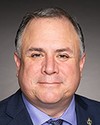
Gord Johns NDP Courtenay—Alberni, BC

Mr. Speaker, this month being Movember, I attended an event last evening on the topic of men's mental health, which included having the opportunity to chat with Michelle Terry, Movember's global CEO, about the importance of investing in the unique health challenges facing men and boys. This is something the health minister specifically referenced in her own remarks at the event last night.

Two in five Canadian men will die prematurely, before the age of 75. Death by suicide is the second-leading cause of death for men aged 15 to 44 in this country. Seventy-two per cent of Canadians can think of a man or boy who has been impacted by stigma, health care delays and mental health struggles. Two in five men, like I said, will die prematurely, but 95% of Canadians agree that improving mens' mental health will benefit everyone, not just men.

Will the government turn its words into action and support a properly funded, nation-wide mental health strategy for men and boys? I am hoping ministers will be able to answer that question today. It is something that is absolutely needed. There is a crisis.

Mental Health and AddictionsAdjournment Proceedings

6:55 p.m.

Liberal

Maggie Chi Liberal Don Valley North, ON

Mr. Speaker, mental health matters deeply to Canadians and to Parliament. I want to again thank my hon. colleague for raising the issue and for his important work on it. Our government shares these concerns and remains firmly committed to advancing safe, effective and innovative mental health care across the country.

We continue to engage with leading experts from movements like Movember, invest in evidence-based approaches, and work closely with provinces and territories, so that federal support is aligned with the realities on the ground. Together we are building a more responsive and inclusive mental health system, one that meets Canadians where they are and supports them throughout their lives.

Again, I look forward to continuing this work with my hon. colleague in order to advance it.

Mental Health and AddictionsAdjournment Proceedings

6:55 p.m.

The Assistant Deputy Speaker John Nater

The motion to adjourn the House is now deemed to have been adopted. Accordingly, this House stands adjourned until tomorrow at 10 a.m., pursuant to Standing Order 24(1).

(The House adjourned at 6:56 p.m.)