House of Commons Hansard #70 of the 45th Parliament, 1st session. (The original version is on Parliament's site.) The word of the day was mou.

Topics

line drawing of robot

This summary is computer-generated. Usually it’s accurate, but every now and then it’ll contain inaccuracies or total fabrications.

Petitions

Opposition Motion—Pipeline Construction Members debate a Conservative motion supporting a new oil pipeline from Alberta to the British Columbia coast for export to Asian markets, alongside an adjustment to the Oil Tanker Moratorium Act. Conservatives urge the Liberal government to unblock investment and expedite construction. Liberals support the full Canada-Alberta MOU, which includes environmental and Indigenous consultation conditions. The Bloc Québécois and NDP oppose, citing economic non-viability, climate betrayal, and lack of Indigenous consent. 47800 words, 6 hours in 2 segments: 1 2.

Statements by Members

Question Period

The Conservatives criticize the government's obstruction of pipelines to the Pacific, alleging the Prime Minister flip-flopped on his promises. They heavily blame the industrial carbon tax and inflationary spending for skyrocketing grocery prices and increased food bank usage, urging the Prime Minister to cut these taxes and address the $1,000 annual increase families face.
The Liberals defend their MOU with Alberta as a comprehensive plan including industrial carbon pricing and methane regulations to build a strong, sustainable economy. They assert the carbon price doesn't raise food costs, attributing increases to climate change. They highlight investments in affordability, good jobs, child care, dental care, and infrastructure, aiming for the strongest economy in the G7.
The Bloc criticizes the government's environmental rollback with Alberta and questions the PM on religious exemptions. They focus on dangerous Driver Inc. practices, alleging Liberal lobbying and donations compromise road safety.
The NDP questions the government's inconsistent messaging on pipeline consent and its commitment to climate goals and B.C.'s coast.
The Greens question a Bill C-15 section allowing ministerial exemptions from Canadian law without public oversight.

Supplementary Estimates (B), 2025-26 First reading of Bill C-17. The bill grants sums of money to His Majesty for federal public administration for the fiscal year ending March 31, 2026, and is passed through all stages of the House. 100 words.

Ukrainian Heritage Month Act Second reading of Bill S-210. The bill proposes to designate September as Ukrainian Heritage Month in Canada to recognize the contributions of Ukrainian Canadians to the country's economic, political, cultural, and social life. Members from various parties support the bill, emphasizing the importance of celebrating Ukrainian heritage, especially given the ongoing conflict in Ukraine, and to educate Canadians about Ukrainian culture and history. 7800 words, 1 hour.

Adjournment Debates

Executive bonuses and deficits Mike Lake questions the Liberal government's decision to award bonuses to Via Rail and CMHC executives amid high deficits, citing broken promises. Kevin Lamoureux defends the government, pointing to Canada's high ranking in quality of life and arguing that Conservative governments also awarded bonuses. Lake says his questions were fair, not "potshots."
Prime Minister's offshore tax havens Michael Cooper accuses the Prime Minister of being a hypocrite and a tax dodger for his involvement with Brookfield's use of offshore tax havens. Kevin Lamoureux defends the Prime Minister, arguing that he meets all ethical requirements and that the Conservative Party is engaging in character assassination.
Corporate Profits and Affordability Gord Johns accuses corporations of price gouging, citing record profits for large companies. Kevin Lamoureux defends the government's actions, mentioning tax cuts and initiatives like pharmacare. Johns dismisses Lamoureux's explanations. Lamoureux insists that the government advocates for consumers via measures like Competition Act amendments.
Was this summary helpful and accurate?

The EconomyOral Questions

2:55 p.m.

Conservative

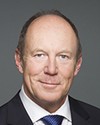
Luc Berthold Conservative Mégantic—L’Érable—Lotbinière, QC

Mr. Speaker, the Prime Minister, sitting just a few feet away from me, has made this personal. He told Canadians that they should judge him by the price of groceries. No matter what excuses all the other Liberals come up with today, the Prime Minister was the one who set the bar on how to judge him. Not only has he failed miserably, but next year's grocery bill is going to cost the average family $1,000 more.

Why is the Prime Minister misleading Canadians as they line up at food banks in growing numbers because of his inflationary spending?

The EconomyOral Questions

2:55 p.m.

Louis-Hébert Québec

Liberal

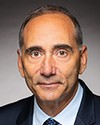
Joël Lightbound LiberalMinister of Government Transformation

Mr. Speaker, after expending so much energy to get elected to the House of Commons, it is sad to see members come here day after day and simply repeat the same talking points written by the Leader of the Opposition.

To answer his question, it is even sadder to see my colleague vote against measures like the Canada child benefit or the national school food program, which is saving the most vulnerable families $800. He votes against affordable housing and against the Canadian dental care plan.

I would like him to tell me what he is thinking of when he talks about inflationary spending.

The EconomyOral Questions

December 9th, 2025 / 2:55 p.m.

Conservative

Luc Berthold Conservative Mégantic—L’Érable—Lotbinière, QC

Mr. Speaker, I am thinking of the consultants, the bureaucracy, the corporate welfare. Not a single one of those members is standing up to defend the words of the Prime Minister, who told Canadians they would judge him on the cost of groceries. Those were his words. Now 36% of Quebeckers are experiencing food insecurity. The food banks in Quebec are receiving three million visits a month. The Prime Minister's wealthy friends do not have to worry because they do not have to skip any meals. They get to eat their fill.

He promised to lower the cost of food. He misled Canadians.

Will he finally keep his word and stop spending so much money so that everyone can eat?

The EconomyOral Questions

2:55 p.m.

Louis-Hébert Québec

Liberal

Joël Lightbound LiberalMinister of Government Transformation

Mr. Speaker, in my previous answer, I listed everything the Conservatives have voted against. These are measures that directly support the people in my colleague's riding and Quebeckers and Canadians across the country.

We were elected to provide opportunities to young Quebeckers and to Canadians from coast to coast to coast. That is exactly what we are doing. In November, 54,000 jobs were created. In October, 67,000 jobs were created. In September, 60,000 jobs were created. The unemployment rate is falling and so is the inflation rate because on this side of the House, we are building the strongest economy in the G7.

The EconomyOral Questions

2:55 p.m.

Conservative

Richard Martel Conservative Chicoutimi—Le Fjord, QC

Mr. Speaker, the Prime Minister said that we should judge him by the cost of groceries. Eight months later, grocery prices are skyrocketing and families are struggling to put food on the table. Canada's Food Price Report 2026 shows that the situation is only going to get worse.

Back home in Saguenay, the Corporation de développement communautaire du Roc, which is made up of 70 community organizations that provide food aid, says that demand is growing faster than resources.

When will the Liberals stop their inflationary spending so that Canadians can finally have enough to eat?

The EconomyOral Questions

3 p.m.

Gatineau Québec

Liberal

Steven MacKinnon LiberalMinister of Transport and Leader of the Government in the House of Commons

Mr. Speaker, I want to acknowledge and commend my esteemed colleague for the great job he did coaching the Chicoutimi Saguenéens.

What he may not realize is that no one in Saguenay is asking the government to eliminate the school food program, support for organizations and volunteers, the Canada child benefit or support for housing. No one in Saguenay is asking for that.

I would like the member to vote with us to keep these support measures for people in Saguenay and across the country.

The EconomyOral Questions

3 p.m.

Conservative

Richard Martel Conservative Chicoutimi—Le Fjord, QC

Mr. Speaker, the Liberals need to stop burying their heads in the sand and look at what is happening on the ground. The majority of requests now come from families where both parents work. It is not just single parents anymore. This is alarming. The annual food price report predicts every family will be paying an additional $1,000 per year for food. This is one of the largest increases ever seen.

When will the government let Canadians eat properly?

The EconomyOral Questions

3 p.m.

Gatineau Québec

Liberal

Steven MacKinnon LiberalMinister of Transport and Leader of the Government in the House of Commons

Mr. Speaker, my colleague, the Minister of Government Transformation, Public Works and Procurement, asked a very important question earlier: What exactly is inflationary spending?
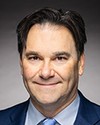
We keep asking this question month after month, day after day, and week after week in this chamber. Is it support for aluminum workers? Is it support for school food? Is it the dental care program? Is it health transfers?

After all these months, can someone tell us what inflationary spending means?

Regional Economic DevelopmentOral Questions

3 p.m.

Liberal

Ben Carr Liberal Winnipeg South Centre, MB

Mr. Speaker, in my father's dying days, he mustered the courage to stand in this chamber to fight for the passage of his private member's bill, which set out a vision for the prairie provinces to continue playing their prominent role in our federation. That vision was realized with the passage of the Building a Green Prairie Economy Act, which received royal assent shortly after his passing, on December 12, 2022.

Can the Minister responsible for Prairies Economic Development Canada share how the newly announced prairie partnership initiative enhances this vision and establishes new opportunities for growth across Alberta, Saskatchewan and Manitoba?

Regional Economic DevelopmentOral Questions

3 p.m.

Edmonton Centre Alberta

Liberal

Eleanor Olszewski LiberalMinister of Emergency Management and Community Resilience and Minister responsible for Prairies Economic Development Canada

Mr. Speaker, I want to thank the member for Winnipeg South Centre for his continued support as we advance the legacy his father set in motion for a stronger prairie economy.

The prairie partnership initiative is a new, coordinated approach that gives significant prairie projects a clear pathway through the federal system so that they can move from ambition to action. By aligning federal expertise with prairie priorities, the PPI will help meet this critical moment by positioning the Prairies at the—

Regional Economic DevelopmentOral Questions

3 p.m.

The Speaker Francis Scarpaleggia

The hon. member for Middlesex—London.

The EconomyOral Questions

3 p.m.

Conservative

Lianne Rood Conservative Middlesex—London, ON

Mr. Speaker, the Prime Minister told Canadians he should be judged by prices at the grocery store. Well, Canadians have judged, and they are angry. When the Liberals came into office in 2015, the Canadian grocery bill was $159 a week. After 10 years, it has more than doubled, to $338. Greg from Komoka wrote to me to say he is sick of the “rules for you and not for me” attitude. Families cannot afford meat, and they are lining up at food banks while the Liberals continue to feast at the public's expense. Why does the Prime Minister think he deserves luxury when Canadians cannot afford lunch?

The EconomyOral Questions

3 p.m.

Burlington North—Milton West Ontario

Liberal

Adam van Koeverden LiberalSecretary of State (Sport)

Mr. Speaker, watching the leader of the Conservative Party lose in slow motion today has been a little amusing, but what is more interesting is watching him do it with a big grin on his face, because he is so proud of himself. He is proud to vote against child care; he is proud to vote against school food programs, and he is so proud to vote against affordable housing. What else is he proud of today? He is proud to call climate change just “weather”, and he is proud to refer to indigenous people with a possessive pronoun; they are not ours.

He seems very proud of himself, but do members know what Canadians are proud of? They are proud of our institutions; they are proud of programs that support them, and they are proud of this side, of this government: We are supporting them.

The EconomyOral Questions

3:05 p.m.

Conservative

Lianne Rood Conservative Middlesex—London, ON

Mr. Speaker, people are starving, and this member is making fun of things.

I say that the Liberals should all be judged by the prices at the grocery store. Bad Liberal policies are what is driving up the cost of food by $1,000 next year.

Katelyn from Thames Centre says that the government is driving us into systemic destruction as the cost of food, fuel and groceries soar. Alber from Strathroy asks why the Prime Minister promised cheaper groceries, safer streets and more homes, but after seven months, all he has delivered is higher prices, higher crime and less for hard-working Canadians.

Do the Liberals even care that there are over 2.2 million visits to food banks, or are they just here to help Brookfield line the Prime Minister's pocket?

The EconomyOral Questions

3:05 p.m.

Burlington North—Milton West Ontario

Liberal

Adam van Koeverden LiberalSecretary of State (Sport)

Mr. Speaker, first, there is no tax on groceries. There is no tax on food. There will never be taxes on groceries, and there will never be taxes on food. That member is a farmer; she should know better. She should know that the industrial carbon price has absolutely no impact on the cost of groceries.

The Conservatives keep talking about things like the price of coffee. Maybe they should stand up and talk about how industrial carbon prices in Canada affect the Colombian price of coffee. It is absurd.

Conservatives are very proud to vote against all the programs that support Canadians, but they could provide Canadians with just one solution to help them at the grocery store over this holiday season.

Merry Christmas.

Carbon PricingOral Questions

3:05 p.m.

Conservative

Kevin Waugh Conservative Saskatoon South, SK

Mr. Speaker, the Prime Minister told Canadians he should be judged by prices at the grocery store. I have a better idea: He should come to my food bank. There are 23,000 visits a month at the Saskatoon Food Bank. Better yet, we have a resurgence of scurvy in northern Saskatchewan. “Canada's Food Price Report” confirms that an additional $1,000 will be needed next year to feed a family of four.

Is the Prime Minister ready to remove the industrial carbon tax?

Carbon PricingOral Questions

3:05 p.m.

Desnethé—Missinippi—Churchill River Saskatchewan

Liberal

Buckley Belanger LiberalSecretary of State (Rural Development)

Mr. Speaker, let us see what this tired, old opposition has accomplished in the last 10 years. As for addressing food affordability, there is zero achievement. As for addressing housing needs, there is zero achievement. As for building major projects, there is zero achievement. As for addressing the challenge of tariffs, there is zero achievement.

However, their negative attitude towards Canada must stop, because if the Conservatives do not stop attacking Canada, I am saying today that I am going to take every single one of them off my Christmas card list.

The EconomyOral Questions

3:05 p.m.

Liberal

Sukh Dhaliwal Liberal Surrey Newton, BC

Mr. Speaker, last week, the President of the Treasury Board held and co-hosted a summit on reduction of red tape, bringing together leaders from across the country. Could the president update the House on what came out of this summit and how this work will help cut red tape, speed up approvals and strengthen Canada's economy?

The EconomyOral Questions

3:05 p.m.

Brampton—Chinguacousy Park Ontario

Liberal

Shafqat Ali LiberalPresident of the Treasury Board

Mr. Speaker, the summit was an important step forward, building on the 60-day red tape review we launched in July. We recently announced a new series of horizontal reviews. These reviews look across government to eliminate regulatory barriers and deliver faster and more reliable services so that we can grow our economy faster, build Canada strong and build the strongest economy in the G7.

Carbon PricingOral Questions

3:05 p.m.

Conservative

Kerry Diotte Conservative Edmonton Griesbach, AB

Mr. Speaker, the Prime Minister told Canadians that he should be judged by prices at the grocery store. Well, eight months later, those prices have skyrocketed. I have heard countless horror stories in Edmonton of families struggling to afford food. I have even heard of single moms selling their furniture online to pay for rent and groceries. Just this week, Miranda from North Edmonton told me she honestly does not know how people are getting by; it is heat or eat.

When will the Liberals cut their inflationary spending and gas the industrial carbon tax so that Canadians can afford to eat?

Carbon PricingOral Questions

3:10 p.m.

Esquimalt—Saanich—Sooke B.C.

Liberal

Stephanie McLean LiberalSecretary of State (Seniors)

Mr. Speaker, as 2025 winds down and we are reviewing our Spotify wrapped, let us look at the Conservatives' 2025 wrapped.

In 2025, the Conservatives lost their fourth election in a row, spent Alberta's money on a by-election so they could say they created at least one job, invented imaginary taxes and presented a platform with no plan to support seniors or families. Conservatives need to work on their playlist, because they are not listening to the same tunes as Canadians.

Natural ResourcesOral Questions

3:10 p.m.

NDP

Don Davies NDP Vancouver Kingsway, BC

Mr. Speaker, the former Liberal environment minister says this government approved a bitumen pipeline that abandons Canada's climate goals and risks B.C.'s coast.

In the House, the Prime Minister said that British Columbia and impacted first nations must agree to this project. In B.C., the energy minister claimed that free, prior and informed consent would be required, but the MOU signed between Ottawa and Alberta says no such thing.

The Liberals are telling one story here, another in B.C., and yet another in Alberta. Canadians deserve to know, is consent for this pipeline required or not?

Natural ResourcesOral Questions

3:10 p.m.

Toronto—Danforth Ontario

Liberal

Julie Dabrusin LiberalMinister of the Environment

Mr. Speaker, the Prime Minister was very clear in the House. He said that the agreement requires agreement from British Columbia and the agreement of first nations. That has been said in the House, and we stand by that, right here, right now. We will continue to.

The BudgetOral Questions

3:10 p.m.

Green

Elizabeth May Green Saanich—Gulf Islands, BC

Mr. Speaker, one section of the enormous Bill C-15, in the over 600 pages of an omnibus budget bill, has not yet been even mentioned in this place and was not mentioned in the budget either.

The idea that the budget implementation act just implements things in the budget is belied by pages 301 to 304, which would exempt the application of Canadian law to any entity, which could be people or corporations, at the discretion of the minister, with no public oversight.

Can anyone here, particularly the Minister of Finance, explain this?

The BudgetOral Questions

3:10 p.m.

Whitby Ontario

Liberal

Ryan Turnbull LiberalParliamentary Secretary to the Minister of Finance and National Revenue and to the Secretary of State (Canada Revenue Agency and Financial Institutions)

Mr. Speaker, I agree with the member that the budget bill is full of really great measures for this country.

One thing we can all acknowledge is that Canada has world-class innovators and entrepreneurs, those of whom will help us build the strongest economy in the G7. As part of that process, we are reducing red tape to broaden the use of something called regulatory sandboxes to help foster and spur research and development and innovation.

We will do this in a responsible way and in a forward-looking way. In a temporary way, these will be authorizations that are limited, but they will help us keep up with the speed of innovation in this country.