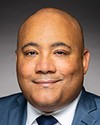
House of Commons Hansard #167 of the 45th Parliament, 1st session. (The original version is on Parliament's site.) The word of the day was jobs.

Topics

line drawing of robot

This summary is computer-generated. Usually it’s accurate, but every now and then it’ll contain inaccuracies or total fabrications.

Statements by Members

Question Period

The Conservatives argue that high immigration is worsening pressure on health care and housing. They criticize the government’s spending and accounting, including overseas funding, and question its handling of Telesat funding and ethics, the Brampton Stellantis plant sale, and Millar Western job losses. They also demand an independent audit of the PrescribeIT spending.
The Liberals defend their immigration plan, citing health-care recruitment and efforts to manage population growth and ease infrastructure pressures. They promote Budget 2026’s affordability measures, investments in housing and jobs, and support for workers facing tariffs, including forestry aid and efforts to protect Stellantis jobs. They also highlight caregiver support and maintaining environmental protections.
The Bloc challenge the Prime Minister over potential Brookfield conflicts of interest, calling for him to sell his shares or options. They also condemn Bill C-39 for weakening environmental protections in national parks and marine protected areas.
The NDP oppose telecom consolidation, warning a Quebecor-Telus takeover could worsen high cellphone prices amid affordability concerns.

Canadian Heritage Members table heritage committee reports on journalism, media, and creative spaces, alongside Conservative and Bloc supplementary reports raising concerns about foreign intimidation, media support and accountability, and distinctions between professional journalism and other forms of commentary. 800 words.

Petitions

Financial Statement of Minister of Finance Members debate the 2026 budget, including proposed investments in housing, affordability, clean energy, infrastructure, agriculture and business growth. Liberal speakers present it as a plan for resilience and long-term prosperity, while Conservatives criticize its deficits, costs and immigration levels, and the Bloc raises concerns about health transfers, fiscal imbalance and federal priorities. 14000 words, 2 hours.

National Immigration Month Act Second reading of Bill S-215. The bill designates November as National Immigration Month to recognize immigrants’ contributions to Canada and encourage public awareness. Supporters emphasize immigration’s historical, cultural and economic value; critics argue recognition should be accompanied by responsible immigration levels, adequate housing and services, and action on exploitation, integration and affordability. 7800 words, 1 hour.

Adjournment Debates

Air Canada strike intervention Garnett Genuis says the government has no records or evidence supporting the minister’s claim that the Air Canada strike threatened organ and pharmaceutical shipments, and challenges her integrity. Leslie Church says the minister was briefed on risks to critical medical supplies and acted responsibly after negotiations stalled, while defending workers’ rights and proposed changes to section 107.
Airport privatization Heather McPherson warns that privatizing airport operations could raise fees, put jobs at risk and transfer profits to investors. Leslie Church says airport assets would remain federally owned, with rules protecting travellers and workers and investment supporting regional airports. She also opposes expanding Billy Bishop Airport at the expense of Toronto’s waterfront.
Small business tax relief Brad Vis urges the government to raise the small business deduction threshold from $500,000 to $700,000 and the GST small-supplier threshold from $30,000 to $60,000, arguing businesses face mounting costs. Marie-Gabrielle Ménard cites budget measures, including a productivity deduction and eased instalment requirements, and says the government will consider further support. Vis presses for lower overall taxes.
Was this summary helpful and accurate?

Financial Statement of Minister of FinanceThe BudgetGovernment Orders

4:10 p.m.

Bloc

Mario Simard Bloc Jonquière—Hébertville—Pays-des-Bleuets, QC

Mr. Speaker, that is yet another example of the Liberal government's idea of consistency. It offers free admission without first considering how existing services will be maintained. That is the Liberal government in a nutshell. It is like the storefront of a shop. There are bright neon lights and a flashy sign to draw people in, but the interior is rather sparse. That sums up the intellectual void at the heart of the Liberal Party. How sad.

Financial Statement of Minister of FinanceThe BudgetGovernment Orders

4:15 p.m.

The Assistant Deputy Speaker John Nater

We have time for a very brief question, about 20 seconds.

The hon. member for Nunavut.

Financial Statement of Minister of FinanceThe BudgetGovernment Orders

4:15 p.m.

Liberal

Lori Idlout Liberal Nunavut, NU

Uqaqtittiji, I thank the member for focusing his speech on health in the budget.

I very much appreciate, in this proposal, the investments that are going toward indigenous health, including $2.9 billion for non-insured health benefits, as well as $290 million for indigenous public health, strengthening disease prevention and outbreak response.

I wondered if he would vote in favour because of the great investments that will be—

Financial Statement of Minister of FinanceThe BudgetGovernment Orders

4:15 p.m.

The Assistant Deputy Speaker John Nater

The hon. member for Jonquière—Hébertville—Pays-des-Bleuets has 20 seconds to respond.

Financial Statement of Minister of FinanceThe BudgetGovernment Orders

4:15 p.m.

Bloc

Mario Simard Bloc Jonquière—Hébertville—Pays-des-Bleuets, QC

Mr. Speaker, a budget is often like a dish at a restaurant. Some of the ingredients look tasty, like funding for indigenous health care, but others are not very appetizing. I would say that the total federal funding for health care is rather unappetizing in this budget.

Financial Statement of Minister of FinanceThe BudgetGovernment Orders

November 18th, 2026 / 4:15 p.m.

Conservative

Michelle Rempel Conservative Calgary Nose Hill, AB

Mr. Speaker, we are here debating budgetary policy and this year's budget.

Every year, the federal government is supposed to table something called the immigration levels plan. This is a document, required by law, which sets out how many people the government is going to allow into the country in coming years. Instead of tabling a separate document for parliamentarians to peruse, look through and really dive into to understand whether or not the numbers are sustainable, the government buried this document in the budget. It is actually in the budget this year, but the day after the budget came out, the Liberals tabled some very fine print, which showed the highest levels of permanent resident admission in Canadian history. At a time when the vast majority of Canadians are feeling that the government has let too many people into the country too fast for housing, health care and jobs to keep up, and at a time when many newcomers themselves are falling behind in the country or are in precarious circumstances, the government, instead of lowering levels, snuck the numbers into this budget and increased them to the highest levels in Canadian history.

Why is this a problem? Some public data released this morning showed that, I believe, over 60% of Liberal voters themselves opposed the levels that were set in the budget, and it is because of these issues.

The first is housing. Having high immigration levels set such that the housing supply cannot keep up with the demand created by the levels that the Prime Minister is setting is good for only one group of people. It is good for corporate landlords like Brookfield, the Prime Minister's former company. Rents go up when there is less housing and more people. When rents go up, people think that maybe they should try and buy a house, because they are paying so much in rent. Where do they go? They go to Brookfield's subdivisions, and if they need to have mortgage insurance, they go to one of Brookfield's mortgage insurance companies. Who benefits from scarcity in housing because of high immigration levels? It is rich corporations like the one the Prime Minister used to work for.

Who does not benefit? Let us imagine a student in a foreign country who wants to come to Canada to build a better life. Their parents have saved up their life savings to send them to Canada to go to school. They end up in Brampton, paying an exorbitant amount of money or responding to ads on Kijiji that are asking for sexual services in exchange for rent, to live 10 deep in a basement suite. They cannot find a job, and the college their parents sent their life savings to is a scam college that is essentially profiting from them. Those are the people who have had their promises broken.

On one hand, we have corporate landlords like Brookfield, benefiting from high rents. On the other hand, we have newcomers to Canada who are being scammed and abused and having the promise of being able to build a better life in this country completely eviscerated. That is what is in this budget, and that is disgusting.

There should be no world in which immigration levels are set such that the people who are coming to this country are treated as units of corporate profit, and that is what we are seeing with these levels. There is not enough housing in the country to house the levels of people included in this budget. That is just the reality.

The Prime Minister has not answered the question of where these people will live. That is not fair to anybody. It is not fair to the newcomer who is coming to Canada to build a better life, and it is not fair to people who are already here, who cannot afford housing and therefore cannot afford to build a family of their own. That is why the levels need to come way down, and that is why the levels set in this budget, the highest levels in history, are unconscionable.

However, it is not just housing. It is also wage suppression. Every day, there is a corporate lobby group. In fact, I would be shocked if there was not one right now on Parliament Hill, lobbying for higher levels of immigration. These powerful corporate lobbyists come, and they talk to everybody in this place and give these lies. They say there are no Canadians who want to do these jobs. Well, that is baloney. There is a stronger word for that. We have a youth unemployment crisis in this country. We have a first entry-level job crisis in this country.

We have corporate lobby groups that are coming here to say we need more immigration, because they want to give the promise of Canada to a newcomer. They do not want people coming to Canada, finding a good-paying job and a decent place to live to build a better life for themselves and their family, like so many immigrants who have built this country have done. What they want is for immigrants to this country to be indentured to their company so they do not have to train people who are already here and so they can suppress wages, because if there are too many people for the jobs available, wages go down.

If we scratch the surface of any corporate lobbyist who comes to this place to ask for more immigration, for the most part, it is for one of these three things. Number one, their business model, their profit model, is based on suppressing wages through high immigration rates. The second thing is that they are not invested in skills training. There are so many youth in Canada who are underemployed or unemployed, who probably just need a bit more training or a place to be trained in an entry-level job in order to get ahead. They just need that chance, but those corporations do not want that. The last thing is that they do not want to invest in productivity.

It is not me saying this. These are major economists. The Bank of Canada is saying that immigration rates that are too high suppress wages. Let us think about how much it now costs, how many multiples of an annual salary it costs to buy a house in Canada. That multiple has increased exponentially over the last several years, because we have brought too many people into this country too fast for social infrastructure to keep up. That is breaking a sacred promise, not only to Canadians who are already here, but to immigrants who were told that when we say welcome to Canada, it means welcome to Canada, that there is a job for them, that there is affordable housing for them, and, the third thing, that there is health care for them.

The corporate lobbyists who come in and ask for higher levels of immigration are not looking at diagnostic imaging waits. They are not looking at the 33-year-old man in Alberta who died in an emergency room earlier this year due to “overcrowding”. No, they do not care about that. Where are these people going to get surgery? What CT scan are they going to be scanned in? People who come to Canada deserve access to quality health care in a timely way, and so do the people who are already here.

Oftentimes, I think of newcomers who are in Canada who might be waiting for the same bed as somebody who is already here. It is not the fault of the newcomer. It is not the fault of somebody who is already here. It is squarely the fault of the Prime Minister, who has set levels too high. Immigrants have built this country. We support immigration. It has to be set in a way that people can come to Canada and successfully integrate.

I want to say this: It is actually the Liberal government that does not support immigration, because if it did, it would not be setting the levels so high that it is dooming newcomers to failure, that it is dooming newcomers to an environment of social tension created with scarcity that has been created by a lack of housing, health care and jobs, and by wage suppression.

That is wrong. The levels that are in here are way too high. It is about a city the size of Winnipeg in permanent residents alone. Where are they going to live? Where are they going to get health care? What jobs are they going to have? How are wages going to grow? If the government is not going to answer these questions, then it is dooming a whole generation of Canadians and newcomers to failure. That is not the promise of Canada. That is why we are going to fight against this. That is why levels need to be lower.

That is why Conservatives have put forward a whole swath of policies to reform the immigration system, but the first thing we need to do is reduce the levels.

Financial Statement of Minister of FinanceThe BudgetGovernment Orders

4:25 p.m.

Winnipeg North Manitoba

Liberal

Kevin Lamoureux LiberalParliamentary Secretary to the Leader of the Government in the House of Commons

Mr. Speaker, I actually find it very upsetting and somewhat sad that the Conservative Party tries to give a false impression. The Conservatives try to give the impression to Canadians that there are going to be 600,000 people coming to Canada, which is just not true. At the end of the day, a majority of the individuals are people who are here today. We are talking about a 24-year-old young lady working for years in the province of Manitoba, and they are saying we should get rid of them. They are talking about our Ukrainian settlements, individuals from Hong Kong who have been here working and are part of our economy, paying taxes. Those are the ones the Conservatives are saying they want out.

Will the member accept the challenge and come to the city of Winnipeg to debate the issue of immigration?

Financial Statement of Minister of FinanceThe BudgetGovernment Orders

4:25 p.m.

Conservative

Michelle Rempel Conservative Calgary Nose Hill, AB

Mr. Speaker, the government promised people from Hong Kong and Ukraine they could stay. It made that promise years ago. The government could have said they could stay here, but it did something different. It brought in close to 400,000 people on top of that, and that does not count the hundreds of thousands of temporary residents over that. Do members see how the Liberals are trying to conflate this issue?

I am from Winnipeg. A woman recently died in the St. Boniface Hospital. She presented with severe chest pain, and she died because the hospital was overcrowded, so my question would be this: Where are the 300,000 temporary residents going to get care from? The government members cannot answer that question, and that is why they are spinning this. It is disgusting.

Financial Statement of Minister of FinanceThe BudgetGovernment Orders

4:25 p.m.

Bloc

Yves Perron Bloc Berthier—Maskinongé, QC

Mr. Speaker, my colleague talked about successful immigration. We agree on that. It is important to have reasonable thresholds so that we can integrate people properly and honour our commitments to them.

She also talked a lot about health care. She gave a few examples of people who died because they could not get care. What does she think about the fact that the federal government is once again reducing health transfers to the provinces and Quebec? Even though the government should be guaranteeing a minimum of 6%, it is going to reduce that amount to 3% starting next year. Would she do the same thing in a Conservative government?

Financial Statement of Minister of FinanceThe BudgetGovernment Orders

4:25 p.m.

Conservative

Michelle Rempel Conservative Calgary Nose Hill, AB

Mr. Speaker, I will emphasize how important the point is that my colleague is making. At a time when the government is reducing health care to the provinces, including Quebec, it is increasing the number of people, to record levels, who are going to use that already strained system. To add to the member's point, the government is spending so much money on so many ridiculous other things, except for health care, that the cost of servicing the debt on those expenditures is higher than the entire amount of money that the government is going to spend on health care. I do not know in what world that math works, but I do know this: There are a lot of the Prime Minister's friends who are getting rich. We have been talking about Telesat. These corporate guys are making a lot of money, and it is about time that people started standing up for Canadian workers and people who cannot access health care. I am sure proud to do that.

Financial Statement of Minister of FinanceThe BudgetGovernment Orders

4:25 p.m.

Conservative

Fred Davies Conservative Niagara South, ON

Mr. Speaker, I want to express my sincere appreciation to my colleague for her insights into the mess of the immigration structure in Canada today. I have had the pleasure of working with her on the immigration committee over the last year or so. She also is aware of my passion for fixing the entrepreneurial side of immigration in Canada, and I wonder what her advice would be to the government, looking at over 30,000 entrepreneurial immigrant applicants who want to come to Canada. The government literally shut the program down. These are people who have investments to make in Canada, jobs to create and businesses to create.

I wonder if the member could give her opinion on how that mess should be fixed.

Financial Statement of Minister of FinanceThe BudgetGovernment Orders

4:30 p.m.

Conservative

Michelle Rempel Conservative Calgary Nose Hill, AB

Mr. Speaker, my colleague just made an important point, and my colleague from the Bloc Québécois made an important point as well. There are regions of the country, and there are specific industries, that have legitimate needs, yet instead of setting levels in accordance with those needs, the government is raising overall levels. Without the social infrastructure, such as housing, health care and jobs, and with wage suppression, it is all getting lumped into one. The consensus for immigration in this country has been eroded. My advice to corporate lobbyists who could fall into that “genuine need” capacity, instead of letting themselves be roped into the Tim Hortons of the world, is to push back and say that they need to have housing, health care and jobs.

Financial Statement of Minister of FinanceThe BudgetGovernment Orders

4:30 p.m.

Liberal

Michael Coteau Liberal Scarborough—Woburn, ON

Mr. Speaker, I will start by saying I will be sharing my time with the member for Ottawa Centre.

It is a real pleasure to speak today about the budget on behalf of the constituents of the riding of Scarborough—Woburn.

In an increasingly turbulent world, Canada is determining our future. We have the strength to build. The discipline to deliver. And the values to take care of each other.

These are the opening paragraphs from this year's budget. These words capture a main theme, an approach with this budget that we are at a time where we recognize the challenges in front of us, but we recognize that Canadians have the determination, resilience and talent to overcome them. Above all, we are in this together. Achieving our ambitions will require more than governments, MPs and business leaders. It will require the collective strength and commitment of all Canadians. I believe this budget presents a balanced approach to building a stronger economy while improving the lives of Canadians. It recognizes that economic prosperity and social well-being are not competing priorities, but go hand in hand.

To understand this budget, we must first understand the world in which it is being introduced. Global trading relationships are shifting. Geopolitical tension and conflict are disrupting our supply chain. Artificial intelligence is transforming how we live, work and do business. Businesses are navigating an increasingly unpredictable economy. Canadian families continue to experience significant affordability issues and pressures.

The world is changing and Canada must adapt. We must not confuse global uncertainty with Canadian weakness because, despite these challenges, Canada is entering a period of transformational change and is in a position of extraordinary strength.

Too often in this House we hear a narrative being built up suggesting that Canada is failing, but the evidence tells a very different story. Canada ranks first in the G7 for tax competitiveness. We are first for direct foreign investment per capita. We have one of the world's most highly educated workforces. We lead in the G7 for artificial intelligence talent growth. Our economics are quite strong. We have the lowest net debt-to-GDP ratio in the G7. Along with Germany, we are the only two countries in the G7 that have an AAA credit rating. Canada is projected to have the second-fastest-growing economy in the G7.

Beyond these statistics, we possess an extraordinary advantage. We have an abundance of natural resources, tremendous agricultural capacity, world-class researchers, innovative businesses and a diverse, highly educated population. Perhaps our greatest asset is Canadians themselves. The question is not whether Canada has the resources or talents to succeed, but whether we are prepared to fully harness those talents.

This is precisely what the budget is set out to accomplish. The budget builds on Canada's strength through investments in economic growth, affordability and national unity.

Let me highlight a few of these areas.

The first is building a stronger, more independent economy. Our government is advancing ambitious strategies in electricity, defence, critical minerals, food security, artificial intelligence and international trade. We are investing in expanding Canada's electricity supply and strengthening our nuclear industry. We are committing $2.3 billion to critical minerals, a sector that contributes over $33 billion to our economy across the country. Through trade diversification, we are working to double our non-U.S. exports by 2035.

These investments are about creating good jobs, strengthening our sovereignty and ensuring Canada can compete in the industries of tomorrow.

Housing is another critical priority. That is why we are investing almost $45 billion in housing outlined in the budget.

As chair of the Standing Committee on Agriculture and Agri-Food, I was so happy to see a $3.2-billion investment dedicated to strengthening Canada's food security. Food security is not simply an agricultural issue. It is an affordability issue, an economic issue and increasingly a matter of national sovereignty. A country that can feed itself, power itself and build for itself is a country better positioned to determine its own future.

Second is supporting Canadians and improving affordability. What I appreciate most in this budget is that it recognizes that while we must invest in businesses and industry, we also have to invest in Canadians who are struggling. The budget would increase the Canada groceries and essentials benefit, better support low-income workers through the build Canada workers benefit and lift 240,000 people out of poverty.

This budget also makes an important commitment on mental health, addiction services and home and community care. Through significant long-term investments, the government has established an ambitious goal of ending homelessness within 10 years. These measures reflect a fundamental principle: Economic growth means little if Canadians cannot share the benefits. A strong economy must create opportunities, reduce barriers and improve the lives of people we represent.

The third point I would like to make is that strengthening Canadian identity, culture and unity is a very important thing for all of us here in the House. One of the most unique aspects of this budget is it recognizes that nation building is about more than just infrastructure and economic development. It is also about our stories. It is about our culture. It is about our shared identity.

As Canada approaches its 160th anniversary, the government is proposing a $300-million commitment for initiatives celebrating our history and strengthening our national pride. The budget also supports Canadian artists, CBC/Radio-Canada and local journalism. One initiative that I find really extraordinary and exciting is the free national digital collection of Canadian books. Imagine a student in Scarborough, in my area, a family in rural Saskatchewan or a young person in northern Canada being able to discover Canadian stories free of charge. Whoever thought of this, I thank them, because this is such a great idea.

In addition to that is the renewal of the Canada strong pass. Free national museum admission for young Canadians is equally important. Economic investment helps us build a stronger country, but cultural investments help us understand what makes this country worth fighting for.

I began seven minutes ago reflecting, in my opening words, about how the budget starts and the words that were chosen. These are words that speak to Canada's strength, our determination and our shared values. We face extraordinary challenges in a rapidly changing world, but we also have extraordinary opportunities. We have the resources, the talent, the institutions and the economic foundations to succeed, and we have a budget that seeks to turn those advantages into greater prosperity and more opportunities for Canadians.

We have a budget that builds our economy while supporting those who need the most help, strengthens our sovereignty while expanding our place in the world and recognizes that our culture, stories and shared values are essential to our future. I believe the Prime Minister's relentless focus on building a stronger, more independent Canada reflects an important truth. We cannot simply react to the world around us. We must shape the future that we want as Canadians.

However, government cannot do this alone. It will take our workers, entrepreneurs, researchers, communities and Canadians from every background in every region in the country, because, ultimately, our greatest strength has never been simply the resources beneath our feet. It has always been the people who call Canada home. We must invest in their potential, remove barriers for opportunity and work toward a future where no Canadian is left behind. There is very little we cannot do if we stick together.

That is the ambition of the 2026 budget, and that is how we become masters of our destiny. It is not as individuals, but as a country working together, building together and moving forward together.

Financial Statement of Minister of FinanceThe BudgetGovernment Orders

4:40 p.m.

Conservative

Dave Epp Conservative Chatham-Kent—Leamington, ON

Mr. Speaker, I want to thank my colleague across the way particularly for mentioning the agriculture and agri-food committee, which I think is certainly one of the most important committees we have as part of the House. I agree with him. The national food security strategy is an important piece of the budget.

More specifically, on the monies allocated, my concern goes back to the last time the government allocated funds, and I am going to be very specific here, to the Pest Management Regulatory Agency, or the PRD as it is known now. I forget what the number was, but it was $500 million or something like that, and it actually slowed down the process. I know the intention is, under the national food security strategy, to speed up the CFIA approvals and the PMRA approvals, but the last time they received money, it actually slowed the process down by more bureaucratic layers.

Can my colleague respond with how he sees this helping this time around?

Financial Statement of Minister of FinanceThe BudgetGovernment Orders

4:40 p.m.

Liberal

Michael Coteau Liberal Scarborough—Woburn, ON

Mr. Speaker, I know, without question, that the member is one of the strongest advocates on that side for agriculture, and I appreciate that. He actually comes from a beautiful part of my province of Ontario, where agriculture plays a huge role in economic development.

Investments into certain areas demonstrate good intention. I know intention is not the only thing we need to make something good, but the investment is the starting point. The Prime Minister has made agriculture a priority for Canada. It is one of our economic pillars, and it represents almost 10% of our GDP.

We are going to continue to invest in that, and if there are challenges along the way, we are going to work together across the aisle to figure out ways to make sure that we can accelerate and continue to grow our agriculture sector in the province.

Financial Statement of Minister of FinanceThe BudgetGovernment Orders

4:40 p.m.

Bloc

Maxime Blanchette-Joncas Bloc Rimouski-Neigette—Mitis—Matapédia—Les Basques, QC

Mr. Speaker, I would like my colleague to explain the contradiction he just presented to us with his fine words. He says that, for the Liberal government, agriculture is the top priority. As it happens, he is the chair of the Standing Committee on Agriculture and Agri-Food.

I would like to remind him that his government recently made cuts to three agricultural research centres, located in Quebec City, Ontario, and Alberta, cutting more than 665 jobs. Four experimental farms are also affected. He says he wants to improve food sovereignty. I am unaware of any other country in the world that is closing its research centres and cutting more than 665 jobs directly related to agri-business and agriculture.

I would like my colleague to explain to me how cutting jobs and research centres improves food sovereignty. These cuts affect people who are advancing research on food sovereignty, among other things.

Financial Statement of Minister of FinanceThe BudgetGovernment Orders

4:40 p.m.

Liberal

Michael Coteau Liberal Scarborough—Woburn, ON

Mr. Speaker, that is a good reminder to demonstrate that the government has, I believe, made the largest single investment in agriculture in the history of this country. The reason we have decided to go in this direction on this side of the House is that we recognize that if Canada is going to remain a strong sovereign nation, agriculture plays a role. We need to make sure that we can grow our own food and continue to lead in technology, lead in expertise and pave the way to the future of agriculture in this country.

Financial Statement of Minister of FinanceThe BudgetGovernment Orders

4:45 p.m.

Winnipeg North Manitoba

Liberal

Kevin Lamoureux LiberalParliamentary Secretary to the Leader of the Government in the House of Commons

Mr. Speaker, I wonder if my colleague could provide his thoughts in regard to how we continue through a theme of building a stronger and healthier economy. This is something we committed to doing through diversification, trade agreements, investments and major projects.

Can he provide his thoughts on that?

Financial Statement of Minister of FinanceThe BudgetGovernment Orders

4:45 p.m.

Liberal

Michael Coteau Liberal Scarborough—Woburn, ON

Mr. Speaker, I would ask all members in the House to read the first paragraph of the budget. It basically outlines the entire strategy.

If we are going to continue to be a successful country, we have to make sure that everyone is included, we pull from our best, and we remove barriers so people can reach their full potential. That is what this budget is trying to do. It works with industry, and it works with individuals who may need some help, but in the end, it is about reaching our full potential as a country through individual Canadians.

Financial Statement of Minister of FinanceThe BudgetGovernment Orders

4:45 p.m.

The Assistant Deputy Speaker John Nater

It is my duty pursuant to Standing Order 38 to inform the House that the questions to be raised tonight at the time of adjournment are as follows: the hon. member for Sherwood Park—Fort Saskatchewan, Labour; the hon. member for Edmonton Strathcona, Air Transportation; the hon. member for Mission—Matsqui—Abbotsford, Small Business.

Financial Statement of Minister of FinanceThe BudgetGovernment Orders

4:45 p.m.

Ottawa Centre Ontario

Liberal

Yasir Naqvi LiberalParliamentary Secretary to the Minister of International Trade and to the Secretary of State (International Development)

Mr. Speaker, I am thankful for the opportunity to speak on budget 2026 in my capacity as the very proud member of Parliament for Ottawa Centre. It is always an honour for me to stand in the House to reflect the views of my constituents of Ottawa Centre.

This budget is an extremely important budget, as we have been hearing from many members of the House. In order to prepare for the budget and to be able to articulate the views of my community directly to the Minister of Finance, I sent a householder with a questionnaire to all my constituents, as many of us do in the House, asking them questions so that they could help outline some of the priorities of our community here in Ottawa Centre. We received thousands of responses back, which I am grateful for, and I was able to send a response to the Minister of Finance, so that we could outline the kinds of things that are important to my constituents here in Ottawa Centre.

I am really happy to say that so many of those issues, whether they were around affordability, building more affordable homes, supporting our businesses, especially our small and medium-sized businesses, or the environment, are covered in the budget.

I want to take my limited time in front of the House to outline some of the key things that are important to my community of Ottawa Centre. Let me first start with the issue of addressing the cost of housing, food and energy. Obviously, what I like about the budget, and the reason I will be supporting the budget, is the emphasis on reducing the cost of living and making sure that people's lives are affordable. It is an issue that we all hear on all sides of the House, regardless of where Canadians are living.

Because of the circumstances around the globe, whether it is the war in Iran or the illegal invasion of Ukraine by Russia, we have seen the cost of things go up. Canada is not immune to the increase in energy prices that is resulting in the increase in food prices and fuel, for example. The government is making sure that the Canada groceries and essentials benefit is strengthened by injecting a one-time increase of 50%, which would result in about $1,290 for a single person or over $2,500 for a family of four, tax-free, which is a really important way of helping those low- to moderate-income Canadians, about 12 million of them.

I have heard from food banks in my riding, such as the Parkdale Food Centre, that this type of help really helps individuals. I know there have been discussions around the national food security strategy, which is going to ensure that we are able to grow more food in Canada so that we can not only ensure food security but also provide nutritious, fresh food right here in our country, which is also going to help.

Proposals like the national heat pump rebate, which is going to support one million home retrofits and bring the cost of energy and emissions down at the same time, are also very well received in my community. We have organizations that have been advocating for a heat pump program, such as organizations like CAFES in my community. I am really happy to say that we are actually putting in the resources to have this particular program.

Let me move on to the second issue, which I think is really important to my community, which is to build more housing, more deeply affordable housing. We are seeing a real, tangible commitment to end homelessness, to put us on a path toward ending homelessness in Canada within 10 years. This is something that I have heard from so many people, that they are really encouraged to see the government putting forward a plan, and not just a plan but actual real dollars, about $30 billion to Build Canada Homes, to make this happen.

In my community here in Ottawa Centre, we have a lot of federal lands, like Tunney’s Pasture or Confederation Heights or unutilized federal government buildings like the Jackson Building, which is just down the street here in downtown Ottawa, that can be converted into housing for urban indigenous people and for young people. We can also build affordable housing on vacant land.

This is the kind of effort that we are engaged in here in Ottawa Centre, which is going to really allow us to end homelessness right here in our city and across the country. I see projects like Odenak, which is being built by Multifaith Housing Initiative, and Gladstone Village and Rochester Heights, which are being done by Ottawa Community Housing. They are the kinds of projects that CCOC in my community is doing. All those are being funded through the government. They will help so many people, because this is not-for-profit housing, deeply affordable housing that is going to really have a huge impact on people's lives.

The third point that is important to my community of Ottawa Centre is around investment in both building a clean economy and protecting our environment with a practical plan, a pragmatic plan. We can really see some important elements in this budget to make that happen.

Let me start with the national electricity strategy, which is going to foster the affordable, reliable and clean electricity we need. Much of the way we will get away from fossil fuels and reduce our emissions is through electrification. For electrification, we need to make sure that we are generating clean electricity. The kind of investment that we are putting into hydroelectricity and the arrangement between Quebec and Newfoundland and Labrador with Churchill Falls is a great example. Making sure we have the transmission lines to then take that electricity to other parts of the country is so extremely important. It is going to really help reduce emissions in our country. I have been really heartened to see the investments that should double our electricity system by 2050.

That is not to mention the automotive strategy, which really aims to promote electric vehicle production, support consumer adoption through EV incentives that are being well utilized, and support the installation of EV chargers. It is going to be another way we can help reduce emissions.

The nature strategy in this budget commits to delivering on Canada's commitment to conserve 30% of lands and waters by 2030, working with partners to conserve terrestrial and marine areas. These are, again, very important commitments with dedicated resources through this budget.

Lastly, I want to really highlight the work that is going on with the ocean strategy, which aims to protect our oceans, secure our waters and build our ocean economy sustainably, given that we have access to three oceans as Canadians. With all those efforts combined, I think, one starts to see the practical nature of our environmental plan.

In the short time I have left, I want to talk about the work we are doing to kick-start Canada's investment supercycle. I have heard from so many businesses that the productivity mega detection is absolutely a game-changer. It is going to allow businesses to invest, whether in machinery or in equipment, to help grow their businesses and to create good-paying jobs. As we build Canada internally, as we make sure that our businesses are able to really invest and fuel the growth needed to help them with the diversification process in international markets, this productivity mega deduction is very important. It is going to really help with the supercycle for investment and attract investment from other parts of the world, as we can see by the increased amount of foreign direct investment taking place in Canada.

I know my time is almost up, but I want to again highlight this. I want to thank my constituents here in Ottawa Centre for providing their feedback, encouragement and ideas to me. It has been an honour for me to put forward those ideas and see them reflected here in this bill: ideas around affordability, building more housing and putting an end to homelessness, around having a practical plan to fight climate change and, of course, making sure we are growing our economy.

I am looking forward to hearing the views of other members. I encourage all members to join me and vote in support of this bill so that we can build Canada strong.

Financial Statement of Minister of FinanceThe BudgetGovernment Orders

4:55 p.m.

Conservative

Marc Dalton Conservative Pitt Meadows—Maple Ridge, BC

Mr. Speaker, one would think, after listening to the Liberals, that things are just amazing here in Canada. Well, they certainly are not. I met with businesses last week, and they are struggling. They are struggling in my communities in British Columbia and across this nation. Meanwhile, the Liberals were able to pledge $570 million to Brazil's rainforests, despite Brazil's having an economy that is as big as ours. In British Columbia, we have plants that are closing, with thousands of workers who are out of a job.

This initiative of the Liberal government just reveals its priorities for outside the country and not for getting Canada going. Would the member not agree with me?

Financial Statement of Minister of FinanceThe BudgetGovernment Orders

4:55 p.m.

Liberal

Yasir Naqvi Liberal Ottawa Centre, ON

Mr. Speaker, I appreciate that the member is using some talking points while I spend most of my time talking about what my constituents in Ottawa Centre have been talking about.

I am not suggesting that the times are not challenging. Of course, these are difficult times, but that is why we need a plan from our government to address the challenges, as we have presented through this budget.

My constituents are well aware of the tariff war, which is not of our own making, and the effort the government is putting in, not only in making sure that we have a deal with the United States, but also in the work we are doing in building Canada, supporting Canadians, and diversifying and opening new markets. That is the perspective I am presenting that I hear from my constituents, and I strongly believe that the budget addresses those concerns.

Financial Statement of Minister of FinanceThe BudgetGovernment Orders

4:55 p.m.

Bloc

Yves Perron Bloc Berthier—Maskinongé, QC

Mr. Speaker, I have a very simple question for my colleague. I would like him to tell me what process the Liberals followed.

To build Canada strong, Parks Canada decided to offer free public admission to all of its parks. That is one thing. It cost the organization about $150 million. They have since announced plans to offer free admission again in the coming season. At the same time, they are sending out letters to nearly 3,000 workers, senselessly plunging them into uncertainty. Furthermore, in some cases, Parks Canada is preparing to cut 60% of these parks' resources.

What was the logic behind all that?

Financial Statement of Minister of FinanceThe BudgetGovernment Orders

4:55 p.m.

Liberal

Yasir Naqvi Liberal Ottawa Centre, ON

Mr. Speaker, I thank the member for raising the initiatives around Parks Canada.

It is so exciting that we are renewing the Canada strong pass. I have had so many parents and members of my community tell me how much they have enjoyed using this pass.

I am really excited that we are making access to our museums free for young people until the age of 25. This is something I have been advocating for, even before my time in the House. There are lots of museums in my riding here in Ottawa Centre. I am so excited to see that, through this budget, we will be able to support those museums, and we will be able to create those learning opportunities for our young people.

I encourage all members to support this budget.